

Another ICE Agent Killing Rocks Minneapolis
Federal ICE agents in Minneapolis killed another civilian after beating and shooting him, just three weeks after the Renée Good murder. The pattern of escalating violence demands scrutiny.
Three weeks. That's how long Minneapolis had between ICE agent killings. On January 7th, agents murdered Renée Good. Now, another man lies dead after federal agents repeatedly punched him, forced him to the ground, and shot him multiple times.
The video is brutal. It shows the escalation from assault to execution, captured by someone brave enough to keep recording while federal agents committed what appears to be murder in broad daylight.
A Pattern, Not an Incident
This isn't a tragic anomaly. Local reports confirm that deadly violence involving ICE has grown "increasingly frequent" in Minneapolis. While the nation focused on police reform after George Floyd's murder, federal immigration enforcement has operated with even less oversight and accountability.
The rapid circulation of this latest killing video online highlights how smartphones have created an informal surveillance network that's exposing federal violence in real-time. But documentation without consequences becomes its own form of trauma.
ICE agents operate with broad federal authority but minimal local accountability. Unlike city police departments that face community pressure and local oversight, federal agents can commit violence and disappear back into bureaucratic anonymity.
Federal Violence, Local Impact

Minneapolis has become a symbol of police reform, but federal agencies remain largely untouched by local reform efforts. ICE's expanded powers during the Trump administration weren't fully rolled back under Biden, leaving agents with sweeping authority and minimal restraint.
The timing matters too. As cities nationwide grapple with police accountability, federal immigration enforcement has intensified its street-level operations. The result is a two-tier system where local cops face scrutiny while federal agents operate with impunity.
Each killing video that goes viral represents not just individual tragedy, but systemic failure. When federal agents can beat and shoot civilians while knowing they're being recorded, it suggests they don't fear consequences.
Beyond Documentation
The proliferation of police violence videos was supposed to drive accountability. Instead, we've created a cycle where brutality is documented, shared, forgotten, and repeated. The Minneapolis ICE killings expose the limits of transparency without enforcement.
Federal agencies like ICE operate across jurisdictions, making coordinated accountability efforts difficult. Local prosecutors often lack authority to charge federal agents, while federal prosecutors rarely pursue cases against their own agencies.
Authors
Related Articles
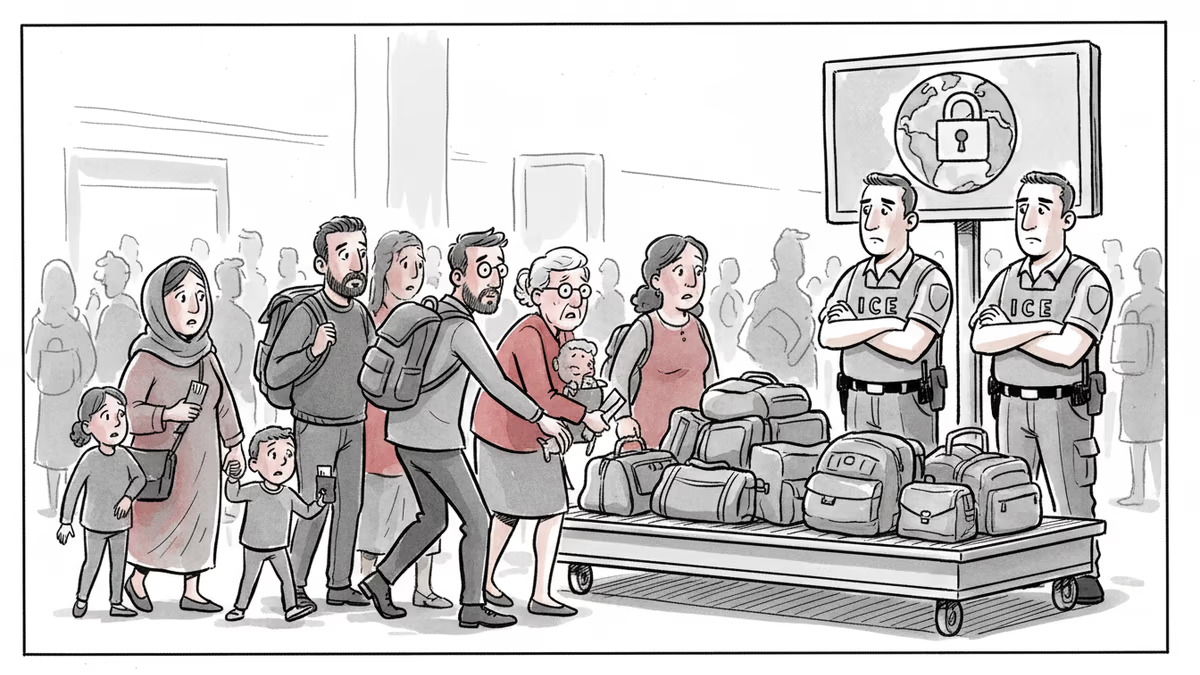
ICE agents have been deployed to 14 US airports, officially to fill TSA staffing gaps during the government shutdown. But the line between security assistance and immigration enforcement is blurring fast.

Google handed over a student's personal data to ICE without judicial approval, raising questions about Big Tech's role in government surveillance and user protection.

Palantir CEO Alex Karp finally responded to weeks of internal pressure about ICE contracts, but his hour-long video raised more questions than answers
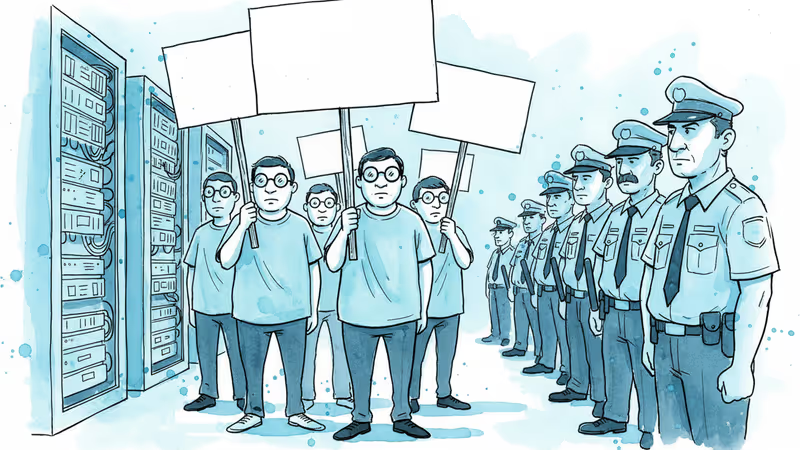
Over 880 Google employees and contractors demand the company disclose and cancel immigration enforcement contracts, sparking debate over tech's moral responsibilities.
ICE agents have been deployed to 14 US airports, officially to fill TSA staffing gaps during the government shutdown. But the line between security assistance and immigration enforcement is blurring fast.
Google handed over a student's personal data to ICE without judicial approval, raising questions about Big Tech's role in government surveillance and user protection.
Palantir CEO Alex Karp finally responded to weeks of internal pressure about ICE contracts, but his hour-long video raised more questions than answers
Over 880 Google employees and contractors demand the company disclose and cancel immigration enforcement contracts, sparking debate over tech's moral responsibilities.
Thoughts
Share your thoughts on this article
Sign in to join the conversation