
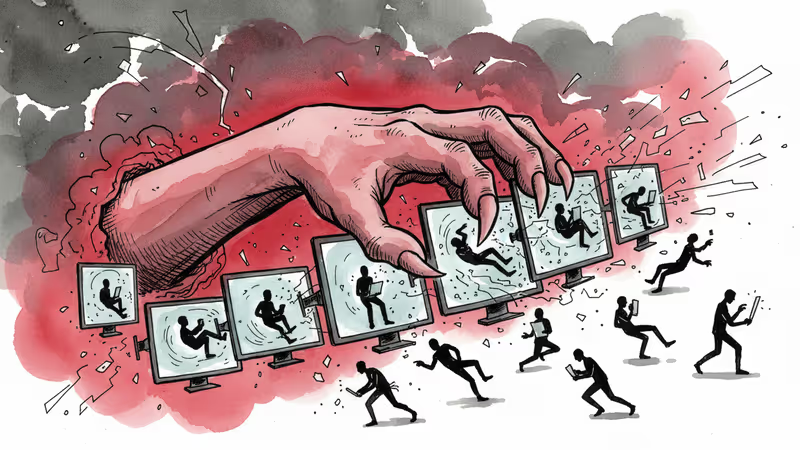
Trump's DHS Quietly Demands User Data on Government Critics
Department of Homeland Security uses administrative subpoenas to target anonymous accounts critical of Trump administration, raising concerns about digital privacy and government overreach.
What if the government could peek into your online life without a judge's approval? In America, that's exactly what's happening right now.
The Department of Homeland Security has been quietly demanding tech companies hand over user information about critics of the Trump administration, according to multiple reports. The targets? Primarily anonymous Instagram accounts that share information about ICE immigration raids in local neighborhoods or post content critical of government policies.
This isn't your typical law enforcement investigation. It's a systematic effort using a legal tool that operates in the shadows of judicial oversight.
The Power of Judge-Free Subpoenas
At the heart of this controversy lies the administrative subpoena – a self-signed demand that federal agencies can issue without judicial approval. Unlike judicial subpoenas, which require a judge to review evidence of potential criminal activity, administrative subpoenas allow investigators to seek vast amounts of personal information with zero court oversight.
While these subpoenas can't access email contents or location data, they can demand everything else: login times, IP addresses, device information, email addresses used to create accounts, and other identifying details. Most importantly, whether companies comply is entirely up to them – there's no court order compelling cooperation.
Bloomberg reported that Homeland Security sought the identity behind @montcowatch, an anonymous Instagram account sharing resources to protect immigrant rights in Montgomery County, Pennsylvania. Meta received an administrative subpoena demanding the account owner's personal information, citing an unsubstantiated tip about ICE agents being "stalked." The American Civil Liberties Union, representing the account owner, noted there was no evidence of wrongdoing. Homeland Security withdrew the subpoena without explanation.
From Critical Email to Doorstep Visit in Two Weeks
Perhaps more alarming is a case reported by The Washington Post. An American retiree sent a critical email to Homeland Security's lead attorney Joseph Dernbach. Within five hours, Google notified him that his account had been subpoenaed by the Department of Homeland Security.

The subpoena demanded comprehensive surveillance data: every online session's day, time, and duration; IP addresses; physical addresses; a list of every service used; and all identifying information including credit card numbers, driver's license, and Social Security numbers. Two weeks later, federal agents appeared at his door asking about the email – which they admitted broke no laws.
Google spokesperson Katelin Jabbari told TechCrunch the company "pushes back against overbroad or improper subpoenas, as we did in this instance." But the damage was already done: a citizen exercising First Amendment rights found himself under federal scrutiny within hours of sending a critical email.
The Tech Company Dilemma
Tech companies find themselves caught between government demands and user privacy. Most publish transparency reports detailing government data requests, but few distinguish between judicial and administrative subpoenas – despite their fundamental differences in legal authority and oversight.
Meta hasn't disclosed whether it provided any data about the @montcowatch account. This opacity leaves users uncertain about what information might be shared and under what circumstances.
Interestingly, end-to-end encrypted messaging apps like Signal have built their entire value proposition around collecting minimal user data. When faced with legal demands, they can truthfully respond that they simply don't have the requested information to begin with.
A Pattern of Intimidation
The ACLU called these subpoenas "part of a broader strategy to intimidate people who document immigration activity or criticize government actions." Bloomberg reported at least four other cases where Homeland Security used administrative subpoenas to unmask Instagram accounts critical of the government. All were withdrawn after legal challenges.
This pattern suggests a chilling effect strategy: even if the subpoenas are ultimately withdrawn, the mere threat of exposure can silence critics and activists.
Global Trust at Stake
These developments come as major U.S. tech company executives are "overtly cozying up to the Trump administration," as the original report notes. This timing isn't coincidental – it's accelerating European countries' and consumers' efforts to reduce dependence on American tech giants.
The implications extend far beyond U.S. borders. International users of American platforms must now consider whether their political views or social activism could make them targets of U.S. government surveillance, regardless of their citizenship or location.
Authors
Related Articles
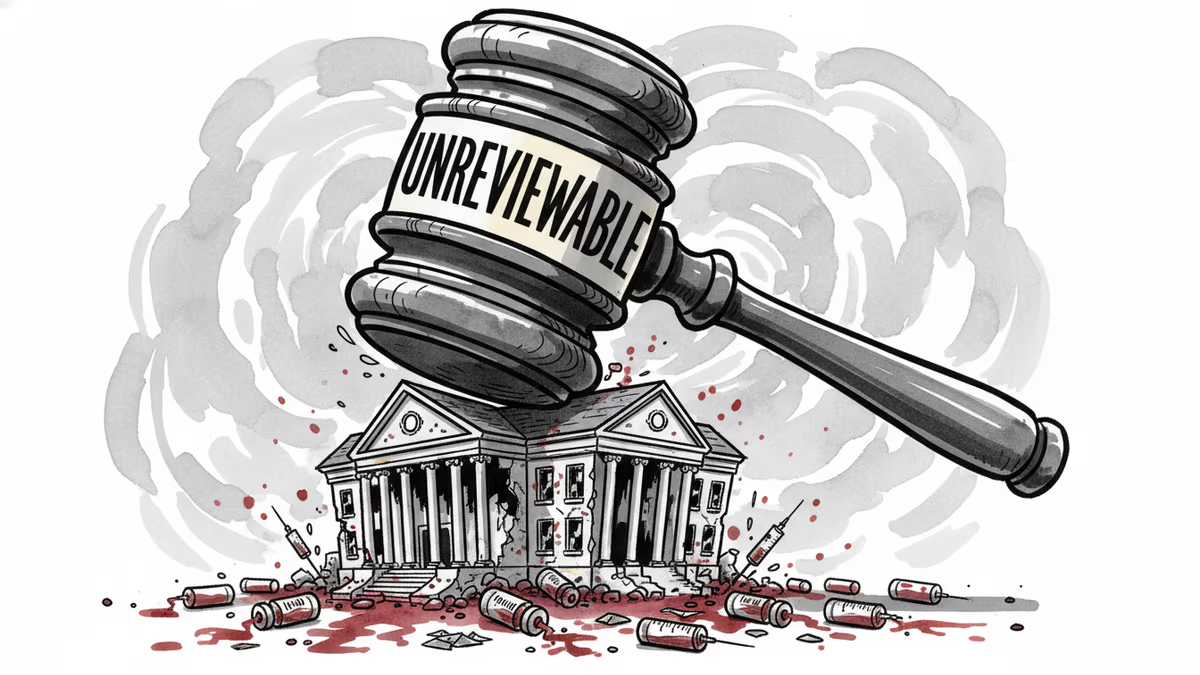
Trump admin lawyer claims RFK Jr.'s vaccine authority is beyond judicial review, even if he tells Americans to ditch vaccines entirely. Medical groups fight back.
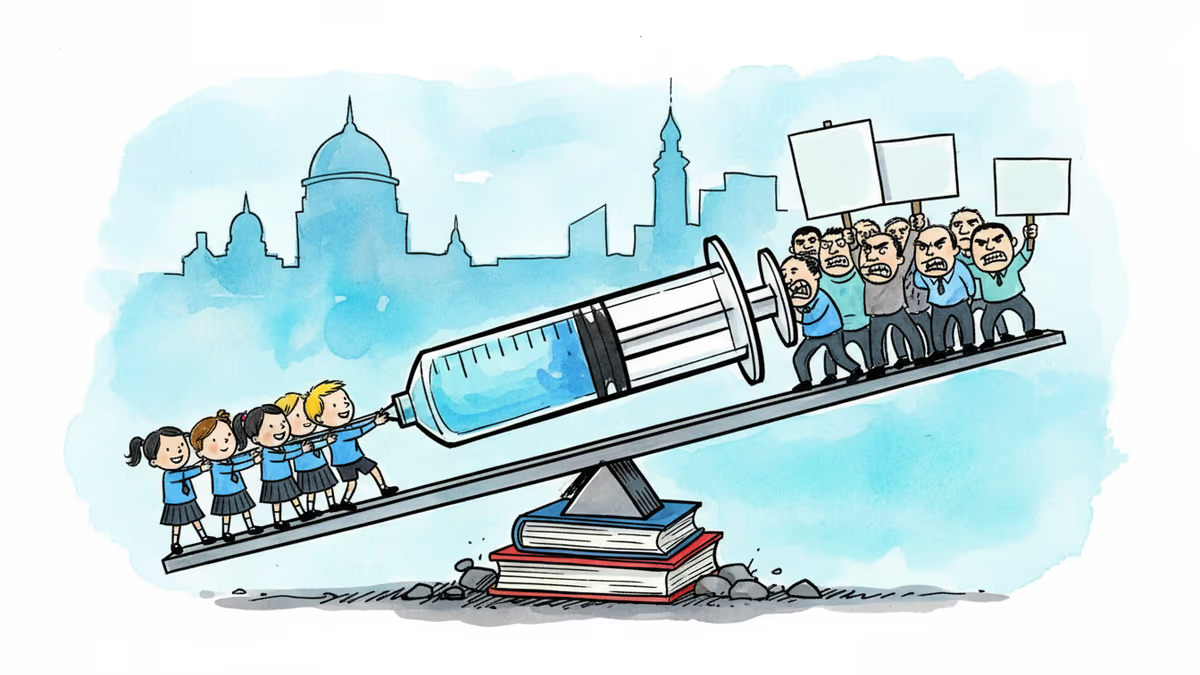
RFK Jr.'s nomination as HHS Secretary sparks unprecedented legal challenge from 15 states over childhood vaccination policies. What this means for public health and global disease prevention.
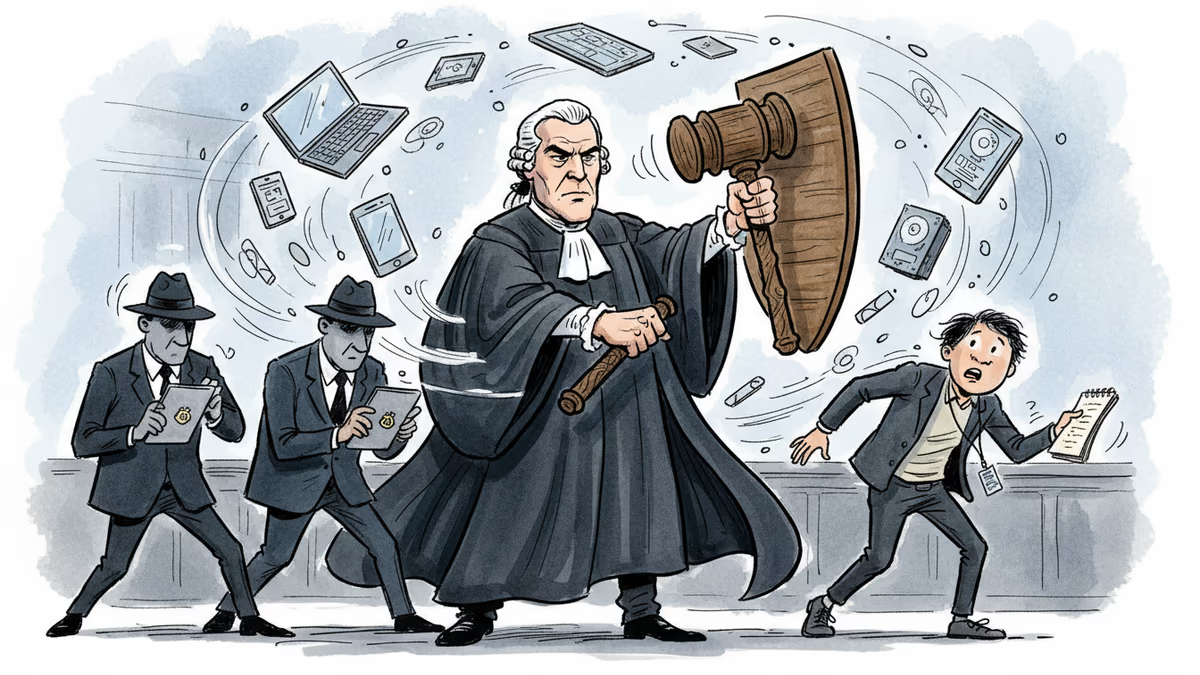
Federal court takes control of Washington Post reporter's seized devices after DOJ omitted key journalist protections from warrant. A new precedent for press freedom vs national security.
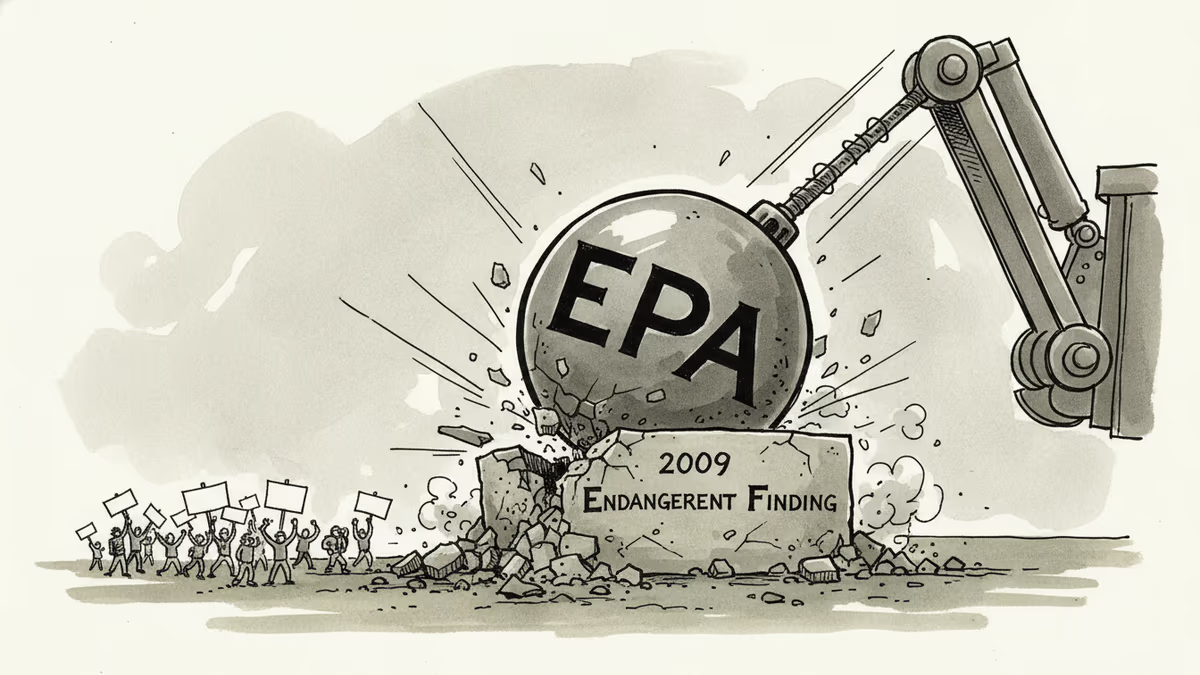
Environmental groups sue EPA after Trump administration repeals endangerment finding that anchored US climate regulations for 17 years, eliminating car emission standards in the process.
Trump admin lawyer claims RFK Jr.'s vaccine authority is beyond judicial review, even if he tells Americans to ditch vaccines entirely. Medical groups fight back.
RFK Jr.'s nomination as HHS Secretary sparks unprecedented legal challenge from 15 states over childhood vaccination policies. What this means for public health and global disease prevention.
Federal court takes control of Washington Post reporter's seized devices after DOJ omitted key journalist protections from warrant. A new precedent for press freedom vs national security.
Environmental groups sue EPA after Trump administration repeals endangerment finding that anchored US climate regulations for 17 years, eliminating car emission standards in the process.
Thoughts
Share your thoughts on this article
Sign in to join the conversation