
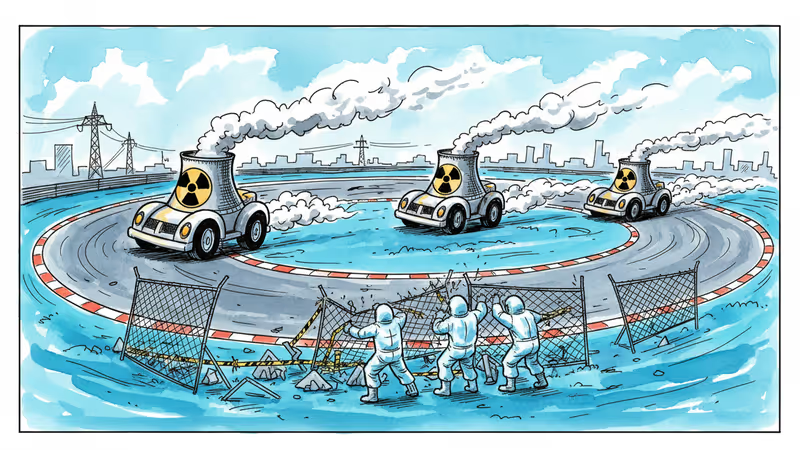
Trump's DOE Quietly Guts Nuclear Safety Rules as Startups Race for July Deadline
The Trump administration has slashed nuclear safety regulations for DOE-owned sites, cutting a third of the rulebook while nuclear startups chase over $1 billion in funding. Speed vs safety in the nuclear renaissance.
Nuclear startups have raised over $1 billion in recent months, riding a wave of AI-driven electricity demand and renewed government support. But there's another accelerant quietly fueling this atomic gold rush: the Trump administration has dramatically loosened nuclear safety rules.
What Changed Behind Closed Doors
According to NPR's investigation, the Department of Energy has quietly overhauled how it oversees nuclear plants built on its properties. The changes are sweeping and significant.
Roughly one-third of the safety rulebook has been eliminated entirely. Multiple sections underwent heavy revision. Requirements that once mandated protection against groundwater and environmental contamination are now mere suggestions. Workers can be exposed to higher radiation doses. Plant security protocols have been largely delegated to individual companies.
Perhaps most concerning to safety advocates: these changes happened without public comment or advance notice. However, the new rules only apply to reactors built on DOE property—facilities elsewhere still fall under Nuclear Regulatory Commission oversight.
The July 4th Nuclear Sprint
Timing tells the story. Several startups are developing demonstration reactors on DOE sites, racing to meet a Trump administration deadline of July 4, 2026. The symbolism isn't subtle—America's Independence Day as the rebirth of nuclear power.
This regulatory relaxation comes as data centers' electricity appetite reaches unprecedented levels. AI workloads are driving power consumption through the roof, making nuclear's reliable, carbon-free baseload increasingly attractive. The investment community has taken notice, pouring over $1 billion into nuclear startups in recent months.

Companies like TerraPower, X-energy, and others are betting that streamlined regulations will help them commercialize technologies like small modular reactors (SMRs) faster than traditional nuclear development timelines.
The Safety vs. Speed Debate
The nuclear industry argues that outdated regulations have stifled innovation for decades. They contend that new reactor designs are inherently safer than previous generations, making some legacy requirements obsolete. For emerging technologies like SMRs, existing regulatory frameworks often don't fit.
Safety experts and environmental groups see it differently. They argue that nuclear safety standards exist for good reasons—the consequences of cutting corners can be catastrophic and long-lasting. The lack of public input particularly rankles critics who say democratic oversight shouldn't be bypassed for expediency.
Interestingly, the DOE's approach creates a two-tier system: looser rules for government sites, stricter NRC oversight elsewhere. This effectively turns DOE properties into regulatory testing grounds—a real-world experiment in whether streamlined rules can maintain safety while accelerating deployment.
Market Implications and Global Context
For investors, the regulatory shift could accelerate returns on nuclear bets. Faster permitting and reduced compliance costs make projects more attractive financially. But it also introduces new risks—if safety incidents occur, the entire sector could face renewed scrutiny and potential backlash.
Globally, other nations are watching America's nuclear renaissance closely. Countries like the UK, Japan, and South Korea are also reconsidering nuclear's role in their energy mix. How the U.S. balances speed and safety could influence international approaches to nuclear regulation.
The changes also highlight a broader regulatory philosophy shift. Where previous administrations emphasized precaution and extensive oversight, the current approach prioritizes innovation and rapid deployment. This reflects a bet that technological advancement can outpace traditional safety concerns.
Authors
Related Articles
NRC approves first nuclear reactor in a decade. TerraPower's sodium-cooled design could reshape energy, but faces steep cost challenges.
Trump admin lawyer claims RFK Jr.'s vaccine authority is beyond judicial review, even if he tells Americans to ditch vaccines entirely. Medical groups fight back.
RFK Jr.'s nomination as HHS Secretary sparks unprecedented legal challenge from 15 states over childhood vaccination policies. What this means for public health and global disease prevention.
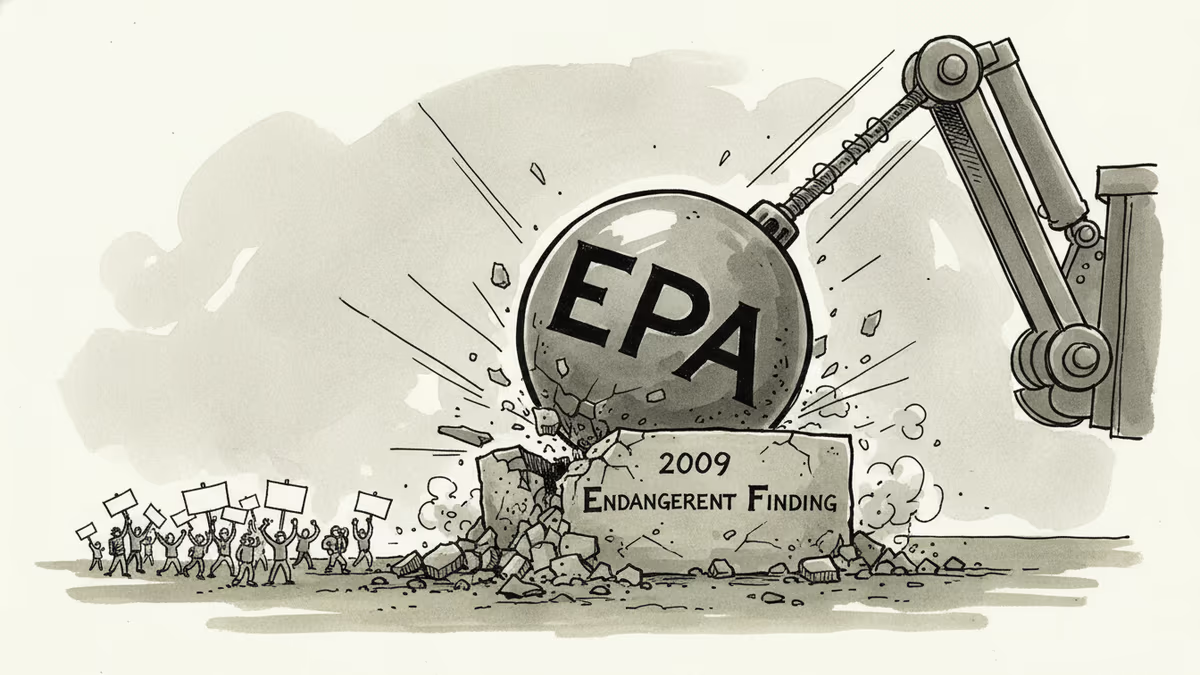
Environmental groups sue EPA after Trump administration repeals endangerment finding that anchored US climate regulations for 17 years, eliminating car emission standards in the process.
NRC approves first nuclear reactor in a decade. TerraPower's sodium-cooled design could reshape energy, but faces steep cost challenges.
Trump admin lawyer claims RFK Jr.'s vaccine authority is beyond judicial review, even if he tells Americans to ditch vaccines entirely. Medical groups fight back.
RFK Jr.'s nomination as HHS Secretary sparks unprecedented legal challenge from 15 states over childhood vaccination policies. What this means for public health and global disease prevention.
Environmental groups sue EPA after Trump administration repeals endangerment finding that anchored US climate regulations for 17 years, eliminating car emission standards in the process.
Thoughts
Share your thoughts on this article
Sign in to join the conversation