
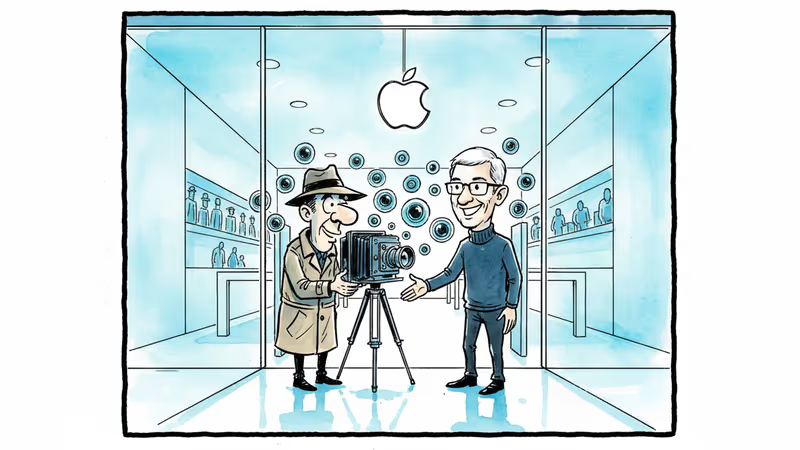
Halide Creator Joins Apple Design Team: When External Innovation Goes Internal
Sebastiaan de With, creator of acclaimed iPhone camera app Halide, joins Apple's design team. What does this mean for camera app innovation?
Sebastian de With, the creative force behind Halide, one of the most beloved iPhone camera apps, is joining Apple's design team. "So excited to work with the very best team in the world on my favorite products," he announced, marking a rare transition from external innovator to internal team member.
From Competitor to Collaborator
This isn't just any developer making the jump to Apple. De With co-founded Lux, the company behind Halide, Kino, and Orion – apps that have consistently pushed the boundaries of what's possible with iPhone photography. His deep-dive analyses of Apple's camera technology have become must-reads in the tech community, with his iPhone 16 camera review famously describing it as having a certain "vibe."
Halide has carved out a unique position in the App Store by offering manual camera controls that Apple's default camera app deliberately omits. With over millions of downloads and a devoted following among professional photographers, it represents exactly the kind of sophisticated camera experience that Apple has traditionally avoided in favor of simplicity.
The Talent Acquisition Strategy
Apple's decision to bring de With in-house signals a potential shift in their camera app philosophy. For years, the company has maintained that the best camera app is one that "just works" – minimal settings, maximum automation. But the success of Halide and similar apps proves there's substantial demand for more granular control.

This acquisition follows Apple's broader pattern of absorbing external innovation. They've previously acquired companies like Dark Sky for weather technology and Workflow (now Shortcuts) for automation. But bringing in an individual developer who's built competing products is less common and potentially more significant.
What This Means for Camera App Innovation
The photography app ecosystem now faces an interesting dilemma. Halide's success demonstrated that there's room for premium, feature-rich camera apps alongside Apple's streamlined approach. But if Apple begins incorporating more advanced features into their default app, it could squeeze out third-party alternatives.
For developers, this represents both opportunity and threat. Apple's validation of advanced camera features might expand the market, but it also means competing directly with functionality that could soon be built into iOS.
The Bigger Picture: Platform vs. Ecosystem
De With's move reflects a broader tension in the app ecosystem. As platforms mature, they inevitably absorb features that were once the domain of third-party developers. Apple has done this with flashlights, weather apps, and countless other categories.
The question isn't whether this is good or bad – it's how platforms can continue fostering innovation while evolving their own capabilities. Apple's challenge will be maintaining the creative spirit that made Halide special while integrating it into their larger design philosophy.
Authors
Related Articles
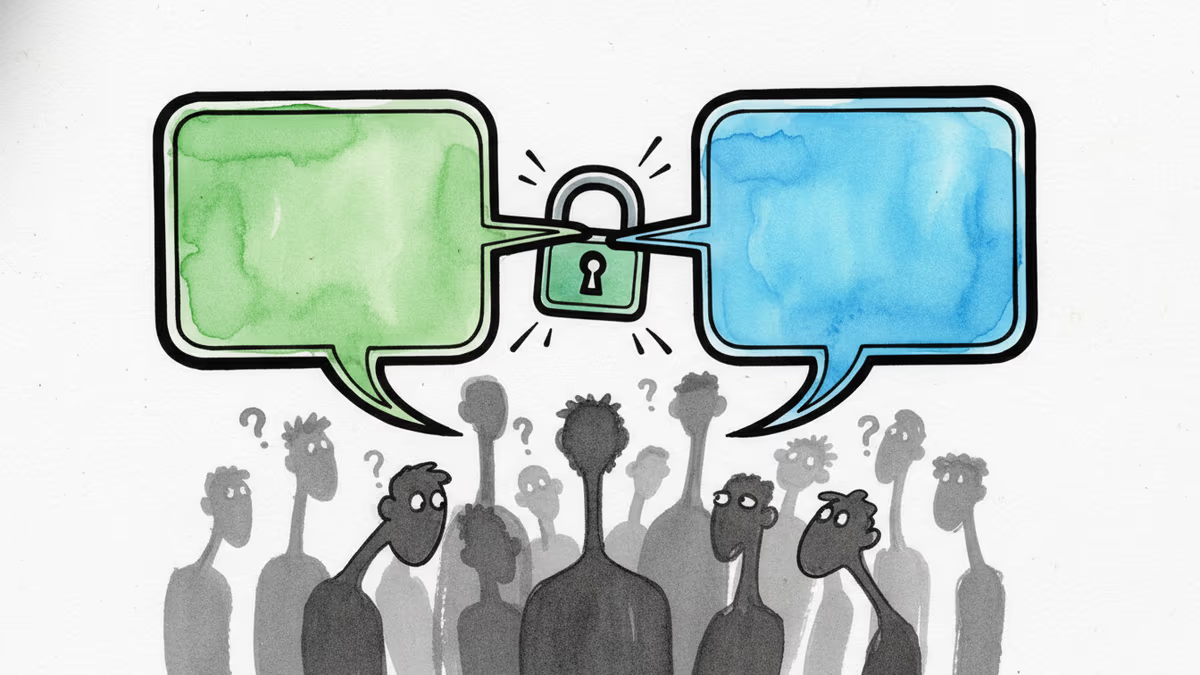
After 15 years of fragmented mobile messaging, Apple and Google are rolling out end-to-end encrypted RCS messaging between iPhones and Android devices. Here's what changed, why it took so long, and what it means for your privacy.
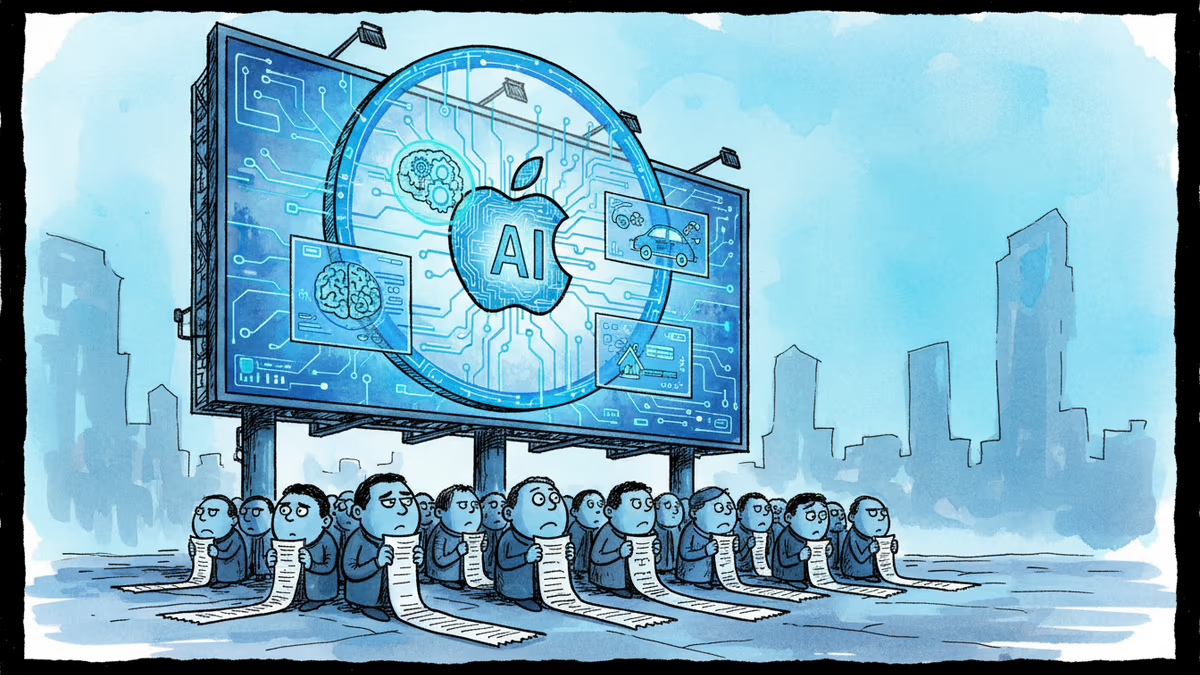
Apple agreed to pay $250 million to settle claims it misled iPhone 16 buyers about Apple Intelligence features. What this means for consumers, Big Tech marketing, and the AI industry.
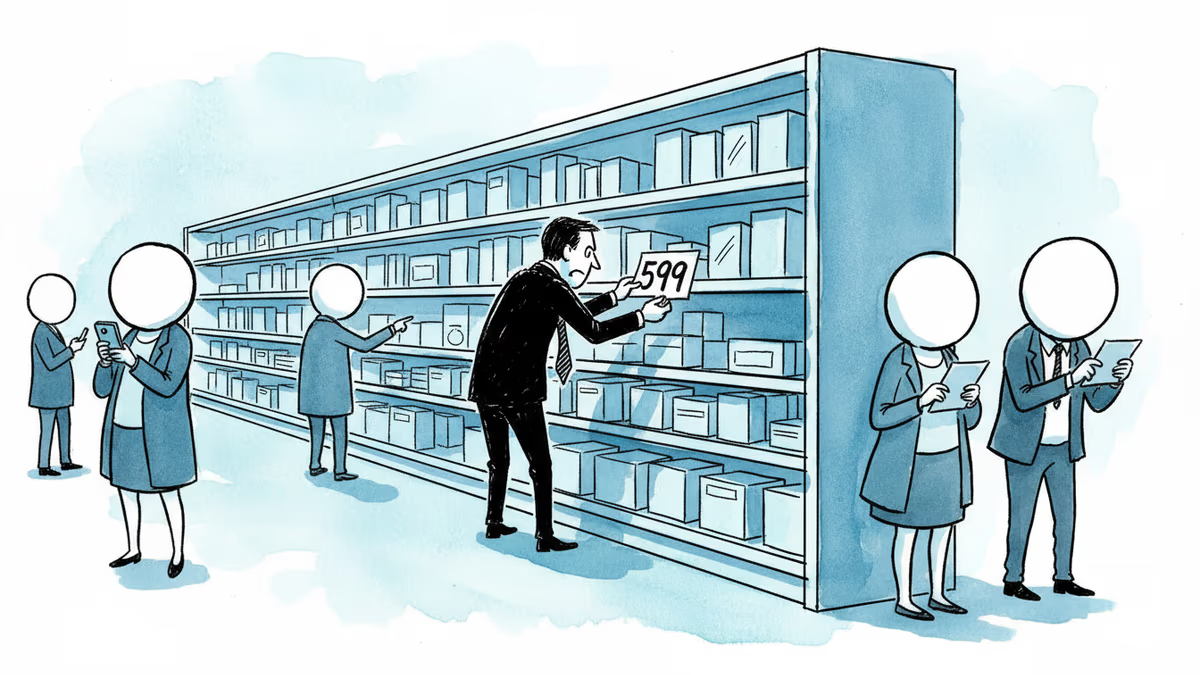
Apple quietly removed the entry-level $599 Mac Mini, raising the starting price to $799 — just one day after Tim Cook warned of chip supply constraints on the earnings call.

Apple names John Ternus, its hardware engineering chief, as the next CEO. The shift from operator to product person signals where Apple thinks its next decade of growth will come from — and raises real questions about what comes next.
After 15 years of fragmented mobile messaging, Apple and Google are rolling out end-to-end encrypted RCS messaging between iPhones and Android devices. Here's what changed, why it took so long, and what it means for your privacy.
Apple agreed to pay $250 million to settle claims it misled iPhone 16 buyers about Apple Intelligence features. What this means for consumers, Big Tech marketing, and the AI industry.
Apple quietly removed the entry-level $599 Mac Mini, raising the starting price to $799 — just one day after Tim Cook warned of chip supply constraints on the earnings call.
Apple names John Ternus, its hardware engineering chief, as the next CEO. The shift from operator to product person signals where Apple thinks its next decade of growth will come from — and raises real questions about what comes next.
Thoughts
Share your thoughts on this article
Sign in to join the conversation