
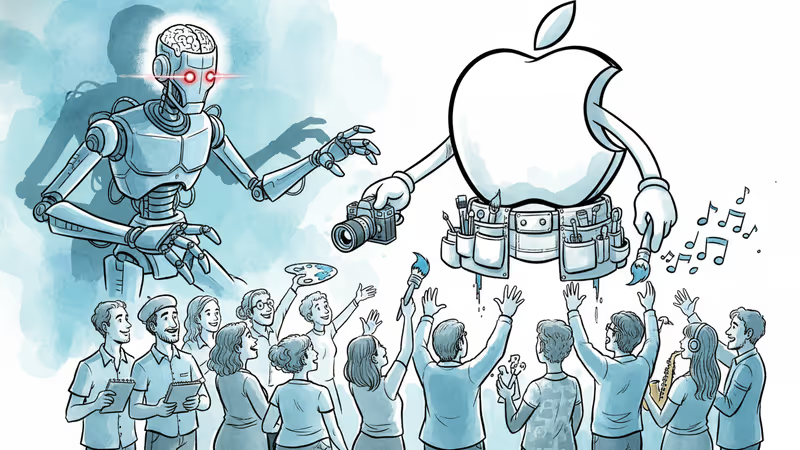
Apple's Different AI Bet: We Won't Replace Creators, We'll Empower Them
Apple's Creator Studio Pro positions generative AI as a creative assistant rather than replacement, bundling Final Cut Pro to Keynote for $12.99/month
While generative AI companies race to replace human creativity with algorithms, Apple just made a $12.99-per-month bet on the opposite approach. The company's newly launched Creator Studio Pro doesn't promise to make creators obsolete—it promises to make them more powerful.
The Anti-Replacement Philosophy
In a market where OpenAI, Midjourney, and others sell the dream of "type a few words, get a masterpiece," Apple has taken a deliberately different path. The AI features in Creator Studio Pro handle the grunt work—generating slideshow drafts from your notes, searching through hours of footage for specific clips, extracting chord information from songs, or changing camera angles in images.
It's AI as a creative assistant, not creative replacement. This positioning comes at a crucial time when creators are filing lawsuits against AI companies for training on their work without permission, then competing with similar output.
Apple's message is clear: we're not here to steal your job, we're here to handle the boring parts so you can focus on what matters.
The $12.99 Creative Ecosystem Play
Creator Studio Pro bundles Apple's creative arsenal into a single subscription: Final Cut Pro, Motion, and Compressor for video; Logic Pro and MainStage for music; Pixelmator Pro for images; plus premium features in Keynote, Pages, Numbers, and Freeform.
The pricing strategy is interesting. At $12.99 monthly or $129 annually, it undercuts Adobe's Creative Cloud while offering something Adobe doesn't: the option to still buy apps individually. Apple also allows family sharing with up to five members—another advantage over Adobe's more restrictive licensing.
This flexibility could be Apple's secret weapon in attracting creators who've grown frustrated with Adobe's subscription-only model.

What the AI Actually Does
Final Cut Pro gains AI-powered transcript search to find specific soundbites across hours of footage, plus visual search for objects and actions. Beat detection uses AI to analyze music tracks for rhythm-based editing.
Logic Pro introduces virtual Session Players that can perform synth and bass parts, plus Chord ID that extracts chord information from audio using AI analysis.
Pixelmator Pro, now available on iPad, offers AI-powered image upscaling, composition suggestions, and artifact removal.
Keynote, Pages, and Numbers get AI features like generating slideshows from text notes, analyzing spreadsheet patterns for content suggestions, and image generation with style and angle modifications.
These aren't flashy "create art from nothing" features. They're productivity multipliers designed to eliminate tedious tasks.
The Privacy and Competition Reality
Apple says some AI features run locally via Apple Intelligence, while others use OpenAI through private relay to anonymize traffic. User content is never used for AI training—a direct shot at competitors who've built their models on scraped creative work.
But Adobe remains formidable. Its tools run on iOS too, offer deeper professional features, and have decades of industry entrenchment. Whether Apple's approach wins depends on whether creators value philosophical alignment over feature depth.
The Broader Creative Industry Shift
This launch signals Apple's belief that the creative software market is splitting. On one side: tools that replace creators. On the other: tools that amplify them. Apple's betting creators want to remain in control of their creative process, not hand it over to algorithms.
It's also a play for the semi-professional market—indie musicians, social media creators, small business owners who need professional-quality output but lack Adobe expertise or budgets.
Authors
Related Articles
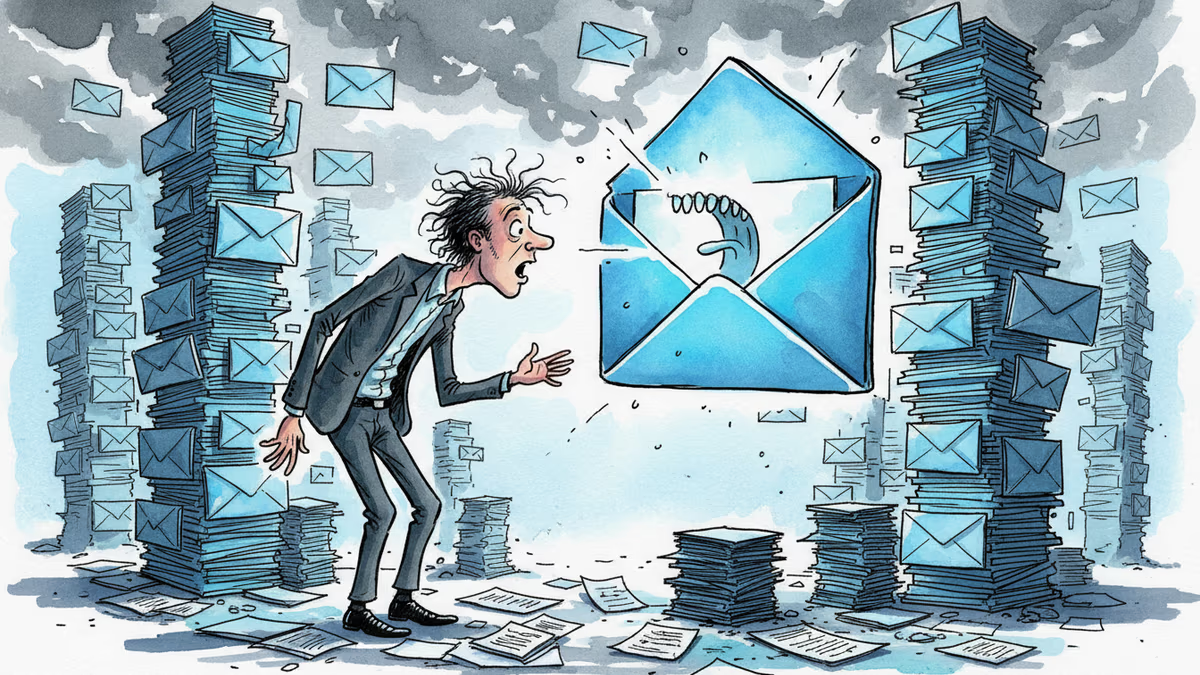
Google's Gmail Live lets you ask your inbox questions out loud. Announced at I/O 2026, it's AI's pitch to skeptics — and a reminder of how much Google already knows about you.
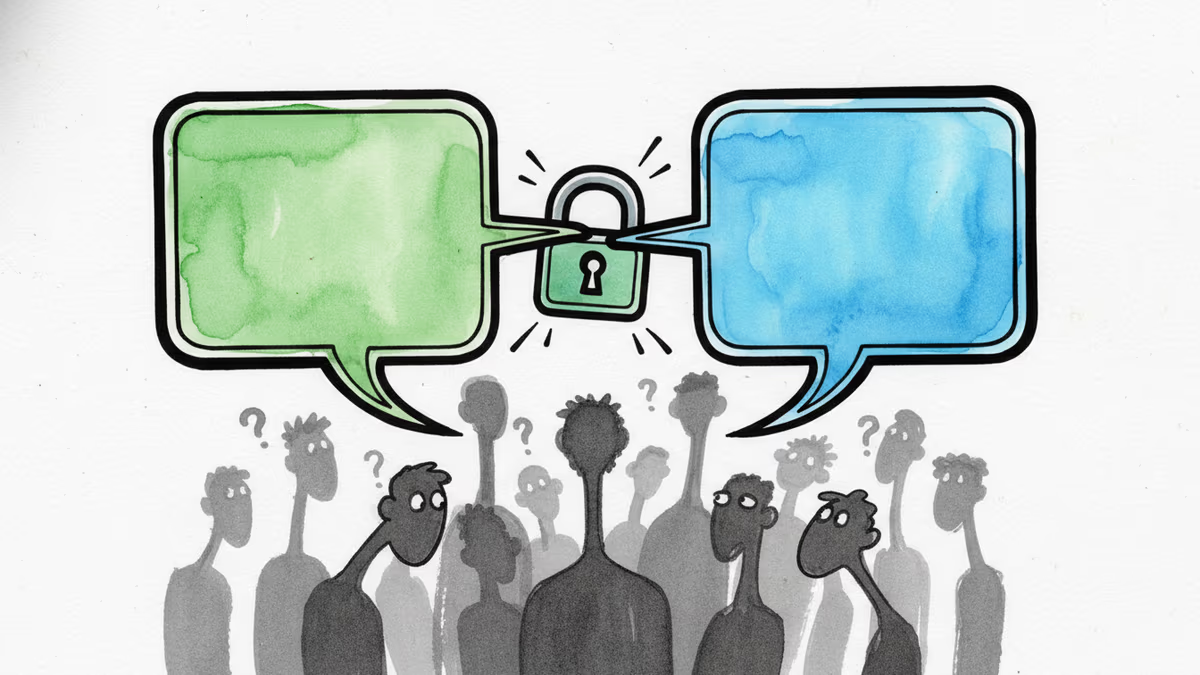
After 15 years of fragmented mobile messaging, Apple and Google are rolling out end-to-end encrypted RCS messaging between iPhones and Android devices. Here's what changed, why it took so long, and what it means for your privacy.
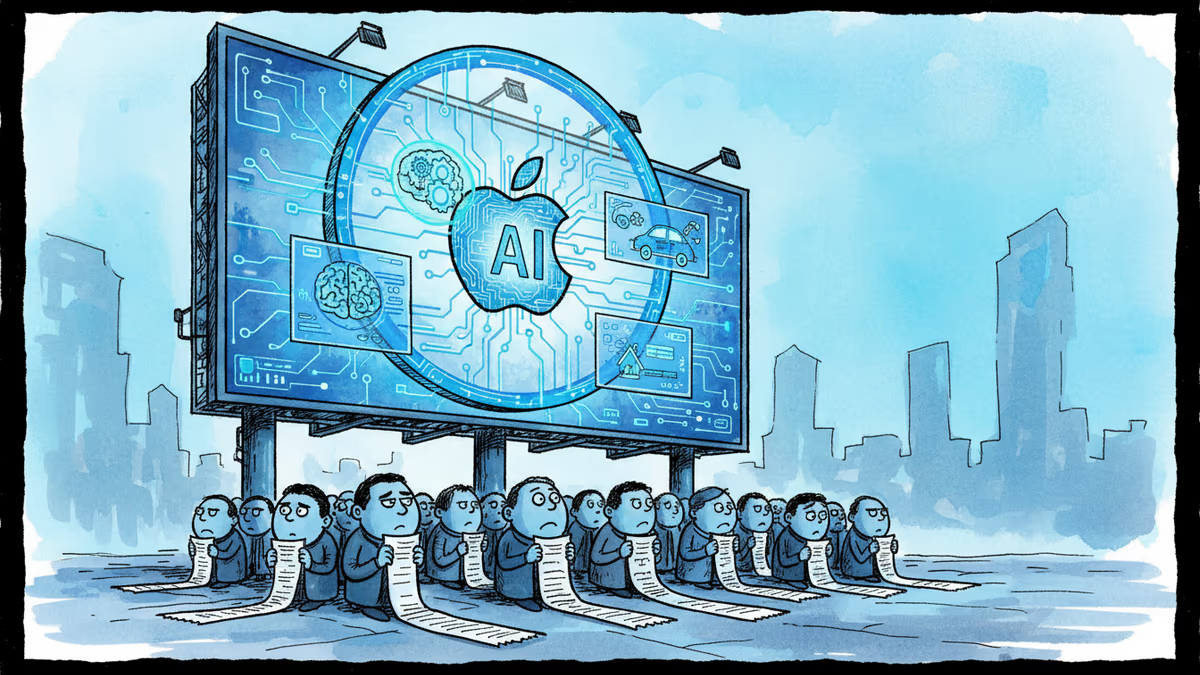
Apple agreed to pay $250 million to settle claims it misled iPhone 16 buyers about Apple Intelligence features. What this means for consumers, Big Tech marketing, and the AI industry.
Five major publishers and author Scott Turow have filed a class action lawsuit against Meta, alleging the company used illegal pirate sites like LibGen to train its Llama AI models without permission.
Google's Gmail Live lets you ask your inbox questions out loud. Announced at I/O 2026, it's AI's pitch to skeptics — and a reminder of how much Google already knows about you.
After 15 years of fragmented mobile messaging, Apple and Google are rolling out end-to-end encrypted RCS messaging between iPhones and Android devices. Here's what changed, why it took so long, and what it means for your privacy.
Apple agreed to pay $250 million to settle claims it misled iPhone 16 buyers about Apple Intelligence features. What this means for consumers, Big Tech marketing, and the AI industry.
Five major publishers and author Scott Turow have filed a class action lawsuit against Meta, alleging the company used illegal pirate sites like LibGen to train its Llama AI models without permission.
Thoughts
Share your thoughts on this article
Sign in to join the conversation