
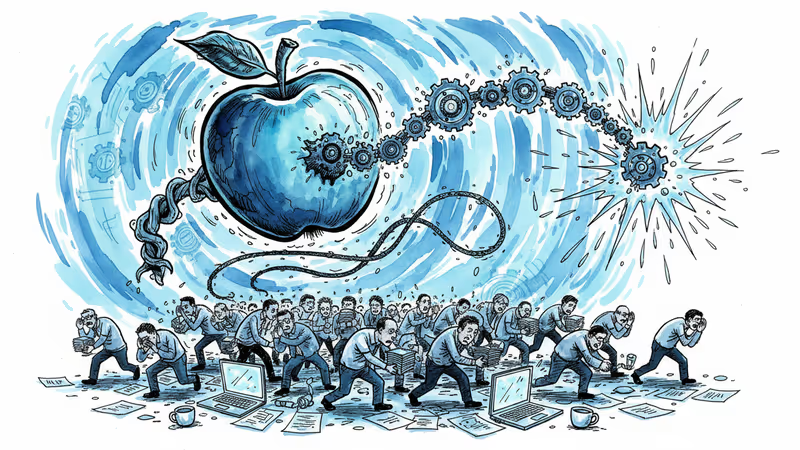
Apple's Policy Whiplash Hits Creators Where It Hurts
Patreon creators face their third policy reversal from Apple in 18 months. What's the real cost of platform dependency in the creator economy?
Three times in 18 months. That's how often Apple has changed the rules for Patreon creators trying to build sustainable businesses.
The latest twist? Apple has set a new deadline of November 1, 2026 for all creators to move to subscription billing using Apple's in-app purchase system. While this affects only 4% of Patreon's creators still using legacy billing models, the real story isn't about percentages—it's about power.
The Apple Squeeze Play
Apple's logic is straightforward: Patreon was managing billing for some creators' subscriptions, effectively skirting the 30% App Store commission structure. In Apple's view, that's unacceptable.
The timeline tells the story of corporate whiplash. In 2024, Apple announced creators must transition by November 2025 or risk Patreon's removal from the App Store. Then in May 2024, following the Epic v. Apple court ruling that loosened App Store guidelines, Patreon offered creators web payment links within the app and told them the November 2025 deadline was "no longer in effect."
Now Apple has reimposed a deadline: November 2026.
"We strongly disagree with this decision," Patreon stated bluntly. "Creators need consistency and clarity in order to build healthy, long-term businesses. Instead, creators using legacy billing will now have to endure the whiplash of another policy reversal."
The Creator's Impossible Choice
For affected creators, the math is brutal. They can raise subscription prices to cover Apple's fees, absorb the revenue hit, or abandon iOS app subscriptions entirely.

Patreon has built tools to ease the transition: benefit eligibility trackers, tier repricing tools, and gifting options. An annual-only membership feature will launch before the November 2026 deadline. But tools can't solve the fundamental problem: unpredictability.
Consider the creator who raised prices in 2024 anticipating Apple's fees, only to learn the deadline was paused, then reimposed. Or the one who delayed price increases, now facing subscriber backlash when they finally implement them.
The Platform Dependency Trap
This isn't just about Patreon. It's about the asymmetric power relationship between platform giants and the creators who depend on them. Apple controls access to 1.8 billion active iPhone users worldwide. For many creators, that's not a market they can afford to abandon.
The irony is stark: Apple positions itself as supporting creators while simultaneously making it harder for them to build predictable businesses. The company's "Creator Economy" marketing feels hollow when creators face constant policy uncertainty.
Patreon noted they've "proposed multiple tools and features to Apple that we could've built to allow creators using legacy billing to transition on their own timelines." Apple "continually declined them."
The Regulatory Reckoning
This saga unfolds as regulators worldwide scrutinize Big Tech's platform power. The European Union's Digital Markets Act, ongoing antitrust investigations, and court rulings like Epic v. Apple signal growing pressure for change.
But regulation moves slowly while creators need stability now. The question becomes: How long can the creator economy thrive under such volatile conditions?
Some creators are already diversifying—building email lists, launching independent websites, exploring blockchain-based platforms. But platform diversification requires resources many creators lack.
Authors
Related Articles
After 15 years of fragmented mobile messaging, Apple and Google are rolling out end-to-end encrypted RCS messaging between iPhones and Android devices. Here's what changed, why it took so long, and what it means for your privacy.
Apple agreed to pay $250 million to settle claims it misled iPhone 16 buyers about Apple Intelligence features. What this means for consumers, Big Tech marketing, and the AI industry.
Apple quietly removed the entry-level $599 Mac Mini, raising the starting price to $799 — just one day after Tim Cook warned of chip supply constraints on the earnings call.
Apple names John Ternus, its hardware engineering chief, as the next CEO. The shift from operator to product person signals where Apple thinks its next decade of growth will come from — and raises real questions about what comes next.
After 15 years of fragmented mobile messaging, Apple and Google are rolling out end-to-end encrypted RCS messaging between iPhones and Android devices. Here's what changed, why it took so long, and what it means for your privacy.
Apple agreed to pay $250 million to settle claims it misled iPhone 16 buyers about Apple Intelligence features. What this means for consumers, Big Tech marketing, and the AI industry.
Apple quietly removed the entry-level $599 Mac Mini, raising the starting price to $799 — just one day after Tim Cook warned of chip supply constraints on the earnings call.
Apple names John Ternus, its hardware engineering chief, as the next CEO. The shift from operator to product person signals where Apple thinks its next decade of growth will come from — and raises real questions about what comes next.
Thoughts
Share your thoughts on this article
Sign in to join the conversation