
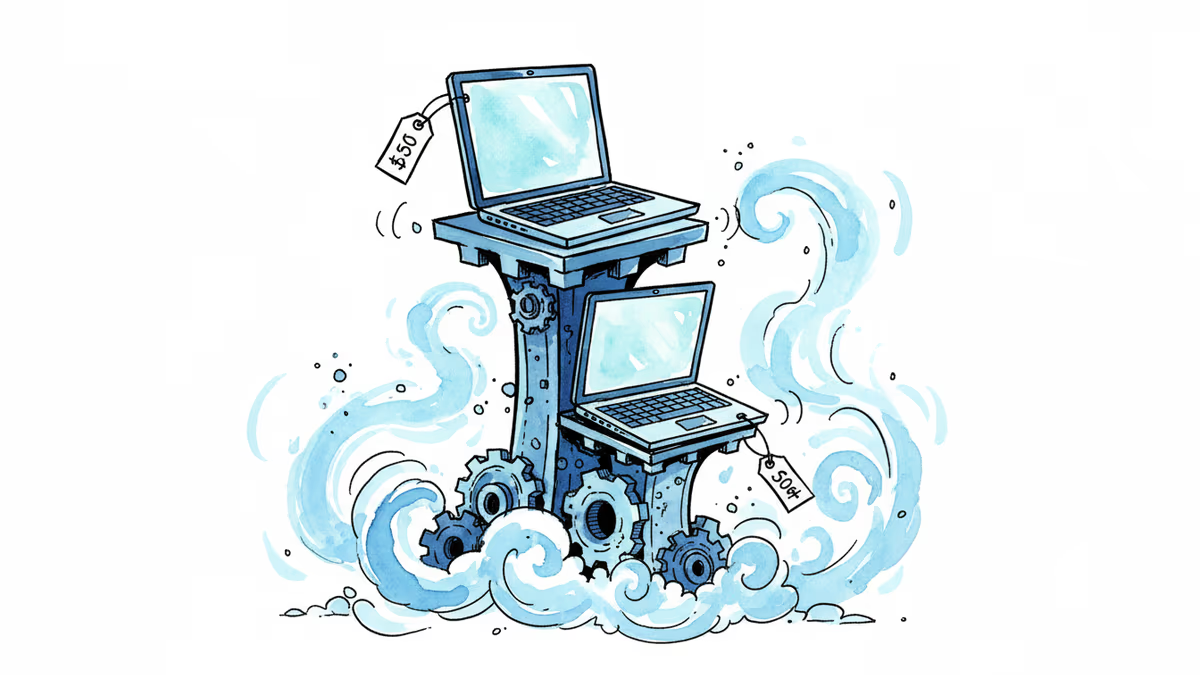
The MacBook Air Got Pricier. Blame the Neo.
Apple's 2026 MacBook Air brings M5, Wi-Fi 7, and a $100 price hike. But the real story is the MacBook Neo sitting $500 below it — and what that means for how we buy laptops.
The MacBook Air didn't change much. Apple changed what sits beneath it.
What Actually Happened
Apple's 2026MacBook Air arrives with the M5 chip, Wi-Fi 7 support, and a base storage bump from 256GB to 512GB. It's a tighter, faster machine than last year's. It's also $100 more expensive.
On paper, that's a modest spec refresh with a sting in the tail. But the price hike only makes sense when you look at what Apple announced alongside it: the MacBook Neo, priced $500 below the 13-inch Air. The Neo is less capable, less sleek, and clearly positioned for first-time buyers or light users. It's Apple's most affordable laptop in years.
The Air didn't change. Its place in the lineup did.
The Anchor Effect in Action
There's a well-documented psychological phenomenon in pricing: the presence of a cheaper option makes the middle option feel more justified. Apple has pulled this lever before — it's the same logic that made the iPhone SE feel like a bargain the moment a new Pro model dropped.

With the Neo now anchoring the bottom, the Air reads as the sensible upgrade rather than the entry point. Spending more feels reasonable when there's something noticeably lesser to compare it to. The $100 price increase lands softer when the alternative framing is: at least it's not the Neo.
This isn't cynical — it's just how product ladders work. But it's worth naming.
Who Wins, Who Watches Nervously
For consumers, the expanded lineup is genuinely useful. A student who needs a Mac for basic coursework now has a sub-$1,000 entry point. A professional who wants the full Air experience pays more, but gets more.
For Windows laptop makers — Dell, HP, Lenovo — the Neo's arrival is a more direct threat than another Air refresh. Apple has historically ceded the sub-$1,000 laptop market entirely. That's no longer true. Manufacturers who've competed on price while Apple competed on ecosystem now face a rival doing both.
For existing M4 Air owners, the calculus is simple: there's no compelling reason to upgrade. The M5 is faster, but not in ways most users will notice in daily tasks. Apple's chip cadence has become so reliable that skipping a generation is now a rational strategy, not a compromise.
The Upgrade Treadmill Question
Apple Silicon has been on a roughly 12-month refresh cycle since the M1 in 2020. Each generation delivers meaningful gains. Each generation also makes the previous one feel slightly incomplete in retrospect — not broken, just no longer the newest thing.
At what point does the pace of improvement outrun the pace of actual need? The Air M5 is an excellent computer. So was the M4. So was the M3. For the vast majority of users, any of them would be more than sufficient for five or more years of use.
Authors
Related Articles
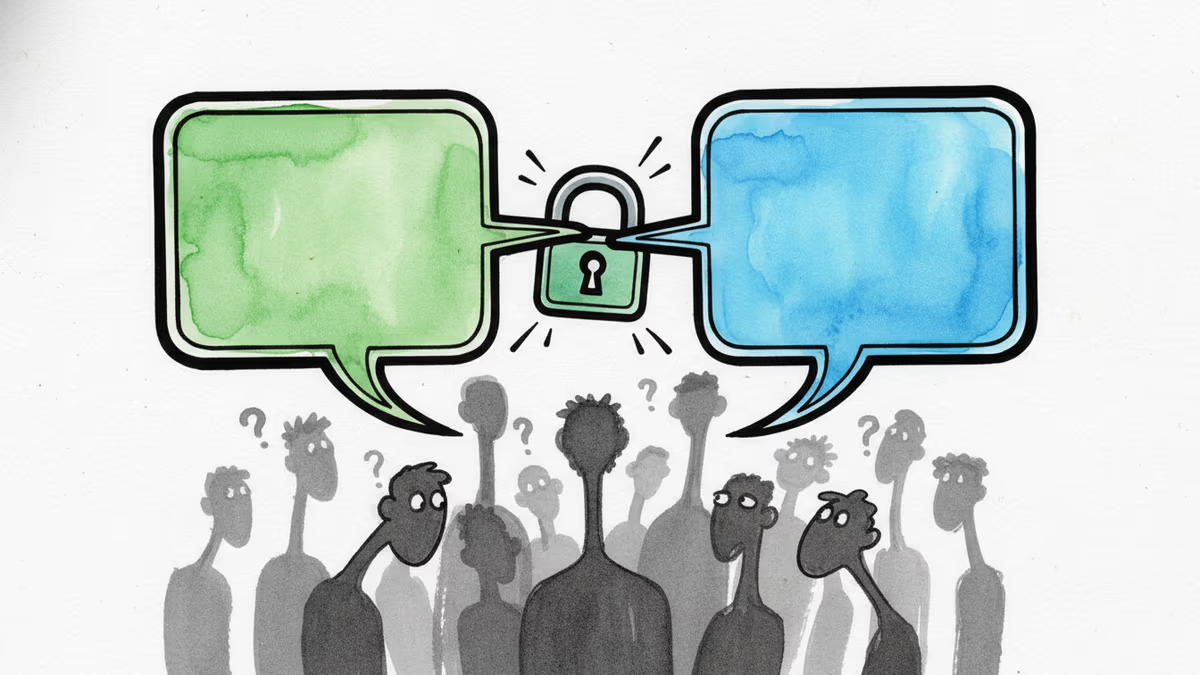
After 15 years of fragmented mobile messaging, Apple and Google are rolling out end-to-end encrypted RCS messaging between iPhones and Android devices. Here's what changed, why it took so long, and what it means for your privacy.
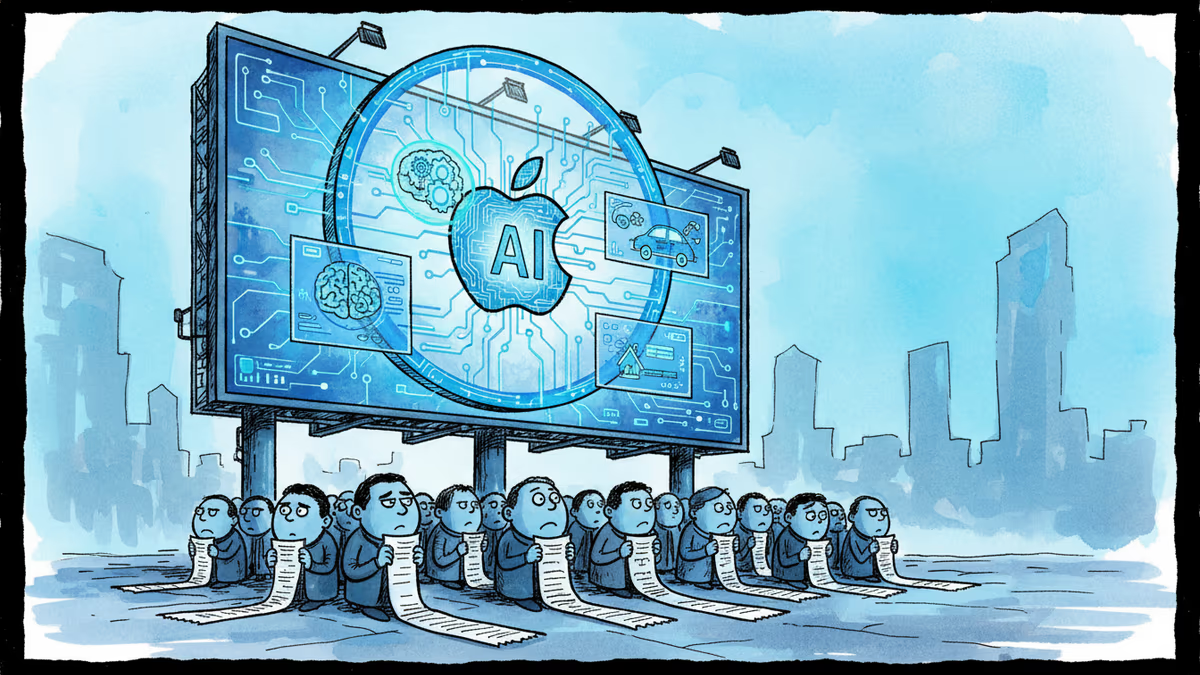
Apple agreed to pay $250 million to settle claims it misled iPhone 16 buyers about Apple Intelligence features. What this means for consumers, Big Tech marketing, and the AI industry.
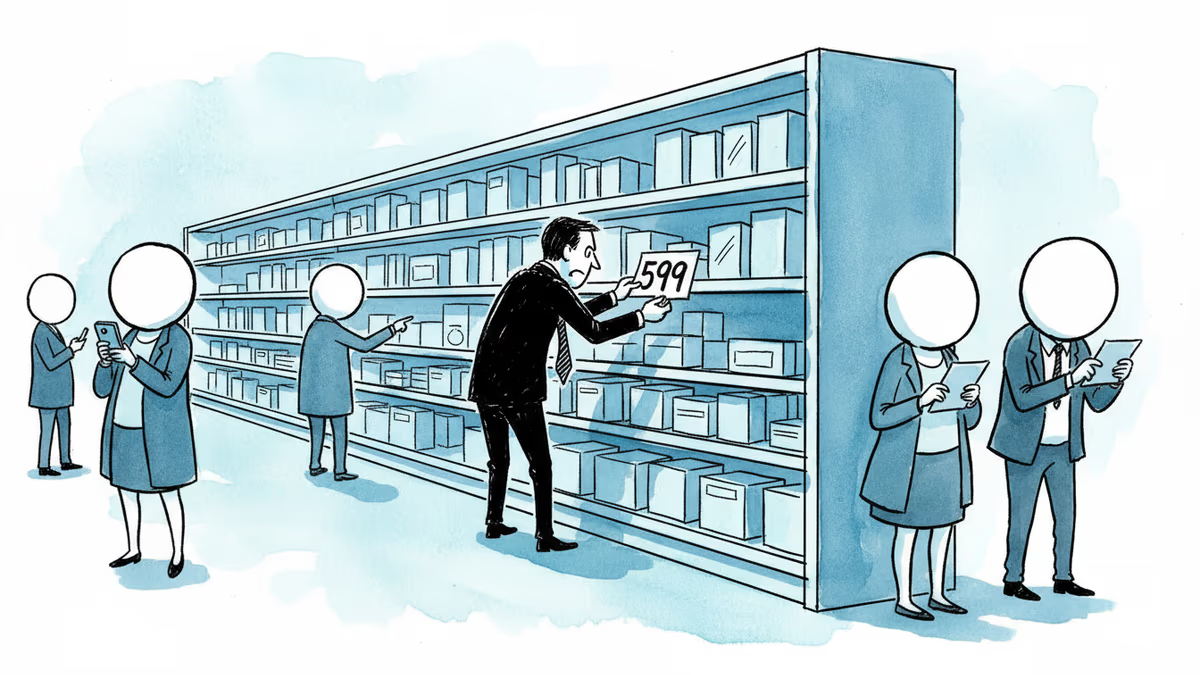
Apple quietly removed the entry-level $599 Mac Mini, raising the starting price to $799 — just one day after Tim Cook warned of chip supply constraints on the earnings call.
Apple names John Ternus, its hardware engineering chief, as the next CEO. The shift from operator to product person signals where Apple thinks its next decade of growth will come from — and raises real questions about what comes next.
After 15 years of fragmented mobile messaging, Apple and Google are rolling out end-to-end encrypted RCS messaging between iPhones and Android devices. Here's what changed, why it took so long, and what it means for your privacy.
Apple agreed to pay $250 million to settle claims it misled iPhone 16 buyers about Apple Intelligence features. What this means for consumers, Big Tech marketing, and the AI industry.
Apple quietly removed the entry-level $599 Mac Mini, raising the starting price to $799 — just one day after Tim Cook warned of chip supply constraints on the earnings call.
Apple names John Ternus, its hardware engineering chief, as the next CEO. The shift from operator to product person signals where Apple thinks its next decade of growth will come from — and raises real questions about what comes next.
Thoughts
Share your thoughts on this article
Sign in to join the conversation