
Apple Bets Big on Services as Memory Crisis Threatens iPhone 18 Pricing
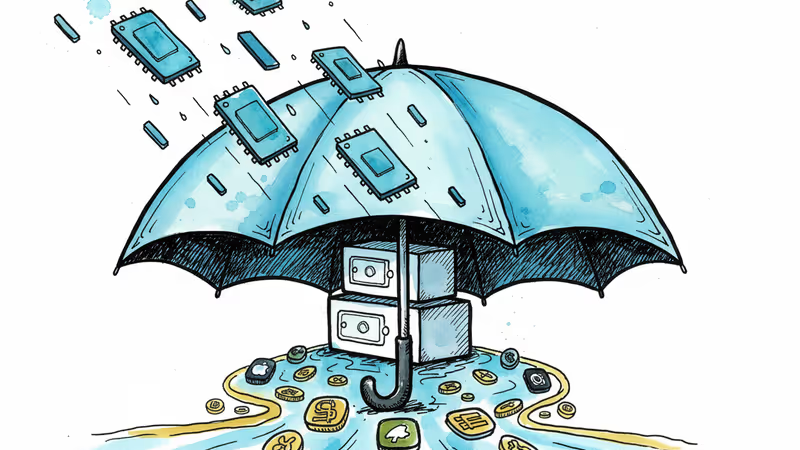
Facing global memory shortages and rising RAM costs, Apple plans to absorb price increases rather than pass them to consumers, relying on services revenue to offset hardware losses.
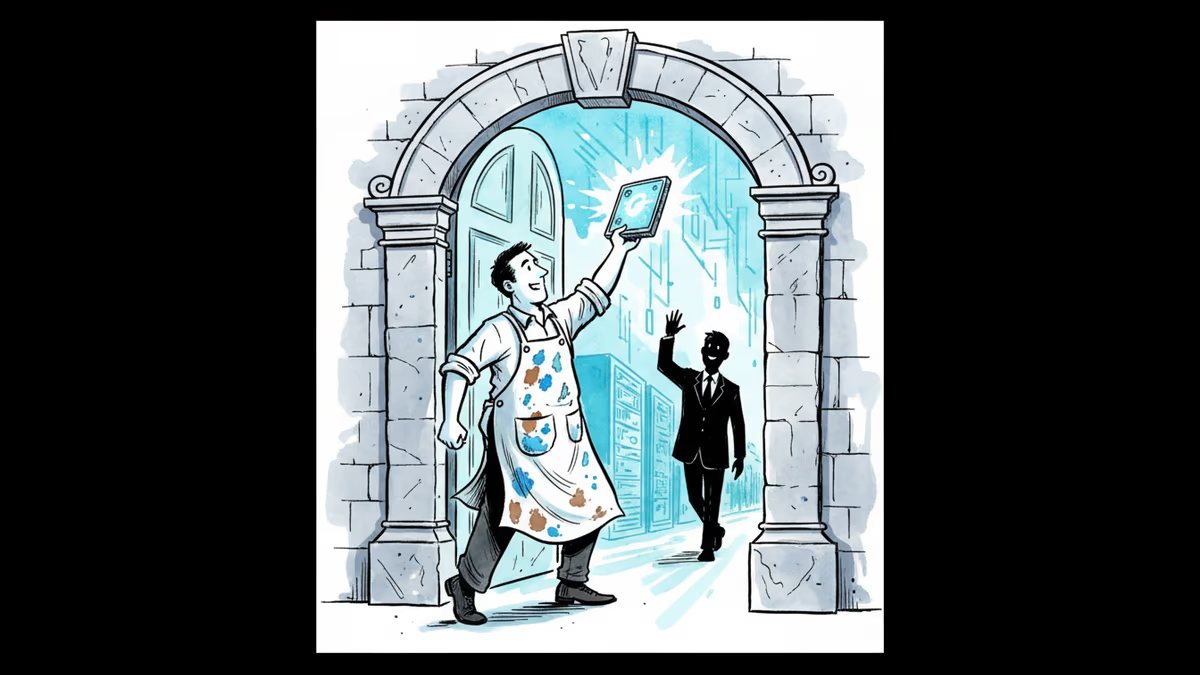
In a world where smartphone prices can make or break consumer adoption, Apple is making a bold bet: eat the costs, keep the customers.
The Memory Crunch Hits Cupertino
Supply chain analyst Ming-Chi Kuo reports that Apple will try to avoid raising iPhone 18 prices "as much as possible" despite facing a global memory shortage. The company plans to absorb rising RAM costs internally rather than pass them on to consumers, keeping the device's starting price steady.
The urgency is real. Apple has shifted from negotiating memory prices with suppliers every six months to every quarter—a clear sign that market volatility has reached critical levels. Kuo expects another price increase in the next round of discussions, but Apple isn't planning to blink.
This isn't just about being consumer-friendly. It's about maintaining market position in an increasingly competitive landscape where even $50 price increases can shift purchasing decisions.
Services: The New Hardware Subsidy
Apple's strategy reveals a fundamental shift in how tech giants think about profit. Instead of maximizing hardware margins, the company plans to offset rising component costs through its services business—App Store subscriptions, iCloud storage, Apple Music, and more.

The numbers support this approach. Apple's services revenue hit $85.1 billion in Q4 2023, representing 22% of total revenue. More importantly, services carry much higher profit margins than hardware, often exceeding 60% compared to hardware margins in the 30-40% range.
This creates an interesting consumer proposition: lower upfront costs in exchange for higher long-term service fees. It's the smartphone equivalent of the razor-and-blades model, but with digital subscriptions instead of physical products.
The Competitive Ripple Effect
If Apple successfully absorbs memory cost increases, competitors face a difficult choice. Samsung, which manufactures both memory chips and smartphones, finds itself in a particularly complex position. Rising memory prices benefit its semiconductor division but squeeze its mobile unit's margins.
Smaller players without robust services ecosystems may struggle to match Apple's pricing strategy. Companies like OnePlus, Xiaomi, and even Google with its Pixel line don't have the same services revenue streams to subsidize hardware costs.
This could accelerate industry consolidation or force competitors to develop their own services strategies more aggressively.
The Long Game
Beyond immediate competitive dynamics, Apple's approach signals a broader industry evolution. Hardware is becoming the gateway drug to services addiction. The real question isn't whether consumers will pay for phones, but how much they're willing to pay monthly for the digital experiences those phones enable.
This shift also has regulatory implications. As services become more central to Apple's revenue model, scrutiny of App Store policies and subscription practices will likely intensify. The company's ability to subsidize hardware through services depends on maintaining its current ecosystem control.
Authors
Related Articles
After 15 years of fragmented mobile messaging, Apple and Google are rolling out end-to-end encrypted RCS messaging between iPhones and Android devices. Here's what changed, why it took so long, and what it means for your privacy.
Apple agreed to pay $250 million to settle claims it misled iPhone 16 buyers about Apple Intelligence features. What this means for consumers, Big Tech marketing, and the AI industry.
Apple quietly removed the entry-level $599 Mac Mini, raising the starting price to $799 — just one day after Tim Cook warned of chip supply constraints on the earnings call.
Apple names John Ternus, its hardware engineering chief, as the next CEO. The shift from operator to product person signals where Apple thinks its next decade of growth will come from — and raises real questions about what comes next.
After 15 years of fragmented mobile messaging, Apple and Google are rolling out end-to-end encrypted RCS messaging between iPhones and Android devices. Here's what changed, why it took so long, and what it means for your privacy.
Apple agreed to pay $250 million to settle claims it misled iPhone 16 buyers about Apple Intelligence features. What this means for consumers, Big Tech marketing, and the AI industry.
Apple quietly removed the entry-level $599 Mac Mini, raising the starting price to $799 — just one day after Tim Cook warned of chip supply constraints on the earnings call.
Apple names John Ternus, its hardware engineering chief, as the next CEO. The shift from operator to product person signals where Apple thinks its next decade of growth will come from — and raises real questions about what comes next.
Thoughts
Share your thoughts on this article
Sign in to join the conversation