
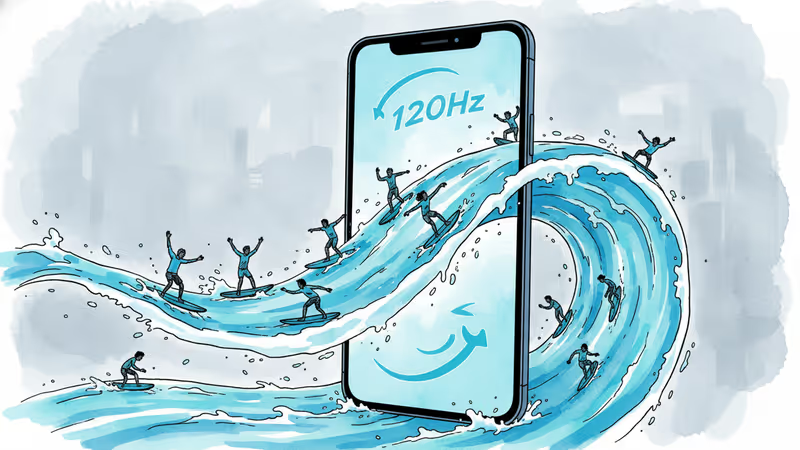
iPhone 17 Brings 120Hz to the Masses, But Is It Enough?
Apple's iPhone 17 lineup democratizes premium features with 120Hz displays in base models, but Apple Intelligence remains unfinished business
After years of keeping 120Hz displays exclusive to Pro models, Apple has finally brought smooth scrolling to the masses. The iPhone 17, starting at $799, now features the high-refresh-rate display that makes every swipe feel like silk.
Apple's 2025 iPhone lineup includes the iPhone 17, 17 Pro, 17 Pro Max, and an entirely new model: the ultra-thin iPhone Air. But it's the base model that's stealing the show with upgrades that blur the line between standard and premium.
The Great Democratization
The iPhone 17 represents a turning point in Apple's strategy. For the first time, the cheapest new iPhone gets both a 120Hz ProMotion display and an always-on screen. These aren't just spec sheet improvements—they transform daily use. Scrolling through social media feels buttery smooth, and checking the time without lifting the phone becomes second nature.
Apple doubled the base storage from 128GB to 256GB while keeping the price unchanged at $799. In an era of rising costs and ongoing tariff concerns, this aggressive pricing sends a clear message: Apple wants to keep more users in its ecosystem.
The camera system also received attention. While the 48-megapixel main camera carries over from last year, the ultrawide sensor jumps from 12 to 48 megapixels. The new 18-megapixel Center Stage front camera can capture horizontal selfies while holding the phone vertically—a small but clever innovation.
Pro Models Fight for Relevance
With the base model gaining premium features, the iPhone 17 Pro and Pro Max need to justify their higher prices. They deliver with the faster A19 Pro chip and a complete 48-megapixel triple camera system, including an 8x telephoto lens.
Professional features like Genlock support for syncing multiple cameras and ProRes RAW recording target serious content creators. But for most users, the question becomes: are these worth the $300 premium?

The Pro Max offers the largest battery ever in an iPhone, promising 39 hours of video playback—a full 12 hours more than last year's champion. It also introduces 2TB storage options, a first for iPhones.
Both Pro models come in a bold new orange color, marking Apple's most vibrant iPhone option in years.
The Air Experiment
The iPhone Air represents Apple's biggest design gamble since the iPhone X. At just 5.6mm thick and 165 grams, it's shockingly light despite its 6.5-inch display. The titanium frame and Ceramic Shield 2 make it surprisingly durable.
But thinness comes with compromises. The single 48-megapixel rear camera limits versatility, and battery life is merely adequate. At $999, you're paying a premium for form over function—a trade-off that won't appeal to everyone.
The Intelligence Gap
All these hardware improvements run iOS 26, featuring the new Liquid Glass interface—Apple's biggest visual overhaul since iOS 7. The polarizing design aside, the real question mark remains Apple Intelligence.
Despite marketing the 2025 lineup as "iPhones for the AI era," Apple Intelligence still feels like a work in progress. The hardware is ready for AI, but the software experience hasn't caught up to the hype.
What's Next?
Reports suggest Apple is preparing a foldable iPhone for later this year, resembling two iPhone Air models side by side. Looking ahead to 2027, an "all-screen" iPhone is reportedly planned to celebrate the device's 20th anniversary.
These upcoming releases are part of Apple's three-year plan to refresh its smartphone lineup—a plan that began with this year's iPhone Air.
Authors
Related Articles
After 15 years of fragmented mobile messaging, Apple and Google are rolling out end-to-end encrypted RCS messaging between iPhones and Android devices. Here's what changed, why it took so long, and what it means for your privacy.
Apple agreed to pay $250 million to settle claims it misled iPhone 16 buyers about Apple Intelligence features. What this means for consumers, Big Tech marketing, and the AI industry.
Apple quietly removed the entry-level $599 Mac Mini, raising the starting price to $799 — just one day after Tim Cook warned of chip supply constraints on the earnings call.

Apple names John Ternus, its hardware engineering chief, as the next CEO. The shift from operator to product person signals where Apple thinks its next decade of growth will come from — and raises real questions about what comes next.
After 15 years of fragmented mobile messaging, Apple and Google are rolling out end-to-end encrypted RCS messaging between iPhones and Android devices. Here's what changed, why it took so long, and what it means for your privacy.
Apple agreed to pay $250 million to settle claims it misled iPhone 16 buyers about Apple Intelligence features. What this means for consumers, Big Tech marketing, and the AI industry.
Apple quietly removed the entry-level $599 Mac Mini, raising the starting price to $799 — just one day after Tim Cook warned of chip supply constraints on the earnings call.
Apple names John Ternus, its hardware engineering chief, as the next CEO. The shift from operator to product person signals where Apple thinks its next decade of growth will come from — and raises real questions about what comes next.
Thoughts
Share your thoughts on this article
Sign in to join the conversation