
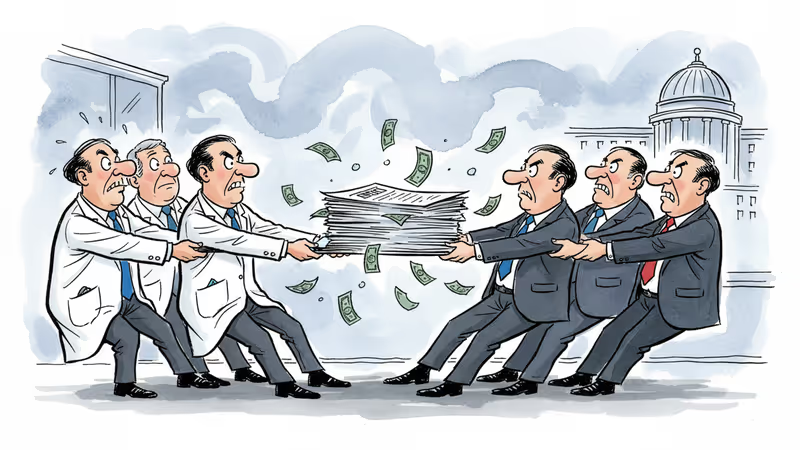
Scientists vs Politicians: The Quiet Power Struggle Over $47 Billion in Research Funding
As Trump's administration fills federal positions, the tension between scientific independence and political accountability resurfaces. Who should control America's vast research apparatus?
When a new president takes office, they're tasked with filling around 4,000 political appointments scattered across the federal bureaucracy. Some roles, like Secretary of State, grab headlines. Others, like the Deputy Assistant Secretary for Textiles, Consumer Goods, Materials, Critical Minerals & Metals Industry & Analysis, fly under the radar.
But here's what's fascinating: science agencies like NASA and the National Institutes of Health have historically operated with fewer political appointees than most government departments. Senior positions controlling billions of dollars in spending and shaping entire research fields often get filled without direct White House or congressional input.
This arrangement reflects a decades-old belief that scientists should oversee science with minimal political interference. But as Trump's administration settles in, that philosophy is facing its biggest test yet.
The Myth of Scientific Independence
The idea that science operates in a political vacuum is appealing but naive. The NIH alone commands a $47 billion annual budget—larger than the GDP of many countries. When you're dealing with that kind of money, politics inevitably follows.
The tension isn't new, but it's intensifying. Climate research funding, pandemic preparedness, and even basic scientific education are becoming political footballs. The question isn't whether politics influences science—it's how much influence we're willing to accept.
Consider this: every research grant, every lab closure, every international collaboration affects real people's lives. When Anthony Fauci became a household name during COVID-19, it highlighted how scientific decisions can become deeply political, whether scientists like it or not.
Who Really Controls the Purse Strings?
The current system creates an odd dynamic. Career scientists often make decisions about research priorities, but elected officials control the funding. It's like giving someone the keys to a car but letting someone else decide where they can drive.

This arrangement worked reasonably well during periods of broad political consensus about science's value. But what happens when that consensus breaks down? When one party views climate research as essential and another sees it as wasteful spending?
The biotech industry is watching closely. Companies like Moderna and Pfizer depend on NIH-funded basic research that eventually becomes profitable drugs. If political appointees start redirecting research priorities, it could reshape entire sectors of the economy.
The Global Competition Factor
While America debates scientific independence, China is pouring $400 billion annually into research and development with clear government direction. The European Union is coordinating massive research initiatives across national boundaries.
This raises uncomfortable questions: Is America's hands-off approach to scientific leadership a luxury it can no longer afford? Or is political interference exactly what will cause the country to fall behind in global innovation?
The semiconductor industry offers a preview. When the government decided to restrict certain research collaborations with Chinese institutions, it forced American scientists to choose between scientific openness and national security concerns. Similar dilemmas are spreading across other fields.
The Accountability Question
There's another side to this story. If taxpayers fund research, don't their elected representatives have a right to influence how that money gets spent? The "trust us, we're scientists" argument only goes so far when public confidence in institutions is at historic lows.
Some argue that political oversight actually improves science by forcing researchers to explain their work's relevance to society. Others worry that short-term political thinking will undermine long-term scientific progress.
The reality is probably messier than either side admits. Good science often emerges from the tension between blue-sky thinking and practical constraints. The question is finding the right balance.
Authors
Related Articles
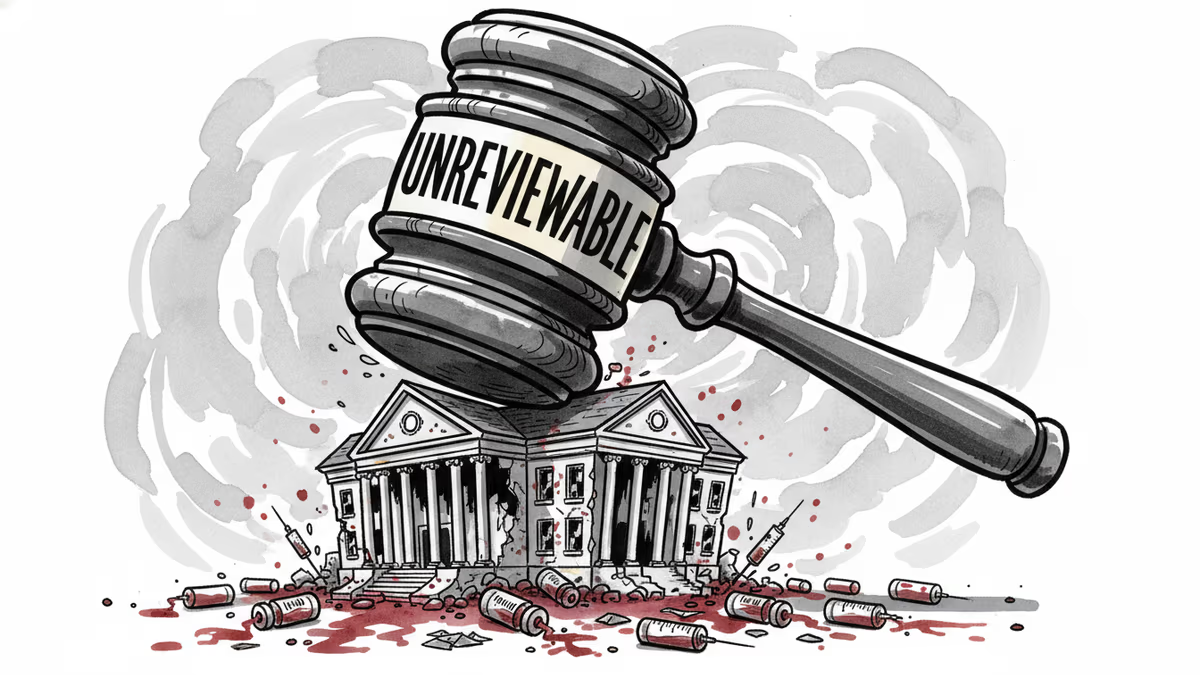
Trump admin lawyer claims RFK Jr.'s vaccine authority is beyond judicial review, even if he tells Americans to ditch vaccines entirely. Medical groups fight back.
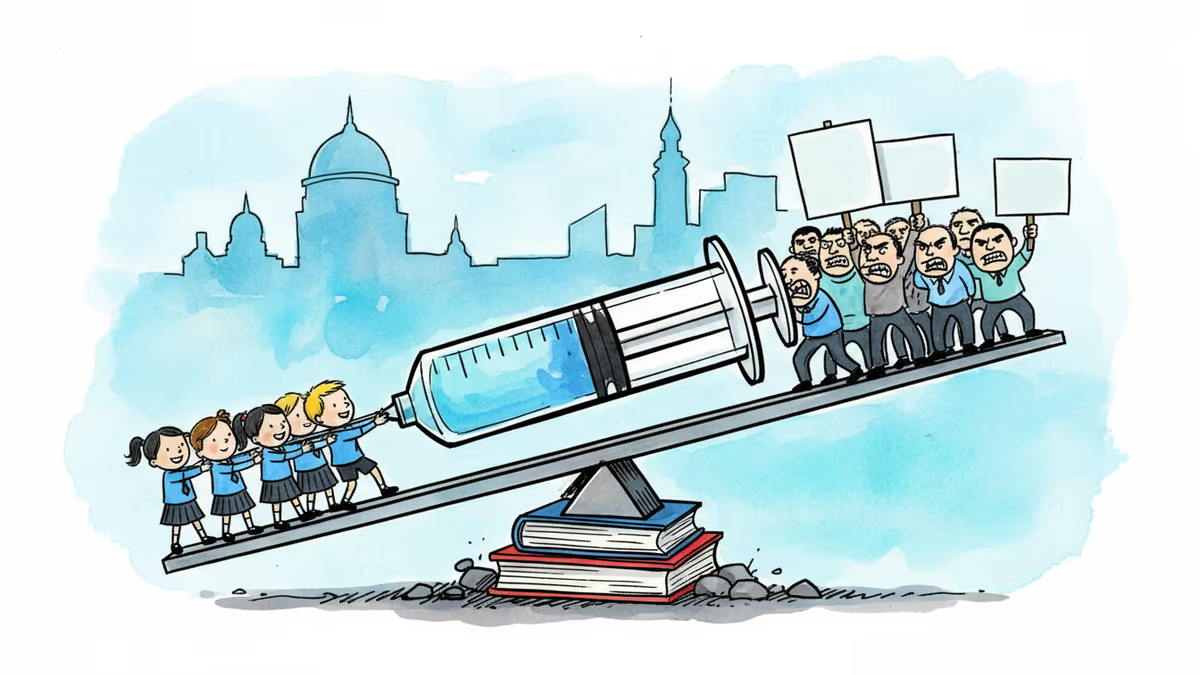
RFK Jr.'s nomination as HHS Secretary sparks unprecedented legal challenge from 15 states over childhood vaccination policies. What this means for public health and global disease prevention.
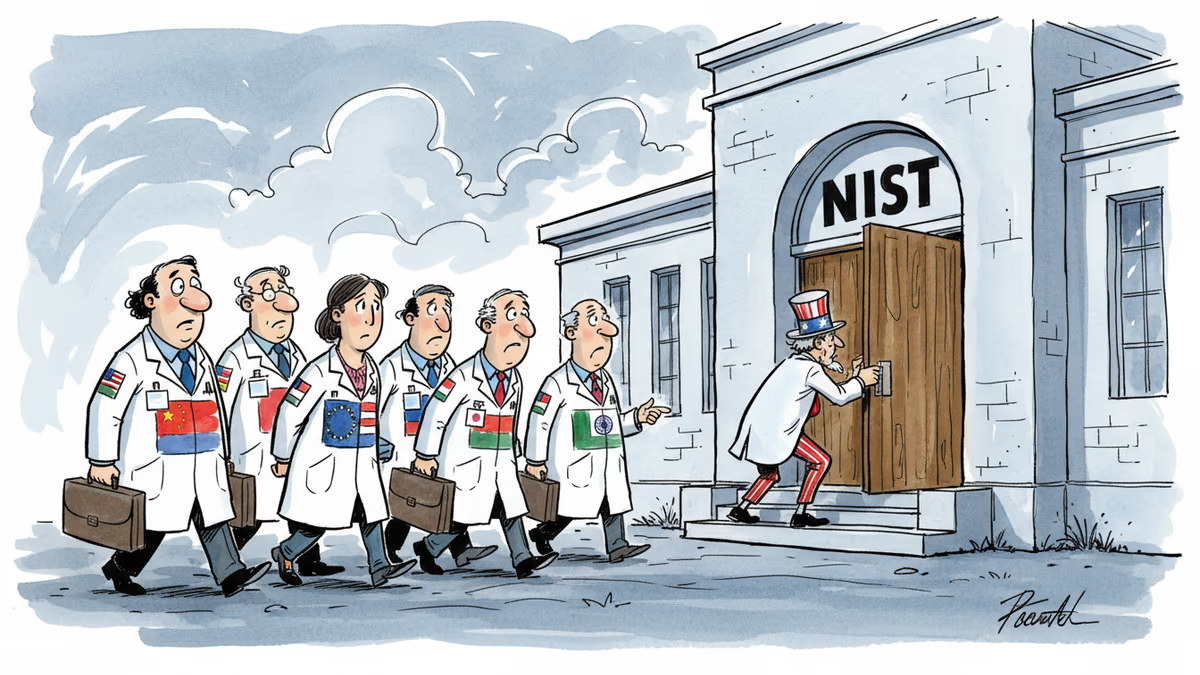
NIST's restrictions on foreign scientists could undermine US research leadership. Examining the tension between national security and scientific innovation.
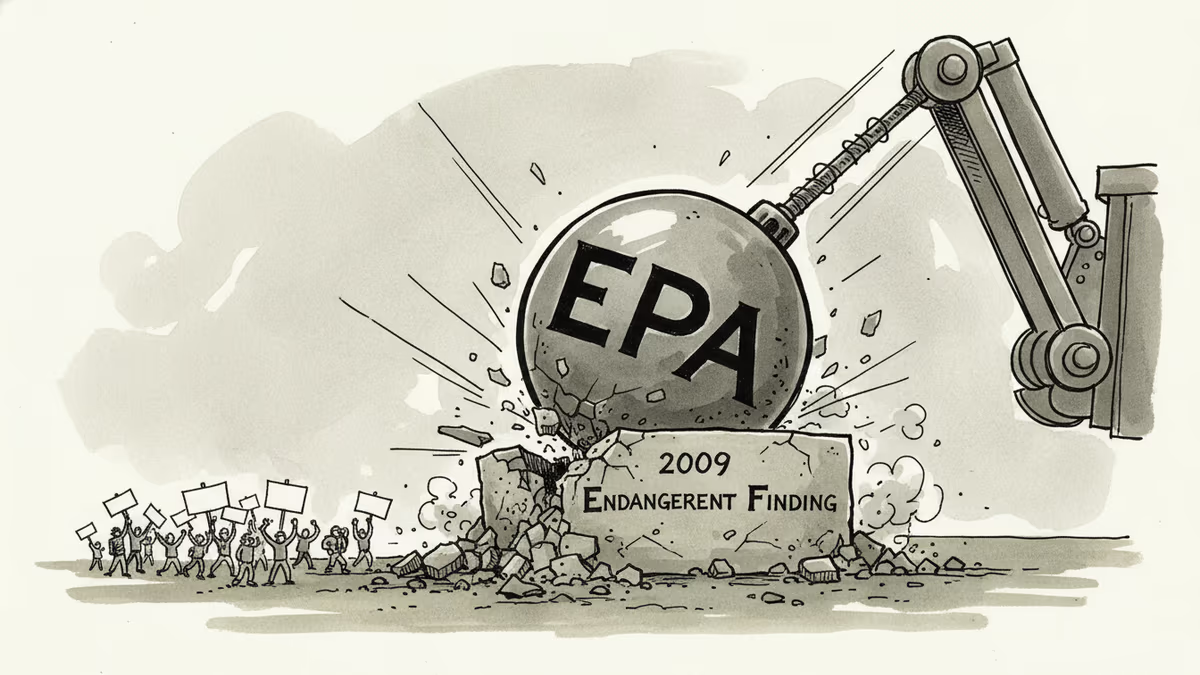
Environmental groups sue EPA after Trump administration repeals endangerment finding that anchored US climate regulations for 17 years, eliminating car emission standards in the process.
Trump admin lawyer claims RFK Jr.'s vaccine authority is beyond judicial review, even if he tells Americans to ditch vaccines entirely. Medical groups fight back.
RFK Jr.'s nomination as HHS Secretary sparks unprecedented legal challenge from 15 states over childhood vaccination policies. What this means for public health and global disease prevention.
NIST's restrictions on foreign scientists could undermine US research leadership. Examining the tension between national security and scientific innovation.
Environmental groups sue EPA after Trump administration repeals endangerment finding that anchored US climate regulations for 17 years, eliminating car emission standards in the process.
Thoughts
Share your thoughts on this article
Sign in to join the conversation