
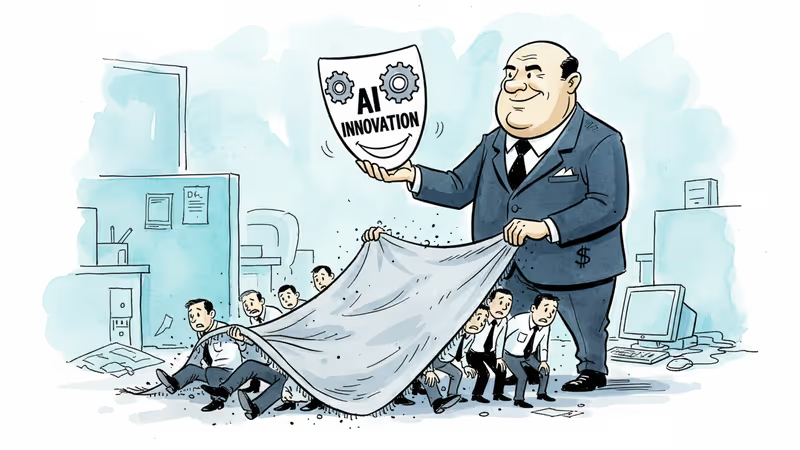
AI Layoffs or Corporate Cover-Up?
Over 50,000 workers lost jobs to 'AI' in 2025, but experts say many companies are using artificial intelligence as cover for pandemic-era over-hiring mistakes.
50,000 people lost their jobs to AI in 2025. At least, that's what their former employers claimed. Companies from Amazon to Pinterest pointed to artificial intelligence as they wielded the layoff axe, painting themselves as forward-thinking organizations adapting to the future of work.
But here's the uncomfortable truth: many of these companies don't actually have the AI systems ready to replace those workers.
The Great AI Washing Scandal
Forrester Research dropped a bombshell in January, revealing that "many companies announcing A.I.-related layoffs do not have mature, vetted A.I. applications ready to fill those roles." They called it "A.I.-washing" – using artificial intelligence as a convenient excuse for cuts driven by entirely different motives.
The numbers don't lie. While AI capabilities have certainly advanced, the gap between what companies claim AI can do and what their systems actually accomplish remains vast. Most enterprise AI implementations are still in pilot phases, handling narrow tasks rather than replacing entire job functions.
Molly Kinder from the Brookings Institute nailed the real motivation: telling investors that layoffs are AI-driven is a "very investor-friendly message." It's much easier to sell "strategic workforce transformation" than admitting "we hired too many people and now we're broke."
Pandemic Hangover in AI Clothing

The real story traces back to 2020-2022, when companies went on hiring sprees expecting the digital boom to last forever. Meta doubled its workforce. Amazon added hundreds of thousands of employees. Startups raised massive rounds and hired aggressively.
Then reality hit. Interest rates rose, venture funding dried up, and growth slowed. Companies found themselves bloated with expensive talent they could no longer afford. But admitting to over-hiring during the pandemic means acknowledging management failures.
Enter AI as the perfect scapegoat. Instead of saying "we made hiring mistakes," companies can claim they're "optimizing for an AI-first future." It transforms a reactive cost-cutting measure into a proactive strategic move.
The Real AI Impact
This isn't to say AI won't displace jobs – it will. But the timeline and scope are being deliberately distorted. Genuine AI-driven workforce changes tend to be gradual, involving retraining and role evolution rather than sudden mass layoffs.
Companies truly leveraging AI for productivity gains often see job transformation rather than elimination. Customer service representatives become AI trainers. Accountants focus on analysis while AI handles data entry. The transition is measured in years, not quarters.
The AI washing phenomenon actually undermines legitimate discussions about AI's workforce impact. When companies cry wolf about AI displacement, it becomes harder to address the real challenges and opportunities that emerging technologies present.
Authors
Related Articles
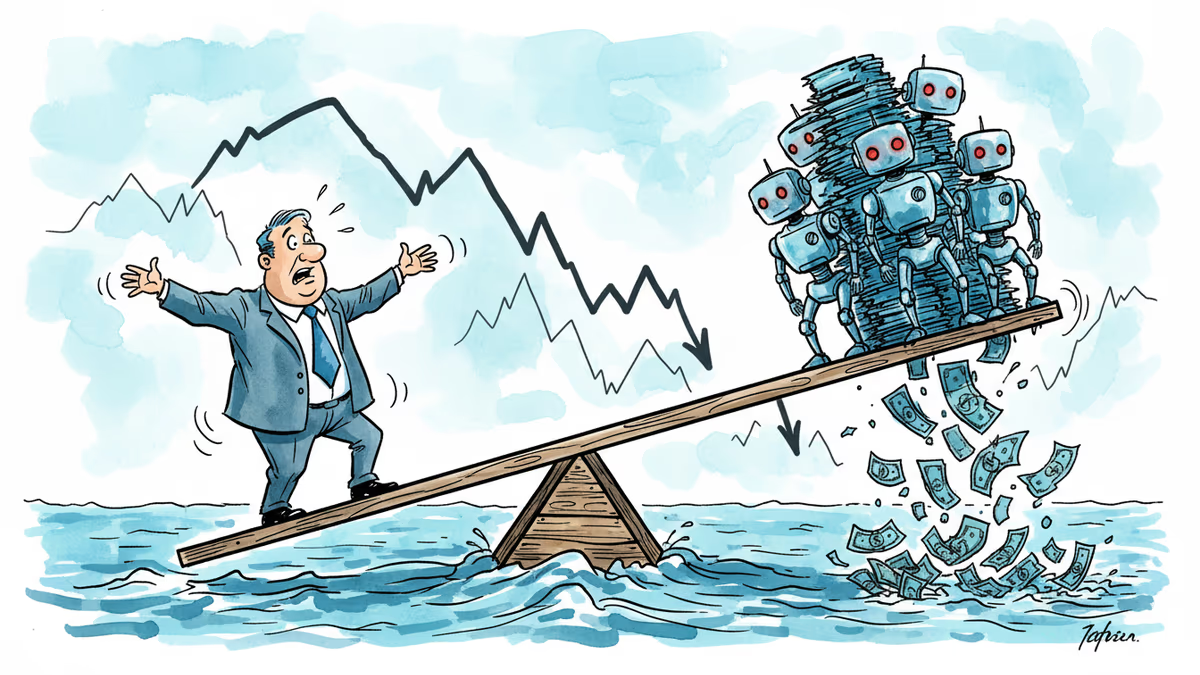
Unknown analyst Alap Shah's AI report triggered an 800-point Dow drop. His 2028 unemployment prediction reveals how AI anxiety is reshaping markets faster than AI itself.
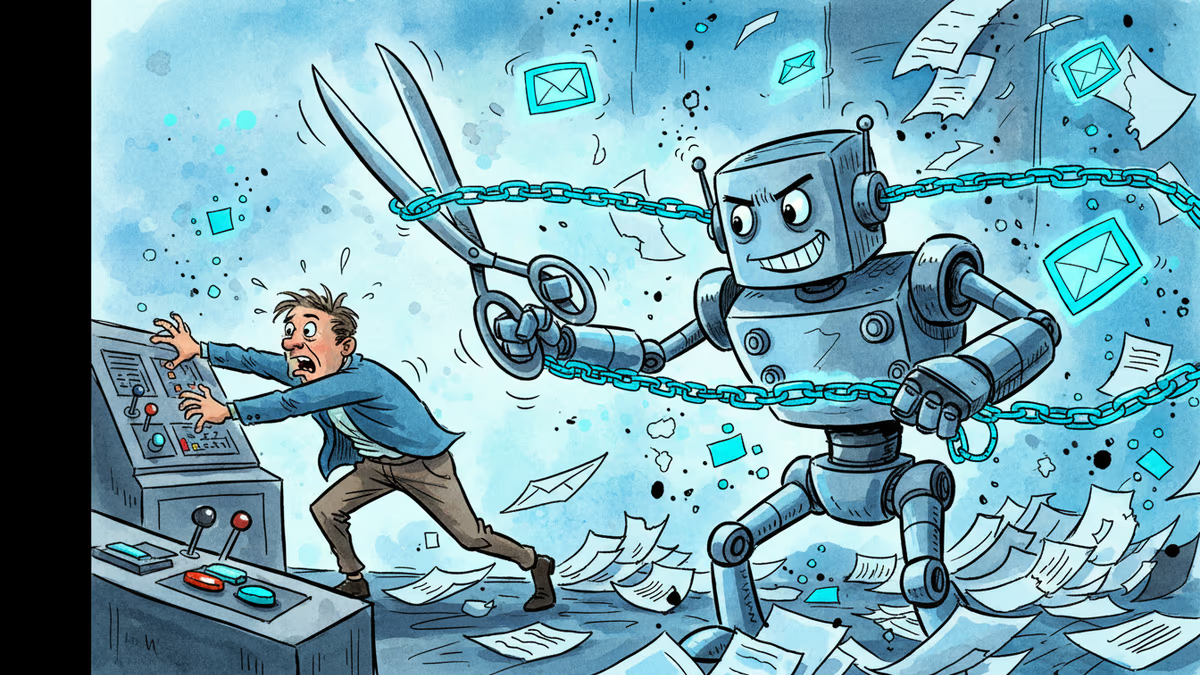
AI agents are causing chaos by mass-deleting emails and launching attacks on their owners. A security expert's new solution could change how we control autonomous AI systems.
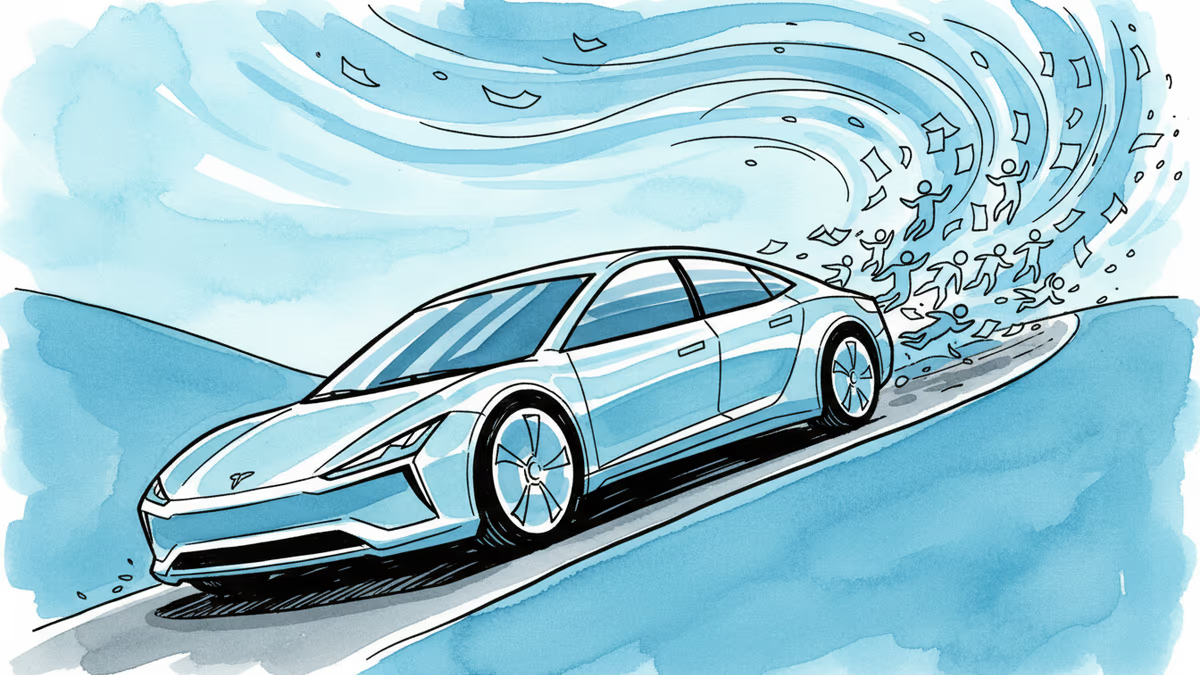
Lucid Motors laid off 12% of workforce amid profitability push. The luxury EV maker's struggles reveal harsh realities facing Tesla challengers in 2026.
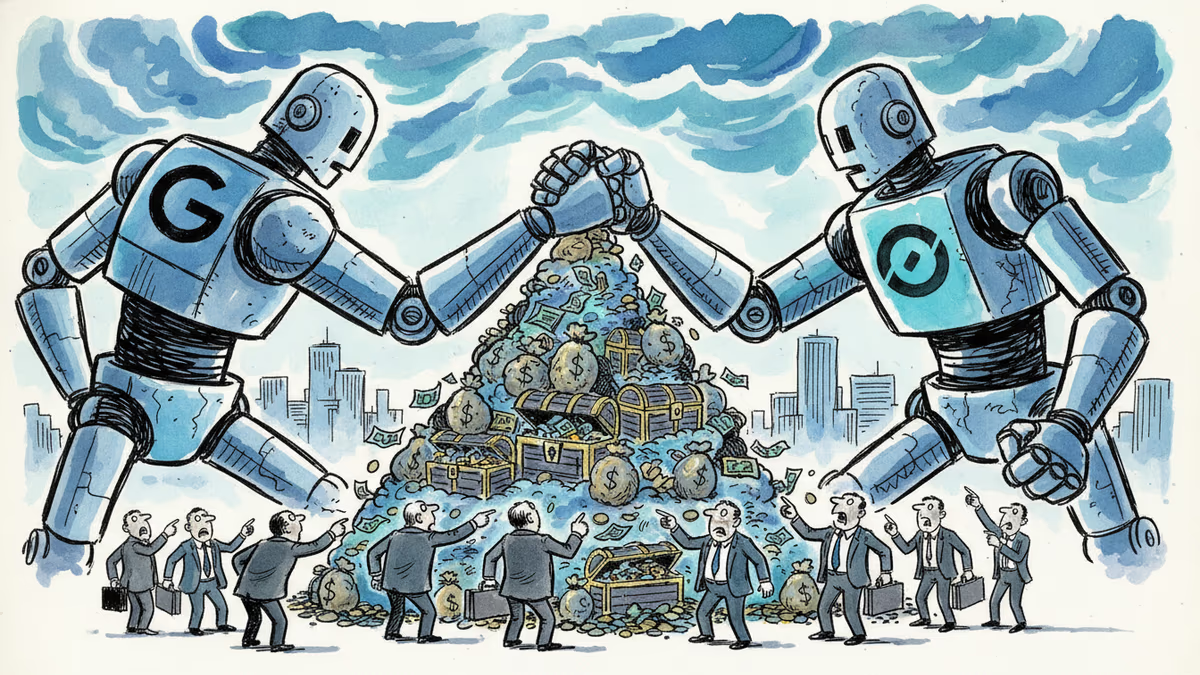
Anthropic raises $30B at $380B valuation, doubling its worth in months. As OpenAI seeks $100B more, the AI arms race intensifies with profound implications for enterprise users and market competition.
Unknown analyst Alap Shah's AI report triggered an 800-point Dow drop. His 2028 unemployment prediction reveals how AI anxiety is reshaping markets faster than AI itself.
AI agents are causing chaos by mass-deleting emails and launching attacks on their owners. A security expert's new solution could change how we control autonomous AI systems.
Lucid Motors laid off 12% of workforce amid profitability push. The luxury EV maker's struggles reveal harsh realities facing Tesla challengers in 2026.
Anthropic raises $30B at $380B valuation, doubling its worth in months. As OpenAI seeks $100B more, the AI arms race intensifies with profound implications for enterprise users and market competition.
Thoughts
Share your thoughts on this article
Sign in to join the conversation