

The End of an Era: Donald Trump’s Greenland Annexation and the Collapse of Global Order in 2026
Analyzing the geopolitical shockwaves of Donald Trump's 2026 push to annex Greenland and its impact on the US-led international order.
A superpower is choosing to self-immolate. As of January 22, 2026, the world is witnessing the official end of the grand experiment in a rules-based international order. While global elites gather in a rattled Davos, Denmark and its European allies are taking the unthinkable step of building a military force in Greenland to deter an annexation by the United States.
The Unprecedented Crisis over Greenland Annexation
President Donald Trump's pursuit of Greenland—a territory of 57,000 people covered by mile-thick ice—is being described as his most unhinged 'side quest' yet. In a recent interview with the New York Times, Trump admitted the motivation was psychological, stating, "That’s what I feel is psychologically needed for success."
This imperial ambition finds little support at home. Only 17 percent of Americans support the push, and a staggering 4 percent think military force is justified. For context, 13 percent of the population believes in Bigfoot. Despite the data, the administration claims a 'deal' with NATO is in the works, even as Trump confused Greenland with 'Iceland' multiple times during his Davos speech.

Dismantling the Six Pillars of American Hegemony
For 80 years, US power rested on six foundational pillars that Trump is now systematically dismantling. These pillars—unfettered immigration to top universities, government research support, open trade access, the rule of law, a robust military alliance network, and the US Dollar as the reserve currency—have been the bedrock of global innovation.
The tragic irony is that Denmark, once among America’s staunchest allies who suffered the third-highest per capita death toll fighting alongside the US in Afghanistan, is now forced to treat its former protector as a territorial threat. This shift marks a departure from the Westphalian era of state sovereignty toward a volatile new reality.
Authors
Related Articles

China is restricting AI researchers and startup founders from traveling abroad as the U.S.-China AI performance gap narrows to just 2.7%. What Beijing's talent lockdown means for the global AI race.
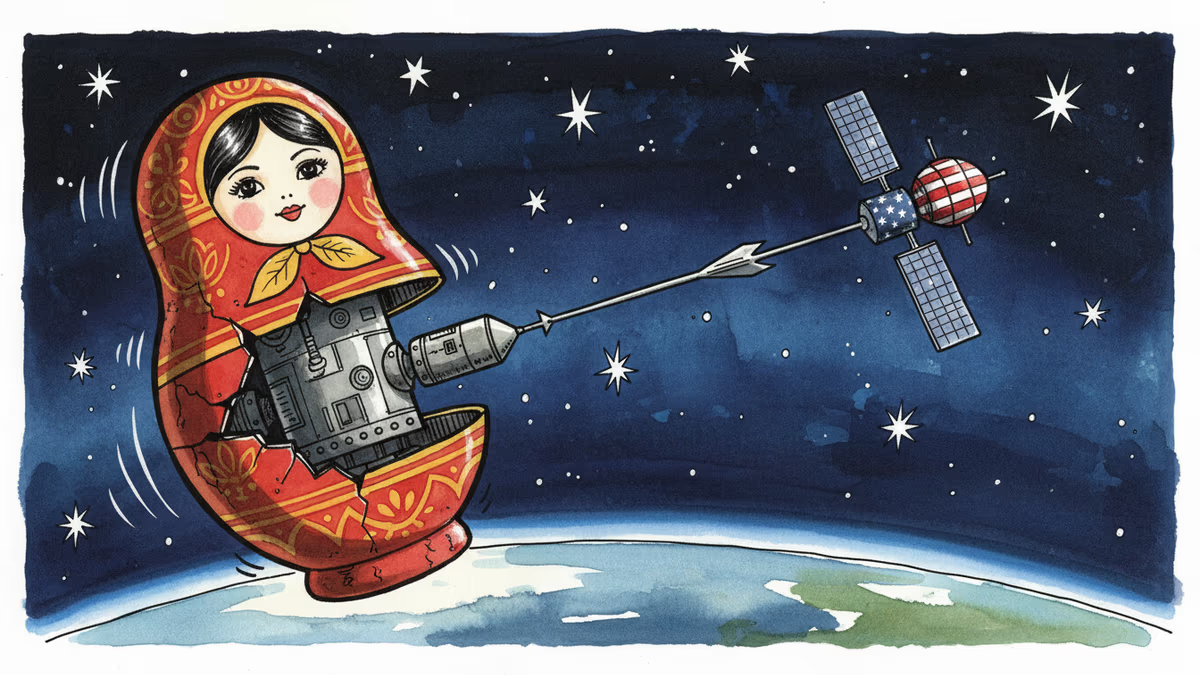
US Space Command confirms Russia has deployed operational anti-satellite weapons tracking American spy satellites in low-Earth orbit. What does this mean for space security?
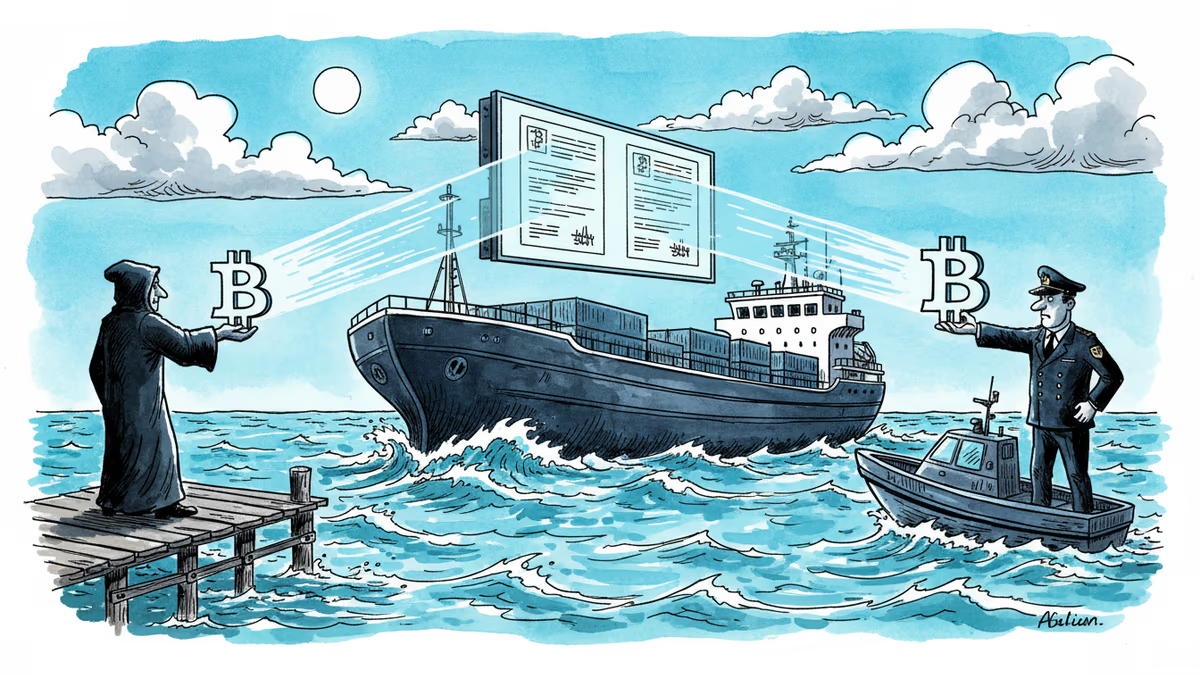
Scammers posing as Iranian authorities are demanding bitcoin and tether from ships near the Strait of Hormuz—exploiting the fact that Iran already does exactly this.
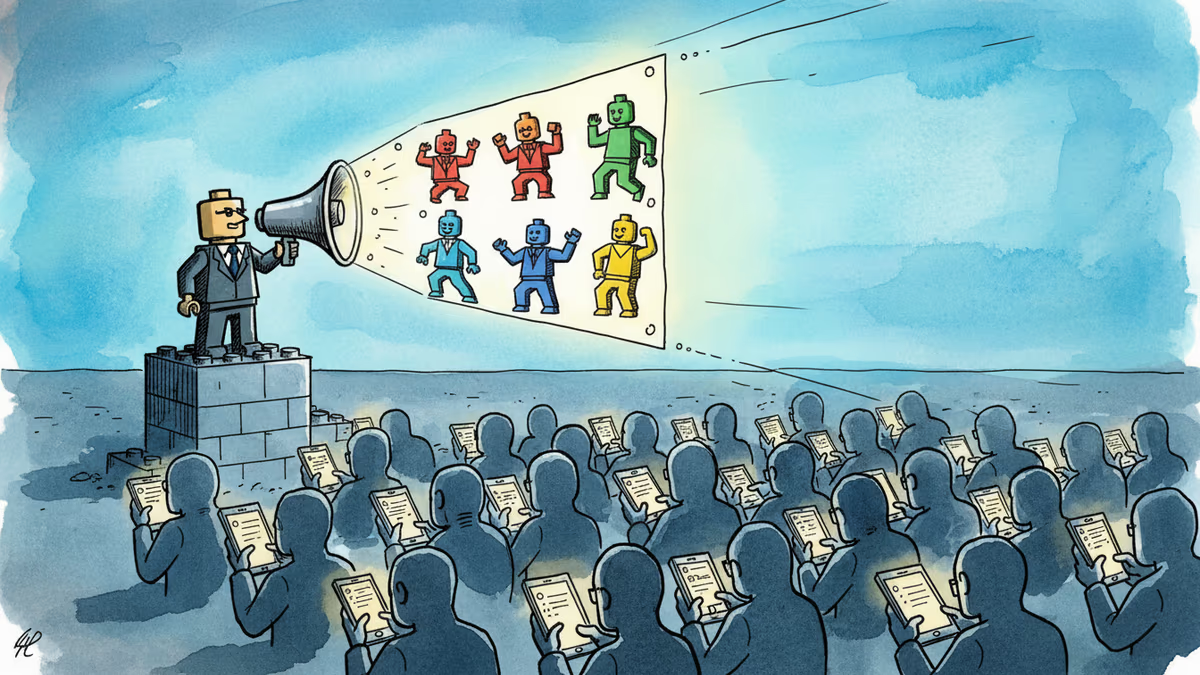
A small pro-Iran team is racking up millions of views with AI-generated Lego videos that mock Trump — and Americans are sharing them. What does that tell us about information warfare?
China is restricting AI researchers and startup founders from traveling abroad as the U.S.-China AI performance gap narrows to just 2.7%. What Beijing's talent lockdown means for the global AI race.
US Space Command confirms Russia has deployed operational anti-satellite weapons tracking American spy satellites in low-Earth orbit. What does this mean for space security?
Scammers posing as Iranian authorities are demanding bitcoin and tether from ships near the Strait of Hormuz—exploiting the fact that Iran already does exactly this.
A small pro-Iran team is racking up millions of views with AI-generated Lego videos that mock Trump — and Americans are sharing them. What does that tell us about information warfare?
Thoughts
Share your thoughts on this article
Sign in to join the conversation