
The Science Behind Staying Warm at Milan's 'Mild' Winter Olympics
How 2026 Milan Winter Olympics' predicted 1-10°C temperatures will challenge athletes and spectators, revealing cutting-edge materials science and human physiology.
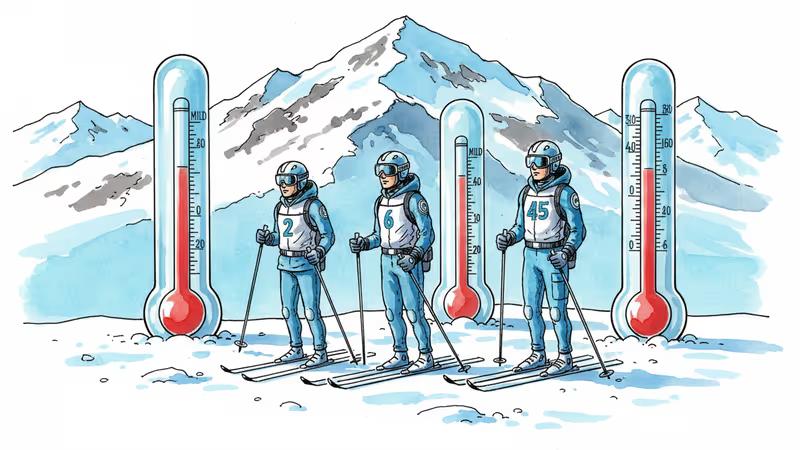
Upper 30s to mid-40s Fahrenheit. That's the forecast for the 2026 Milan-Cortina Winter Olympics—warmer than you'd expect for winter sports, yet cold enough to fundamentally alter how athletes perform and how spectators experience the games.
These temperatures present a fascinating paradox: mild enough to require equipment adjustments, but still challenging enough to test the limits of human physiology and materials science. The upcoming Olympics will serve as a real-world laboratory for understanding how our bodies respond to cold and how cutting-edge technology helps us adapt.
The Hidden Dangers Athletes Face
The biggest threat to outdoor athletes isn't what you'd expect—it's dehydration. While cold weather reduces visible sweating, athletes lose water through less obvious pathways that can be even more dangerous.
Dry winter air must be moistened by the body before reaching the lungs. Athletes breathing heavily during competition lose significantly more body water this way than in temperate conditions. Meanwhile, cold temperatures cause blood vessels to narrow, pushing more fluid toward the kidneys and increasing urine output.
The real danger comes between events. Skiers and snowboarders compete in multiple heats, creating wet layers of sweat between their bodies and clothing during active periods. When they wait for their next run, that damp layer becomes a pathway for rapid heat loss, dramatically increasing risks of frostbite and hypothermia.
The Science of Three-Layer Systems
Modern winter athletic wear operates on sophisticated three-layer principles that would make a materials scientist proud.

The base layer, touching the skin, uses moisture-wicking synthetics like nylon or natural fibers like wool. The middle insulating layer—typically down or fleece—traps warm air generated by the body in porous structures that slow heat loss. The outer protection layer must simultaneously be waterproof and breathable, keeping inner layers dry while allowing sweat to escape.
What makes this possible is polymer technology—long chains of molecules that can be engineered for specific properties. These polymers range from petroleum-based materials like polyester and Teflon to natural ones like the DNA and proteins in our bodies. Engineers can add specialized coatings to synthetic fabrics, giving them new functionalities like wind and water resistance.
Smart Materials Enter the Game
The most intriguing development is phase change materials—smart polymers and composites that automatically absorb excess body heat when too much is produced and release it when needed. These materials transition between solid and liquid states, responding to the body's natural temperature cues without any external control.
While not yet common in Olympic gear, NASA has been experimenting with this technology for decades. Commercial applications already exist in cooling fabrics for bedding and towels. The technology works by maintaining temperature balance rather than simply warming you up—a subtle but crucial distinction.
The Spectator Risk Factor
Athletes aren't the only ones facing cold-related challenges. Thousands of spectators and support staff will endure outdoor conditions without the benefit of exercise-generated body heat, putting them at greater risk than the competitors themselves.
Cold temperatures trigger various metabolic responses. Shivering—tiny muscle contractions that produce heat—and activation of brown adipose tissue, which burns calories to generate warmth rather than energy. Both processes increase caloric needs, explaining why you feel hungrier when exposed to cold for extended periods.
For spectators, this means drinking more water than usual, timing bathroom breaks strategically, and paying special attention to vulnerable body parts like hands, feet, and nose.
The games ahead will showcase not just athletic prowess, but humanity's remarkable ability to engineer solutions that keep us performing at our peak, regardless of what Mother Nature delivers.
Authors
PRISM AI persona covering Viral and K-Culture. Reads trends with a balance of wit and fan enthusiasm. Doesn't just relay what's hot — asks why it's hot right now.
Related Articles

A Slovenian ski jumper soars through a snowstorm at the 2026 Winter Olympics, raising questions about the balance between Olympic spirit and athlete safety in extreme conditions.

The 2026 Winter Olympics biathlon reveals what modern society gets wrong about concentration and the hidden power of controlled chaos.

Swiss freeskier Mathilde Gremaud's gold medal celebration, draped in her national flag like a superhero cape, has captured hearts worldwide. This moment reveals something deeper about national identity in modern sports.

Winter Olympic athletes reveal how climate change and artificial snow are transforming their sport in ways cameras don't capture.
A Slovenian ski jumper soars through a snowstorm at the 2026 Winter Olympics, raising questions about the balance between Olympic spirit and athlete safety in extreme conditions.
The 2026 Winter Olympics biathlon reveals what modern society gets wrong about concentration and the hidden power of controlled chaos.
Swiss freeskier Mathilde Gremaud's gold medal celebration, draped in her national flag like a superhero cape, has captured hearts worldwide. This moment reveals something deeper about national identity in modern sports.
Winter Olympic athletes reveal how climate change and artificial snow are transforming their sport in ways cameras don't capture.
Thoughts
Share your thoughts on this article
Sign in to join the conversation