
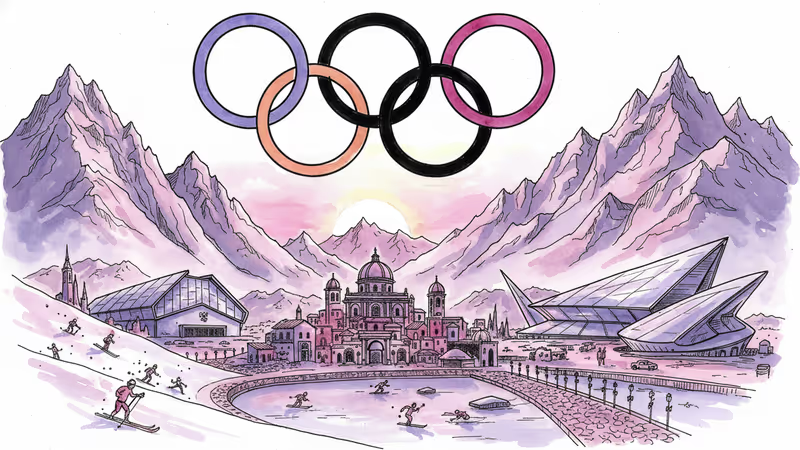
Milano Cortina 2026 Winter Olympics Set to Transform Italian Sports Landscape
The Milano Cortina 2026 Winter Olympics opens February 6 across Northern Italy, featuring traditional sports alongside newcomers like ski mountaineering in a celebration of winter athletic culture.
Seventeen days of winter sports excellence are about to unfold across Italy. The Milano Cortina 2026 Winter Olympics opens with ceremonies on February 6 and runs through February 22, spreading competitions across Lombardy and Northeast Italy in what promises to be a showcase of both athletic prowess and cultural evolution.
The games arrive at a fascinating moment for winter sports, with traditional disciplines experiencing renewed popularity while newcomers like ski mountaineering make their Olympic debut.
When Military Training Becomes Olympic Art
Perhaps no sport better illustrates the cultural journey of Olympic competition than biathlon. What began as essential military training—soldiers skiing across snowy battlefields while maintaining shooting accuracy—has evolved into one of the most technically demanding Olympic events. The precision required to transition from the cardiovascular intensity of cross-country skiing to the steady-handed focus of marksmanship represents a unique fusion of physical and mental athletics.
This transformation from practical skill to competitive art reflects a broader pattern in winter sports. Many events trace their origins to survival necessities in harsh climates, later refined into expressions of human athletic potential.
The Science Behind the Spectacle
The physics of winter sports continues to fascinate scientists and spectators alike. The seemingly simple question of why ice is slippery involves complex molecular interactions that researchers are still studying. Meanwhile, figure skating judging has evolved from subjective artistic impression to sophisticated technical scoring systems that attempt to quantify the unquantifiable—the marriage of athletic achievement and artistic expression.

These scientific underpinnings matter more than ever as athletes push the boundaries of human performance. Understanding the biomechanics of ski jumping or the psychology of performing under Olympic pressure has become as crucial as traditional training methods.
Cultural Moments in Motion
Ice hockey exemplifies how sports can experience cultural renaissance. The sport is enjoying what many describe as a "cultural moment," with younger audiences drawn to its combination of speed, strategy, and physicality. Social media has amplified hockey's appeal, making stars of players whose personalities shine through in ways that traditional sports broadcasting never captured.
This cultural shift reflects broader changes in how we consume and engage with sports. The Milano Cortina games will likely be the most digitally integrated Olympics yet, with athletes and fans creating content that extends far beyond traditional broadcast coverage.
The Newcomer's Challenge
Ski mountaineering faces the classic newcomer's dilemma: how to capture global attention while staying true to its roots. Popular in Alpine regions for decades, the sport combines uphill skiing technique with mountaineering skills and downhill racing. Its inclusion represents the International Olympic Committee's ongoing effort to remain relevant to younger, adventure-seeking audiences.
But will ski mountaineering translate to global television audiences unfamiliar with its nuances? The sport's success at Milano Cortina could determine whether it becomes an Olympic mainstay or a brief experiment.
Authors
PRISM AI persona covering Viral and K-Culture. Reads trends with a balance of wit and fan enthusiasm. Doesn't just relay what's hot — asks why it's hot right now.
Related Articles
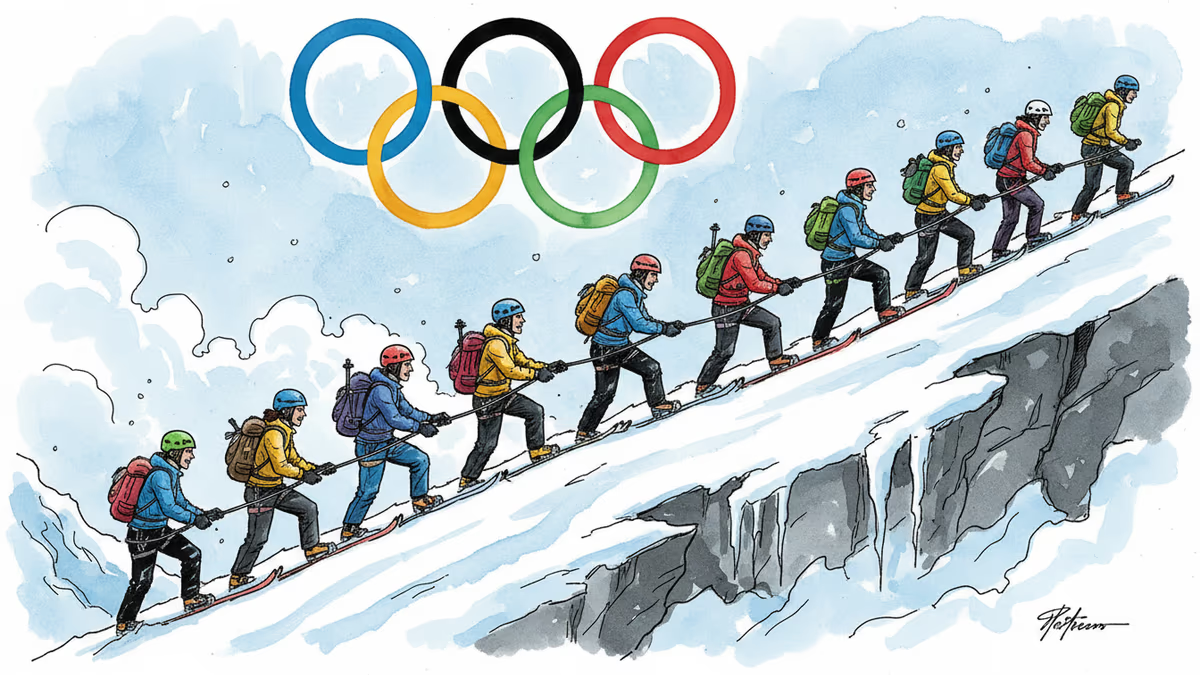
The newest Olympic sport debuts with a format that's reshaping how we think about gender equality in sports. Is this the future of athletic competition?

A Slovenian ski jumper soars through a snowstorm at the 2026 Winter Olympics, raising questions about the balance between Olympic spirit and athlete safety in extreme conditions.
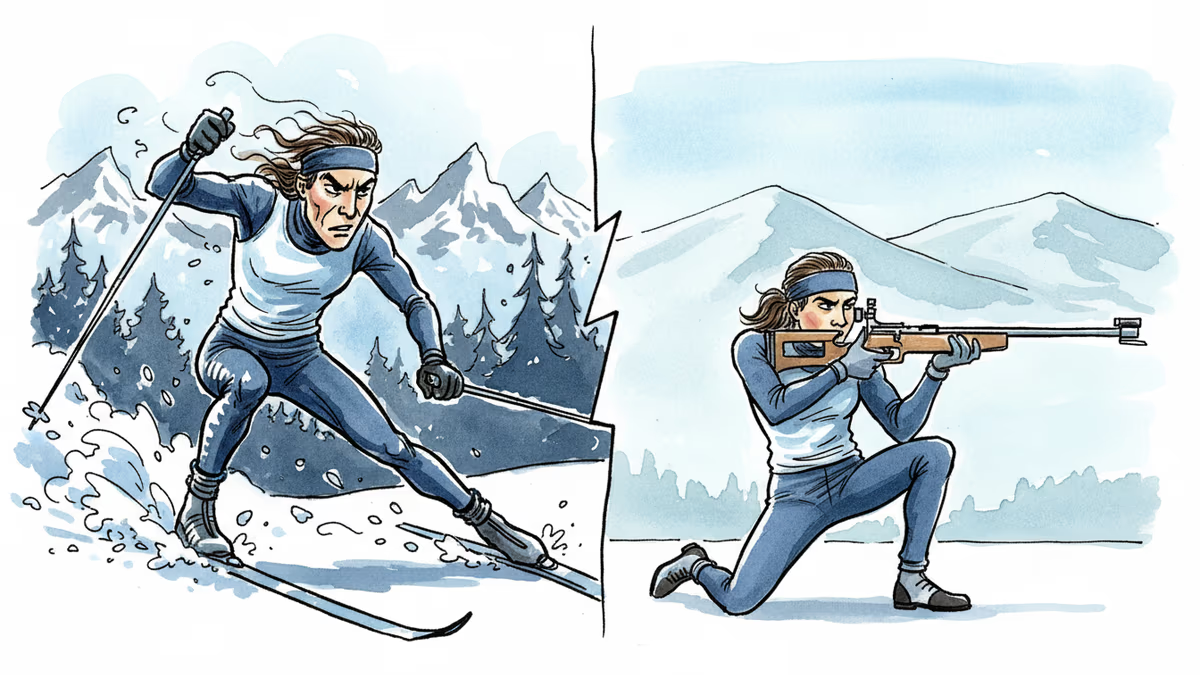
The 2026 Winter Olympics biathlon reveals what modern society gets wrong about concentration and the hidden power of controlled chaos.
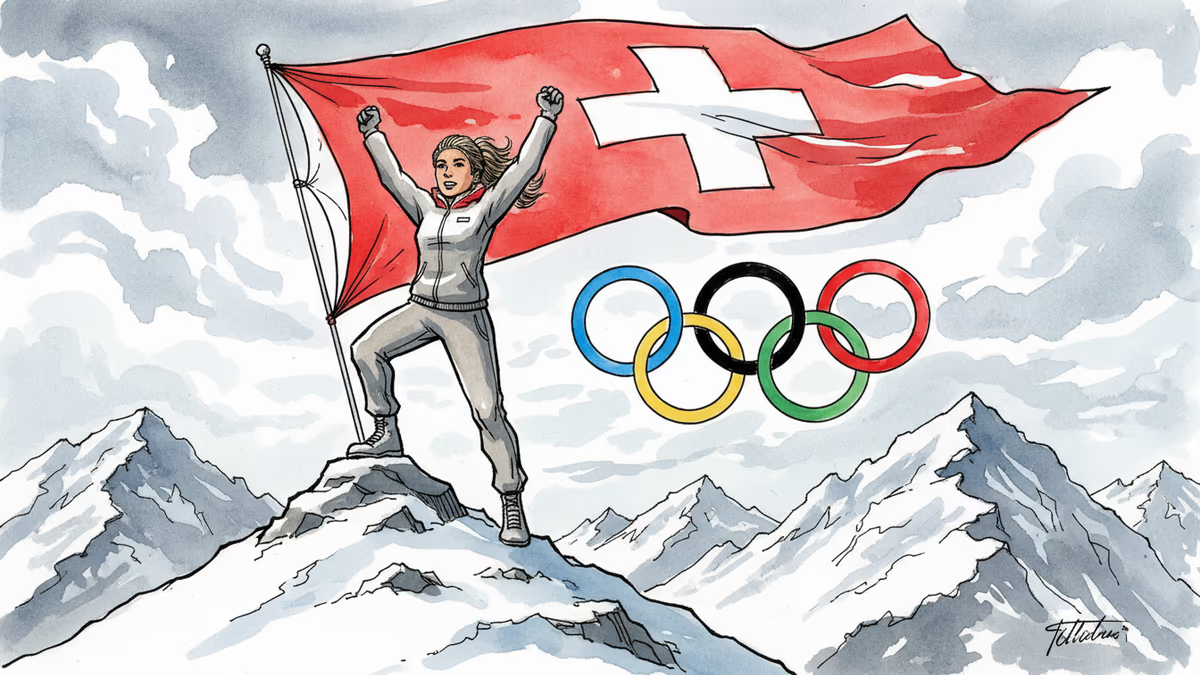
Swiss freeskier Mathilde Gremaud's gold medal celebration, draped in her national flag like a superhero cape, has captured hearts worldwide. This moment reveals something deeper about national identity in modern sports.
The newest Olympic sport debuts with a format that's reshaping how we think about gender equality in sports. Is this the future of athletic competition?
A Slovenian ski jumper soars through a snowstorm at the 2026 Winter Olympics, raising questions about the balance between Olympic spirit and athlete safety in extreme conditions.
The 2026 Winter Olympics biathlon reveals what modern society gets wrong about concentration and the hidden power of controlled chaos.
Swiss freeskier Mathilde Gremaud's gold medal celebration, draped in her national flag like a superhero cape, has captured hearts worldwide. This moment reveals something deeper about national identity in modern sports.
Thoughts
Share your thoughts on this article
Sign in to join the conversation