
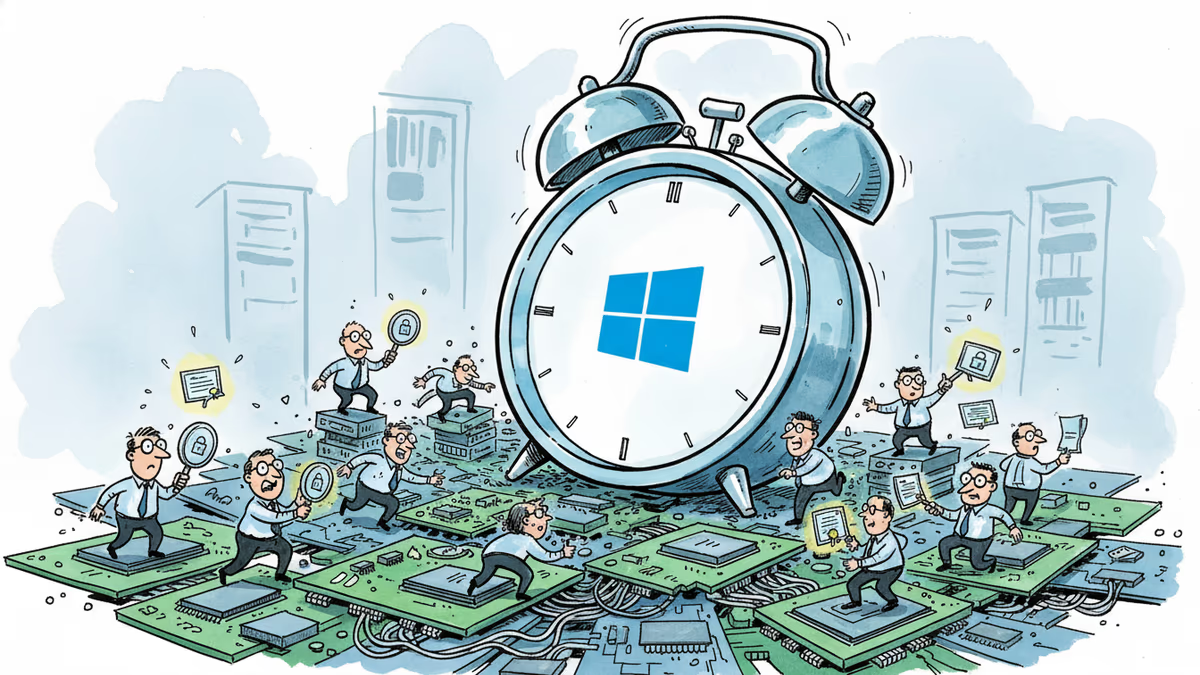
The Hidden Clock Ticking in Every Windows PC
Windows security certificates expire this year, potentially affecting millions of PCs. What IT admins and users need to know about the quiet transition happening behind the scenes.
15 years. That's how long the same security certificates have been quietly protecting Windows PCs from malicious boot-time attacks. But this summer, those digital guardians are set to retire—and most users have no idea it's happening.
The Invisible Shield Expires
Microsoft's UEFI Secure Boot certificates, first deployed during Windows 8 development in 2011, will expire between June and October 2026. These certificates act as digital bouncers, verifying that only legitimate software can load when your PC starts up. Without them, malware could potentially hijack your computer before Windows even begins loading.
The expiration isn't a surprise—Microsoft and major PC manufacturers have been preparing for months. But the transition highlights a fascinating tension in cybersecurity: the balance between ironclad security and seamless user experience.
Secure Boot became mandatory with Windows 11 in 2021, meaning every modern Windows PC depends on these certificates. For the 1.4 billion Windows users worldwide, this represents one of the largest coordinated security transitions in computing history.
The IT Administrator's Dilemma
For enterprise IT teams, certificate expiration creates a familiar headache. Older systems—particularly those from 2012-2015—might struggle with the transition if their firmware hasn't been updated. Some legacy industrial PCs, medical devices, and embedded systems could find themselves unable to boot if the changeover goes wrong.

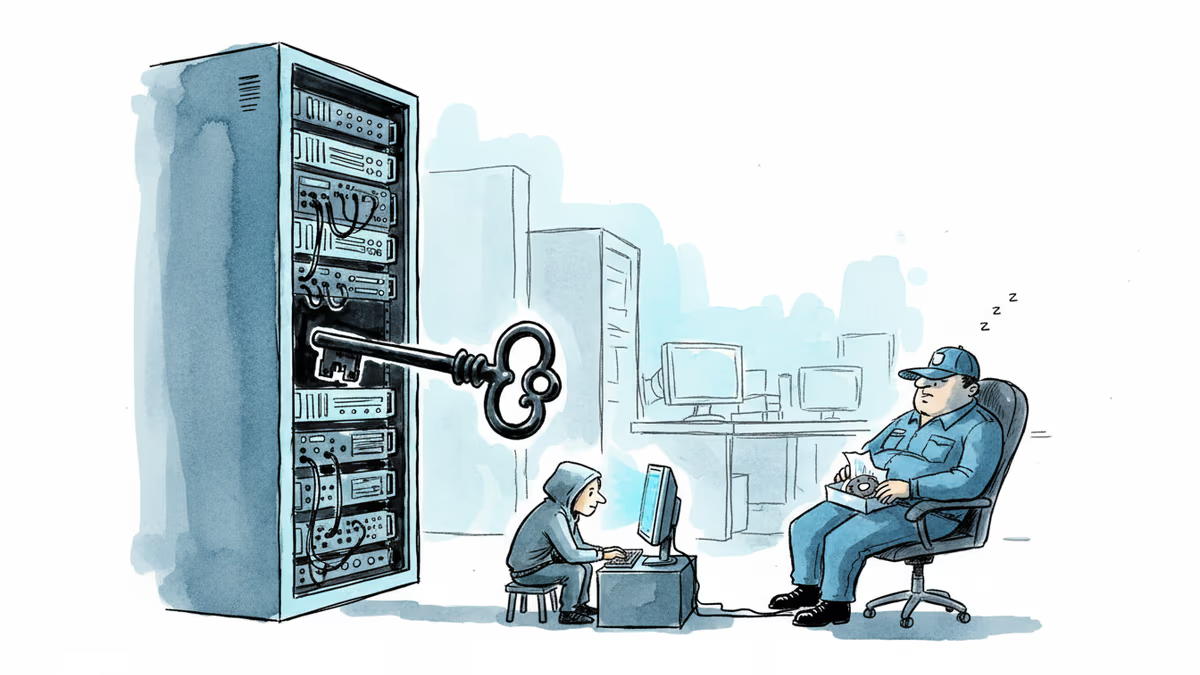
"It's like changing the locks on every building in the city simultaneously," explains one enterprise security consultant. "Most doors will work fine with new keys, but some older locks might jam."
The challenge isn't just technical—it's logistical. IT departments must balance security updates against operational continuity, especially in sectors like healthcare and manufacturing where downtime costs thousands per minute.
The Consumer Blind Spot
Most home users won't notice anything. Microsoft and PC manufacturers have been quietly updating firmware and preparing new certificates through regular Windows updates. But this invisible transition raises broader questions about digital dependency.
Consider this: your PC's ability to start depends on certificates managed by a handful of tech companies. When those certificates change, millions of devices must coordinate a simultaneous handoff. It works—until it doesn't.
Recent certificate-related outages have grounded airlines and crashed payment systems. While Microsoft's transition appears well-planned, the scale creates unavoidable risk.
Beyond the Technical Details
The certificate renewal reflects a deeper shift in computing. Secure Boot, once controversial among open-source advocates who feared it would lock out alternative operating systems, has become essential infrastructure. The same mechanism that prevents malware also enforces a particular vision of how computers should work.
This evolution mirrors broader trends in tech: increased security often means increased centralization. Your PC boots because Microsoft says it can. Your apps run because Apple or Google approve them. Convenience and security come at the cost of user control.
Authors
Related Articles
A critical vulnerability in Starlette—downloaded 325 million times per week—puts millions of AI agent servers at risk, exposing stored credentials for email, databases, and third-party services.
GitHub confirmed hackers stole data from 3,800 internal repositories via a poisoned VS Code extension. Here's why developer tools are now the most dangerous attack surface in tech.
A Utah woman was sentenced to life in prison partly because of her Google searches and deleted texts. The Kouri Richins case reveals how digital footprints have become the courtroom's most reliable witness.
Dirty Frag gives low-privilege users root access on virtually every Linux distro. The exploit code leaked three days ago. Microsoft says attackers are already experimenting with it.
A critical vulnerability in Starlette—downloaded 325 million times per week—puts millions of AI agent servers at risk, exposing stored credentials for email, databases, and third-party services.
GitHub confirmed hackers stole data from 3,800 internal repositories via a poisoned VS Code extension. Here's why developer tools are now the most dangerous attack surface in tech.
A Utah woman was sentenced to life in prison partly because of her Google searches and deleted texts. The Kouri Richins case reveals how digital footprints have become the courtroom's most reliable witness.
Dirty Frag gives low-privilege users root access on virtually every Linux distro. The exploit code leaked three days ago. Microsoft says attackers are already experimenting with it.
Thoughts
Share your thoughts on this article
Sign in to join the conversation