
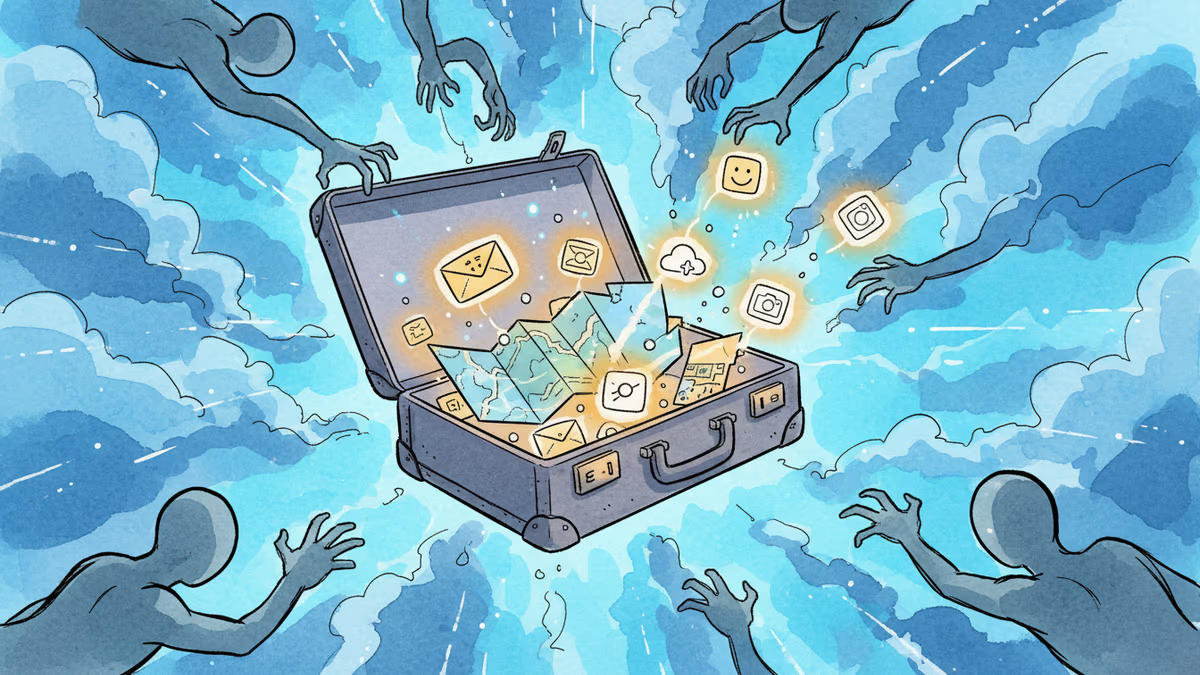
Your Hotel Booking Just Became a Hacker's Playbook
Booking.com confirmed a data breach exposing names, emails, addresses, phone numbers, and booking details. Hackers are already using the data for phishing attacks.
The WhatsApp message looked real. It had the right hotel name, the right check-in date, the right room type. It even knew the sender's phone number was on the reservation. The only problem: Booking.com didn't send it. A hacker did.
What Happened
Booking.com confirmed this week that unauthorized third parties may have accessed customer data including names, email addresses, physical addresses, phone numbers, and booking details—including anything guests had shared directly with their accommodation. The company sent formal notifications to affected customers, with one Reddit user posting the message verbatim: "We're writing to inform you that unauthorized third parties may have been able to access certain booking information associated with your reservation." Dozens of other users replied saying they'd received the same notice.
The company told The Guardian that financial information was not accessed. But Booking.com spokesperson Courtney Camp declined to answer TechCrunch's more pointed questions: how many customers were affected, and exactly how the breach occurred.
What makes this breach more than a routine data leak is what happened next. The Reddit user who first posted the notification told TechCrunch they had received a WhatsApp phishing message two weeks earlier—one that contained accurate booking details and personal information. The data wasn't just stolen. It was immediately weaponized.
This Isn't the First Time
Context matters here. In 2024, TechCrunch reported that hackers had infected hotel computers with consumer-grade stalkerware called pcTattletale. In one documented case, a hotel employee was logged into their Booking.com administration portal when the spyware captured a screenshot of their screen. That attack targeted the weakest link in Booking.com's ecosystem: its partner hotels, not the platform itself.
The attack vector for this latest breach hasn't been confirmed. But the pattern raises a structural question: when a platform connects with thousands of independent accommodation providers globally, where does the security perimeter actually end?

The scale of potential exposure is significant. Booking.com's own website states that 6.8 billion hotel rooms and homes have been booked through the platform since 2010. That's not a user count—it's a transaction count—but it reflects the sheer volume of personal data flowing through the system.
Why Booking Data Is Particularly Valuable
Financial data gets the headlines, but travel booking data is arguably more dangerous for targeted attacks. A stolen credit card number is one-dimensional. A stolen booking record tells a hacker where you're going, when you'll be away from home, who you're traveling with, what kind of accommodation you prefer, and how to reach you. That's a behavioral profile—far more useful for social engineering than a card number that gets canceled within hours of detection.
The phishing attack already documented in this case illustrates exactly that. The attacker didn't need to guess. They already knew.
Three Stakeholders, Three Very Different Problems
For travelers, the immediate risk is layered. Phishing messages impersonating Booking.com or partner hotels are already circulating. Anyone who has received a Booking.com notification should treat any follow-up communication via WhatsApp, SMS, or unfamiliar email with suspicion—especially messages requesting payment or login credentials. Password reuse across services compounds the risk: if your Booking.com email and password combination appears elsewhere, those accounts are now exposed too.
For the travel industry, this breach highlights a systemic vulnerability. Booking.com, Airbnb, Expedia, and their peers operate as data aggregators by design. The convenience that makes them indispensable—one login, all your trips, all your preferences—is also what makes them high-value targets. The more centralized the data, the higher the reward for a successful breach.
For regulators, the harder question is accountability. Under GDPR in Europe, Booking.com faces potential scrutiny over breach notification timelines and the adequacy of its security measures. But the broader regulatory debate—whether platform operators should bear legal responsibility for the security posture of their thousands of partner properties—remains unresolved. The weakest link in a global accommodation network might be a small guesthouse in Southeast Asia with minimal IT infrastructure. Who's responsible for that?
What You Should Do Right Now
If you've used Booking.com in the past year, assume your contact details and booking history may be in circulation. Concretely: be skeptical of any unsolicited contact referencing your reservations, update your Booking.com password and enable two-factor authentication if you haven't already, and watch for phishing attempts that reference accurate booking details—accuracy is exactly what makes these attacks convincing.
Authors
Related Articles
A critical vulnerability in Starlette—downloaded 325 million times per week—puts millions of AI agent servers at risk, exposing stored credentials for email, databases, and third-party services.
The FTC fined Cox Media and two ad firms $930,000 — not for actually eavesdropping on users, but for falsely claiming they could. The case raises uncomfortable questions about surveillance capitalism.
GitHub confirmed hackers stole data from 3,800 internal repositories via a poisoned VS Code extension. Here's why developer tools are now the most dangerous attack surface in tech.
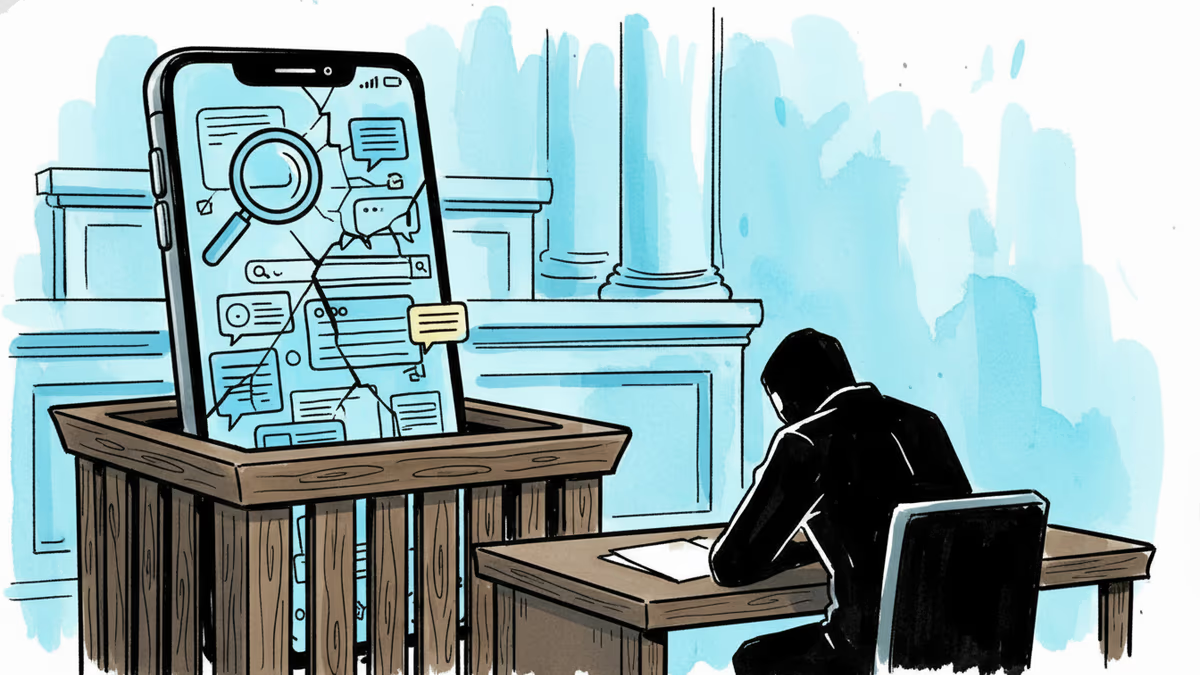
A Utah woman was sentenced to life in prison partly because of her Google searches and deleted texts. The Kouri Richins case reveals how digital footprints have become the courtroom's most reliable witness.
A critical vulnerability in Starlette—downloaded 325 million times per week—puts millions of AI agent servers at risk, exposing stored credentials for email, databases, and third-party services.
The FTC fined Cox Media and two ad firms $930,000 — not for actually eavesdropping on users, but for falsely claiming they could. The case raises uncomfortable questions about surveillance capitalism.
GitHub confirmed hackers stole data from 3,800 internal repositories via a poisoned VS Code extension. Here's why developer tools are now the most dangerous attack surface in tech.
A Utah woman was sentenced to life in prison partly because of her Google searches and deleted texts. The Kouri Richins case reveals how digital footprints have become the courtroom's most reliable witness.
Thoughts
Share your thoughts on this article
Sign in to join the conversation