
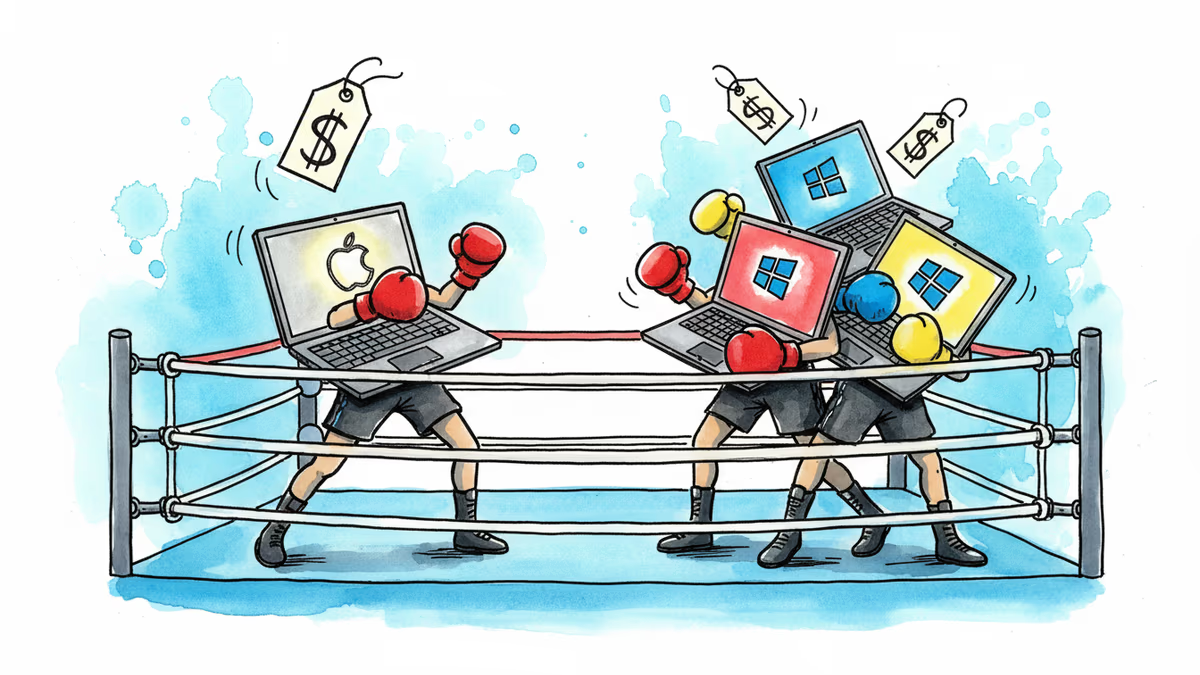
Apple's $599 MacBook Shakes Up Budget Laptop Wars
Apple's new $599 MacBook Neo enters the budget laptop market, challenging Windows competitors with superior display and trackpad but fewer specs for the money.
$599 Changes Everything (Or Does It?)
For the first time in Apple's history, you can buy a MacBook for under $600. The MacBook Neo, announced today, represents Apple's boldest move into budget territory—a market it has largely ignored while Windows laptops dominated the sub-$700 space.
But here's the catch: the competition isn't sitting idle. While Apple was perfecting premium laptops, Windows manufacturers have been crafting compelling budget machines that offer more bang for your buck.
The Spec War Apple Might Be Losing
Take the Asus Vivobook 14, currently selling for $539—that's $60 less than Apple's entry point. For that lower price, you get 16GB of RAM and 512GB of storage. The MacBook Neo's base configuration? Just 8GB RAM and 256GB storage. That's literally half the memory and storage for more money.
The port situation tells a similar story. The Vivobook 14 offers HDMI, two USB-A ports, one USB-C, and a headphone jack—enough to drive two external monitors simultaneously. Apple's MacBook Neo can handle just one external display.
Meanwhile, the HP OmniBook 5 at $500 throws an OLED display into the mix. Sure, it only has 256GB of storage, but that screen delivers color performance that makes most laptop displays look washed out.
Where Apple Still Wins
Specs don't tell the whole story, though. The MacBook Neo's display hits 500 nits of brightness—nearly double the Vivobook 14's 280 nits. If you've ever tried to work on a laptop outdoors, you know this isn't just a number on a spec sheet.

Then there's the trackpad. Even though the Neo uses a mechanical trackpad (not the haptic feedback found in pricier MacBooks), Apple has never made a truly bad trackpad. The same can't be said for budget Windows laptops, where trackpads often feel like afterthoughts.
The Real Battle: A18 Pro vs Snapdragon X
The performance showdown centers on chips most people have never heard of. Apple's MacBook Neo runs the A18 Pro—the same processor found in iPhones. The Windows competitors use Qualcomm's Snapdragon X.
Both are ARM-based chips designed for efficiency over raw power. Both promise excellent battery life. But which performs better in real-world use? Apple claims superiority over Intel chips, but direct comparisons with Snapdragon X remain scarce.
The Ecosystem Advantage
Here's where the math gets complicated. A $539 Windows laptop with twice the RAM sounds like a no-brainer, until you factor in the Apple ecosystem. If you own an iPhone, AirPods, or use iCloud, the MacBook Neo integrates seamlessly in ways Windows laptops simply can't match.
For students especially, features like Universal Clipboard, AirDrop, and Handoff can be genuinely useful. The question is whether these conveniences justify paying more for less storage and RAM.
Market Disruption or Market Entry?
Apple's move raises bigger questions about the laptop market's future. Is this a defensive play against Chromebooks eating into education sales? Or is Apple preparing for an AI-driven future where local processing power matters more than raw specs?
The timing is telling. As AI features become standard, having a powerful, efficient chip might matter more than having 16GB of RAM that mostly sits unused. Apple's A18 Pro includes dedicated neural processing units that could give it advantages in AI tasks that spec sheets don't capture.
Authors
Related Articles
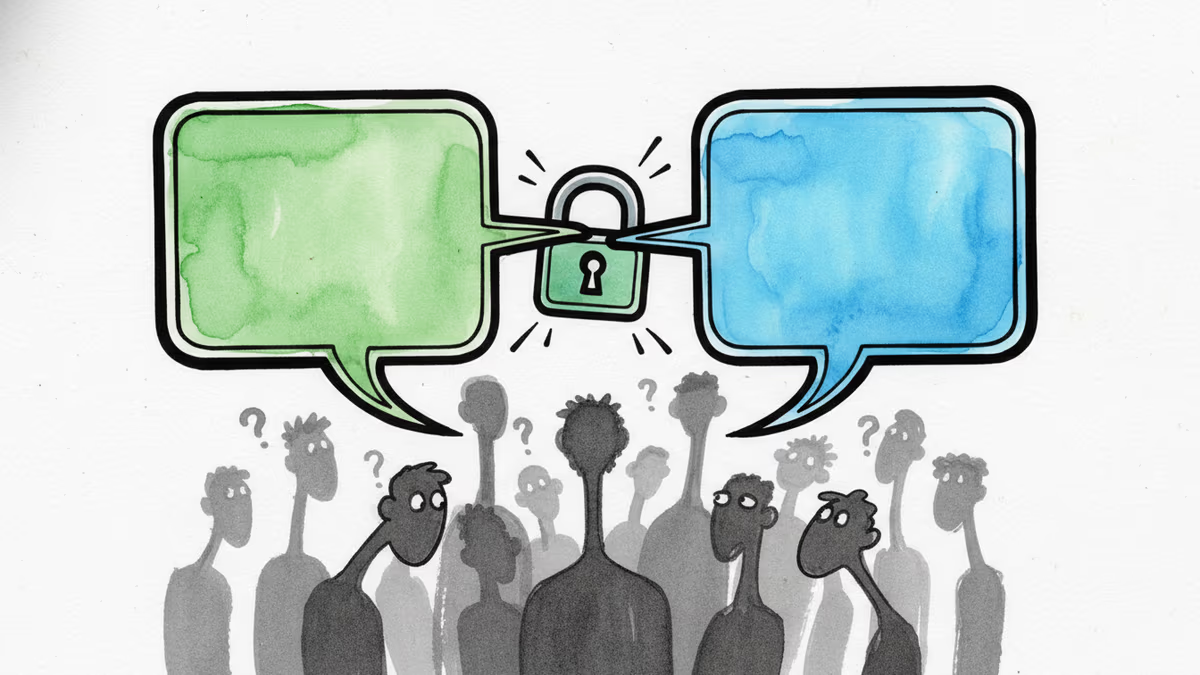
After 15 years of fragmented mobile messaging, Apple and Google are rolling out end-to-end encrypted RCS messaging between iPhones and Android devices. Here's what changed, why it took so long, and what it means for your privacy.
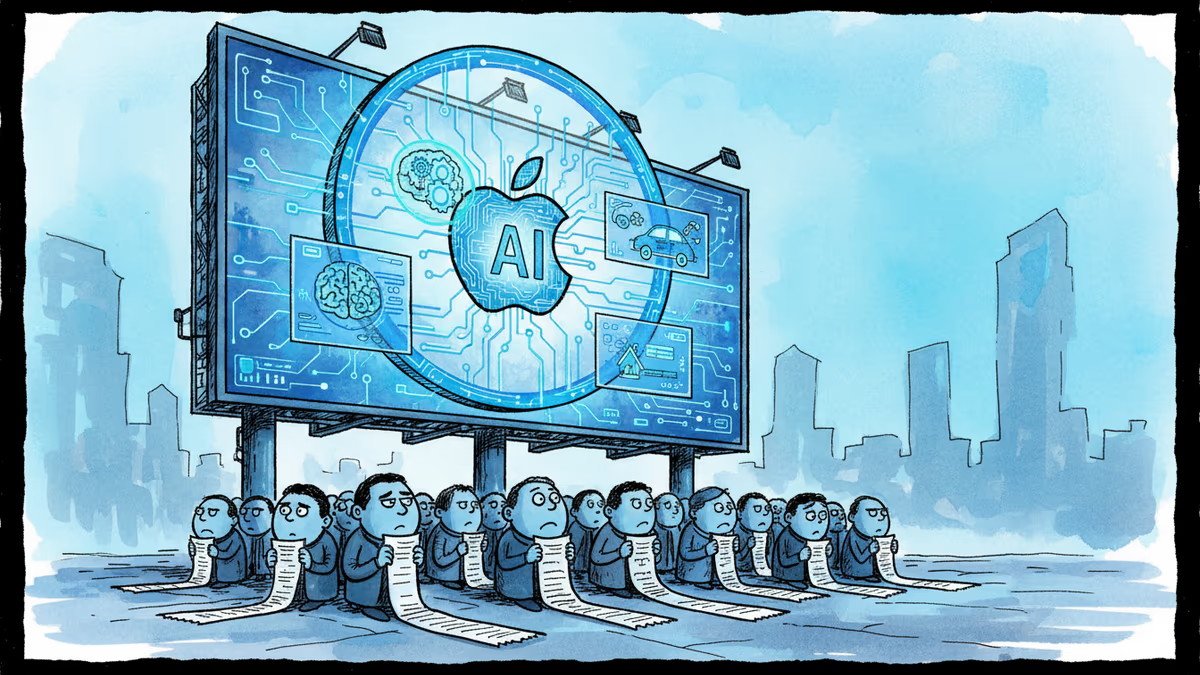
Apple agreed to pay $250 million to settle claims it misled iPhone 16 buyers about Apple Intelligence features. What this means for consumers, Big Tech marketing, and the AI industry.
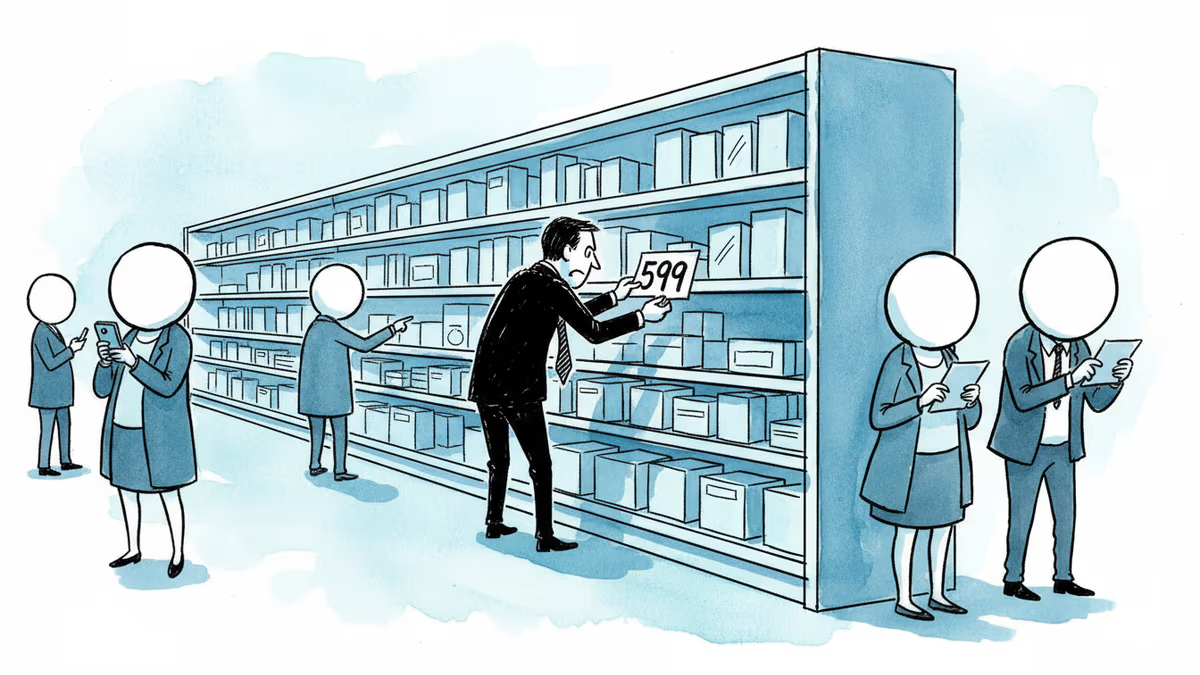
Apple quietly removed the entry-level $599 Mac Mini, raising the starting price to $799 — just one day after Tim Cook warned of chip supply constraints on the earnings call.

Apple names John Ternus, its hardware engineering chief, as the next CEO. The shift from operator to product person signals where Apple thinks its next decade of growth will come from — and raises real questions about what comes next.
After 15 years of fragmented mobile messaging, Apple and Google are rolling out end-to-end encrypted RCS messaging between iPhones and Android devices. Here's what changed, why it took so long, and what it means for your privacy.
Apple agreed to pay $250 million to settle claims it misled iPhone 16 buyers about Apple Intelligence features. What this means for consumers, Big Tech marketing, and the AI industry.
Apple quietly removed the entry-level $599 Mac Mini, raising the starting price to $799 — just one day after Tim Cook warned of chip supply constraints on the earnings call.
Apple names John Ternus, its hardware engineering chief, as the next CEO. The shift from operator to product person signals where Apple thinks its next decade of growth will come from — and raises real questions about what comes next.
Thoughts
Share your thoughts on this article
Sign in to join the conversation