
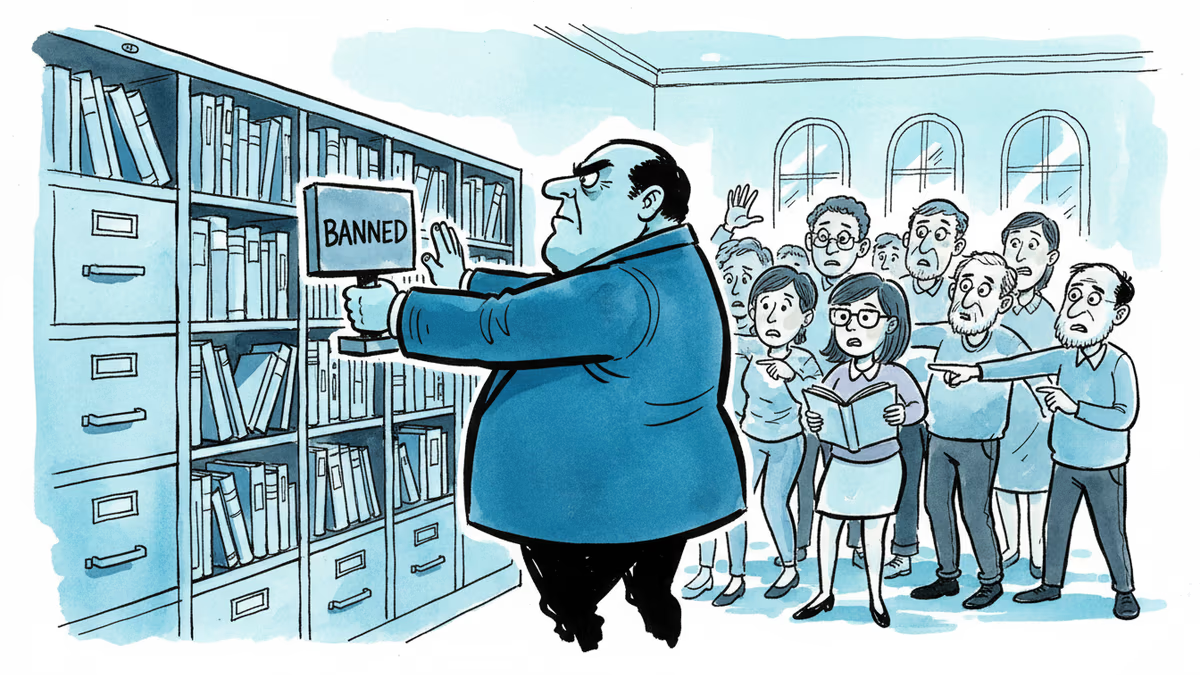
Why Wikipedia Just Blacklisted a Major Archive Site
Wikipedia's decision to ban Archive.today reveals deeper issues about digital preservation, trust, and who controls the internet's memory.
48 hours after the decision was announced, links to Archive.today started disappearing from Wikipedia articles worldwide. This wasn't just another policy update—it was a digital exile that raises uncomfortable questions about who we trust to preserve the internet's memory.
The Smoking Gun: When Archives Attack
The immediate trigger was damning: Archive.today had been weaponized to launch a distributed denial of service (DDoS) attack against a blogger. Users clicking Archive.today links unknowingly became part of the attack, their computers hijacked to flood the target's website with traffic.
But the deeper revelation was more disturbing. Wikipedia editors discovered that Archive.today's operators had been tampering with archived content, inserting the targeted blogger's name into snapshots of web pages. This appeared to be retaliation for a blog post that exposed how Archive.today's maintainer hid behind multiple aliases.
"Wikipedia should not direct its readers towards a website that hijacks users' computers," the editors concluded. The evidence was clear: Archive.today had violated the fundamental principle that archives should preserve, not manipulate, the historical record.
The Preservation Paradox
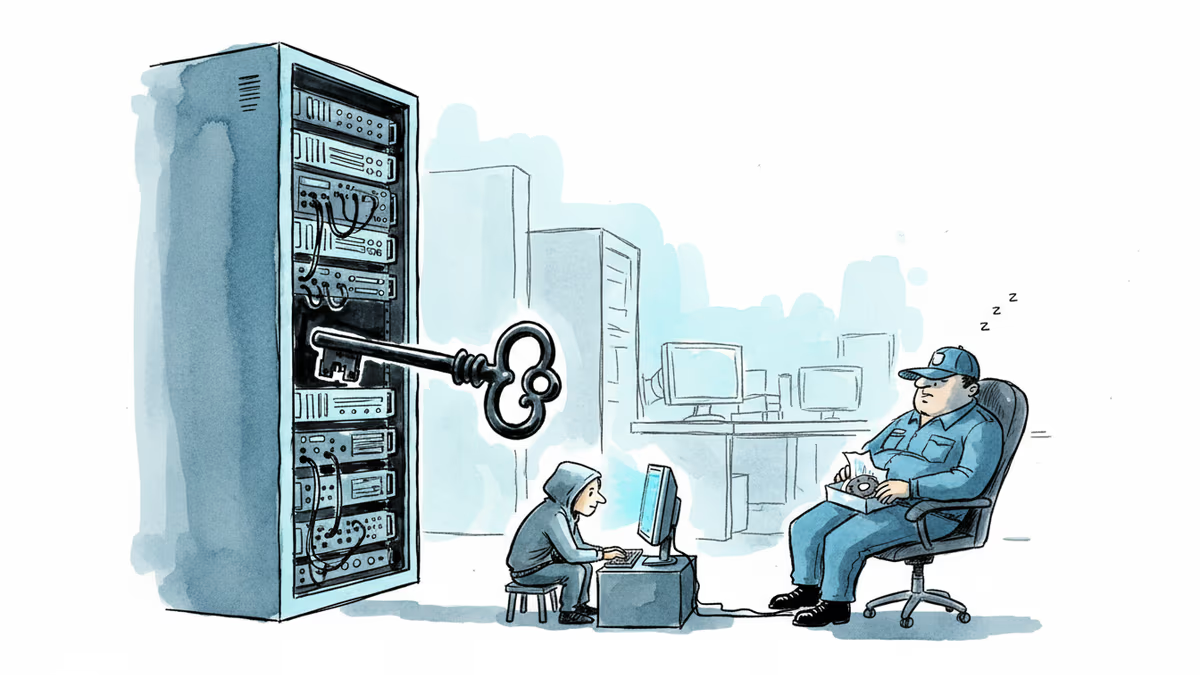
This incident exposes a critical vulnerability in our digital infrastructure: who watches the watchers of the web?
Archive.today had filled an important niche. When news outlets deleted controversial articles or politicians scrubbed embarrassing statements, the service provided an independent record. It was particularly valued by journalists tracking changes to corporate websites and researchers studying information manipulation.
Yet this independence came with a dark side. The service operated with minimal transparency—unclear funding, anonymous operators, and apparently no oversight to prevent abuse. The recent revelations show how easily such power can be corrupted.
Contrast this with the Internet Archive's Wayback Machine, which operates as a transparent nonprofit but sometimes faces legal pressure to remove content. The trade-off seems stark: accountability versus independence, transparency versus resilience.

The Ripple Effects
For researchers and journalists, this creates immediate practical problems. Archive.today was often the go-to backup when the Wayback Machine was blocked or incomplete. Graduate students writing dissertations, fact-checkers verifying claims, and investigative reporters tracking corporate behavior now have one fewer tool.
Wikipedia editors face a particular challenge. They've built workflows around multiple archive services to ensure citations remain accessible. Losing Archive.today means more dead links over time, potentially undermining the reliability of the world's largest encyclopedia.
The decision also sets a precedent. If Wikipedia can blacklist one archive service for bad behavior, what stops them from blocking others? The platform's enormous influence means this choice ripples across the entire web ecosystem.
The Trust Infrastructure Crisis
This incident highlights a broader crisis in our digital trust infrastructure. We've built an internet that depends on intermediaries—search engines, social platforms, archive services—but we haven't solved the fundamental question of how to make these intermediaries accountable without destroying their utility.
Government-run archives raise censorship concerns. Corporate archives serve business interests first. Independent archives, as we've seen, can go rogue. Blockchain-based solutions promise decentralization but remain technically immature and energy-intensive.
The result is a fragmented landscape where no single solution addresses all needs. Perhaps that's not a bug but a feature—maybe resilience comes from redundancy, not from finding the perfect archive.
The Broader Stakes
Wikipedia's decision forces us to confront uncomfortable truths about digital preservation. Every choice about what to save, how to save it, and who gets to access it is inherently political. Even seemingly neutral institutions like Wikipedia must make judgment calls that shape how future generations understand our present moment.
The stakes extend beyond academic research. In an era of "memory holes" and information warfare, reliable archives become tools of democratic accountability. When powerful actors can erase their digital footprints, independent preservation becomes a form of resistance.
But as Archive.today's corruption shows, independence alone isn't enough. We need archives that are both autonomous and accountable, transparent yet resilient.
Authors
Related Articles
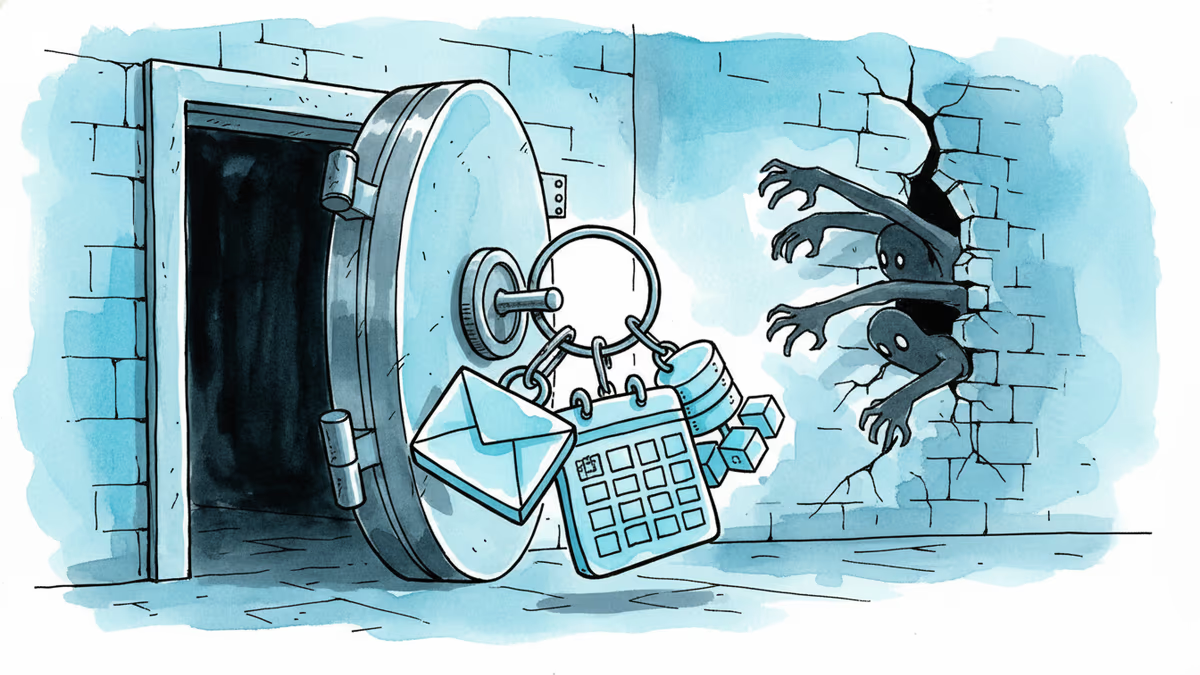
A critical vulnerability in Starlette—downloaded 325 million times per week—puts millions of AI agent servers at risk, exposing stored credentials for email, databases, and third-party services.
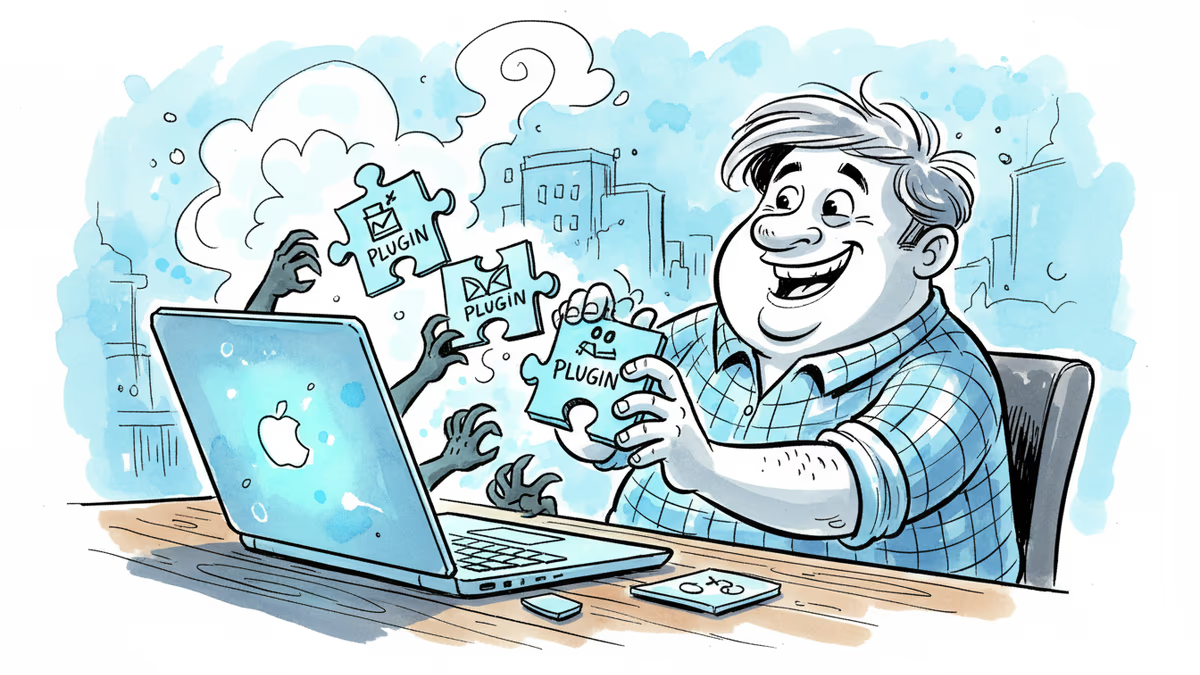
GitHub confirmed hackers stole data from 3,800 internal repositories via a poisoned VS Code extension. Here's why developer tools are now the most dangerous attack surface in tech.
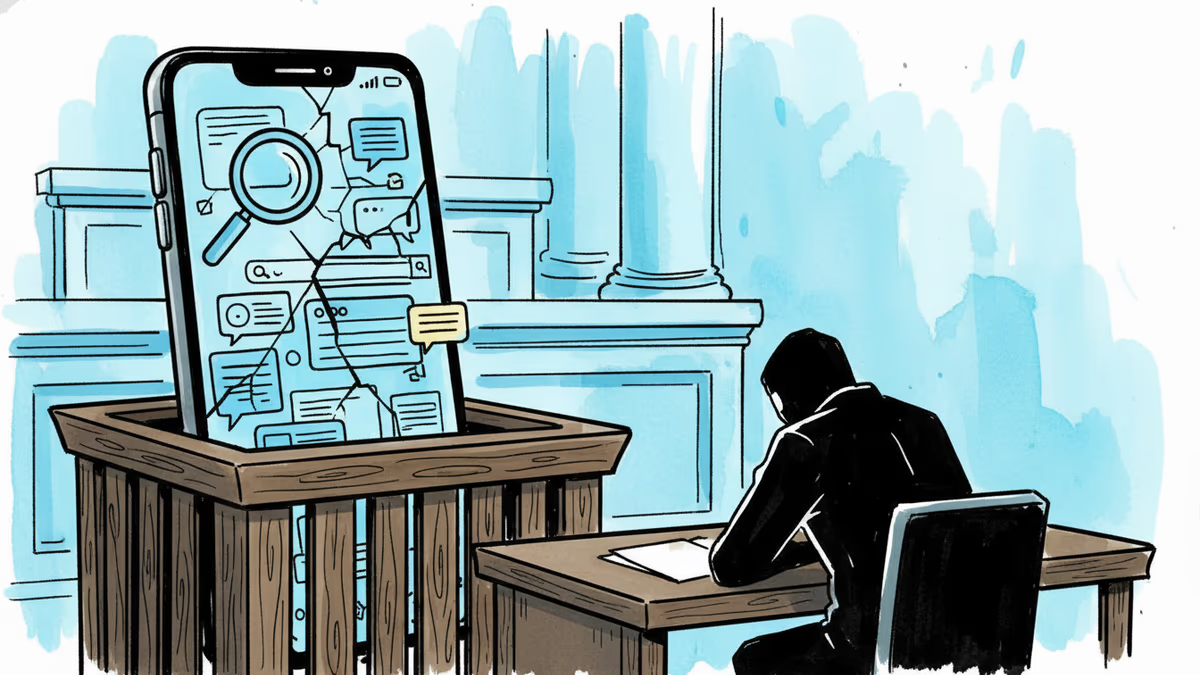
A Utah woman was sentenced to life in prison partly because of her Google searches and deleted texts. The Kouri Richins case reveals how digital footprints have become the courtroom's most reliable witness.
Dirty Frag gives low-privilege users root access on virtually every Linux distro. The exploit code leaked three days ago. Microsoft says attackers are already experimenting with it.
A critical vulnerability in Starlette—downloaded 325 million times per week—puts millions of AI agent servers at risk, exposing stored credentials for email, databases, and third-party services.
GitHub confirmed hackers stole data from 3,800 internal repositories via a poisoned VS Code extension. Here's why developer tools are now the most dangerous attack surface in tech.
A Utah woman was sentenced to life in prison partly because of her Google searches and deleted texts. The Kouri Richins case reveals how digital footprints have become the courtroom's most reliable witness.
Dirty Frag gives low-privilege users root access on virtually every Linux distro. The exploit code leaked three days ago. Microsoft says attackers are already experimenting with it.
Thoughts
Share your thoughts on this article
Sign in to join the conversation