
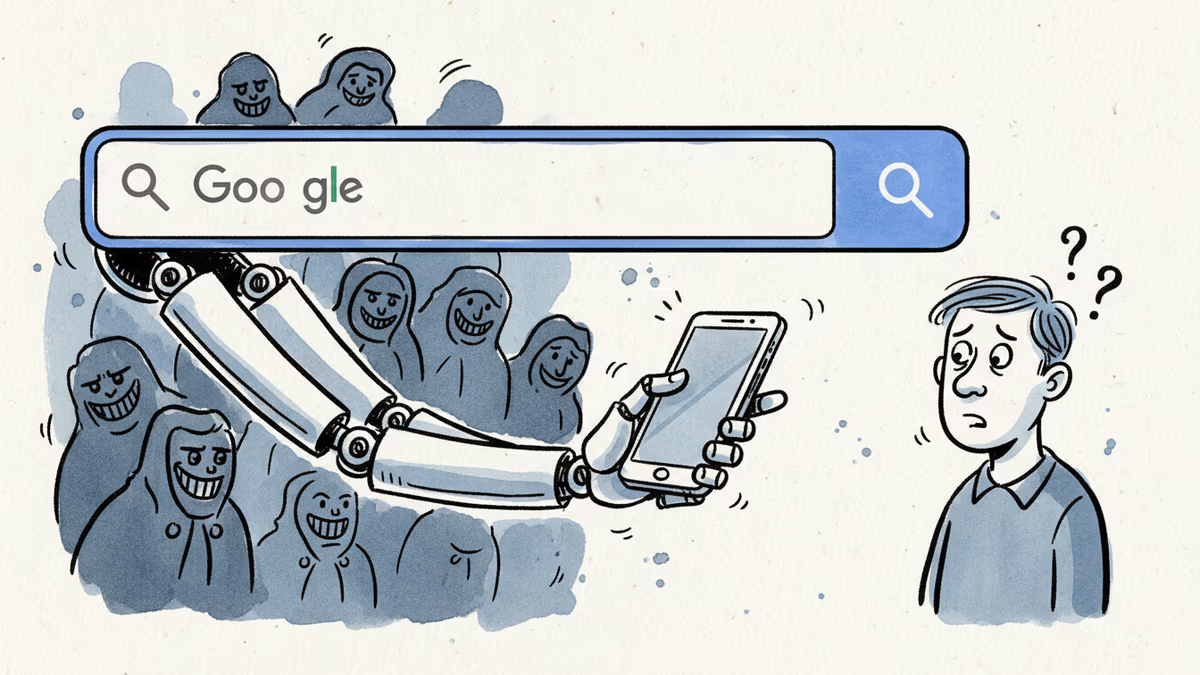
Google's AI Just Became a Scammer's Best Friend
Fake customer service numbers are infiltrating Google's AI Overviews, creating new fraud opportunities. Why trusting search results blindly is more dangerous than ever.
When One Search Can Cost You Everything
You Google "Bank of America customer service" and the AI helpfully provides a phone number. You call it. The person who answers sounds professional, asks for your account details, and... congratulations, you've just been scammed.
This isn't a hypothetical scenario. The Washington Post and Digital Trends have documented multiple cases of fraudulent phone numbers appearing in Google's AI Overviews, with victim reports surfacing across Facebook and Reddit. Credit unions and banks are now warning customers about this emerging threat.
The twist? The very technology designed to make information more accessible is making fraud more sophisticated.
How Scammers Hijacked AI
The mechanics are deceptively simple. Bad actors plant fake customer service numbers across multiple low-profile websites, pairing them with legitimate company names. Google's AI then scrapes this information and presents it as factual, authoritative guidance—no verification required.
This isn't entirely new. Fake contact information has polluted the web for years. But AI Overviews have changed the game entirely. Instead of forcing users to cross-reference multiple sources, the AI confidently delivers "the answer," complete with the visual authority of Google's interface.
Users have little reason to doubt what appears to be an official response.

Google maintains that its "anti-spam protections are highly effective at keeping scams out of AI Overviews." The company says it's "continuing to roll out updates" to strengthen detection systems. Yet the reports keep coming.
The Generative Problem
This goes deeper than simple misinformation. Generative AI doesn't just parrot information—it synthesizes and embellishes it. That's the core problem. When an AI system is designed to sound confident and authoritative, distinguishing between accurate data and convincing fabrication becomes nearly impossible for users.
Security researchers have demonstrated similar vulnerabilities in AI email summarization, where malicious text hidden in messages gets processed and served up as legitimate information. The issue extends beyond Google to other AI search engines as well.
Your Defense Strategy
The solution sounds almost quaint in our AI-powered world: Don't trust everything an AI tells you.
When searching for contact information, take the extra step of visiting the company's official website directly. Yes, it requires additional clicks. Yes, it defeats the supposed convenience of AI Overviews. But it's the difference between reaching actual customer service and handing your personal information to criminals.
Google itself recommends this approach, advising users to "double-check phone numbers by performing additional searches." The irony is palpable: the company pushing AI-first search is telling users to search multiple times to verify AI results.
Currently, there's no way to disable AI Overviews. When Google decides to serve them for your query, your options are limited: scroll past them or switch search engines entirely.
Authors
Related Articles

Samsung and SK unveiled a chip and AI investment package worth thousands of trillions of won on June 29. The headline number swings wildly by outlet, but the real contest isn't capital — it's water and power.
A critical vulnerability in Starlette—downloaded 325 million times per week—puts millions of AI agent servers at risk, exposing stored credentials for email, databases, and third-party services.
In a post-Google I/O interview, Sundar Pichai acknowledged flawed search results, real AI anxiety, and an AGI timeline that makes the label irrelevant. Here's what he said — and what it means.
Google is building AI agents that search the web proactively, without user prompting. That's not just a product update — it's a fundamental shift in who controls the information you receive.
Samsung and SK unveiled a chip and AI investment package worth thousands of trillions of won on June 29. The headline number swings wildly by outlet, but the real contest isn't capital — it's water and power.
A critical vulnerability in Starlette—downloaded 325 million times per week—puts millions of AI agent servers at risk, exposing stored credentials for email, databases, and third-party services.
In a post-Google I/O interview, Sundar Pichai acknowledged flawed search results, real AI anxiety, and an AGI timeline that makes the label irrelevant. Here's what he said — and what it means.
Google is building AI agents that search the web proactively, without user prompting. That's not just a product update — it's a fundamental shift in who controls the information you receive.
Thoughts
Share your thoughts on this article
Sign in to join the conversation