
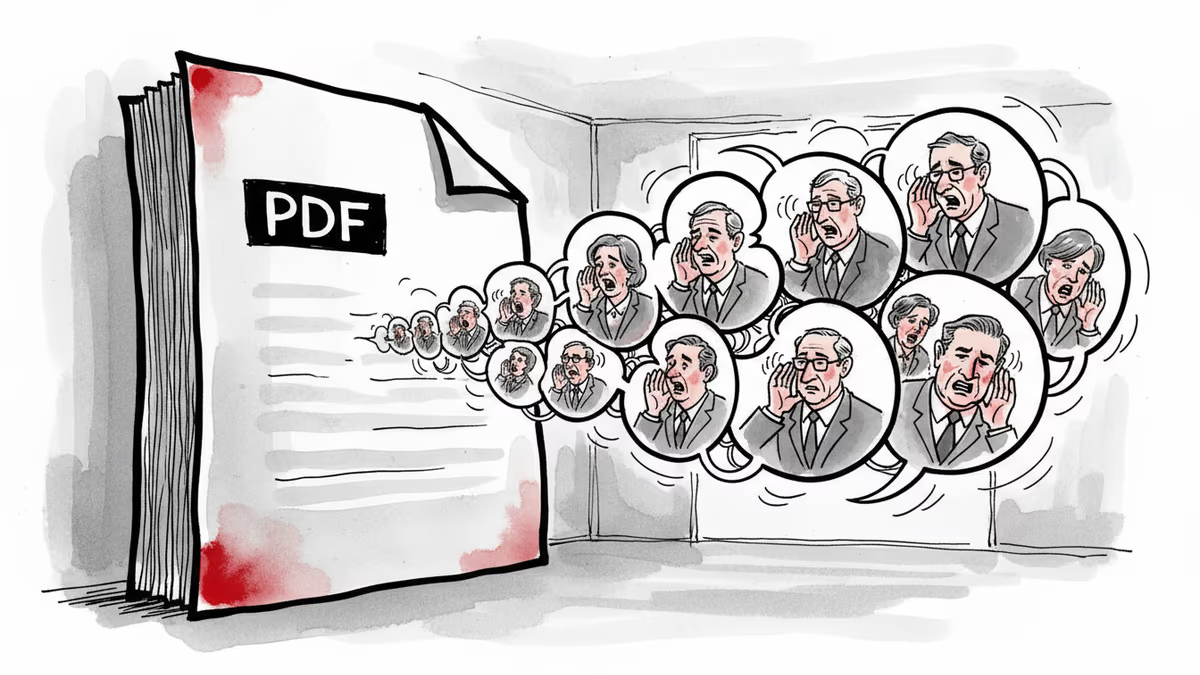
When Government PDFs Accidentally Reveal Too Much
A DHS document about mega detention centers sent to New Hampshire's governor contained embedded comments and metadata exposing staff identities and internal discussions.
The PDF That Said Too Much
Sometimes the most revealing government documents are the ones that weren't meant to reveal anything at all. A Department of Homeland Security PDF about building "mega" detention centers across America accidentally exposed the identities of officials crafting the plan—and their private conversations about it.
The document, detailing ICE's "Detention Reengineering Initiative," was sent to New Hampshire Governor Kelly Ayotte's office. But whoever prepared it forgot a crucial step: scrubbing the metadata and embedded comments that revealed far more than intended.
Jonathan Florentino, director of ICE's Newark Field Office, was listed as the document's author. More intriguingly, internal discussions between officials remained visible as embedded comments—like digital Post-it notes left on a supposedly clean document.
The 60-Day Question That Lingered
Tim Kaiser, deputy chief of staff for US Citizenship and Immigration Services, had asked David Venturella—a former GEO Group executive now advising on detention contracts—to confirm the average stay at mega centers would be 60 days.
Venturella's response, still visible in the published document: "Ideally, I'd like to see a 30-day average for the Mega Center but 60 is fine."

This wasn't meant for public consumption. Yet there it was, offering a rare glimpse into how detention policies get shaped—not through public debate, but through internal negotiations about logistics and capacity.
The Scale of What's Coming
The numbers in the document are staggering. ICE has hired 12,000 new law enforcement officers and plans a "hub and spoke" detention model:
- Regional processing centers: 1,000-1,500 detainees for 3-7 days
- Mega detention facilities: 7,000-10,000 people for an average of 60 days
- Timeline: All facilities operational by November 30, 2026
Beyond detention centers, ICE plans offices and facilities in over 150 locations across nearly every US state. It's an infrastructure expansion on a scale not seen in modern immigration enforcement.
When Communities Push Back
The mega center plan has sparked fierce local resistance. In Surprise, Arizona, hundreds packed a city council meeting after ICE purchased a warehouse. Social Circle, Georgia officials rejected a proposed mega center, citing inadequate water and sewage infrastructure.
The document problems weren't limited to metadata. An economic impact analysis for a New Hampshire site initially referenced "the Oklahoma economy" in its opening lines—suggesting a copy-paste approach to crafting supposedly site-specific assessments.
Authors
Related Articles
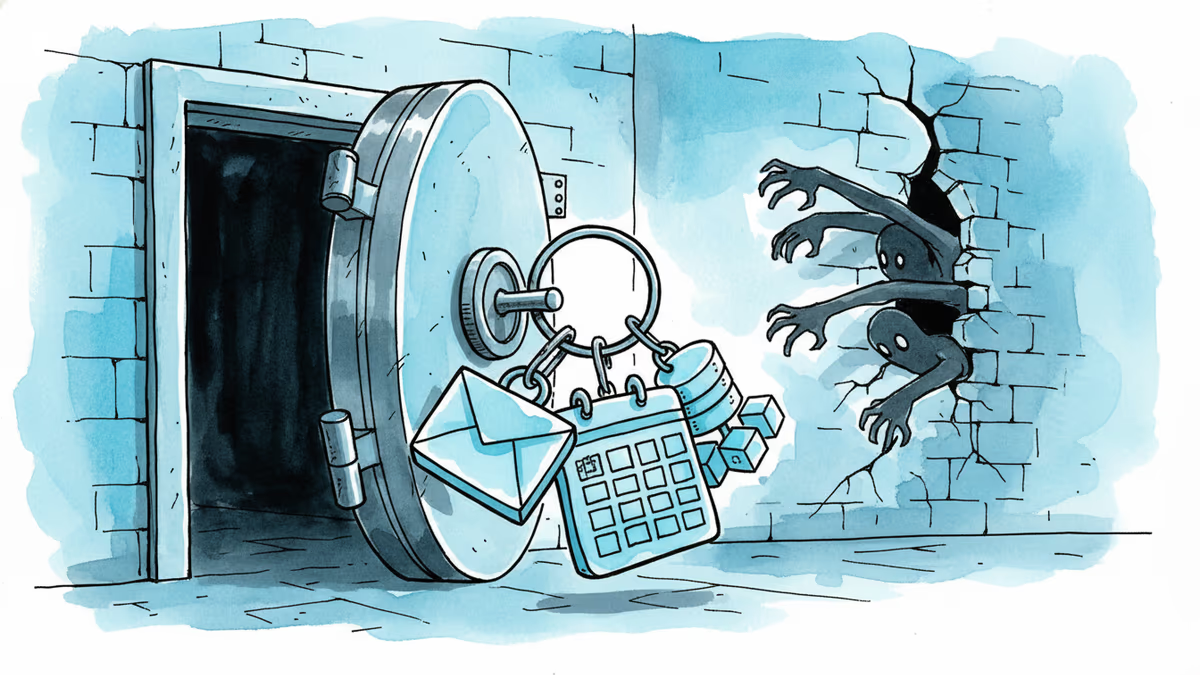
A critical vulnerability in Starlette—downloaded 325 million times per week—puts millions of AI agent servers at risk, exposing stored credentials for email, databases, and third-party services.

GitHub confirmed hackers stole data from 3,800 internal repositories via a poisoned VS Code extension. Here's why developer tools are now the most dangerous attack surface in tech.

A Utah woman was sentenced to life in prison partly because of her Google searches and deleted texts. The Kouri Richins case reveals how digital footprints have become the courtroom's most reliable witness.
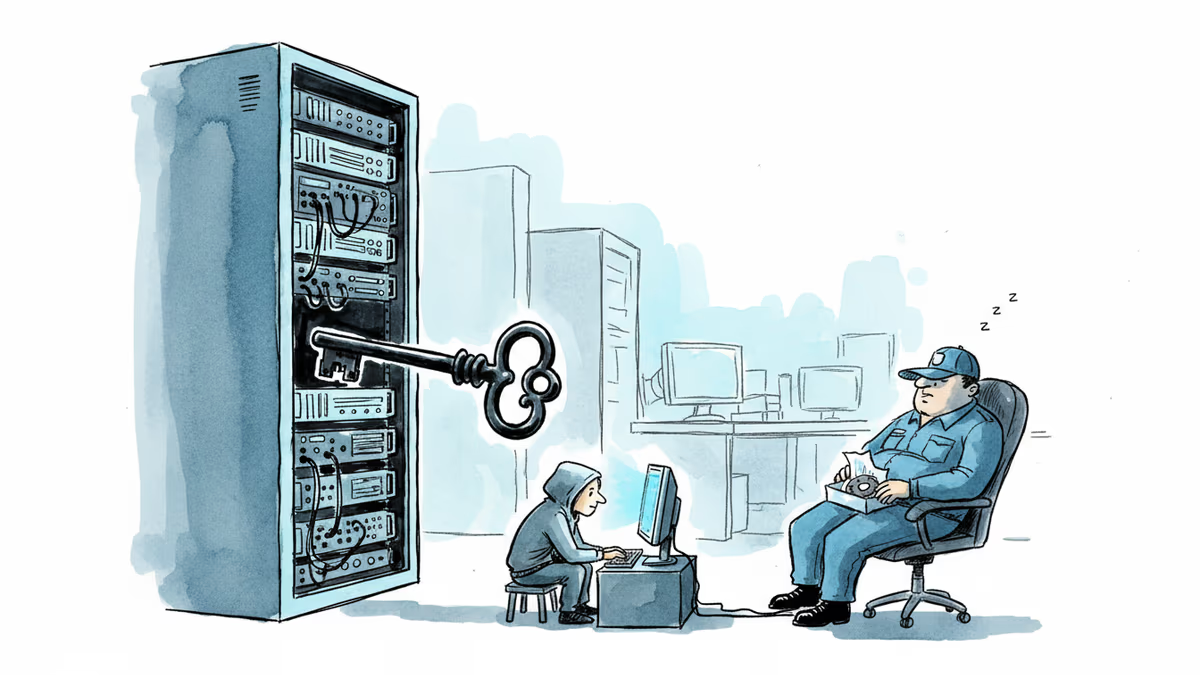
Dirty Frag gives low-privilege users root access on virtually every Linux distro. The exploit code leaked three days ago. Microsoft says attackers are already experimenting with it.
A critical vulnerability in Starlette—downloaded 325 million times per week—puts millions of AI agent servers at risk, exposing stored credentials for email, databases, and third-party services.
GitHub confirmed hackers stole data from 3,800 internal repositories via a poisoned VS Code extension. Here's why developer tools are now the most dangerous attack surface in tech.
A Utah woman was sentenced to life in prison partly because of her Google searches and deleted texts. The Kouri Richins case reveals how digital footprints have become the courtroom's most reliable witness.
Dirty Frag gives low-privilege users root access on virtually every Linux distro. The exploit code leaked three days ago. Microsoft says attackers are already experimenting with it.
Thoughts
Share your thoughts on this article
Sign in to join the conversation