
Inside ICE: Agents Question Mass Deportation Tactics
A leaked forum reveals deep divisions among Homeland Security agents over Trump's immigration crackdown, with officers questioning tactics and organizational priorities.
"Black Ops Gear for a 90-Pound Woman?"
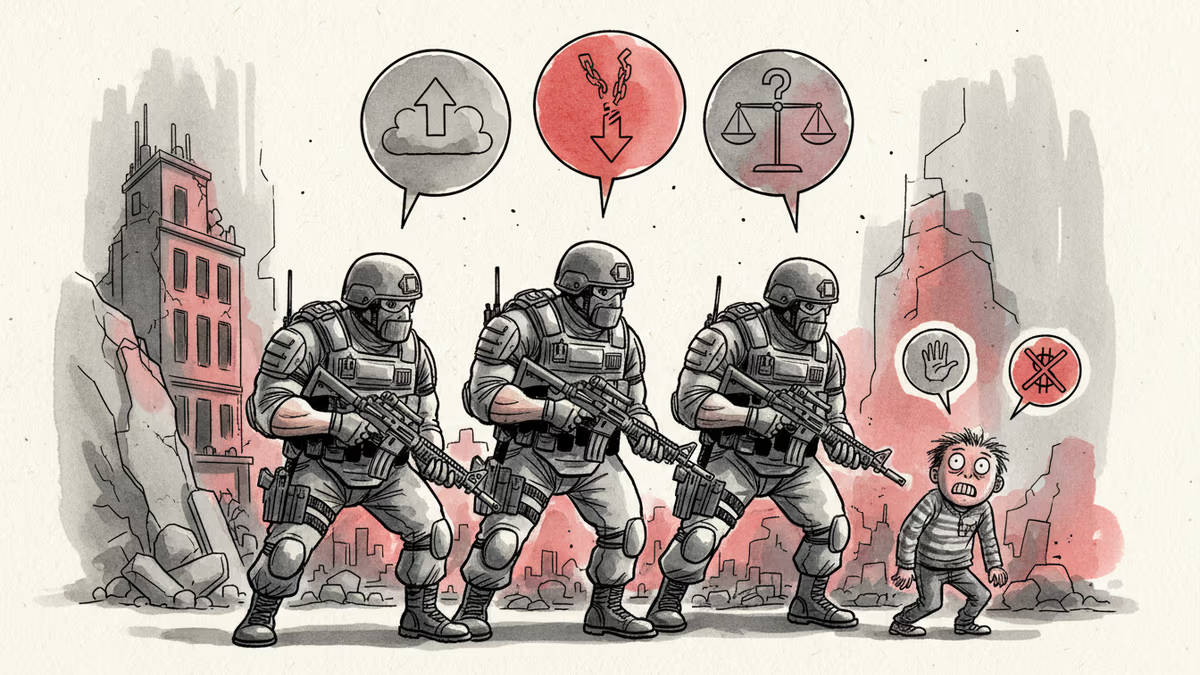
In a private online forum for Homeland Security Investigations (HSI) officers, frustration boiled over last July. One agent criticized colleagues for showing up in "tactical body armor, drop down thigh rigs, balaclavas, multiple M4 magazines, and Punisher patches" to arrest a "90-pound, 5-foot-2 non-violent undocumented immigrant inside a secure federal building."
The forum, operating since 2004 with over 2,000 members, has become an unexpected window into the tensions within America's immigration enforcement apparatus. As the Trump administration's mass deportation efforts intensify, these internal debates reveal a law enforcement community deeply divided about its mission and methods.
Shootings Expose Deep Fractures
The January shootings of protesters Renee Good and Alex Pretti in Minneapolis split the forum down the middle. After ICE agent Jonathan Ross killed Good, some officers defended the action while others questioned its necessity.
"I get that it's legally justified, but he nearly shot one of his partners," wrote one agent. "A US citizen woman shot in the head on TV—for what? Doesn't sit well with me."
Others pushed back hard. "Can't believe we have 'supposed agents' questioning the shooting of a domestic terrorist," one replied, echoing DHS Secretary Kristi Noem's characterization of Good.
The exchange grew heated: "If you think a fat unarmed lesbian in a Honda is a 'terrorist,' then you're a fake cop! I've worked real terrorism cases."
Criminal Investigators Doing Civil Enforcement

The core tension runs deeper than individual incidents. HSI agents are trained as criminal investigators handling drug smuggling, terrorism, and human trafficking. Yet they're increasingly deployed for administrative immigration enforcement—a civil matter, not criminal.
"The use of 1811s [special agents] for administrative immigration enforcement is a complete misuse of resources," one officer complained. "They could be doing crime surges for drugs, child exploitation, gangs—anything would be better. Our reputations would still be intact."
The numbers support this concern. Most immigrants detained or deported in 2025 had no criminal records. Unlawful presence is a civil violation, not a criminal offense.
Organizational Chaos and Burnout
Workplace complaints paint a picture of an agency stretched thin. Officers describe no days off, overtime caps that leave them "working for free," and promised $50,000 sign-on bonuses that materialized as "a grand total of $600 more" in paychecks.
The dysfunction extends to basic operations. "ERO does essentially nothing," one agent wrote about the Enforcement and Removal Operations division. "HSI agents were doing jail pickups and processing while ERO folks gathered around drinking coffee and joking."
Meanwhile, ERO officers fire back that HSI agents "haven't done immigration work in decades" and lack basic knowledge of detention procedures.
The Broader Questions
These internal conflicts reflect larger questions about America's immigration enforcement strategy. When specialized criminal investigators are reassigned to civil enforcement, what criminal cases go uninvestigated? When tactical teams deploy for routine arrests, what message does that send?
Some forum members explicitly worry about their agency's reputation. Others question whether the current approach serves public safety or political theater.
Authors
Related Articles

The Trump administration has gutted the DOJ's Voting Section, pushing out two dozen experienced lawyers and replacing them with loyalists. With 2026 midterms approaching, what does this mean for American democracy?
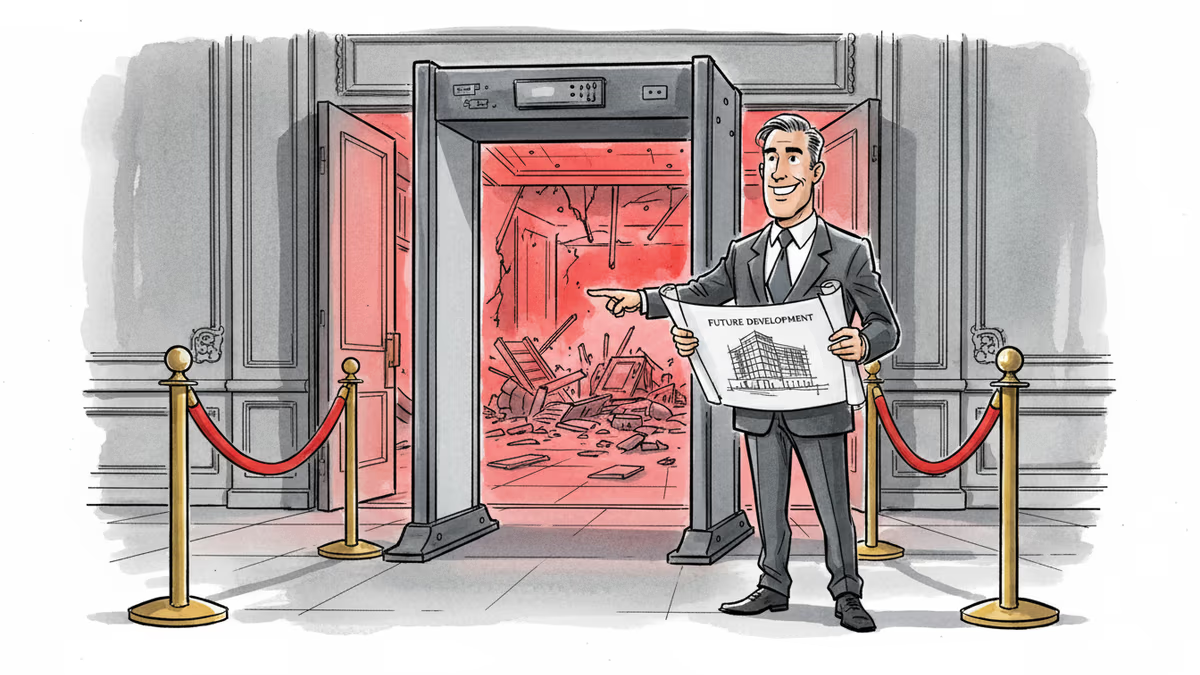
A gunman attacked a Secret Service checkpoint at the White House Correspondents' Dinner. Trump's first public reaction wasn't about security. It was about his $400M ballroom project.

Hours after an armed suspect attempted to breach the White House Correspondents Dinner, Trump used the security scare to publicly defend his White House ballroom project. What does that tell us?
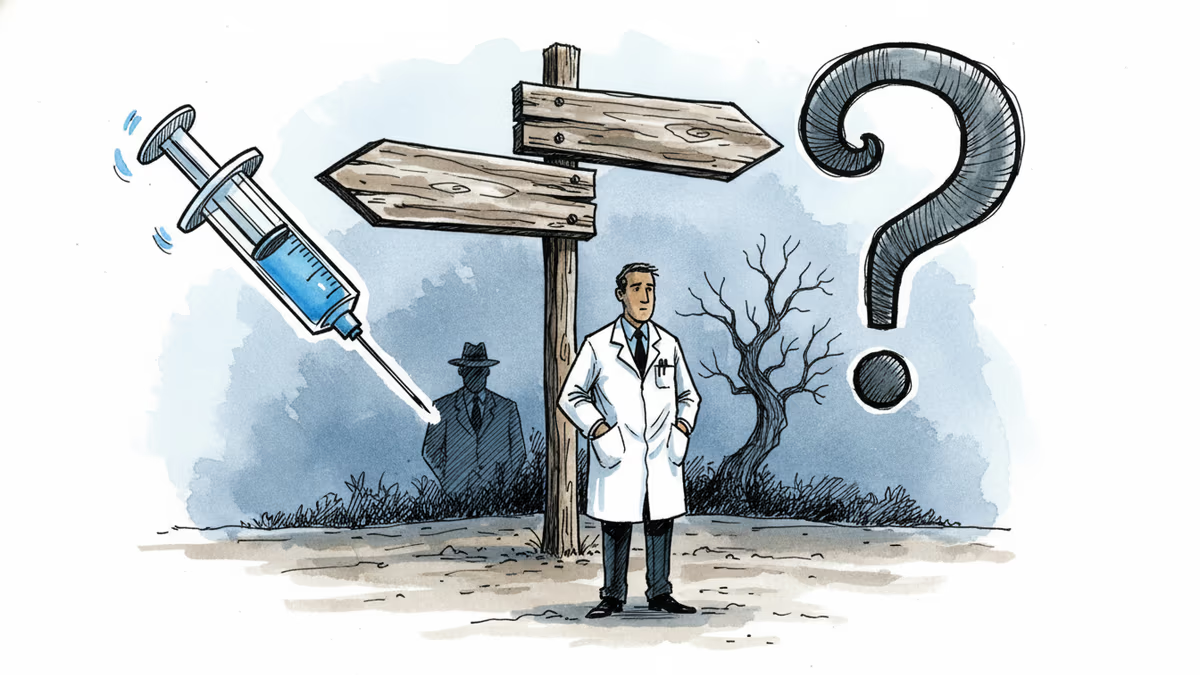
Dr. Erica Schwartz, a pro-vaccine physician with an unimpeachable public health résumé, is Trump's third CDC director nominee—a quiet but pointed rebuke of RFK Jr.'s agenda.
The Trump administration has gutted the DOJ's Voting Section, pushing out two dozen experienced lawyers and replacing them with loyalists. With 2026 midterms approaching, what does this mean for American democracy?
A gunman attacked a Secret Service checkpoint at the White House Correspondents' Dinner. Trump's first public reaction wasn't about security. It was about his $400M ballroom project.
Hours after an armed suspect attempted to breach the White House Correspondents Dinner, Trump used the security scare to publicly defend his White House ballroom project. What does that tell us?
Dr. Erica Schwartz, a pro-vaccine physician with an unimpeachable public health résumé, is Trump's third CDC director nominee—a quiet but pointed rebuke of RFK Jr.'s agenda.
Thoughts
Share your thoughts on this article
Sign in to join the conversation