
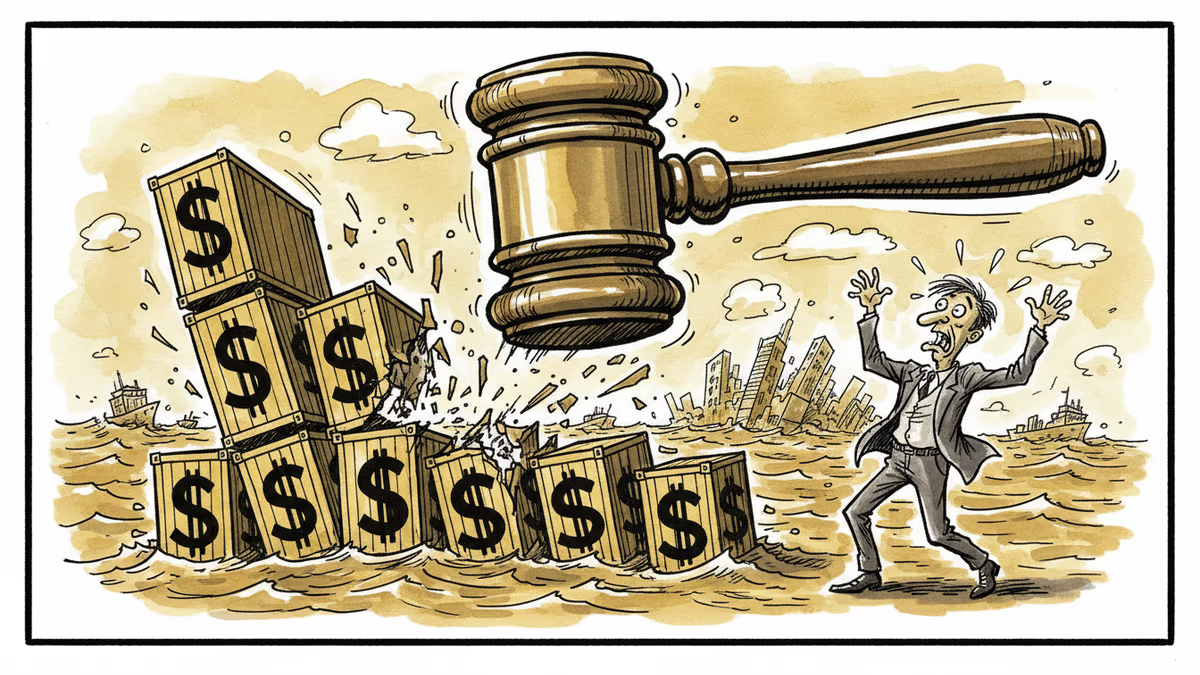
Supreme Court Strikes Down Trump's Emergency Tariffs
US Supreme Court rules against Trump's use of emergency powers for trade tariffs, marking a significant check on presidential authority in international commerce.
$1 Trillion Trade War Hits Constitutional Wall
The US Supreme Court delivered a stunning blow to Donald Trump's trade agenda, striking down tariffs imposed under the International Emergency Economic Powers Act (IEEPA). The 5-4 decision marks the first time the Court has limited presidential tariff authority in over three decades.
The ruling affects duties on imports worth more than $1 trillion annually — from Chinese electronics to European auto parts. What started as targeted trade pressure has become a constitutional crisis over the limits of executive power.
Trump's unprecedented use of the 1977 emergency law for routine trade disputes crossed a line the Court wasn't willing to ignore. No previous president had weaponized IEEPA for commercial competition.
Justices Draw Line on Emergency Powers
The majority opinion, written by Chief Justice Roberts, was blunt: "National emergencies require actual threats to national security, not trade deficits or competitive disadvantage."
Two conservative justices joined the majority, signaling bipartisan judicial concern about executive overreach. Justice Gorsuch's concurring opinion went further, warning that "elastic interpretations of emergency powers threaten the constitutional separation of powers."
The dissent, led by Justice Thomas, argued that economic security is national security in the modern era. But even Thomas acknowledged the "troubling precedent" of using emergency powers for trade policy.
Trump's legal team had argued that China's trade practices constituted an economic emergency. The Court wasn't buying it. "If trade competition justifies emergency powers," Roberts wrote, "then every economic policy becomes a national emergency."

Winners and Losers Emerge Quickly
Tech companies are the biggest winners. Apple, Tesla, and other firms heavily reliant on Chinese supply chains saw immediate stock gains. The 25% tariffs on semiconductors and batteries are now legally questionable.
Manufacturing unions and domestic steel producers face the biggest losses. The United Steelworkers called the decision "a gift to Chinese dumping." Domestic solar panel manufacturers worry about renewed Chinese competition.
But the ruling isn't total victory for free traders. Tariffs imposed under other authorities — like Section 301 (intellectual property) and Section 232 (national security) — remain intact. The 200% duties on Chinese solar panels, for instance, stand firm.
Trade Partnership Worldwide estimates the decision will normalize $300 billion in annual trade flows, potentially reducing consumer prices by 1.2% over two years.
Congress Scrambles to Fill Legal Vacuum
The ruling creates immediate pressure on Congress to clarify trade authority. Senate Majority Leader Chuck Schumer announced hearings on "modernizing trade law for the 21st century."
Republican senators are split. Trade hawks want new legislation expanding presidential tariff powers. Fiscal conservatives welcome limits on executive authority. "We can't have presidents treating the economy like their personal sandbox," said Senator Rand Paul.
The Business Roundtable is pushing for comprehensive trade reform, while labor unions demand stronger anti-dumping measures. Both sides agree the current legal framework is obsolete.
International allies are watching closely. The EU has already signaled interest in negotiating new trade agreements, sensing an opportunity while US policy remains unsettled.
Authors
Related Articles
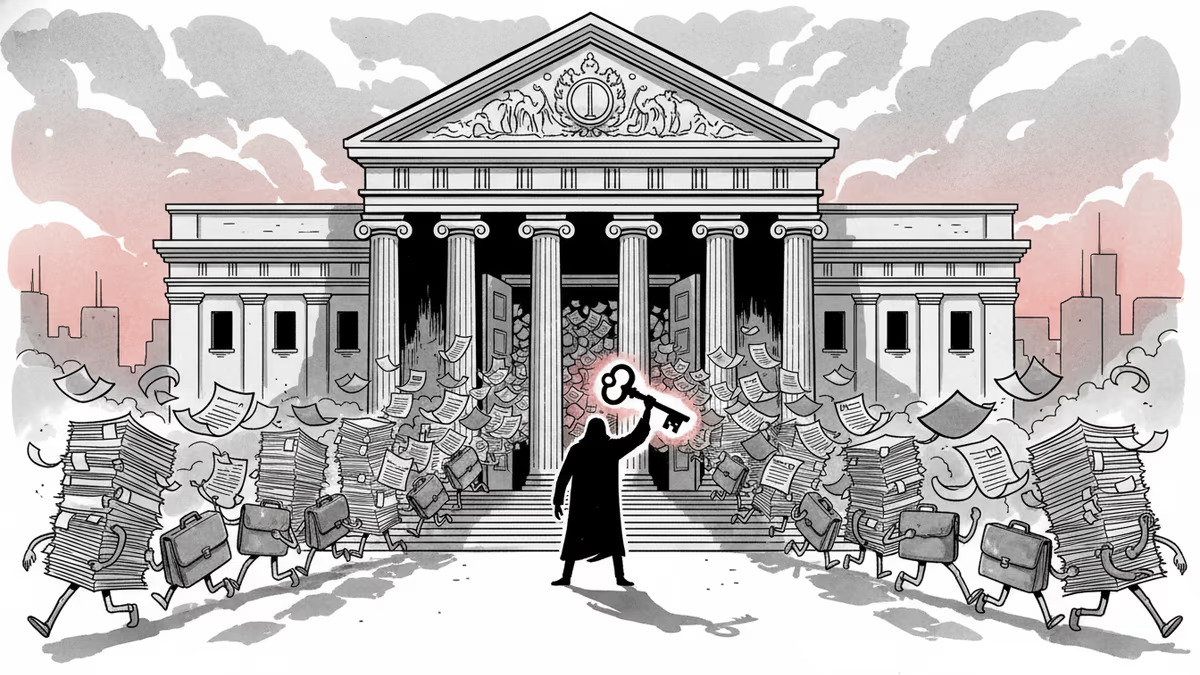
The Trump administration has gutted the DOJ's Voting Section, pushing out two dozen experienced lawyers and replacing them with loyalists. With 2026 midterms approaching, what does this mean for American democracy?
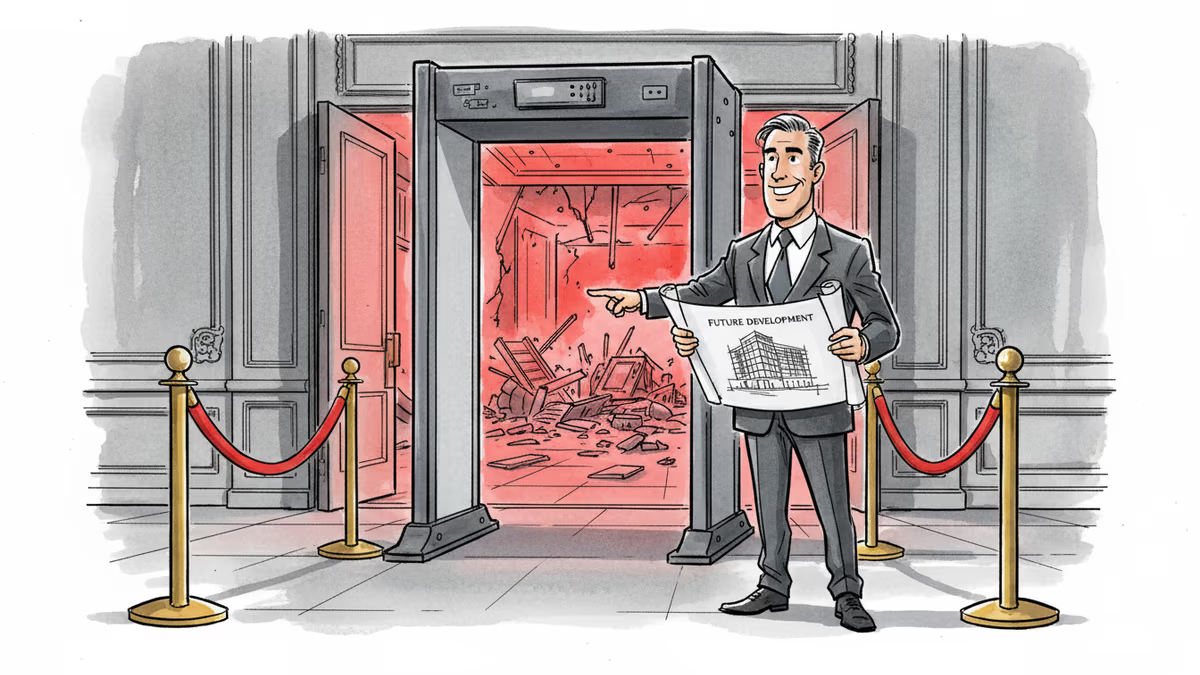
A gunman attacked a Secret Service checkpoint at the White House Correspondents' Dinner. Trump's first public reaction wasn't about security. It was about his $400M ballroom project.
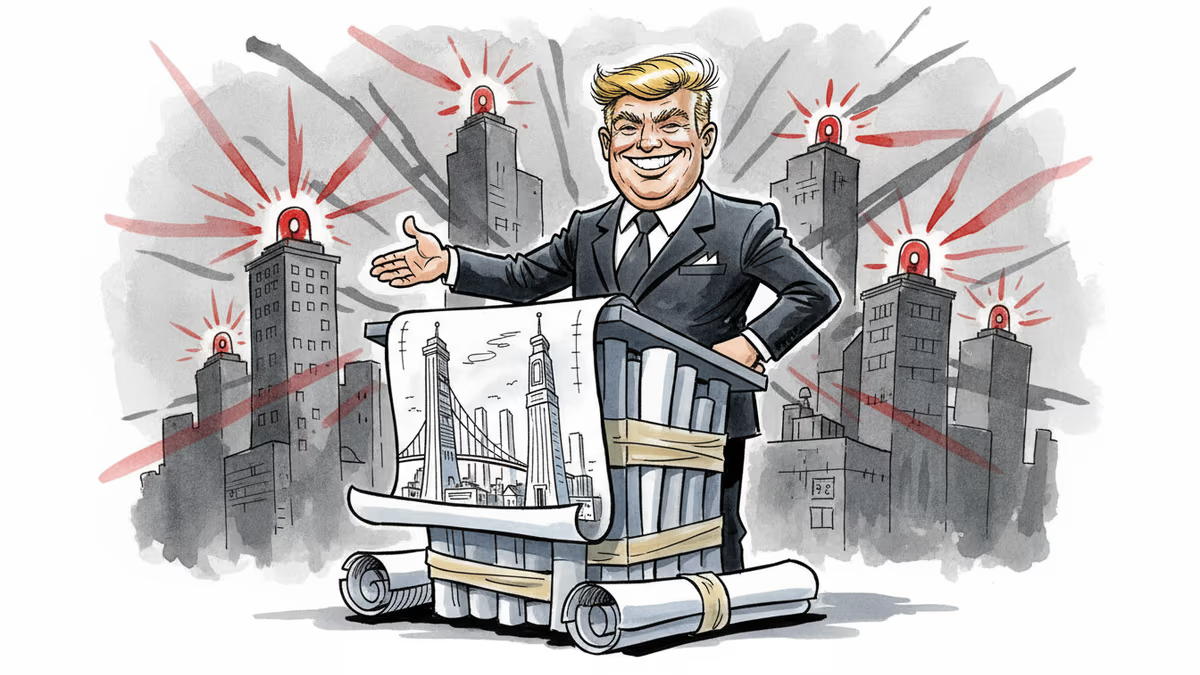
Hours after an armed suspect attempted to breach the White House Correspondents Dinner, Trump used the security scare to publicly defend his White House ballroom project. What does that tell us?
Dr. Erica Schwartz, a pro-vaccine physician with an unimpeachable public health résumé, is Trump's third CDC director nominee—a quiet but pointed rebuke of RFK Jr.'s agenda.
The Trump administration has gutted the DOJ's Voting Section, pushing out two dozen experienced lawyers and replacing them with loyalists. With 2026 midterms approaching, what does this mean for American democracy?
A gunman attacked a Secret Service checkpoint at the White House Correspondents' Dinner. Trump's first public reaction wasn't about security. It was about his $400M ballroom project.
Hours after an armed suspect attempted to breach the White House Correspondents Dinner, Trump used the security scare to publicly defend his White House ballroom project. What does that tell us?
Dr. Erica Schwartz, a pro-vaccine physician with an unimpeachable public health résumé, is Trump's third CDC director nominee—a quiet but pointed rebuke of RFK Jr.'s agenda.
Thoughts
Share your thoughts on this article
Sign in to join the conversation