
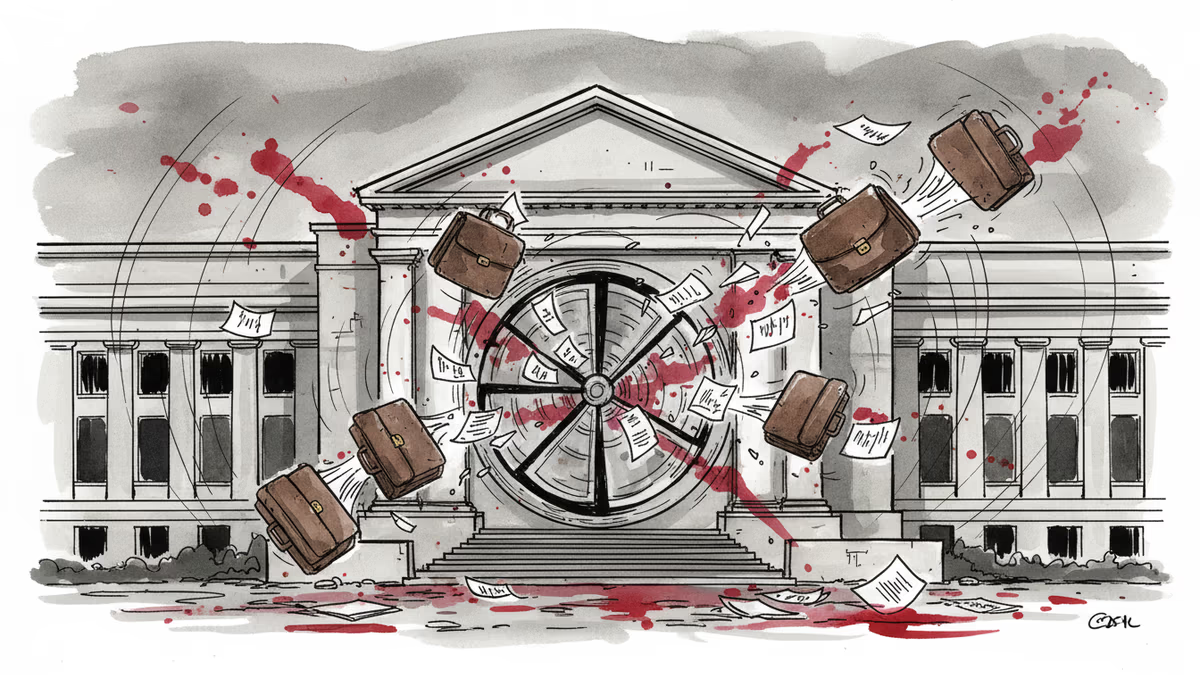
Why America's Top Health Agency Has Been Headless for 6 Months
The CDC has cycled through 6 acting directors under Trump's second term. Is this chaos by design or dysfunction? What it means for US public health preparedness.
The World's Premier Health Agency Without a Leader
For six months, the US Centers for Disease Control and Prevention has operated without a permanent director. Last week, acting director Jim O'Neill departed, making Jay Bhattacharya—who already runs the National Institutes of Health—the sixth temporary leader of America's flagship public health agency.
This isn't just bureaucratic musical chairs. Since Trump's second term began, the CDC has lost 25% of its workforce to mass layoffs orchestrated by Health Secretary Robert F. Kennedy Jr. The agency that once led the global response to health crises now can't seem to keep its own house in order.
The Four-Week Director Who Wouldn't Comply
Susan Monarez lasted exactly four weeks as CDC director before her firing in July 2025. Her congressional testimony revealed why: she refused to "blindly approve Kennedy's changes to federal vaccine policy." During her brief tenure, a gunman attacked the CDC's Atlanta headquarters, killing a police officer—reportedly motivated by "discontent" with Covid-19 vaccines.
The administration's original pick, former Congressman Dave Weldon, was a vocal vaccine skeptic who couldn't secure enough Senate votes even with Republican support. His nomination was quietly withdrawn.
One Person, Two Agencies, 600 Miles Apart
Bhattacharya now oversees both the NIH in Bethesda, Maryland, and the CDC in Atlanta, Georgia—600 miles apart. It's like asking someone to simultaneously manage air traffic control while designing the planes, says George Washington University's Y. Tony Yang.

"NIH is a grantmaking research behemoth; CDC is an operational, field-facing emergency-and-prevention agency," Yang explains. The geographic separation alone makes effective leadership nearly impossible.
Ronald Nahass, president of the Infectious Diseases Society of America, warns the consequences could be devastating: "We are woefully unprepared for a bioterror attack or novel pathogen outbreak without leaders capable of directing a national response."
Chaos by Design?
This dysfunction might be intentional. A 2023 law championed by Senator Ted Cruz requires CDC directors to undergo Senate confirmation—a response to Republican anger over Covid-19 policies. The irony? This "check on power" has given the Trump administration a workaround.
Without a nominee, the administration can install temporary leaders to implement its agenda without Senate scrutiny. Under the Federal Vacancies Reform Act, acting directors have 210 days to serve—a clock that runs out March 25 for the CDC role.
"Trump has a history of avoiding the Senate confirmation process when it's likely to be difficult," notes Bruce Mirken of Defend Public Health, a grassroots network formed after Kennedy's nomination.
The Governance Gap
Stanford Law's Anne Joseph O'Connell warns that having one confirmed official juggle multiple agencies "undermines the spirit" of federal vacancy laws. "It is hard to do two full-time jobs," she says—especially when those jobs involve fundamentally different missions separated by hundreds of miles.
Meanwhile, critical public health functions suffer. Surveillance data on pathogens faces delays, measles guidance lacks clarity, and state health departments lose federal support due to CDC staffing cuts.
Authors
Related Articles
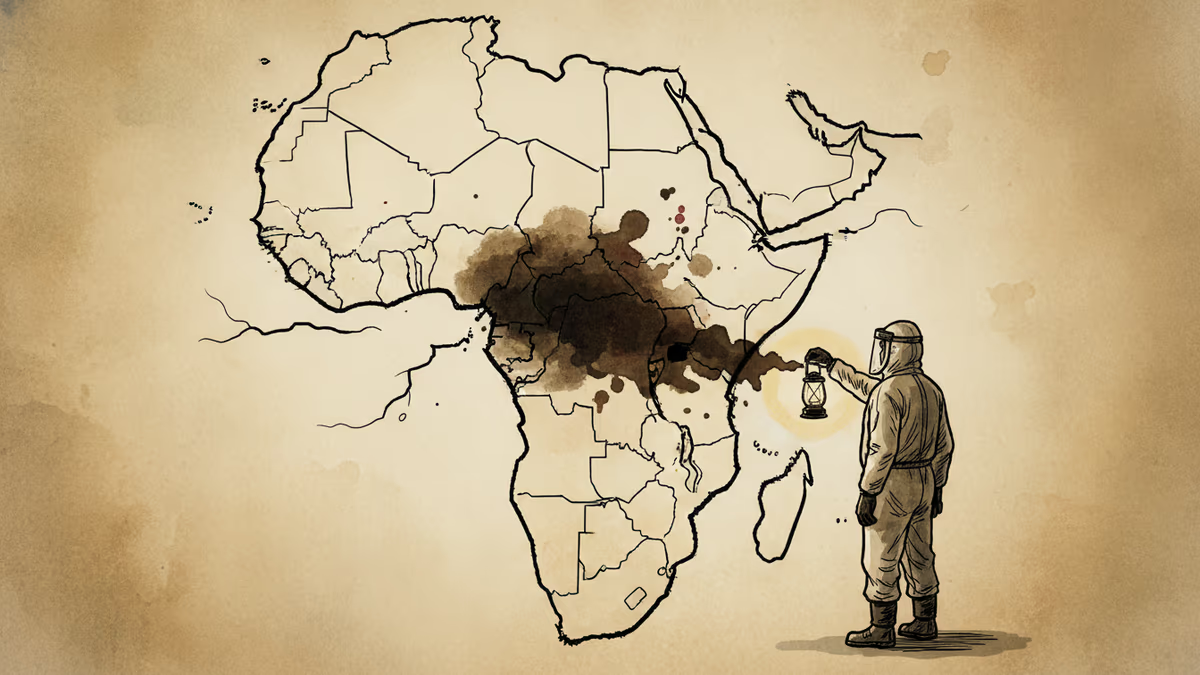
The DRC Ebola outbreak has already crossed into Uganda and earned a WHO emergency declaration. The case count isn't the alarming part—the gaps in detection are.

The Trump administration has gutted the DOJ's Voting Section, pushing out two dozen experienced lawyers and replacing them with loyalists. With 2026 midterms approaching, what does this mean for American democracy?
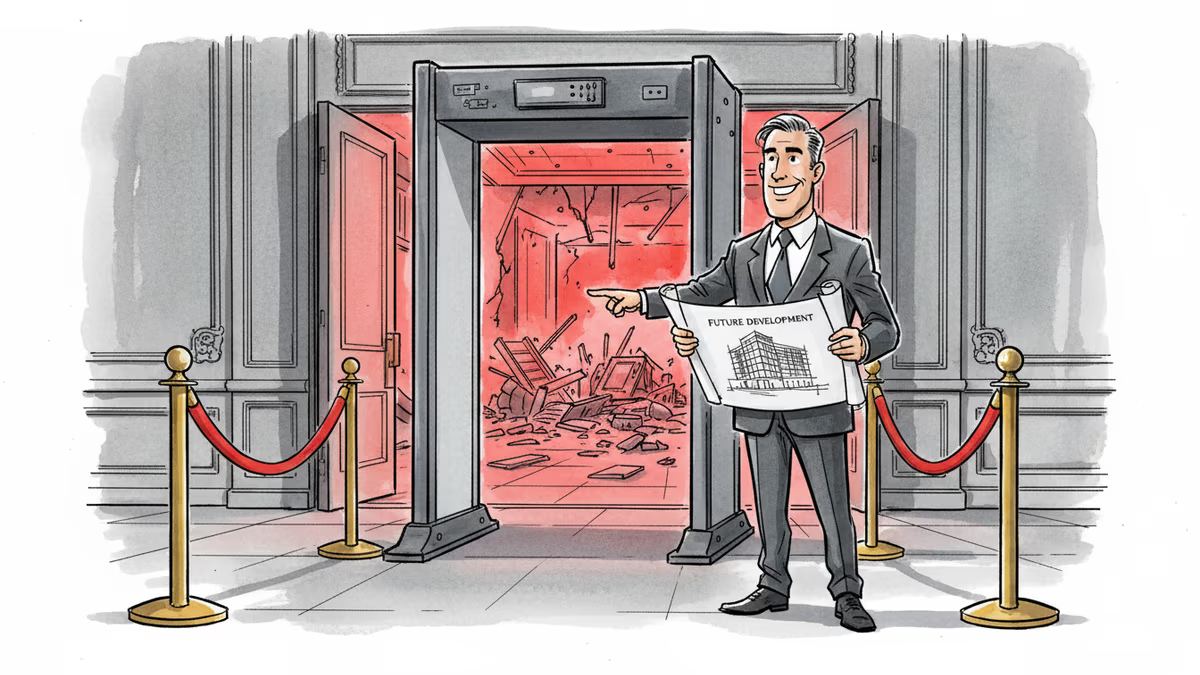
A gunman attacked a Secret Service checkpoint at the White House Correspondents' Dinner. Trump's first public reaction wasn't about security. It was about his $400M ballroom project.
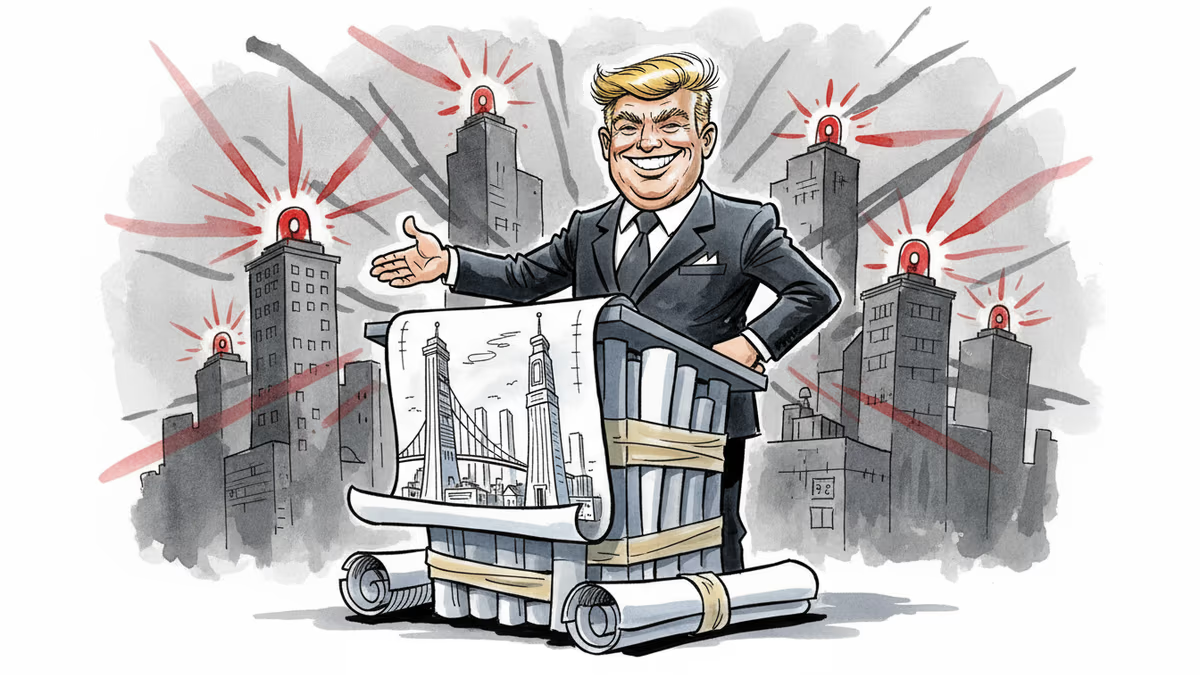
Hours after an armed suspect attempted to breach the White House Correspondents Dinner, Trump used the security scare to publicly defend his White House ballroom project. What does that tell us?
The DRC Ebola outbreak has already crossed into Uganda and earned a WHO emergency declaration. The case count isn't the alarming part—the gaps in detection are.
The Trump administration has gutted the DOJ's Voting Section, pushing out two dozen experienced lawyers and replacing them with loyalists. With 2026 midterms approaching, what does this mean for American democracy?
A gunman attacked a Secret Service checkpoint at the White House Correspondents' Dinner. Trump's first public reaction wasn't about security. It was about his $400M ballroom project.
Hours after an armed suspect attempted to breach the White House Correspondents Dinner, Trump used the security scare to publicly defend his White House ballroom project. What does that tell us?
Thoughts
Share your thoughts on this article
Sign in to join the conversation