
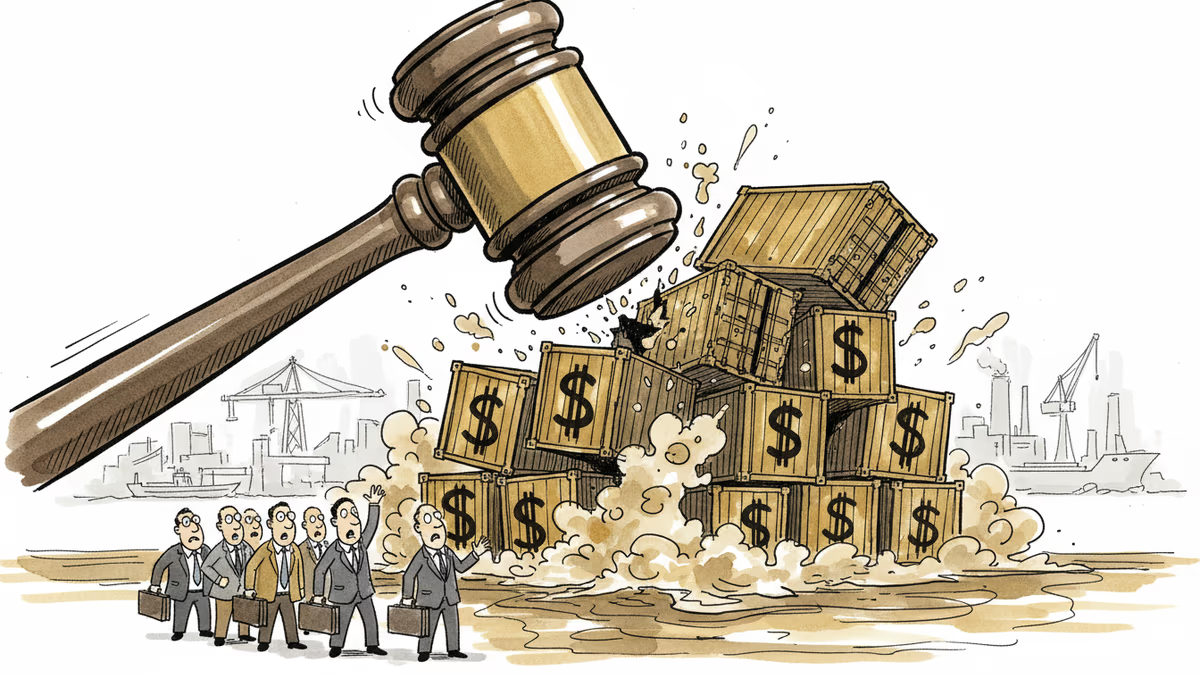
Supreme Court Strikes Down Trump's Emergency Tariffs in $200B Trade Shakeup
Supreme Court rules 6-3 that Trump lacked authority for emergency tariffs. Billions in paid tariffs now face legal challenges as businesses seek refunds
$200 Billion in Tariffs Just Lost Their Legal Foundation
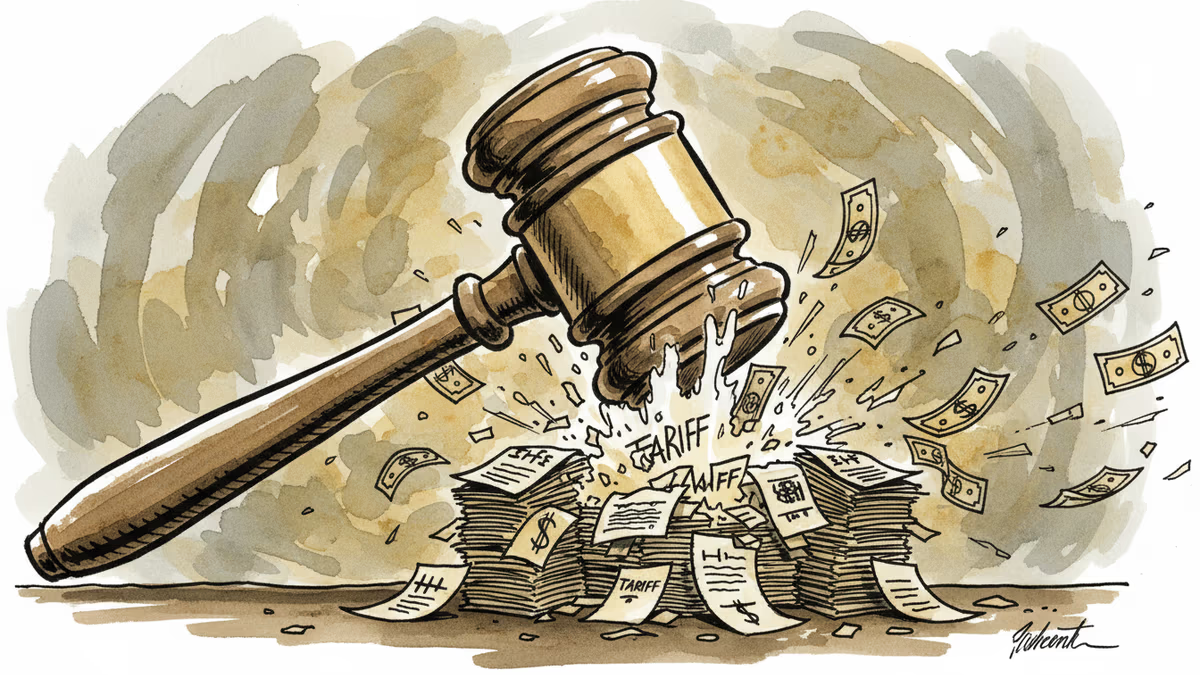
The Supreme Court delivered a crushing blow to executive trade power Friday, ruling 6-3 that Donald Trump lacked authority to impose emergency tariffs under the guise of blocking drug flows and reducing trade deficits.
The decision doesn't just invalidate future presidential tariff powers—it throws into question billions already collected from American businesses. Companies that paid Trump's ever-changing "reciprocal" tariffs, which fluctuated wildly during trade negotiations, now face a complex legal maze to recover their money.
Businesses Caught Between Relief and Reality
Import-heavy industries are celebrating, but cautiously. Walmart, Target, and other major retailers that absorbed billions in tariff costs see vindication in the ruling. "This confirms what we've argued for years—tariffs are taxes on American consumers," said a retail industry spokesperson.
Yet the path to actual relief remains murky. The Court remanded cases to lower courts, meaning businesses face years of litigation to recoup payments. Many smaller importers lack the legal resources for prolonged court battles, potentially leaving them empty-handed despite winning the constitutional argument.

The IEEPA's Limits Finally Defined
At the heart of Friday's ruling lies a fundamental question: Can a president weaponize emergency powers for routine trade disputes? The Court's answer was a resounding no.
Trump had invoked the International Emergency Economic Powers Act (IEEPA) to justify tariffs on China, Mexico, and others, claiming national security emergencies. But Justice Roberts, writing for the majority, drew a sharp line: "Trade policy belongs to Congress, not presidential whim."
This interpretation will constrain future presidents—including Biden, who maintained many Trump-era tariffs. The ruling essentially forces any tariff policy back through the traditional legislative process, where industry lobbying and political horse-trading typically water down protectionist measures.
Global Supply Chains Recalculate
Multinational corporations are already adjusting strategies. Apple and Tesla, which built complex supply chains around tariff assumptions, now face new variables. Some may accelerate reshoring plans, while others might reverse costly diversification efforts away from China.
The biggest winners could be American consumers, who ultimately bore tariff costs through higher prices. But the transition won't be immediate—existing supply contracts and inventory positions mean price relief could take months to materialize.
Authors
Related Articles
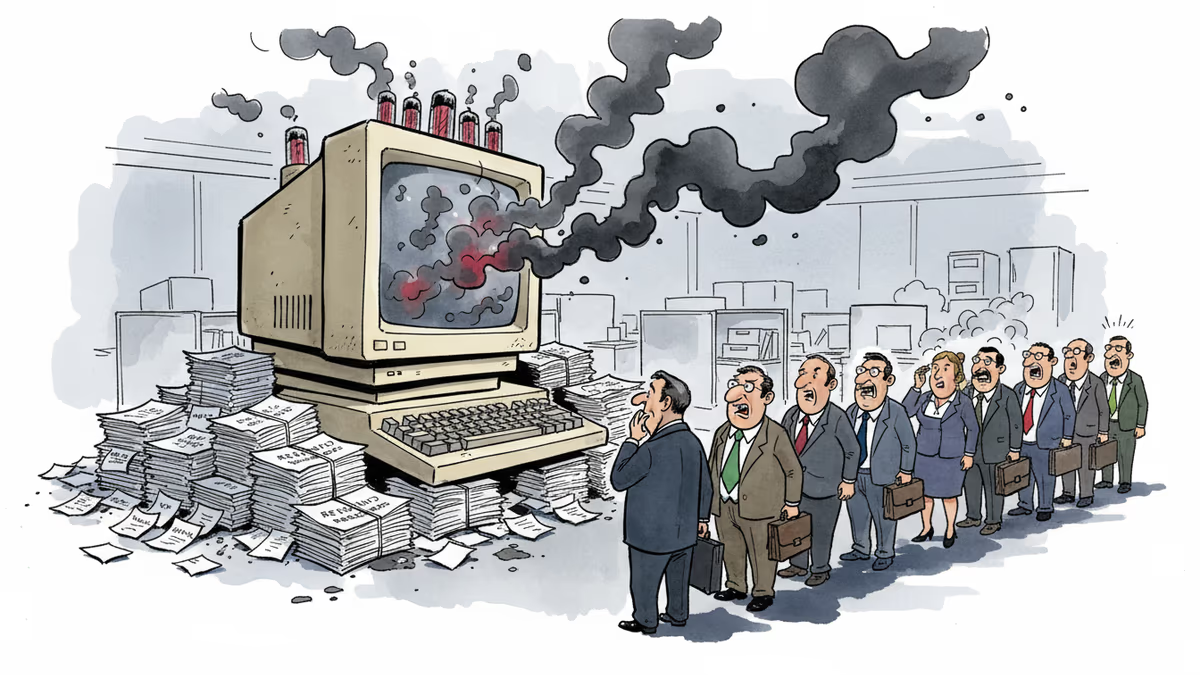
US Customs admits its decades-old system can't process billions in Trump tariff refunds despite Supreme Court ruling. What happens when analog government meets digital-age commerce?
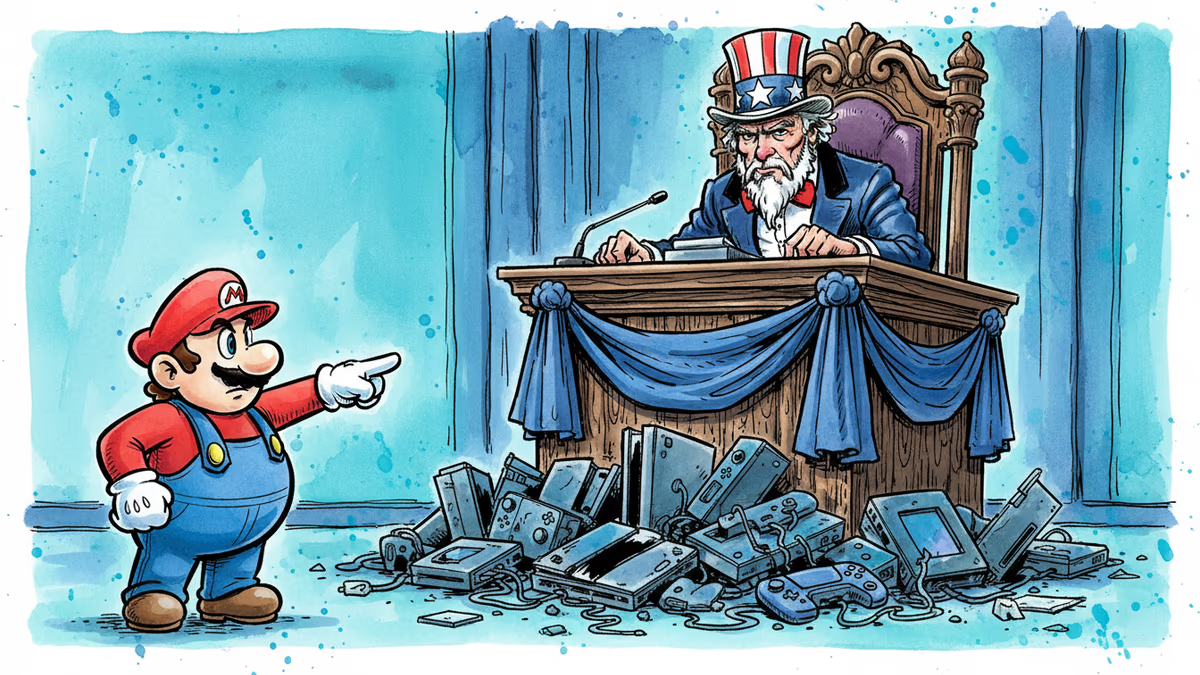
Nintendo has filed a lawsuit against the US government over Trump's tariffs, demanding refunds with interest. This legal battle reveals deeper questions about trade policy and corporate rights.
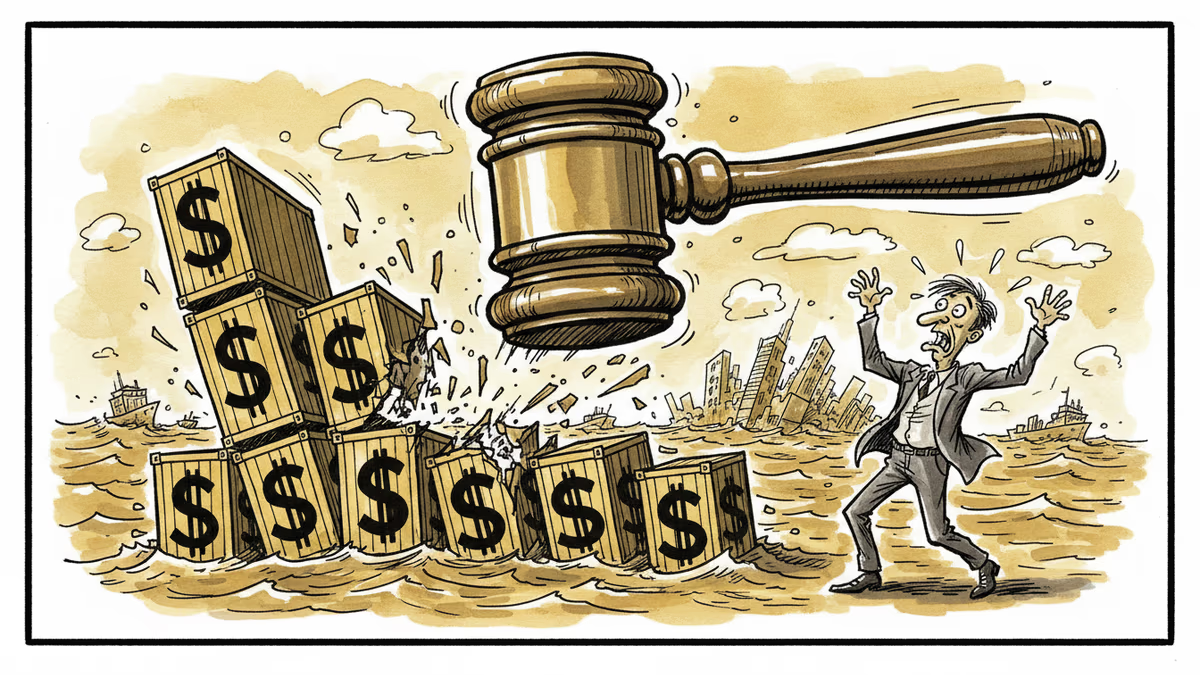
US Supreme Court rules against Trump's use of emergency powers for trade tariffs, marking a significant check on presidential authority in international commerce.
US Supreme Court overturns most Trump tariffs in 6-3 ruling, potentially triggering $175B in refunds while administration scrambles for backup plan
US Customs admits its decades-old system can't process billions in Trump tariff refunds despite Supreme Court ruling. What happens when analog government meets digital-age commerce?
Nintendo has filed a lawsuit against the US government over Trump's tariffs, demanding refunds with interest. This legal battle reveals deeper questions about trade policy and corporate rights.
US Supreme Court rules against Trump's use of emergency powers for trade tariffs, marking a significant check on presidential authority in international commerce.
US Supreme Court overturns most Trump tariffs in 6-3 ruling, potentially triggering $175B in refunds while administration scrambles for backup plan
Thoughts
Share your thoughts on this article
Sign in to join the conversation