
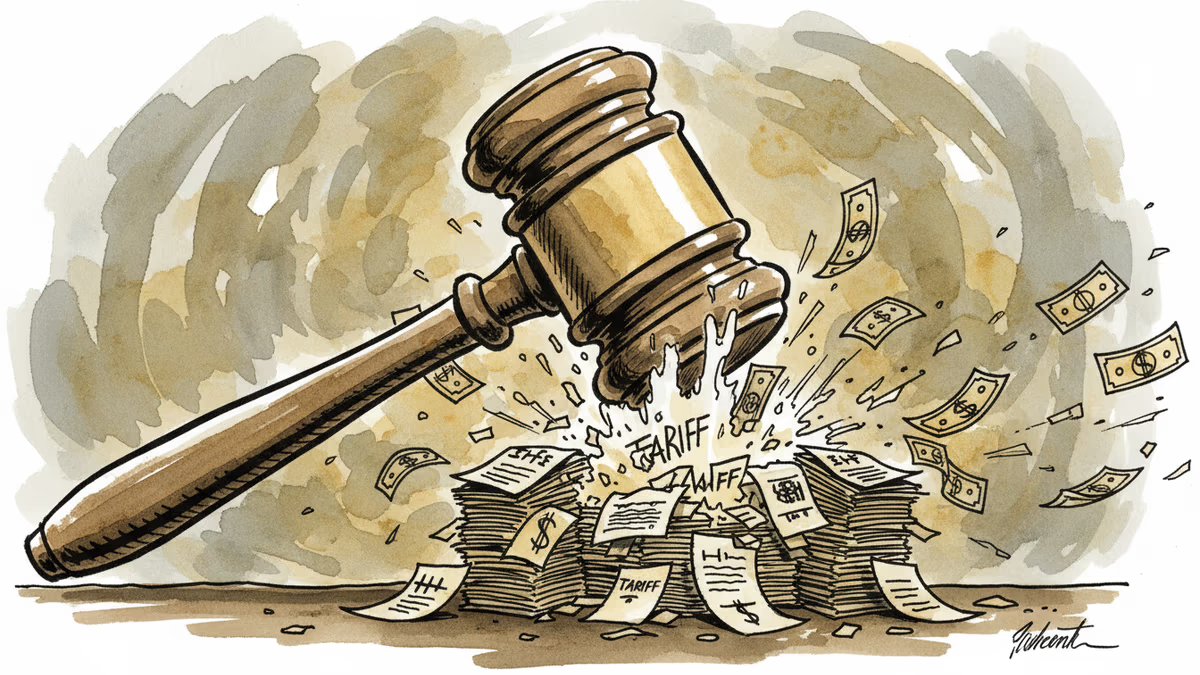
$175 Billion Tariff Refund: Supreme Court Slaps Down Trump
US Supreme Court overturns most Trump tariffs in 6-3 ruling, potentially triggering $175B in refunds while administration scrambles for backup plan
$175 billion. That's the staggering amount American companies could get back after the Supreme Court delivered a rare but decisive blow to President Trump's trade war on Friday. In a 6-3 ruling that sent shockwaves through Washington, the justices essentially told the administration: you can't tax your way to trade policy without Congress.
Fifty Years of Law, One Big Misread
The problem wasn't the tariffs themselves—it was the legal gymnastics used to justify them. Trump's team had been wielding the International Emergency Economic Powers Act (IEEPA) like a Swiss Army knife, using it to slap tariffs on everything from Chinese electronics to, infamously, "islands with only penguin populations."
Chief Justice John Roberts wasn't buying it. "In IEEPA's half century of existence, no President has invoked the statute to impose any tariffs, let alone tariffs of this magnitude and scope," he wrote. Translation: just because you can doesn't mean you should.
The ruling represents something rare in the Trump era—institutional pushback that actually stuck. Even with a conservative-leaning court, six justices drew the line at executive overreach.
Winners, Losers, and the Scramble Begins
Corporate America's reaction split predictably. Costco, Prada, BYD, and Goodyear—companies that had already filed refund lawsuits—celebrated. But small business advocates worried about what comes next.

"Small businesses are rightfully worried that the administration will respond to this legal defeat by simply reimposing the same tariff policy through other means," warned Dan Anthony from the coalition We Pay the Tariffs. He's not wrong—steel, aluminum, and copper tariffs remain untouched because they were imposed under different authorities.
Meanwhile, at a White House breakfast with governors, Trump reportedly called the ruling a "disgrace" and hinted at a backup plan. The question isn't whether he'll try again, but how.
The Refund Circus Begins
Here's where things get messy. $175 billion doesn't just magically appear in company bank accounts. The refund process will likely trigger a bureaucratic nightmare that could take years to sort out.
Some saw this coming. Cantor Fitzgerald—run by Commerce Secretary Howard Lutnick's sons—had been offering clients ways to bet on tariff overturns since July 2025. Wall Street, it seems, reads Supreme Court tea leaves better than Pennsylvania Avenue.
Beyond the Headlines: What This Really Means
This ruling isn't just about tariffs—it's about presidential power in the 21st century. For decades, Congress has been ceding trade authority to the executive branch. Friday's decision suggests the Supreme Court is ready to pump the brakes on that trend.
But don't expect Trump to go quietly. Other tariff authorities exist, though they come with more procedural hurdles and lengthy trade investigations. The administration could pivot to national security justifications, anti-dumping measures, or sector-specific authorities.
For businesses, the uncertainty continues. While some will celebrate potential refunds, others are already bracing for Tariff Policy 2.0—potentially more targeted but equally disruptive.
Authors
Related Articles
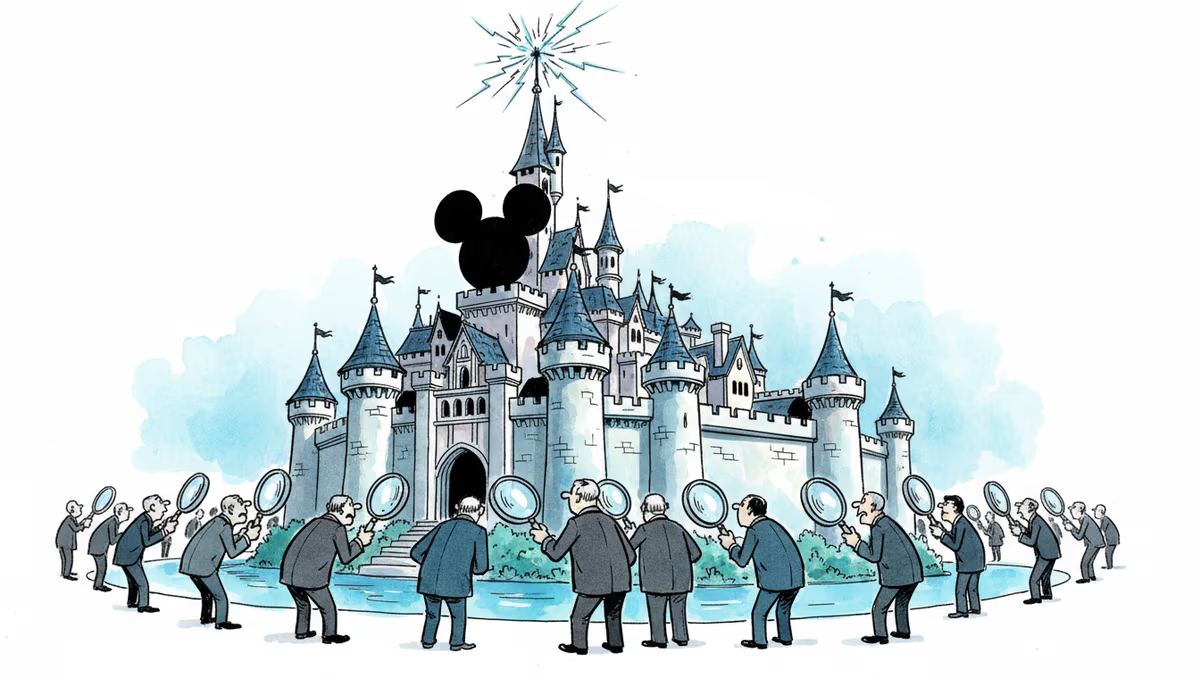
Josh D'Amaro took over Disney with a bold Disney Plus vision. Days later, he's in a First Amendment fight with the Trump administration over The View. What does this mean for media freedom?
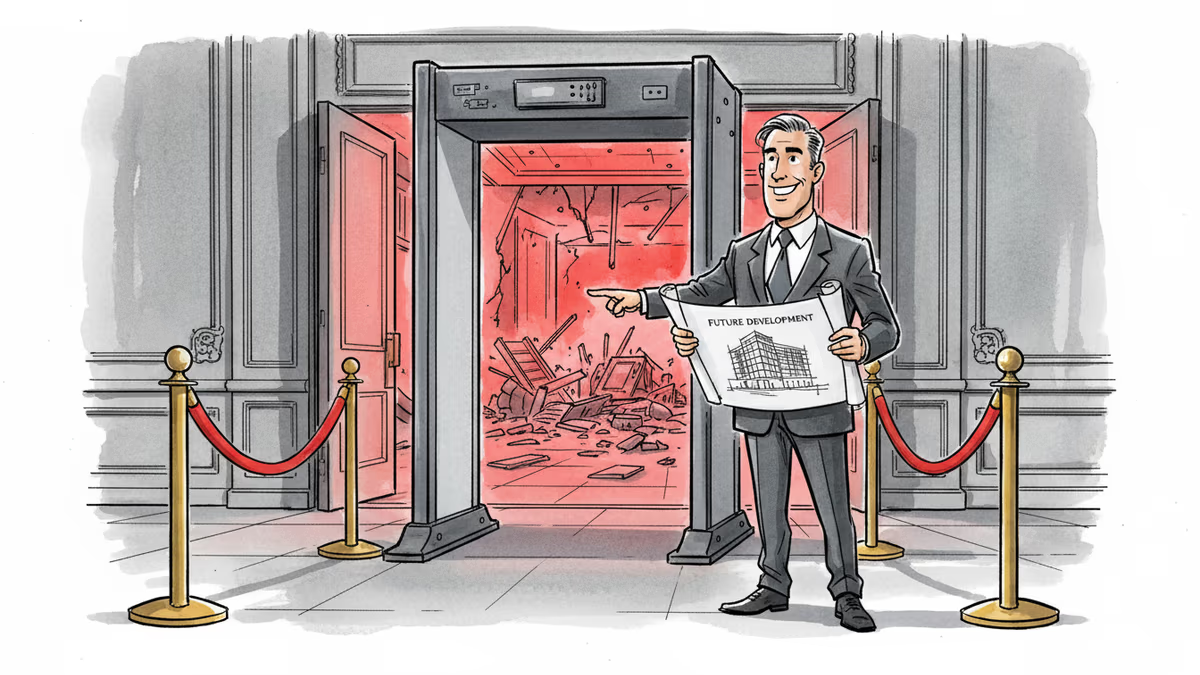
A gunman attacked a Secret Service checkpoint at the White House Correspondents' Dinner. Trump's first public reaction wasn't about security. It was about his $400M ballroom project.
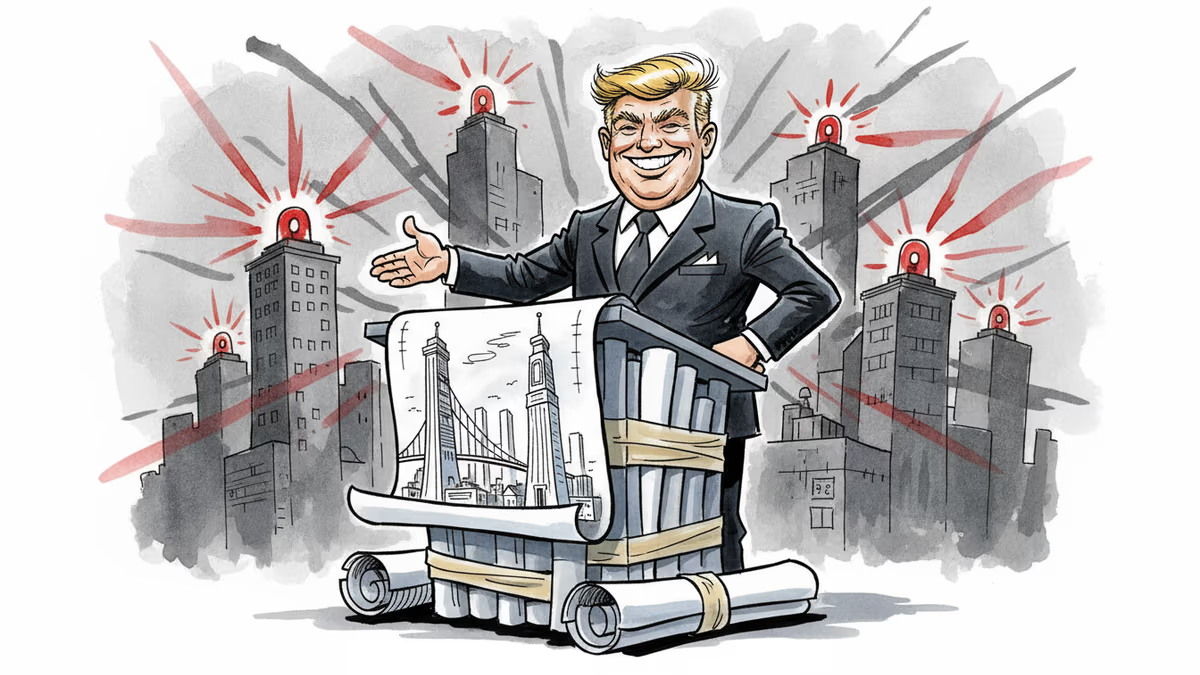
Hours after an armed suspect attempted to breach the White House Correspondents Dinner, Trump used the security scare to publicly defend his White House ballroom project. What does that tell us?
As Washington D.C. enters another political spring, the battle over Big Tech regulation is heating up — and the stakes extend far beyond Silicon Valley.
Josh D'Amaro took over Disney with a bold Disney Plus vision. Days later, he's in a First Amendment fight with the Trump administration over The View. What does this mean for media freedom?
A gunman attacked a Secret Service checkpoint at the White House Correspondents' Dinner. Trump's first public reaction wasn't about security. It was about his $400M ballroom project.
Hours after an armed suspect attempted to breach the White House Correspondents Dinner, Trump used the security scare to publicly defend his White House ballroom project. What does that tell us?
As Washington D.C. enters another political spring, the battle over Big Tech regulation is heating up — and the stakes extend far beyond Silicon Valley.
Thoughts
Share your thoughts on this article
Sign in to join the conversation