
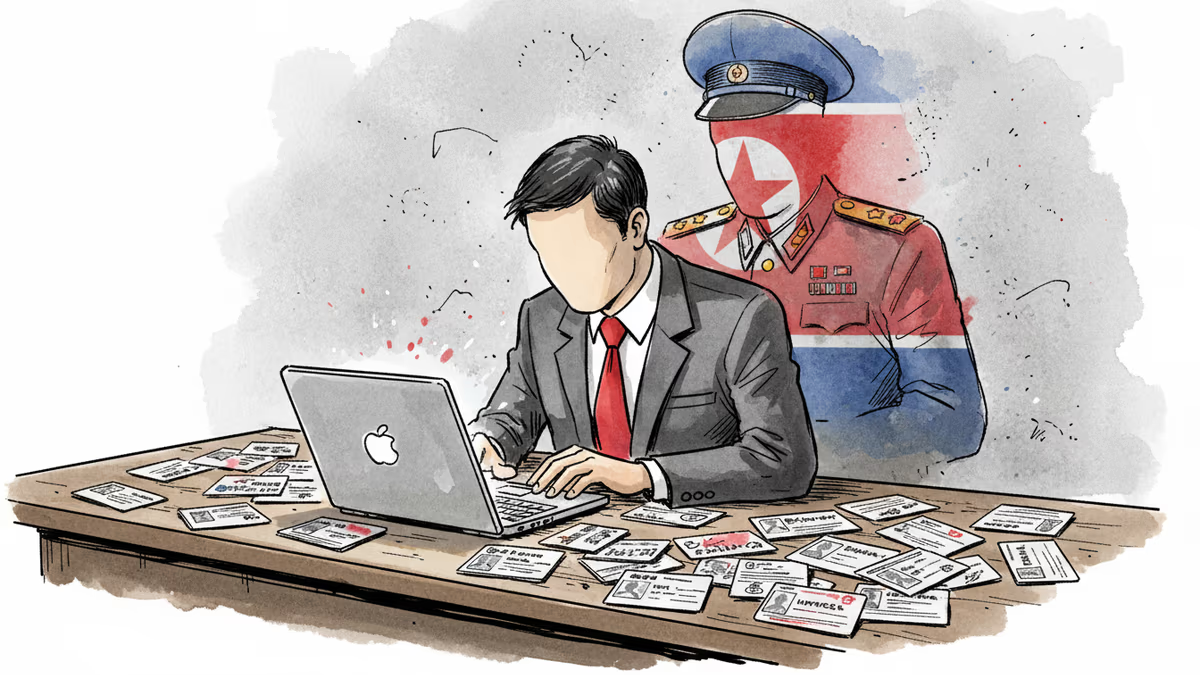
North Korean Hackers Got Jobs at U.S. Companies
A Ukrainian man received 5 years in prison for helping North Korean IT workers infiltrate U.S. companies using stolen identities to fund nuclear weapons development.
870 stolen identities. One Ukrainian man. Five years in federal prison.
Oleksandr Didenko, 29, built a thriving business selling American identities to North Korean hackers so they could get hired at U.S. companies. The scheme wasn't just identity theft—it was a sophisticated operation funding North Korea's nuclear weapons program through remote work.
The Perfect Disguise
Didenko's website, Upworksell, operated like a twisted version of LinkedIn. Instead of connecting legitimate workers with employers, it sold stolen American identities to overseas workers, particularly North Koreans seeking employment at U.S. firms.
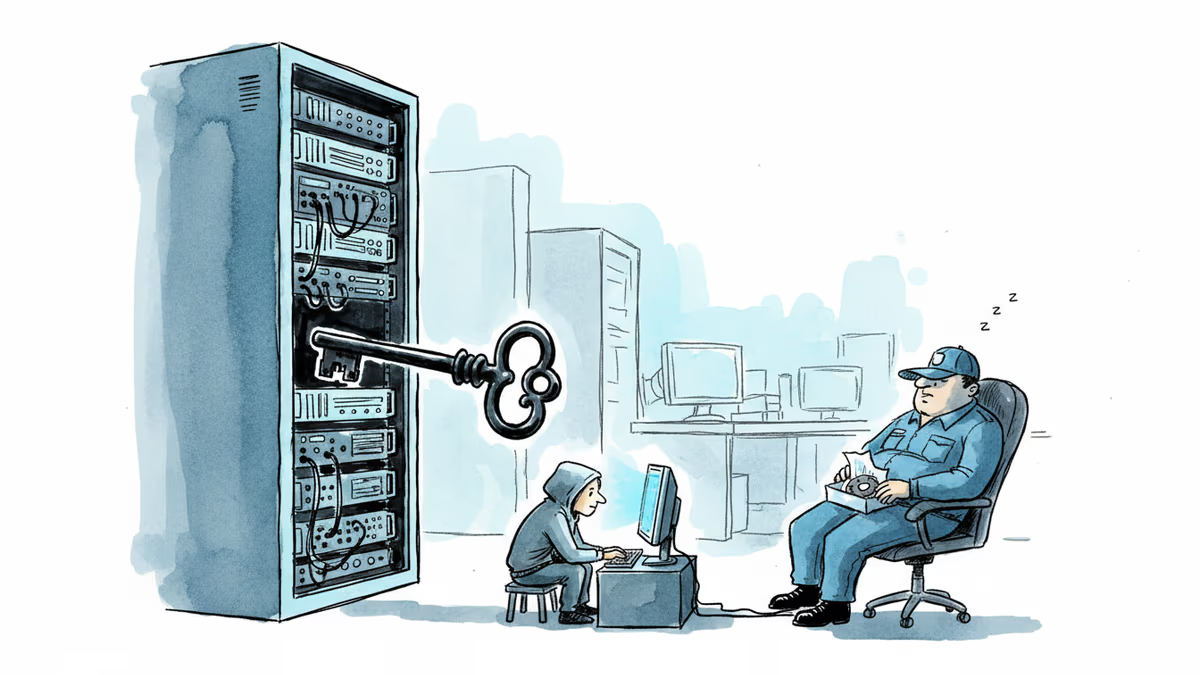
But the deception went deeper. Didenko established "laptop farms" in California, Tennessee, and Virginia—rooms filled with racks of open laptops in ordinary American homes. North Korean workers would remotely access these machines, making it appear they were physically working in the United States.
The FBI seized the operation in 2024, but not before it had processed hundreds of fraudulent employment arrangements.
The Triple Threat Reality
Security researchers describe North Korean IT workers as a "triple threat" to Western businesses:
First, they violate U.S. sanctions. Every paycheck sent to these fake employees flows directly back to Pyongyang, funding the regime's internationally sanctioned nuclear program.
Second, they steal sensitive corporate data. Once inside companies as legitimate employees, they gain access to proprietary information, trade secrets, and customer data.

Third, they later extort their victim companies. "Pay up, or we'll release your secrets publicly."
CrowdStrike reported a sharp rise in North Korean infiltration attempts last year, with hackers primarily targeting remote developer and software engineering positions.
Beyond Traditional Cybercrime
This case represents an evolution in state-sponsored cybercrime. Rather than quick-hit ransomware attacks or cryptocurrency thefts, North Korea is playing the long game—embedding workers inside American companies for months or years.
The strategy is brilliant in its simplicity. Why hack into a company when you can get hired by one? Why steal data in a risky breach when you can access it as a trusted employee?
U.S. prosecutors are cracking down. Didenko's conviction follows a string of similar cases, suggesting this isn't an isolated scheme but part of a broader North Korean strategy.
The Remote Work Paradox
The timing isn't coincidental. North Korea's IT infiltration accelerated alongside the global shift to remote work. Companies desperate for tech talent began hiring internationally, often with minimal in-person verification.
Video interviews can be faked. Documents can be forged. Background checks have geographical limitations. The very flexibility that makes remote work attractive also creates vulnerabilities that nation-states are exploiting.
Sanctions' Unintended Consequences
There's an ironic twist here. International sanctions designed to isolate North Korea economically have pushed the regime toward increasingly sophisticated cybercrime. Cut off from traditional banking, North Korea has become perhaps the world's most innovative digital criminal enterprise.
From cryptocurrency exchanges to fake venture capital schemes to employment fraud—sanctions haven't stopped North Korea's revenue streams. They've just made them more creative and harder to detect.
Authors
Related Articles
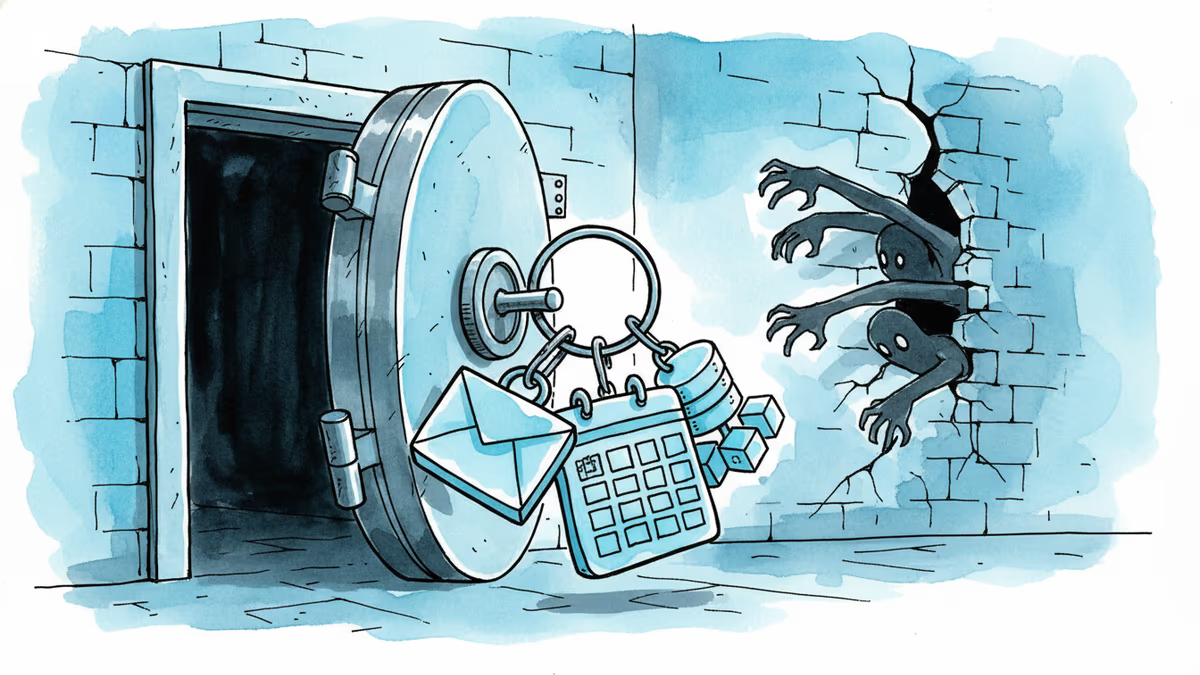
A critical vulnerability in Starlette—downloaded 325 million times per week—puts millions of AI agent servers at risk, exposing stored credentials for email, databases, and third-party services.
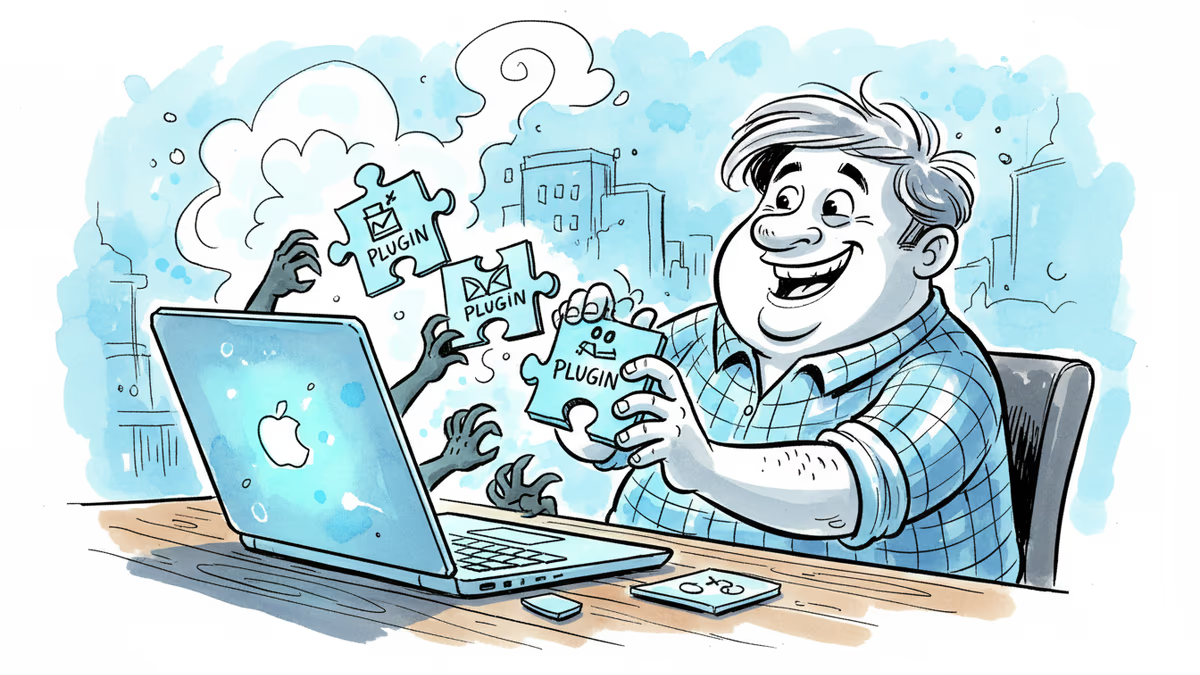
GitHub confirmed hackers stole data from 3,800 internal repositories via a poisoned VS Code extension. Here's why developer tools are now the most dangerous attack surface in tech.
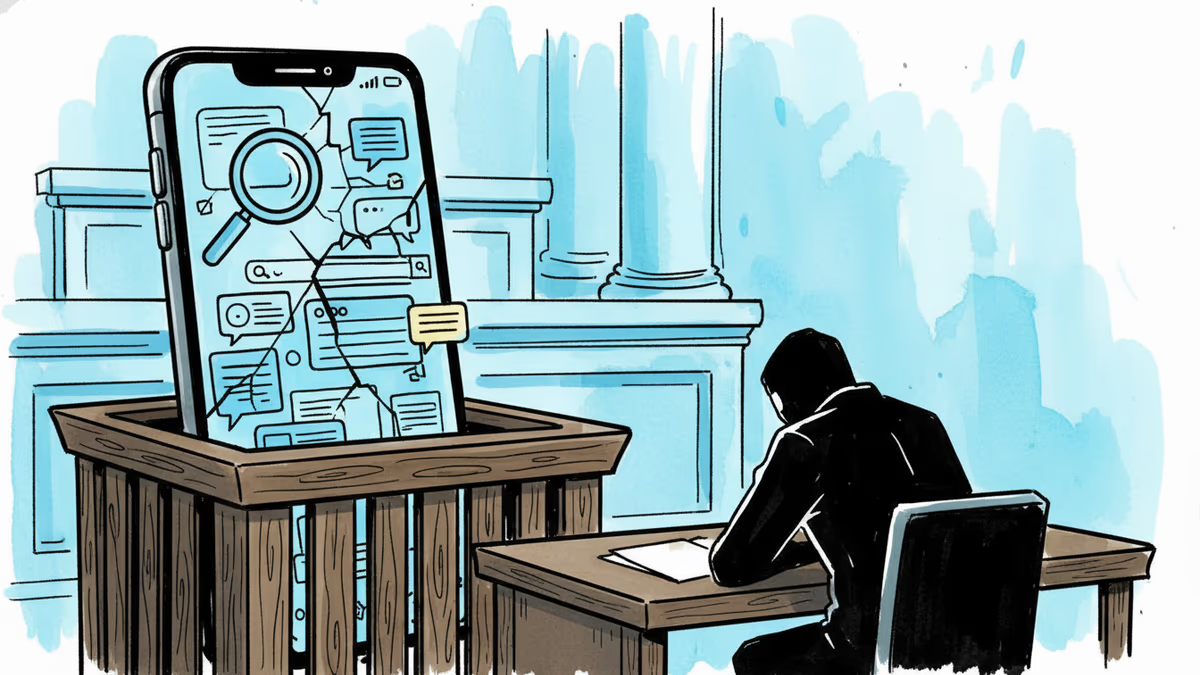
A Utah woman was sentenced to life in prison partly because of her Google searches and deleted texts. The Kouri Richins case reveals how digital footprints have become the courtroom's most reliable witness.
Dirty Frag gives low-privilege users root access on virtually every Linux distro. The exploit code leaked three days ago. Microsoft says attackers are already experimenting with it.
A critical vulnerability in Starlette—downloaded 325 million times per week—puts millions of AI agent servers at risk, exposing stored credentials for email, databases, and third-party services.
GitHub confirmed hackers stole data from 3,800 internal repositories via a poisoned VS Code extension. Here's why developer tools are now the most dangerous attack surface in tech.
A Utah woman was sentenced to life in prison partly because of her Google searches and deleted texts. The Kouri Richins case reveals how digital footprints have become the courtroom's most reliable witness.
Dirty Frag gives low-privilege users root access on virtually every Linux distro. The exploit code leaked three days ago. Microsoft says attackers are already experimenting with it.
Thoughts
Share your thoughts on this article
Sign in to join the conversation