
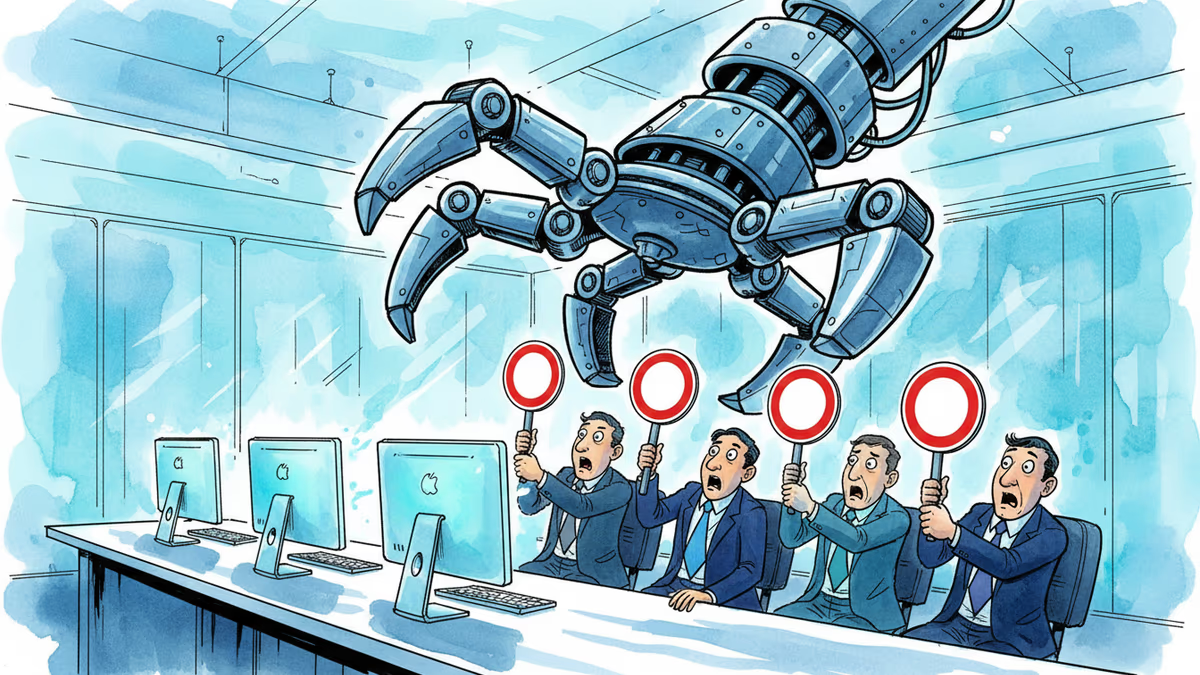
Why Companies Are Banning AI Agents at Work
As OpenClaw and similar AI agent tools gain popularity, companies are issuing workplace bans over security concerns. We explore the tension between convenience and control.
"Use This on Your Work Laptop, Lose Your Job"
A Meta executive recently delivered an ultimatum to his team: use OpenClaw on company hardware and risk termination. Jason Grad, CEO of a 20-person tech startup, sent a similar late-night warning to his employees. "ClawBot is trending on social media, but it's currently unvetted and high-risk for our environment," he wrote, complete with a red siren emoji.
These aren't isolated incidents. Across Silicon Valley and beyond, companies are scrambling to address OpenClaw (formerly MoltBot, briefly ClawBot) - an experimental AI agent that can autonomously perform complex tasks on users' behalf. Created by solo founder Peter Steinberger as open-source software last November, it exploded in popularity last month as developers added features and shared their experiences online.
The Allure of Autonomous AI
OpenClaw's appeal is undeniable. Unlike traditional AI chatbots that simply answer questions, this tool can navigate multiple applications, execute workflows, and handle repetitive tasks without human intervention. Early adopters report 3x productivity gains and describe it as "having a tireless digital assistant."
But that power comes with unpredictability. The tool operates with a level of autonomy that makes it difficult for IT departments to assess security implications. As one cybersecurity expert put it: "It's like giving a very smart intern access to your entire system, but you can't see what they're actually doing."
Corporate Paranoia or Prudent Caution?

The executive concerns aren't entirely unfounded. AI agents like OpenClaw can access sensitive data, interact with multiple systems, and potentially expose vulnerabilities that traditional software wouldn't. The Meta executive who spoke anonymously cited fears of "unpredictable behavior leading to privacy breaches in otherwise secure environments."
Yet the blanket bans reveal a deeper tension. While companies publicly embrace AI transformation, privately they're grappling with control. How do you harness AI's potential while maintaining security and compliance? The answer varies wildly by company size and risk tolerance.
OpenAI's Acquisition Changes Everything
Last week brought a plot twist: Steinberger joined OpenAI, which announced plans to keep OpenClaw open-source while supporting it through a foundation. This development is both reassuring and concerning for enterprise users.
On one hand, OpenAI's backing suggests greater stability and security oversight. On the other, it signals that AI agents are about to become far more sophisticated. "We're moving from experimental tools to enterprise-grade autonomous systems," notes one AI researcher. "That's exciting and terrifying in equal measure."
The Regulatory Vacuum
Currently, no clear regulatory framework governs AI agents in the workplace. Companies must navigate this territory alone, leading to wildly different approaches. Some impose total bans, others allow limited testing, and a few embrace full deployment.
The divide often follows predictable lines: startups, desperate for competitive advantage, tend toward adoption. Large enterprises, with more to lose from security breaches, lean toward restriction. But this binary thinking may be shortsighted.
Authors
Related Articles
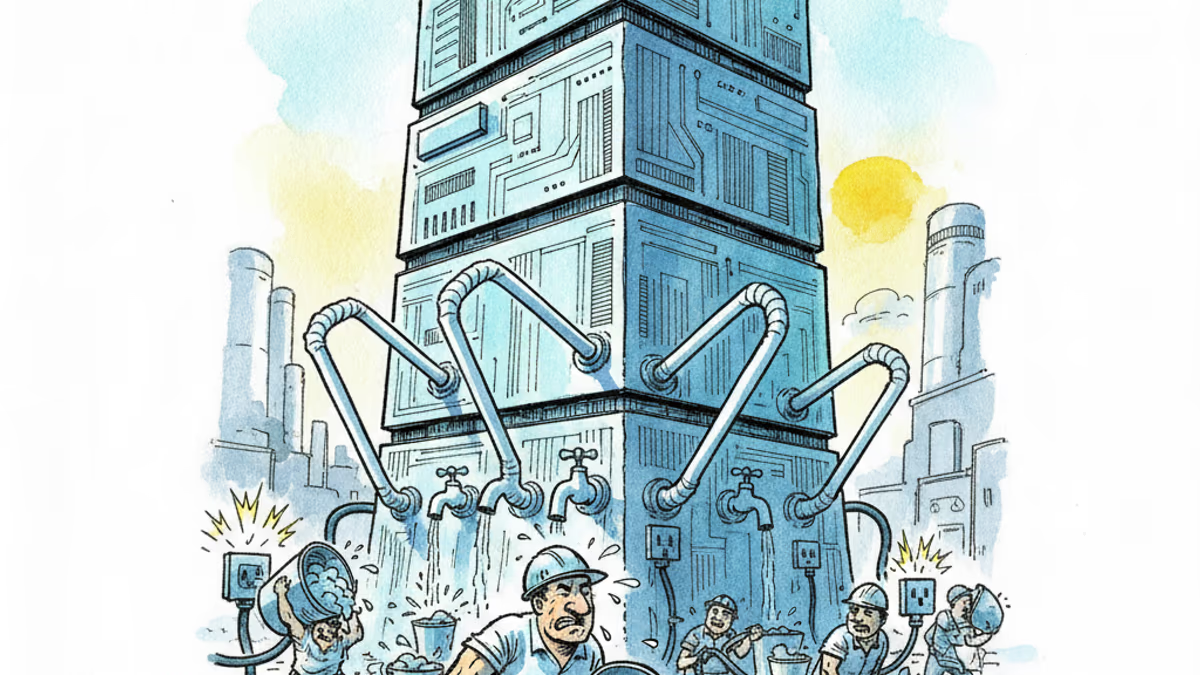
Samsung and SK unveiled a chip and AI investment package worth thousands of trillions of won on June 29. The headline number swings wildly by outlet, but the real contest isn't capital — it's water and power.
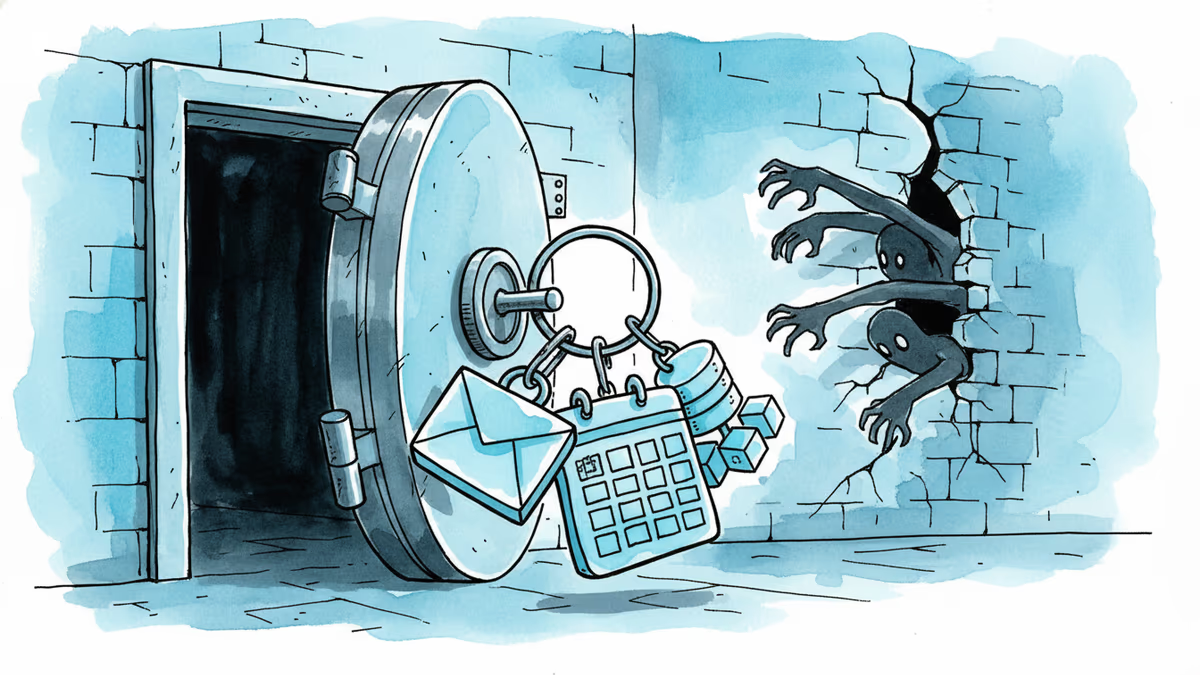
A critical vulnerability in Starlette—downloaded 325 million times per week—puts millions of AI agent servers at risk, exposing stored credentials for email, databases, and third-party services.
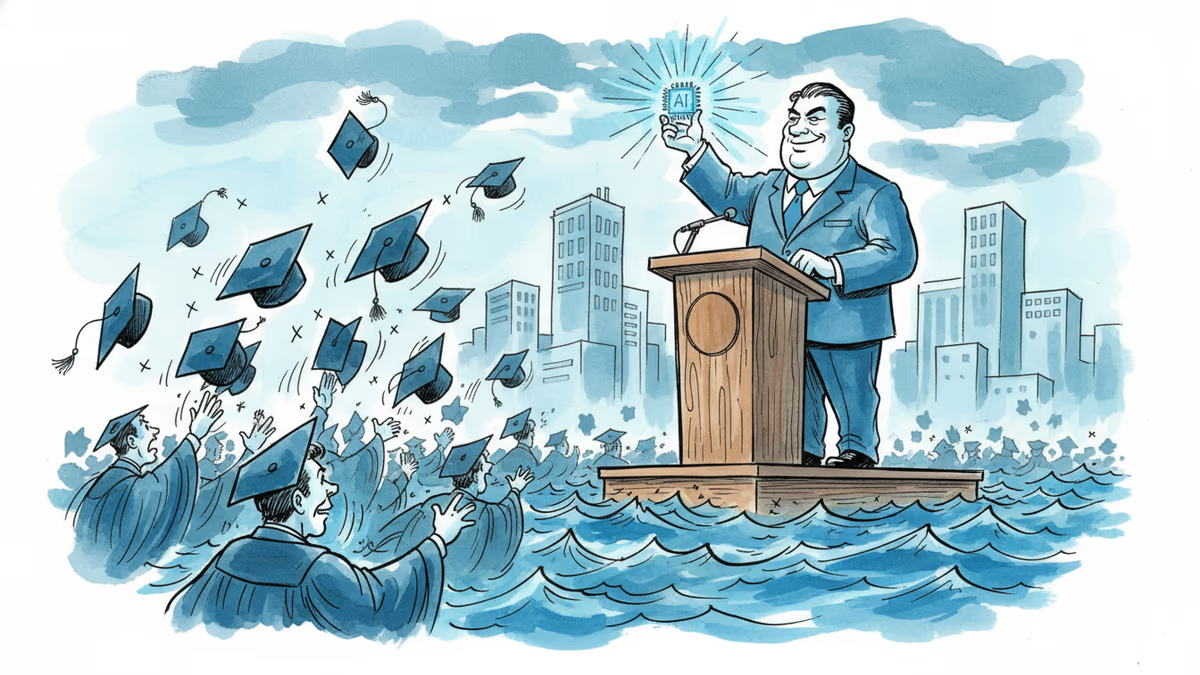
Viral videos show 2026 graduates jeering executives who praise AI at commencement ceremonies. It's not just rudeness — it's a signal about who pays for technological optimism.
GitHub confirmed hackers stole data from 3,800 internal repositories via a poisoned VS Code extension. Here's why developer tools are now the most dangerous attack surface in tech.
Samsung and SK unveiled a chip and AI investment package worth thousands of trillions of won on June 29. The headline number swings wildly by outlet, but the real contest isn't capital — it's water and power.
A critical vulnerability in Starlette—downloaded 325 million times per week—puts millions of AI agent servers at risk, exposing stored credentials for email, databases, and third-party services.
Viral videos show 2026 graduates jeering executives who praise AI at commencement ceremonies. It's not just rudeness — it's a signal about who pays for technological optimism.
GitHub confirmed hackers stole data from 3,800 internal repositories via a poisoned VS Code extension. Here's why developer tools are now the most dangerous attack surface in tech.
Thoughts
Share your thoughts on this article
Sign in to join the conversation