
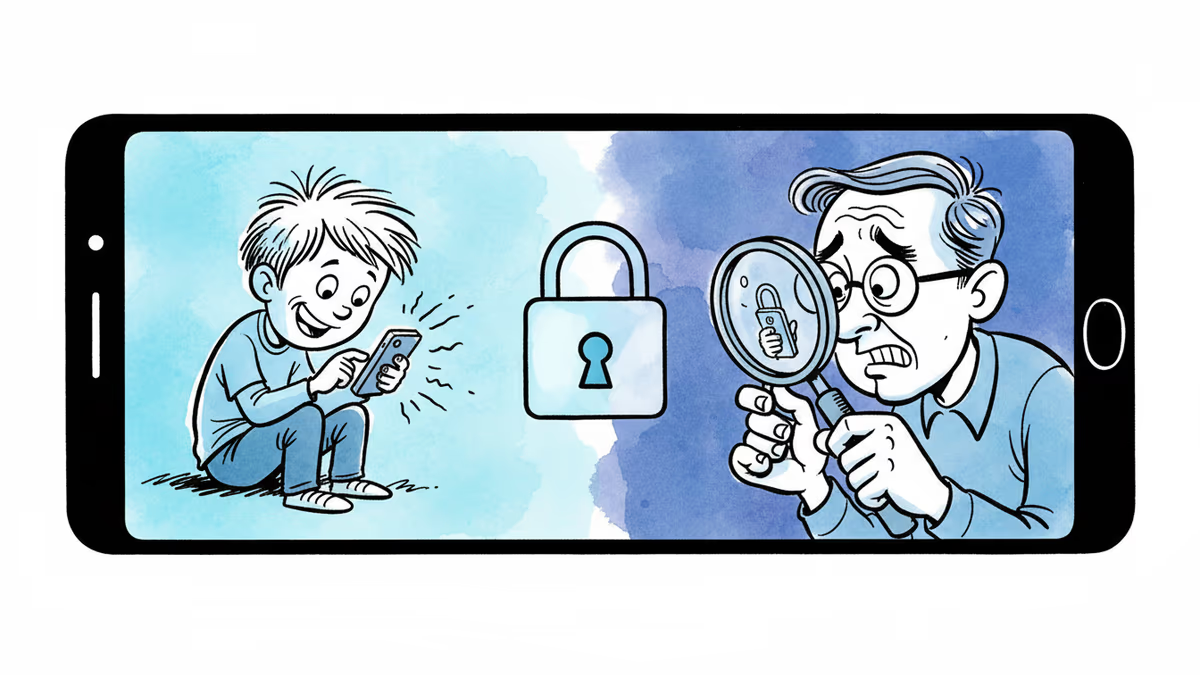
WhatsApp Lets Parents Into the Chat—But Should They Be?
WhatsApp's new parent-managed accounts for under-13s offer monitoring tools and safety features. But the line between protection and surveillance is thinner than a PIN code.
The Kids Were Already on WhatsApp. Now It's Official.
3 billion people use WhatsApp. A meaningful slice of them are under 13—and until now, that was an open secret nobody had a policy for. On Wednesday, Meta stopped pretending otherwise. The company launched parent-managed accounts for pre-teens, acknowledging what parents in dozens of countries already knew: children are on the platform whether the terms of service say so or not.
The feature is surgical in what it allows and blocks. Pre-teen accounts get messaging and calls—nothing else. Meta AI, Channels, and Status are off-limits. Disappearing messages in one-on-one chats can't be enabled. There are no ads. All conversations remain end-to-end encrypted, which Meta was careful to emphasize.
Setup requires both devices in the same room: a parent scans a QR code on the child's phone to authenticate. From there, a six-digit PIN—set and controlled by the parent—locks the key settings. By default, parents get notified when their child adds, blocks, or reports a contact. Optional alerts extend to profile picture changes, new chat requests, group activity, and even deleted chats.
Unknown contacts are handled with extra friction. Chat requests from strangers land in a separate folder that requires the parent PIN to open. Group invite links are similarly gated. Images from unknown contacts are blurred by default, and context cards show which country an unknown sender is from and whether they share any groups with the child.
When a pre-teen ages up, they'll receive a notification that their account can be converted to a standard one. Meta also plans to let parents delay that transition by 12 months—a detail that will read very differently depending on which side of the parenting debate you're on.
Why Now? Follow the Legislation
The timing isn't accidental. Denmark, Germany, Spain, and the UK are all moving toward legal restrictions on social media access for minors. Australia already passed a ban on social media for under-16s. Regulators across the EU are scrutinizing Meta's track record with young users, and the company has faced repeated criticism for algorithmic harm to teenagers on Instagram.

WhatsApp is technically a messaging app, not a social network—a distinction Meta leans on heavily. But with 3 billion users, the platform's cultural footprint is closer to infrastructure than to a social feed. The company has already rolled out teen safety features on Instagram and Facebook. Extending that logic to WhatsApp was, at some point, inevitable.
What's notable is the framing: Meta says this feature came from parent feedback, not regulatory pressure. That may be true. It's also the kind of thing a company says when it wants to get ahead of a mandate.
Three Stakeholders, Three Very Different Reads
For parents, this is a genuine toolkit. The ability to gate unknown contacts behind a PIN, blur incoming images, and receive alerts about group activity addresses real fears—not hypothetical ones. Online grooming and exposure to inappropriate content are documented risks, and blunt parental controls have historically been easy to circumvent. This approach is more granular.
For kids, the calculus is more complicated. A 10- or 11-year-old who knows their parent gets pinged every time they change their profile picture may simply find a workaround—a second device, a different app, a friend's account. Research on restrictive parental controls consistently shows that transparency and conversation outperform surveillance as long-term strategies. A PIN doesn't replace a conversation.
For Meta, the business logic is clear even if unstated. Pre-teens who grow up inside the WhatsApp ecosystem are likely to stay there. An ad-free managed account costs Meta almost nothing in revenue today and builds brand loyalty for the next decade. It's also a hedge: if regulators mandate age verification or outright bans, Meta can point to this feature as evidence of good-faith self-regulation.
The Harder Question Regulators Are Asking
Self-regulation has a mixed record in Big Tech. Meta's own internal research, revealed during the 2021 Facebook Papers, showed the company knew Instagram was harmful to teenage girls and continued optimizing for engagement anyway. That history makes it reasonable to ask whether parent-managed accounts are a safety feature or a safety narrative.
Child safety organizations will likely welcome the feature while pushing for more—mandatory age verification, independent auditing of how pre-teen data is handled, and clearer accountability if the system fails. The encryption question is also unresolved: end-to-end encryption protects children from external threats but also limits law enforcement's ability to investigate abuse that occurs on the platform.
Authors
Related Articles
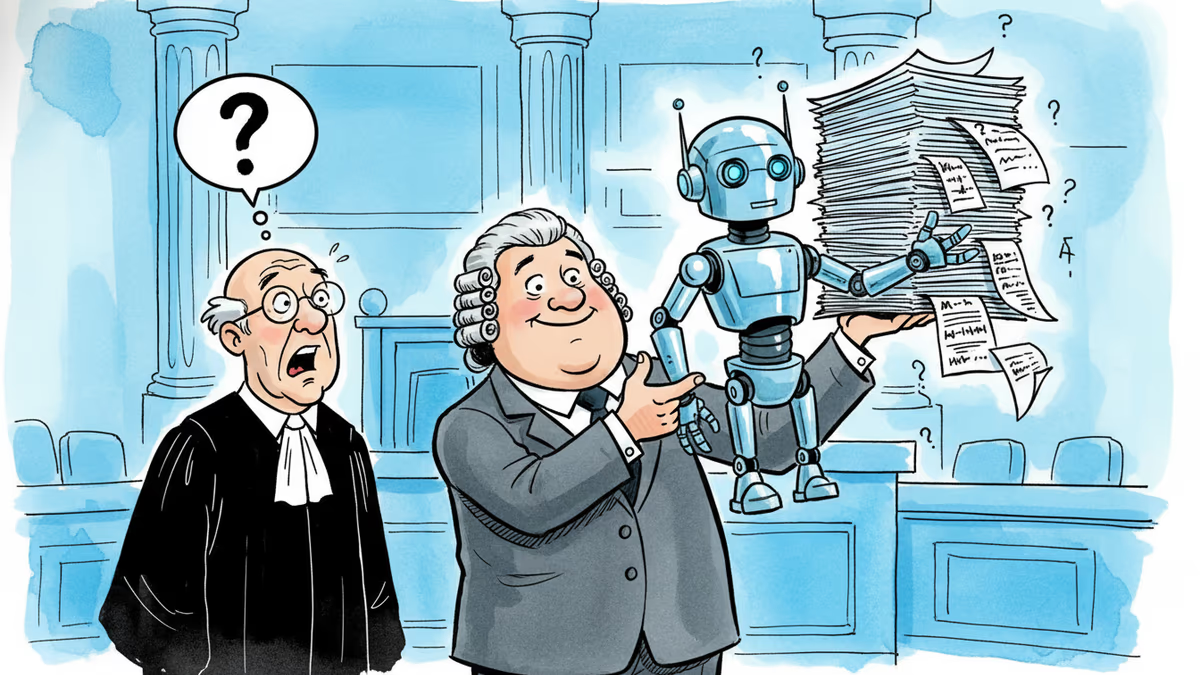
A law firm marketing itself on AI-powered legal success submitted fake citations in a federal appeal. Now its lawyers face sanctions — and the broader AI legal industry faces a credibility crisis.
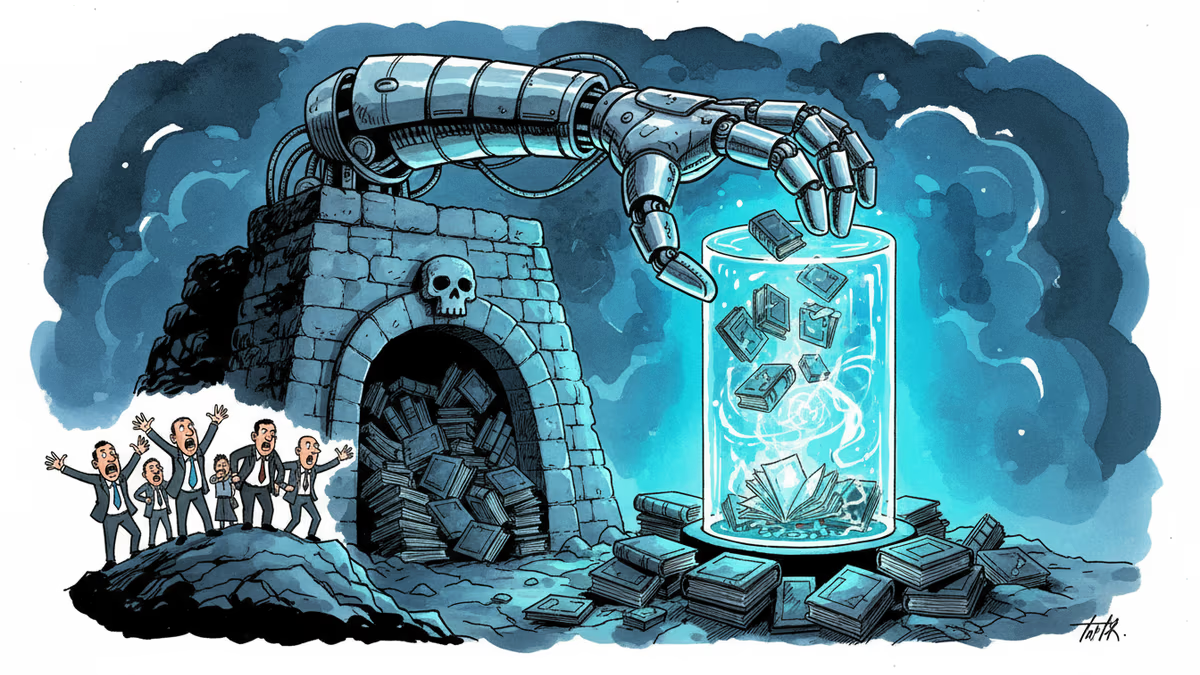
Five major publishers and author Scott Turow have filed a class action lawsuit against Meta, alleging the company used illegal pirate sites like LibGen to train its Llama AI models without permission.
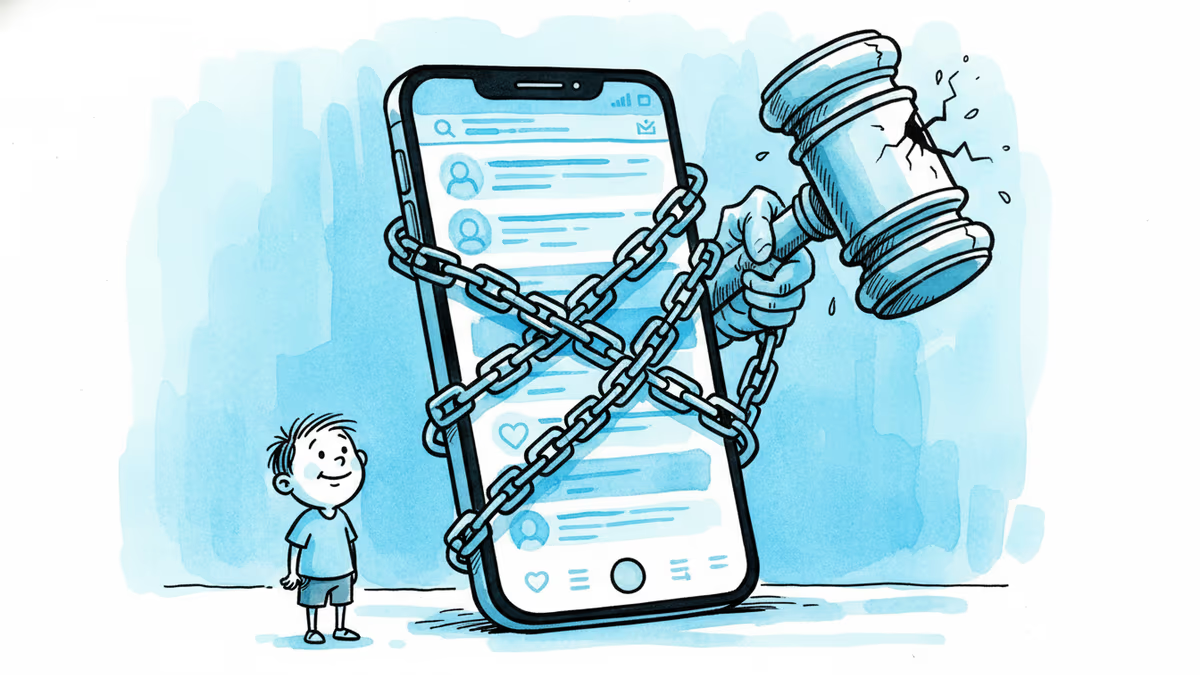
New Mexico already won $375 million from Meta. Now it wants something harder to give: a court order forcing Facebook, Instagram, and WhatsApp to redesign themselves. A three-week trial starts Monday.
Meta acquired humanoid robotics startup ARI, adding to a Big Tech arms race in physical AI. The real prize isn't a robot product — it's a new way to train intelligence.
A law firm marketing itself on AI-powered legal success submitted fake citations in a federal appeal. Now its lawyers face sanctions — and the broader AI legal industry faces a credibility crisis.
Five major publishers and author Scott Turow have filed a class action lawsuit against Meta, alleging the company used illegal pirate sites like LibGen to train its Llama AI models without permission.
New Mexico already won $375 million from Meta. Now it wants something harder to give: a court order forcing Facebook, Instagram, and WhatsApp to redesign themselves. A three-week trial starts Monday.
Meta acquired humanoid robotics startup ARI, adding to a Big Tech arms race in physical AI. The real prize isn't a robot product — it's a new way to train intelligence.
Thoughts
Share your thoughts on this article
Sign in to join the conversation