
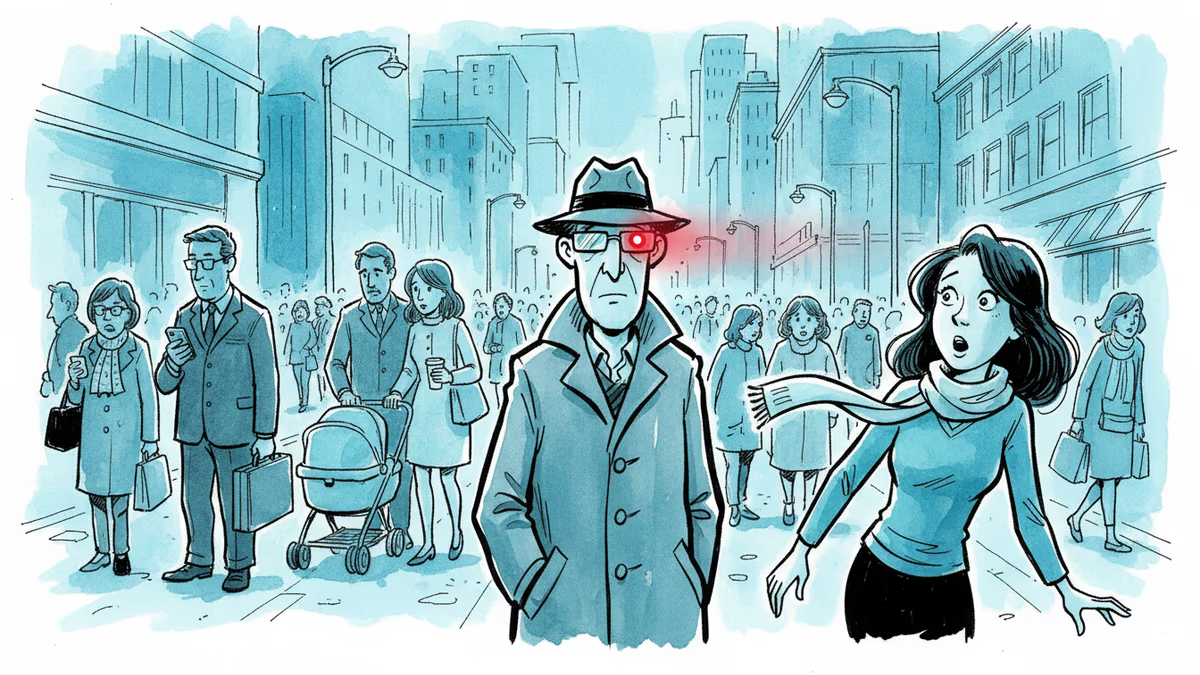
The Glasses Are Watching You
Meta Ray-Ban smart glasses sold 8 million units in 2025 alone. Now a black market for disabling their recording indicator lights is thriving—and lawmakers are alarmed about what comes next.
She was wearing a sundress and a big stylish hat, walking through one of Paris's most fashionable neighborhoods. Two university students chased her down to compliment her outfit. It seemed charming—until the end of the conversation, when one of them mentioned, almost as an afterthought, that his glasses had been recording the whole time.
Joy Hui Lin, a book researcher based in Paris, wasn't just surprised. She felt violated. Not because she was in public, but because the man holding the footage never asked.
That moment—a casual disclosure, a face already on film—is playing out in cities around the world with increasing frequency. And it's only going to get more complicated.
8 Million Pairs. Zero Warning.
Meta's Ray-Ban smart glasses don't look like spy equipment. That's precisely the point. Unlike the nakedly futuristic Google Glass, which telegraphed its intentions with a visor bolted to your forehead, the Ray-Ban version just looks like... sunglasses. Stylish ones, even. Prices run from $299 to $499, and Meta sold 8 million pairs in 2025 alone—more than every previous smart glasses product combined.
The company says there's a built-in safeguard: an LED indicator light in the upper corner of the frame that activates during recording. But the internet has already rendered that promise largely symbolic. YouTube hosts dozens of tutorials on how to cover the light while still filming. A TikToker in Southern California with 62,000 followers charges $120 to physically remove the LED entirely, advertising the service as "stealth mode." He stopped responding to questions once asked for his name.
Then there's what happens to the footage after it's captured. A February investigation by Swedish newspapers found that videos recorded on Meta Ray-Bans are automatically uploaded to the company, where overseas contract workers review them. Among the content flagged: nudity, sexual activity, and bathroom footage—material users likely didn't realize they were sending to a corporation. A consumer protection lawsuit is now underway.
From Flirting to Surveillance: The Pickup Artist Pipeline
The most visible controversy around Meta's glasses isn't corporate data practices—it's the men using them to film women in public without consent, then posting the footage for millions of followers.
Instagram and TikTok are populated with creators who wear the glasses while approaching strangers, particularly women on beaches and in nightlife districts. The more prominent accounts, with combined followings exceeding 3 million, feature men attempting to flirt with—and sometimes physically lift—women who are visibly uncomfortable. The glasses have earned a contemptuous nickname in these circles: "pervert glasses."

In Vancouver, a Reddit thread this month identified a man regularly filming his approaches to women in the city's clubbing district. "In many of his videos women are very uncomfortable and are clearly rejecting his advances," one post read. One woman who encountered him told WIRED, anonymously, that she had no expectation of privacy in public—but that approaching strangers with a concealed camera and not disclosing you're filming for content "is a problem."
What makes this more than a niche annoyance is the monetization layer. Some of these accounts link to "dating assistant" AI apps or promotional codes for consumer products. The surveillance, in other words, isn't incidental—it's the business model.
Senators, Sociologists, and a $120 Black Market
Democratic senators Ron Wyden, Ed Markey, and Jeff Merkley sent an open letter to Mark Zuckerberg this week, focused on something more alarming than what the glasses can do now: what they're reportedly being built to do next. Meta is said to be planning to integrate facial recognition into the devices.
"Given Meta's vast data collections, its smart glasses could capture images of thousands of people without their knowledge or consent and then instantly link those faces to names, workplaces, or personal profiles," the senators wrote. They raised concerns about how the technology could be used to "discourage political expression, target vulnerable communities, and chill lawful dissent."
Meta responded through a spokesperson, noting that terms of service prohibit harassment and privacy violations, and pointing to the LED indicator as evidence of transparency. The company did not address the facial recognition question directly.
Meanwhile, a sociologist in Germany built a workaround. Yves Jeanrenaud, at Osnabrück University of Applied Sciences, developed an open-source Android app called Nearby Glasses that detects the Bluetooth signal unique to Meta Ray-Bans and Snap Spectacles, alerting users when someone nearby might be recording. It's been downloaded more than 59,000 times since launch, with an iOS version in development.
Jeanrenaud is candid about its limits. "I don't think my app is the solution," he says. "The law seems to be not on the side of those who want privacy." He sees the stealth-mode black market not as an aberration but as a symptom: "A culture where entertainment and exploitation are often linked very closely."
Denmark has moved to extend individual copyright protections to a person's own likeness—a legal framework that could guard against unwanted recording and AI-generated deepfakes alike. It's an approach that legal scholars in the US and EU are watching closely, even if adoption remains slow.
The Consent Gap
There's a foundational tension at the center of this debate that no LED light can resolve. In most jurisdictions, recording someone in a public space is legal. The principle—no expectation of privacy in public—was established long before cameras became invisible, AI became capable of identifying faces in real time, and footage could be uploaded to an audience of millions within seconds.
The technology has moved. The legal framework largely hasn't. And the gap between them is where the discomfort lives—for the woman in Paris who only learned she'd been filmed when the conversation was already over, for the Vancouver residents organizing on Reddit, for the senators demanding answers from a company that sold 8 million pairs of recording devices last year and is already planning the next upgrade.
Authors
Related Articles
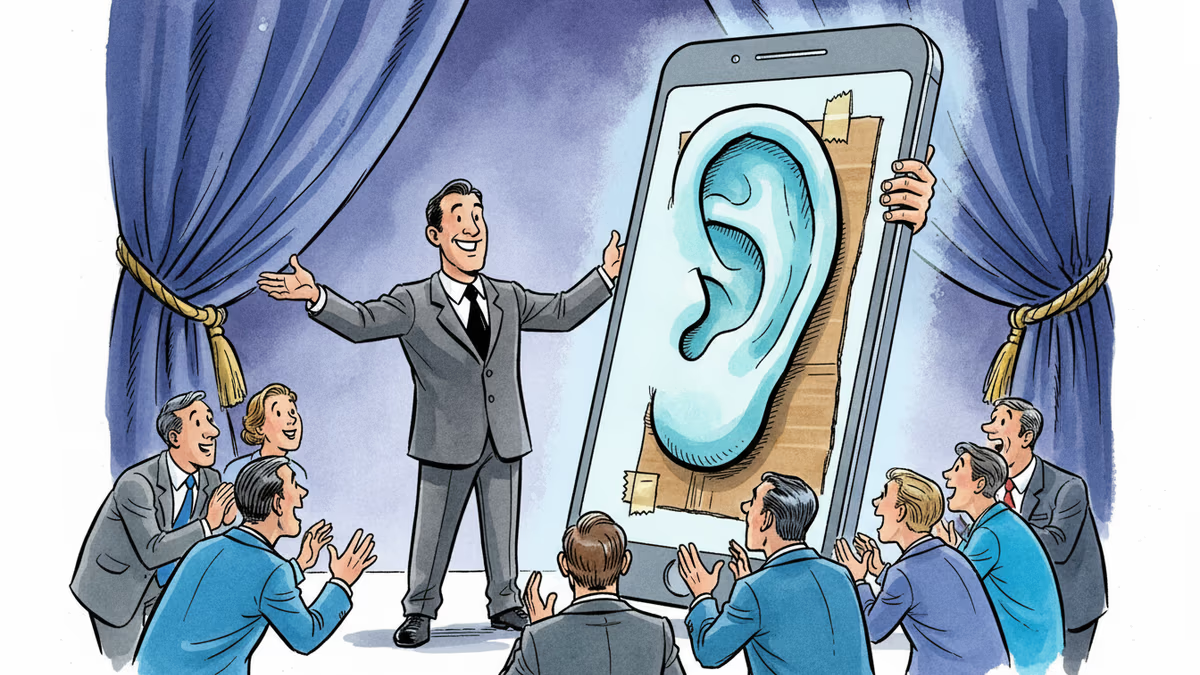
The FTC fined Cox Media and two ad firms $930,000 — not for actually eavesdropping on users, but for falsely claiming they could. The case raises uncomfortable questions about surveillance capitalism.
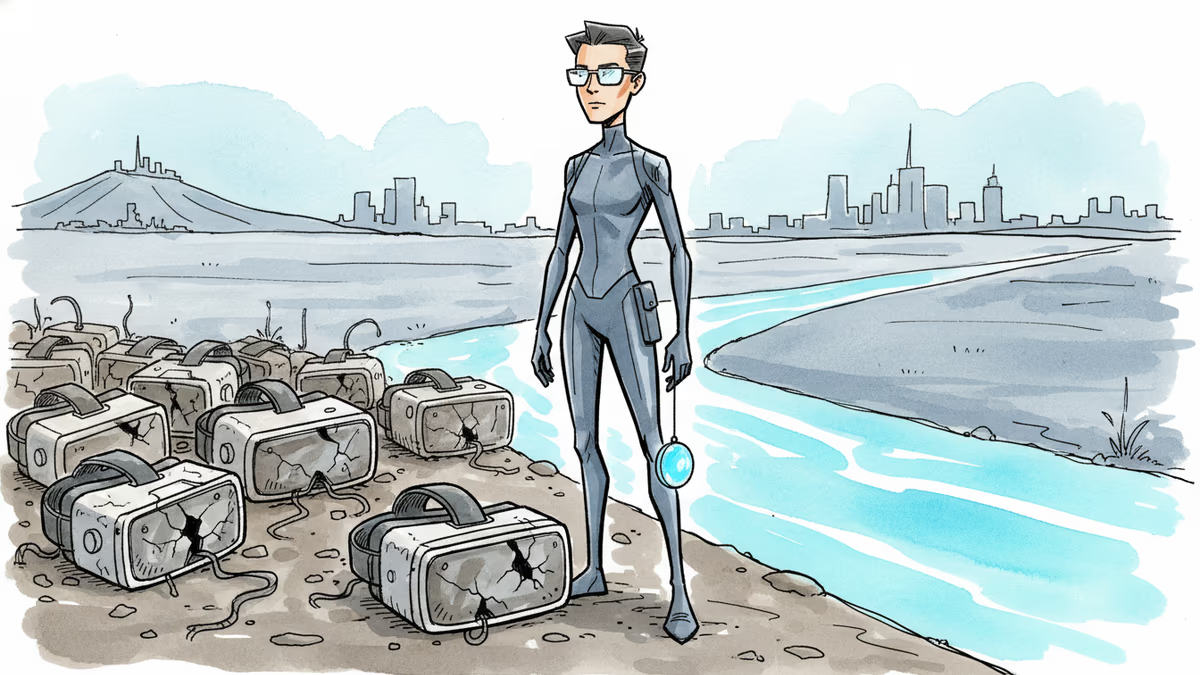
Xreal's Project Aura debuted at Google I/O with OLED displays, hand tracking, and an IPO on the horizon. The industry has burned billions for a decade. So why does it feel like something has actually shifted?
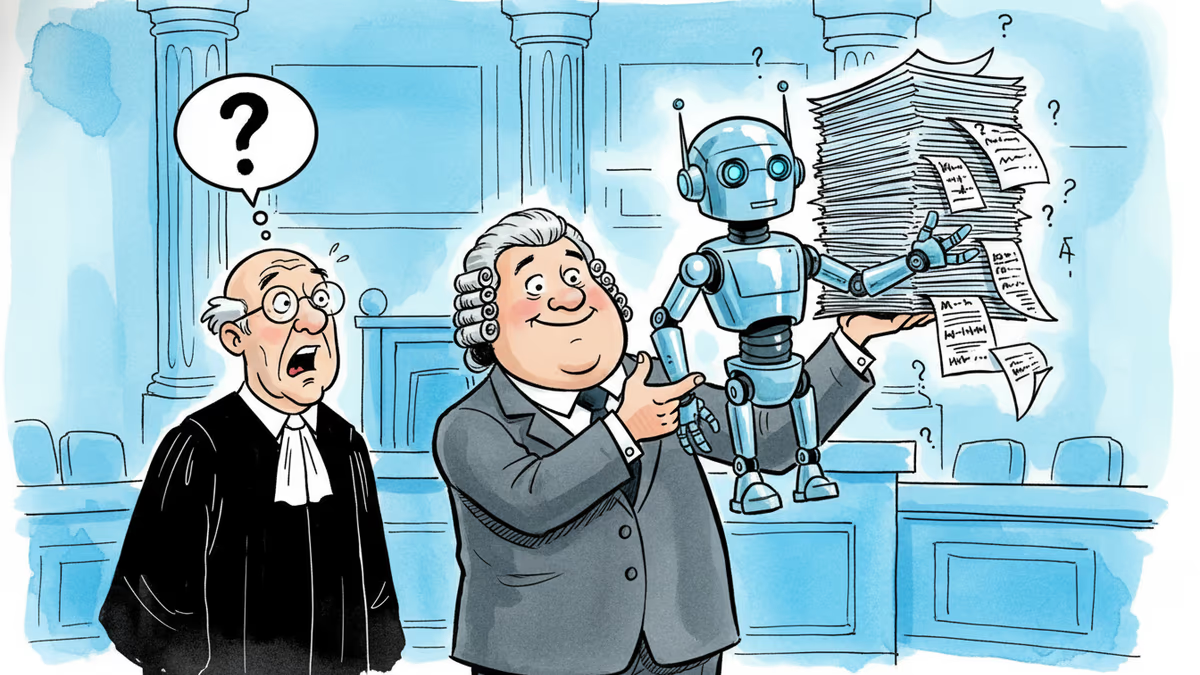
A law firm marketing itself on AI-powered legal success submitted fake citations in a federal appeal. Now its lawyers face sanctions — and the broader AI legal industry faces a credibility crisis.
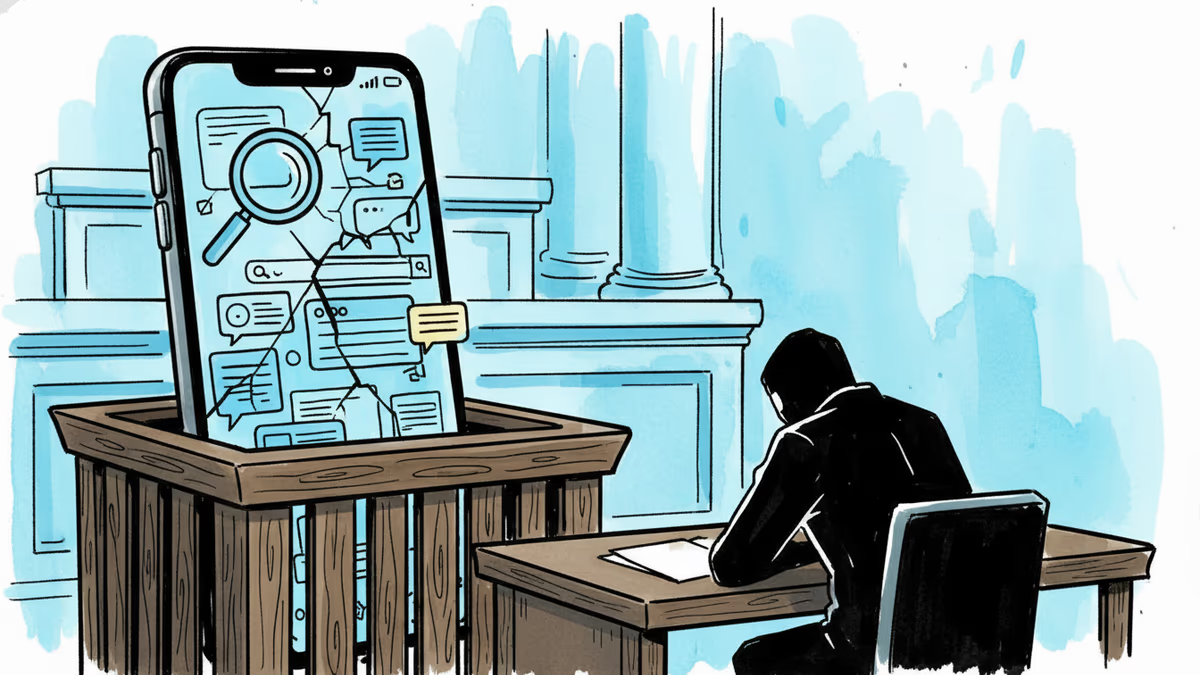
A Utah woman was sentenced to life in prison partly because of her Google searches and deleted texts. The Kouri Richins case reveals how digital footprints have become the courtroom's most reliable witness.
The FTC fined Cox Media and two ad firms $930,000 — not for actually eavesdropping on users, but for falsely claiming they could. The case raises uncomfortable questions about surveillance capitalism.
Xreal's Project Aura debuted at Google I/O with OLED displays, hand tracking, and an IPO on the horizon. The industry has burned billions for a decade. So why does it feel like something has actually shifted?
A law firm marketing itself on AI-powered legal success submitted fake citations in a federal appeal. Now its lawyers face sanctions — and the broader AI legal industry faces a credibility crisis.
A Utah woman was sentenced to life in prison partly because of her Google searches and deleted texts. The Kouri Richins case reveals how digital footprints have become the courtroom's most reliable witness.
Thoughts
Share your thoughts on this article
Sign in to join the conversation