
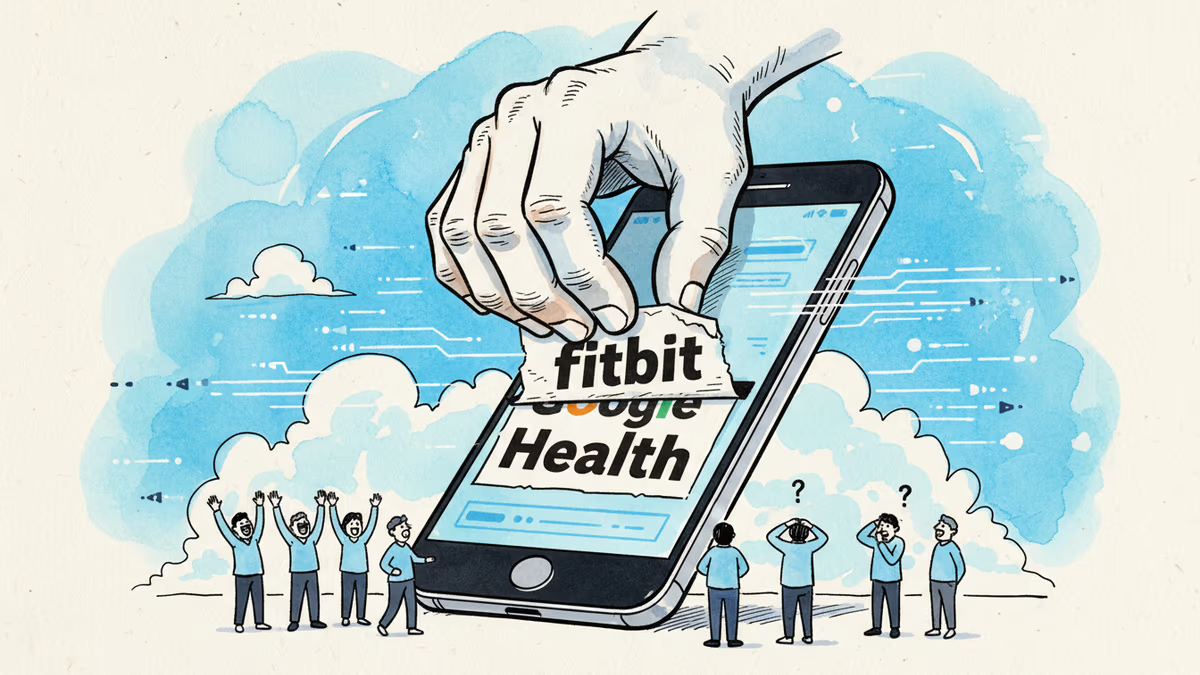
Fitbit Is Dead. Google Health Is Here.
Google is rebranding the Fitbit app as Google Health on May 19, launching an AI Health Coach powered by Gemini. What does this mean for your data, your doctor, and Apple?
For 12 years, the little Fitbit app quietly counted your steps. On May 19, it stops existing.
Google is officially rebranding the Fitbit app as Google Health, pulling the AI-powered Health Coach out of beta, and sunsetting the 12-year-oldGoogle Fit app later this year—all in one move. It's been five years since Google paid $2.1 billion for Fitbit. The question isn't whether this rebrand was coming. It's whether Google is actually ready to compete in the space it just claimed.
One App to Rule Them All (In Theory)
The ambition of Google Health is straightforward: become the single platform where your entire health life lives. Existing Fitbit users get an automatic app update on May 19. No migration required—at least for now.
The centerpiece is the Health Coach, a Gemini-powered chatbot that can field questions about fitness, nutrition, sleep, and even parse uploaded medical records. Log your lunch. Reconfigure your workout plan after an injury. Search for your doctor's name in the app, log into their portal, and your historical and future records sync automatically. The app also restores some social features Google had stripped from Fitbit years ago—friends can now set challenges around step counts or cardio load.
Platform openness is a deliberate strategic choice. Google Health supports both Health Connect and Apple HealthKit, meaning Apple Watch users can pipe their data into the app. The new $100Fitbit Air—a screenless, ultralight tracker launching May 26—will eventually push data into Apple Health too, though not at launch.
Rishi Chandra, Google's VP for Health and Home, told WIRED: "The investment we've been making the last few years is literally designed for this one moment." He also confirmed the Health Coach will eventually support devices beyond Fitbit and Pixel Watch—including Apple Watch—later this year.

The Paywall in the Middle of Your Health Data
Here's where the strategy gets complicated. The free tier covers the basics: activity, sleep, and health metrics for existing Fitbit and Pixel Watch users. But the features that actually differentiate Google Health—the Health Coach, deeper sleep analysis, adaptive fitness plans, proactive insights—sit behind a $10/month (or $100/year) Google Health Premium subscription. It's bundled into Google One's AI Pro and AI Ultra plans.
For context: Apple bundles most comparable features into its Health app at no extra charge, as a default part of iOS. Google is asking users to pay for the intelligence layer on top of the data they're already generating.
There's also a transparency issue worth noting. Chandra openly acknowledged that the Health Coach has hallucinated during its public beta—generating inaccurate health information for some users. "It's not perfect by any means," he said, adding that Google has "evals" in place for safety requirements and isn't in the business of diagnosing or replacing doctors. That's a reasonable disclaimer. It's also the kind of disclaimer that gets buried when people are in the middle of a health scare and need a straight answer fast.
Apple Has a Head Start. Samsung Has the Hardware.
Google is framing this as a new chapter. But Apple has been writing this story for years. Apple Health already supports medication tracking, medical record sync with healthcare institutions, hearing health features, and an expanding portfolio of health apps. The social fitness challenges Google is "restoring" to Google Health are features Apple's Activity Sharing has offered since 2015.
Samsung Health, meanwhile, has built a deep hardware integration story with Galaxy Watch—sleep apnea detection, continuous heart monitoring, and tight ecosystem lock-in for Android users who don't own a Pixel. If Google Health's bet is platform openness, Samsung's counter is depth of integration.
The competitive picture matters because Google is late. The company had 500,000 users in its public preview and received over 1 million feedback submissions—which is meaningful signal. But Apple Health has been the default health repository for hundreds of millions of iPhone users for a decade. Displacing that default behavior is a different problem than building a better product.
On the privacy front: Google's acquisition agreement with regulators prohibits using Fitbit health data for Google Ads, and that separation continues under Google Health. Research and model training require explicit opt-in. That's a structural constraint, not a voluntary commitment—which is either reassuring or a reminder of why regulators demanded it in the first place.
This content is AI-generated based on source articles. While we strive for accuracy, errors may occur. We recommend verifying with the original source.
Related Articles

Xreal's Project Aura debuted at Google I/O with OLED displays, hand tracking, and an IPO on the horizon. The industry has burned billions for a decade. So why does it feel like something has actually shifted?
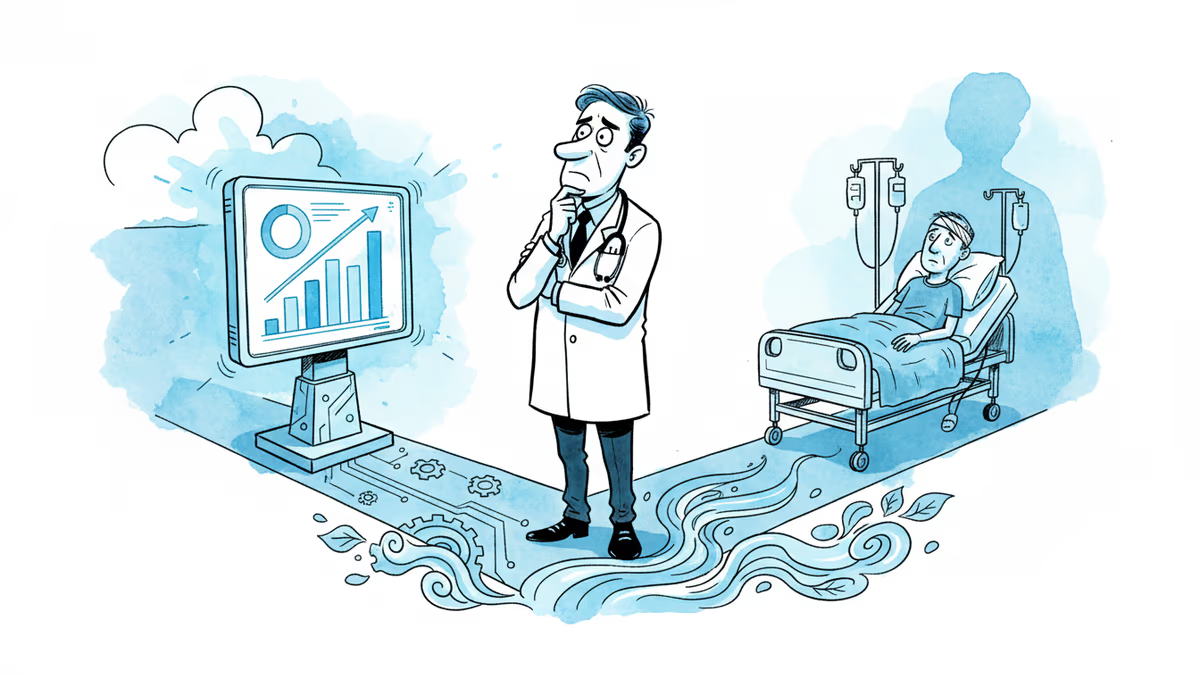
65% of US hospitals use AI diagnostic tools, but almost no one is measuring whether patients actually get better. Accuracy and effectiveness aren't the same thing.
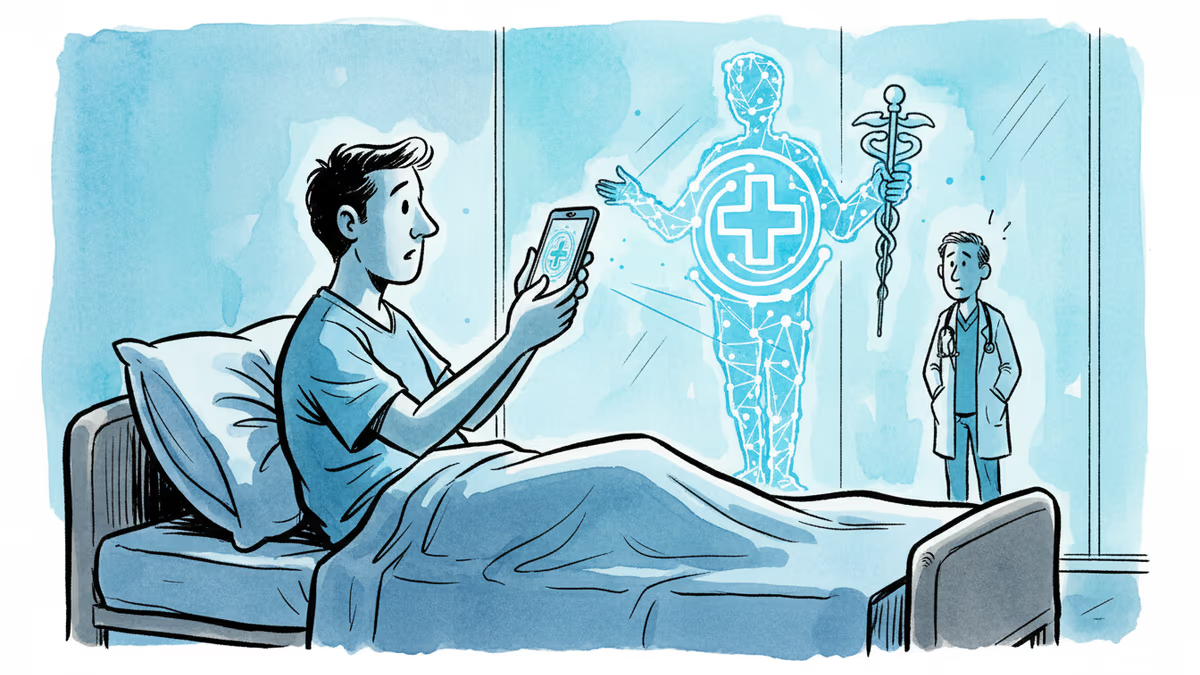
US health systems are launching branded AI chatbots, framing them as safer alternatives to ChatGPT for medical advice. But convenience and conflict of interest may be harder to separate than they appear.
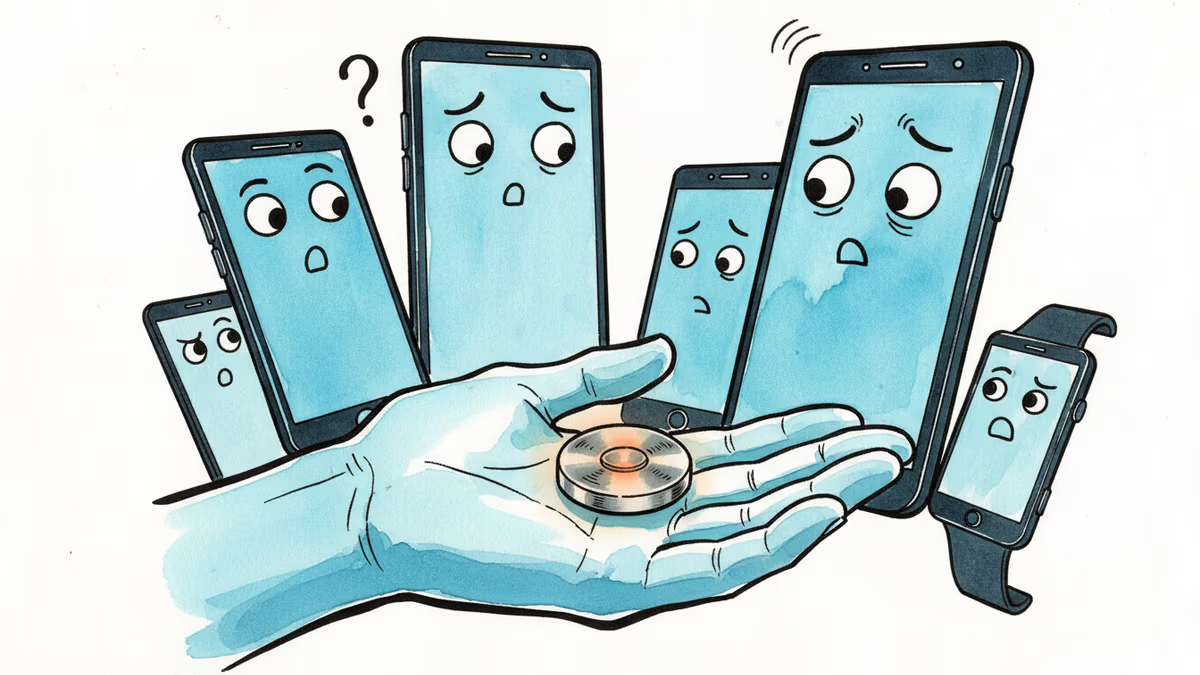
Two ex-Apple engineers built an AI puck that only listens when you press it. At $179, Button is a deliberate bet that dedicated AI hardware beats the Swiss Army knife approach of smartphones.
Xreal's Project Aura debuted at Google I/O with OLED displays, hand tracking, and an IPO on the horizon. The industry has burned billions for a decade. So why does it feel like something has actually shifted?
65% of US hospitals use AI diagnostic tools, but almost no one is measuring whether patients actually get better. Accuracy and effectiveness aren't the same thing.
US health systems are launching branded AI chatbots, framing them as safer alternatives to ChatGPT for medical advice. But convenience and conflict of interest may be harder to separate than they appear.
Two ex-Apple engineers built an AI puck that only listens when you press it. At $179, Button is a deliberate bet that dedicated AI hardware beats the Swiss Army knife approach of smartphones.
Thoughts
Share your thoughts on this article
Sign in to join the conversation