
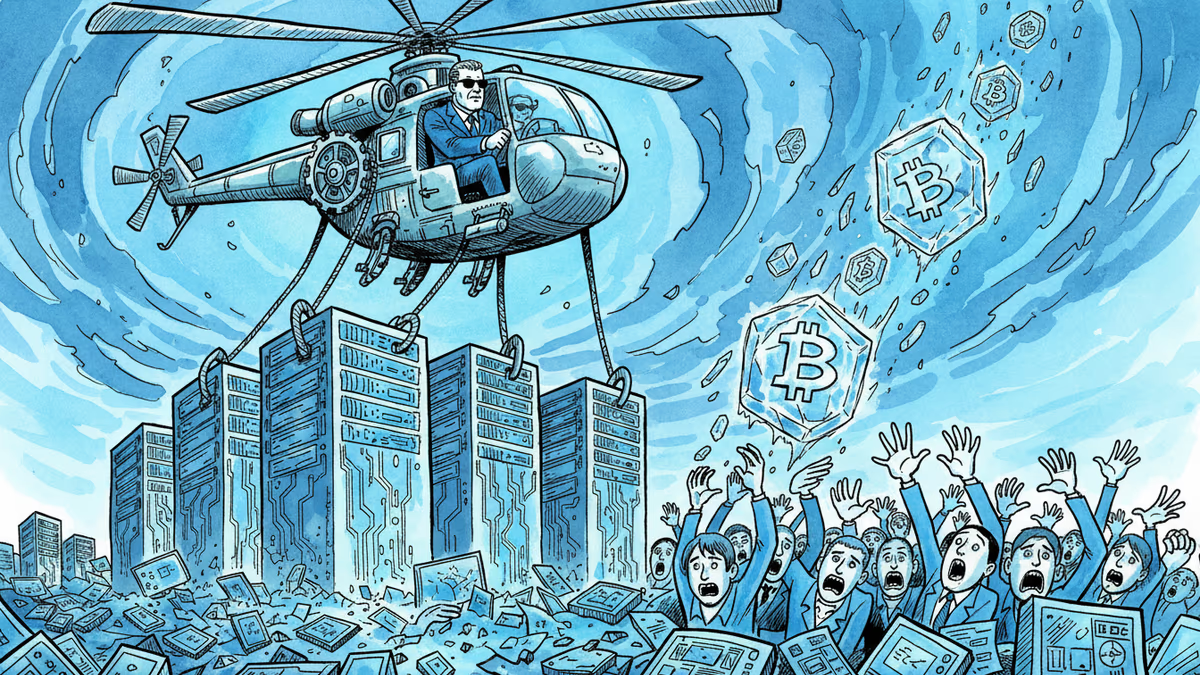
The $200M Question: Who Really Controls 'Decentralized' Crypto?
THORChain founder's contradictions expose the illusion of decentralization in crypto. When one person can freeze $200M with a single key, is anything truly decentralized?
$200 million frozen with a single keystroke. Users who believed they had "complete control" of their crypto woke up to find their retirement funds locked away by someone who wasn't supposed to exist in a "fully decentralized" system.
Welcome to the messy reality of crypto's decentralization promise.
The Man Behind the Mask
Jean-Paul Thorbjornsen pilots a $5 million Aston Martin helicopter with "BTC" emblazoned on its tail. For years, this Australian entrepreneur hid behind the pseudonym "leena" and an AI-generated female avatar while building THORChain, a blockchain that lets users swap one cryptocurrency for another.
THORChain markets itself as permissionless and decentralized—anyone can use it without approval, and decisions are made by 120 node operators through majority vote. No central authority, no single point of failure. That was the promise.
But when THORFi users lost access to their funds in January 2024, the facade crumbled. "We were told it was decentralized," says Ryan Treat, a retired Army veteran who lost his bitcoin retirement savings. "Then you wake up one morning and read this guy had an admin key."
North Korea's Crypto Highway
The decentralization myth became even murkier when North Korea's Lazarus Group used THORChain to launder $1.2 billion stolen from Dubai-based exchange Bybit. Despite FBI warnings, THORChain's community debated whether to block the transactions.
"We are not the morality police," wrote one developer. But former FBI analyst Nick Carlsen disagrees: "People like Thorbjornsen have a personal degree of culpability in sustaining the North Korean government."

The financial incentive was clear—THORChain earned between $5-10 million in fees from processing the stolen funds. When asked if he received any of those fees, Thorbjornsen replied, "Not directly," then clarified: "All crypto holders profit indirectly off economic activity on any chain."
The Irony of Getting Hacked
In a twist of poetic justice, Thorbjornsen himself fell victim to North Korean hackers in September. A fake Zoom meeting cost him $1.2 million when malware accessed his crypto wallets. Blockchain detective ZachXBT called it "poetic."
Yet Thorbjornsen maintains his casino analogy: "You go to a casino, you play a few games, you expect to lose. When you do actually go to zero, don't cry."
Contradictions Everywhere
Thorbjornsen's story is riddled with inconsistencies. He claims to have no crypto assets, then shows a wallet containing $143,000. He says he doesn't control THORChain's social media, then admits the main account is "delegated" to him for "trickier questions."
Most tellingly, he's spending more time in Singapore—a country that historically denies extraditions to the US for money-laundering prosecutions.
The Regulatory Void
Victims like Halsey Richartz tried filing reports with Miami-Dade Police, the FBI, SEC, and multiple agencies. The response? "Try small claims court." Law enforcement agencies struggle with crimes involving "a post office box in Switzerland" as the company address.
Meanwhile, THORChain continues operating. The admin keys that froze user funds have allegedly been "removed from the network," though proving this is nearly impossible.
Authors
Related Articles
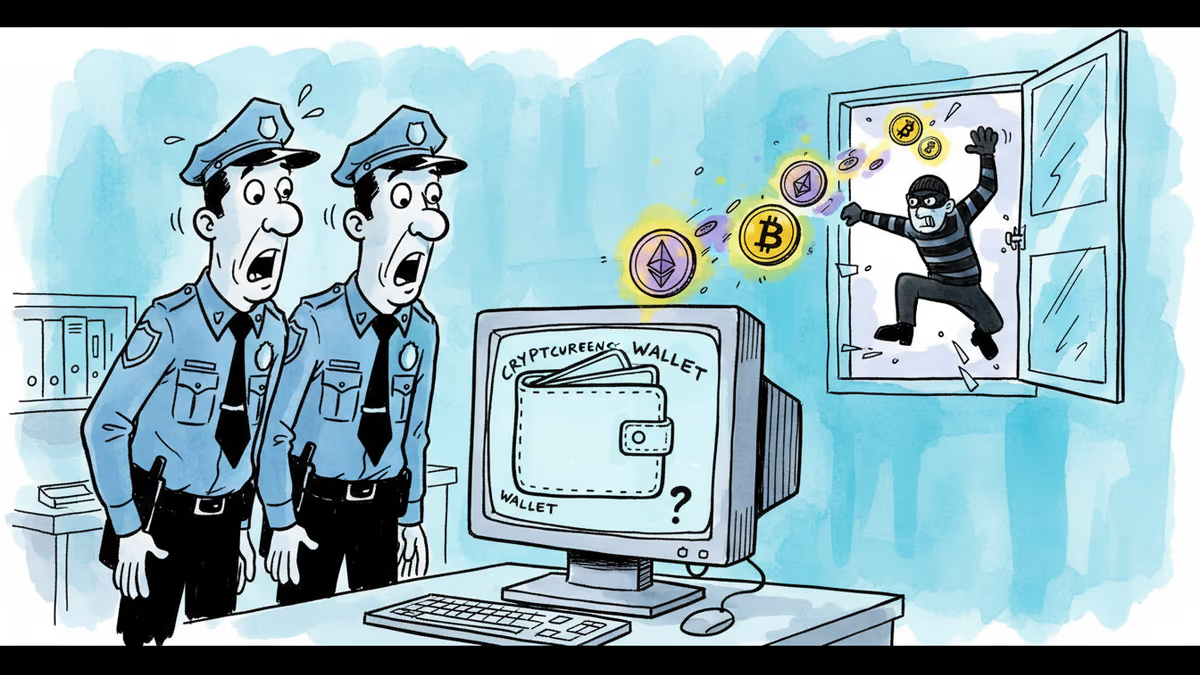
South Korean police accidentally revealed recovery phrases in a press release photo, leading to the theft of seized cryptocurrency assets worth $5.6 million. A costly lesson in digital evidence handling.
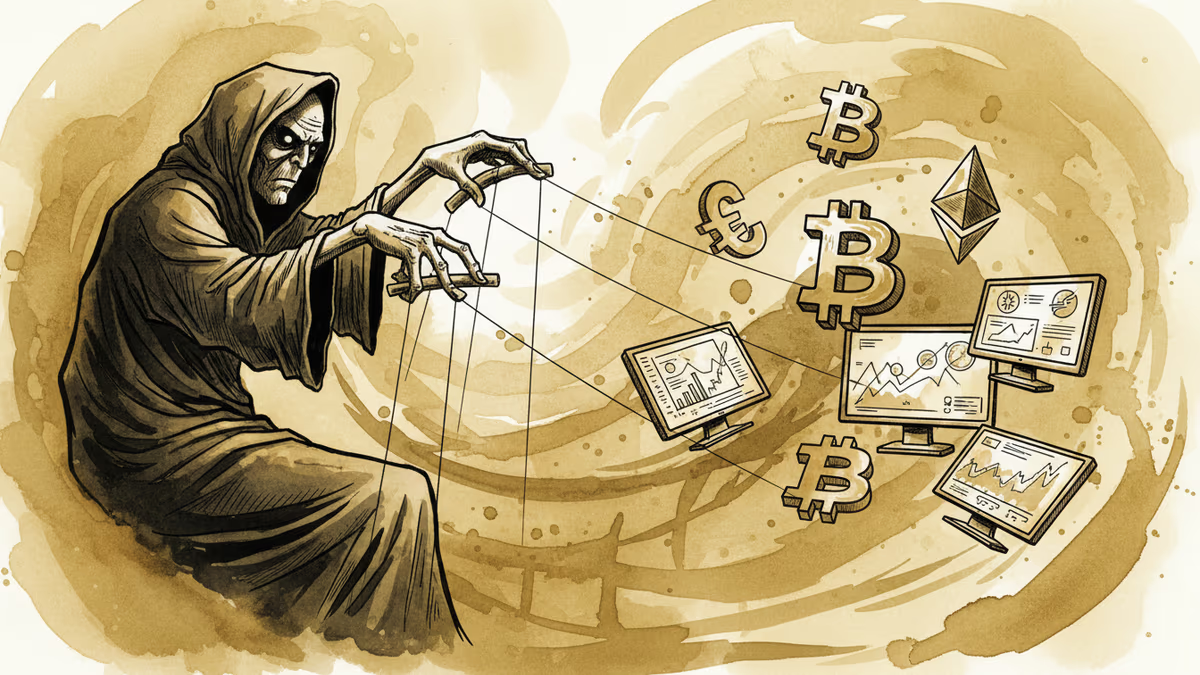
Newly released Jeffrey Epstein files reveal deep ties to cryptocurrency leaders. How the convicted trafficker leveraged crypto's early promise for dark purposes, and what it means for the industry today.
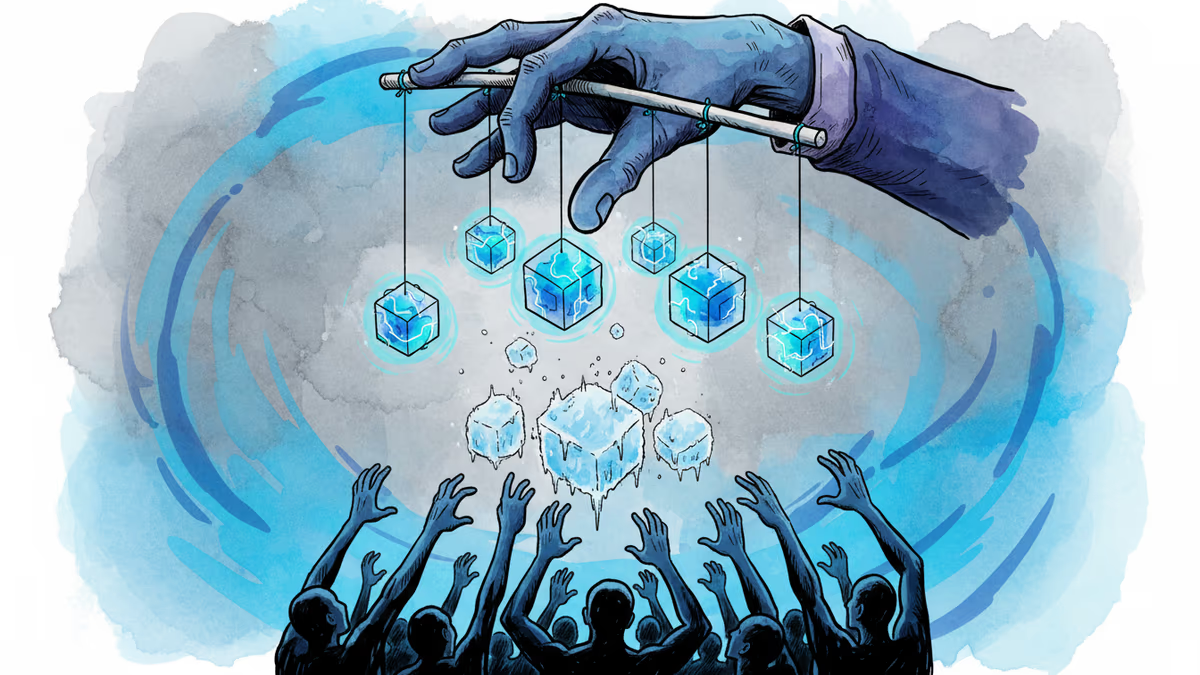
THORChain's frozen funds expose the dark side of crypto's permissionless promise. When decentralized isn't really decentralized.
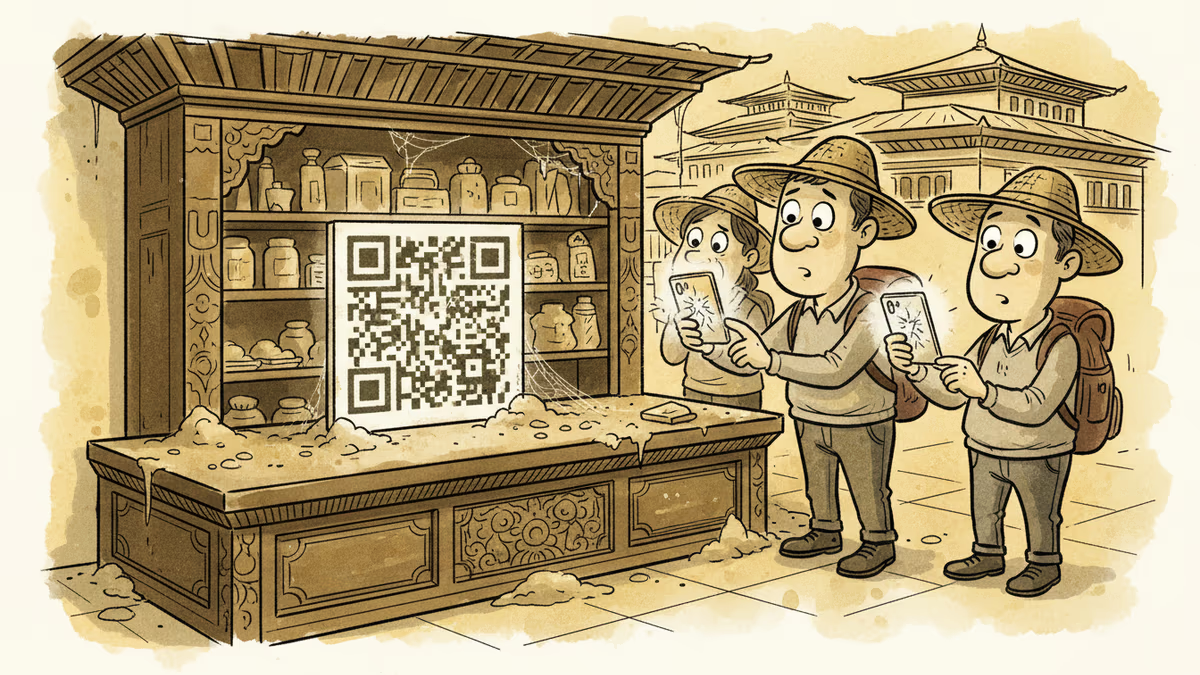
Bhutan launched the world's first nationwide crypto payment system for tourists. Nearly a year later, QR codes gather dust and merchants report zero crypto transactions. What went wrong?
South Korean police accidentally revealed recovery phrases in a press release photo, leading to the theft of seized cryptocurrency assets worth $5.6 million. A costly lesson in digital evidence handling.
Newly released Jeffrey Epstein files reveal deep ties to cryptocurrency leaders. How the convicted trafficker leveraged crypto's early promise for dark purposes, and what it means for the industry today.
THORChain's frozen funds expose the dark side of crypto's permissionless promise. When decentralized isn't really decentralized.
Bhutan launched the world's first nationwide crypto payment system for tourists. Nearly a year later, QR codes gather dust and merchants report zero crypto transactions. What went wrong?
Thoughts
Share your thoughts on this article
Sign in to join the conversation