
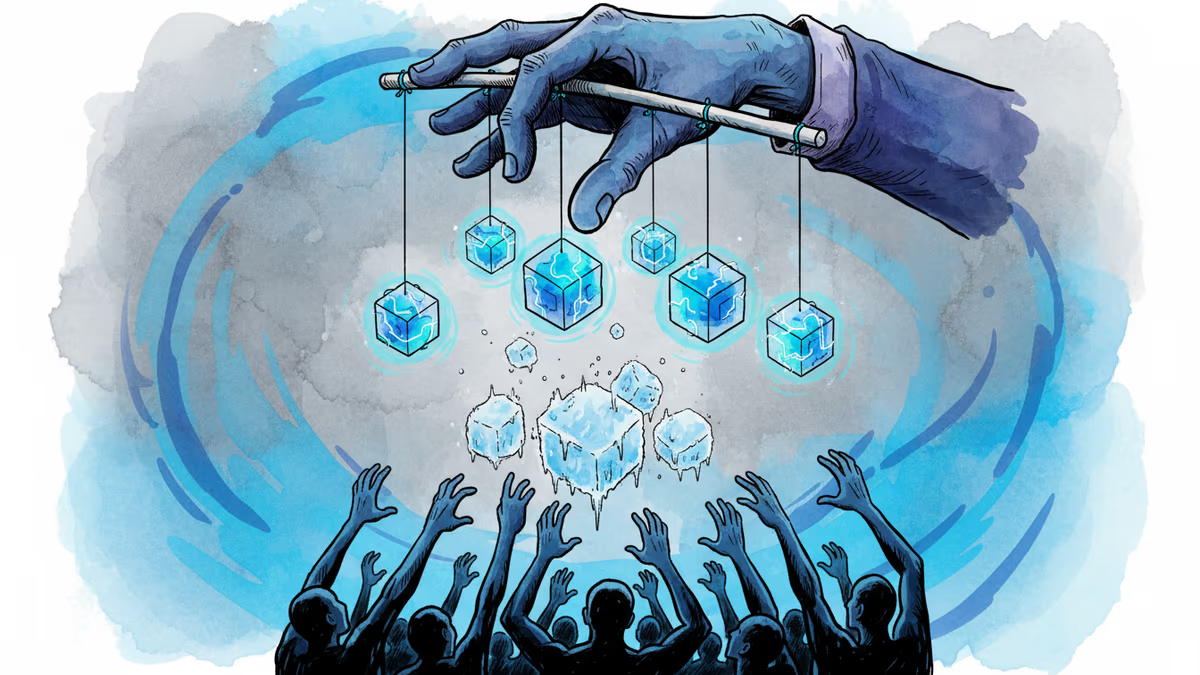
The $200M Question: Who Really Controls 'Decentralized' Crypto?
THORChain's frozen funds expose the dark side of crypto's permissionless promise. When decentralized isn't really decentralized.
$200 Million Frozen by a Single Click
In January 2024, THORChain users woke up to find their cryptocurrency accounts frozen. Over $200 million worth of digital assets were locked by what the platform called an "admin override"—a centralized kill switch that users believed didn't exist in this supposedly decentralized network.
THORChain allows users to swap different cryptocurrencies directly without traditional exchanges. Its founder, Jean-Paul Thorbjornsen, promised a system where "anyone can transact freely outside the reach of purportedly corrupt governments." Yet when crisis struck, it wasn't governments that froze user funds—it was the system itself.
From Anonymous Avatar to Accountability Vacuum
Thorbjornsen spent years hiding behind the pseudonym "leena" and an AI-generated female avatar before revealing his true identity in March 2024. The mid-30s Australian with a rural Catholic background had built a global financial network while remaining virtually anonymous to its users.
But even after going public, a crucial question remains unanswered: Who is actually responsible when things go wrong? THORChain operates as a decentralized network with operators worldwide, yet someone clearly had the power to freeze $200 million with a single administrative action.

The Decentralization Paradox
This incident exposes a fundamental tension in crypto: True decentralization requires sacrificing efficiency and emergency controls. But platforms that prioritize user experience often retain centralized powers "just in case."
Bitcoin's original vision was a trustless system where no single party could control transactions. However, newer platforms like THORChain promise both decentralization and convenience—a combination that may be inherently contradictory.
The regulatory implications are significant. If crypto platforms retain centralized controls, shouldn't they face the same oversight as traditional financial institutions? Yet if they eliminate these controls entirely, how can they protect users from hacks and exploits?
The Trust Trade-off
Users face an uncomfortable choice: Accept centralized risks for better user experience, or embrace true decentralization with all its inefficiencies and irreversible mistakes. Most choose convenience, which explains why centralized exchanges like Coinbase and Binance still dominate despite philosophical contradictions.
The THORChain incident suggests that alternative financial systems may not be much better than traditional ones—they just shift trust from regulated institutions to pseudonymous developers and opaque governance structures.
Authors
Related Articles
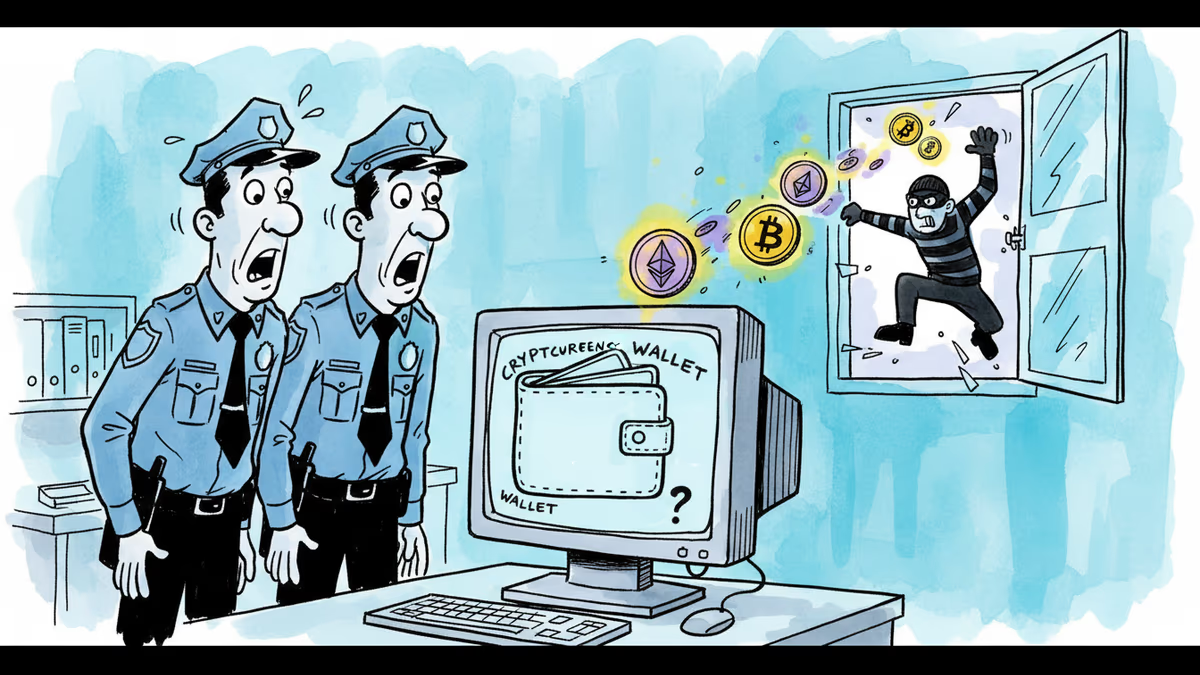
South Korean police accidentally revealed recovery phrases in a press release photo, leading to the theft of seized cryptocurrency assets worth $5.6 million. A costly lesson in digital evidence handling.
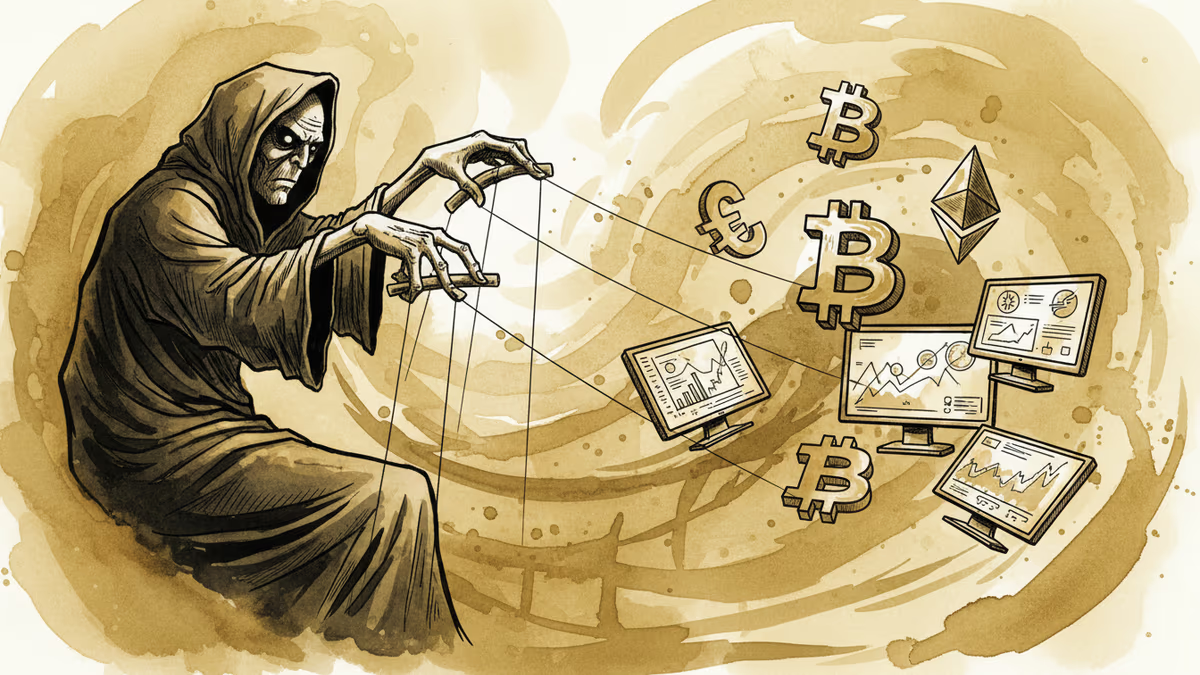
Newly released Jeffrey Epstein files reveal deep ties to cryptocurrency leaders. How the convicted trafficker leveraged crypto's early promise for dark purposes, and what it means for the industry today.
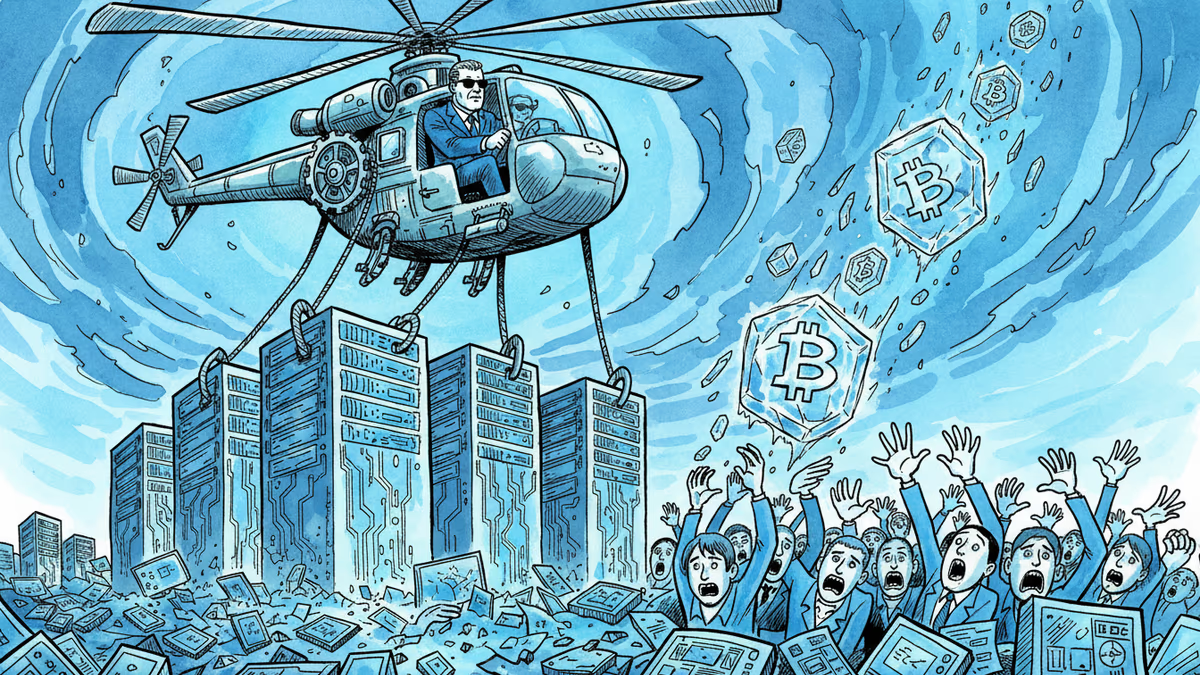
THORChain founder's contradictions expose the illusion of decentralization in crypto. When one person can freeze $200M with a single key, is anything truly decentralized?
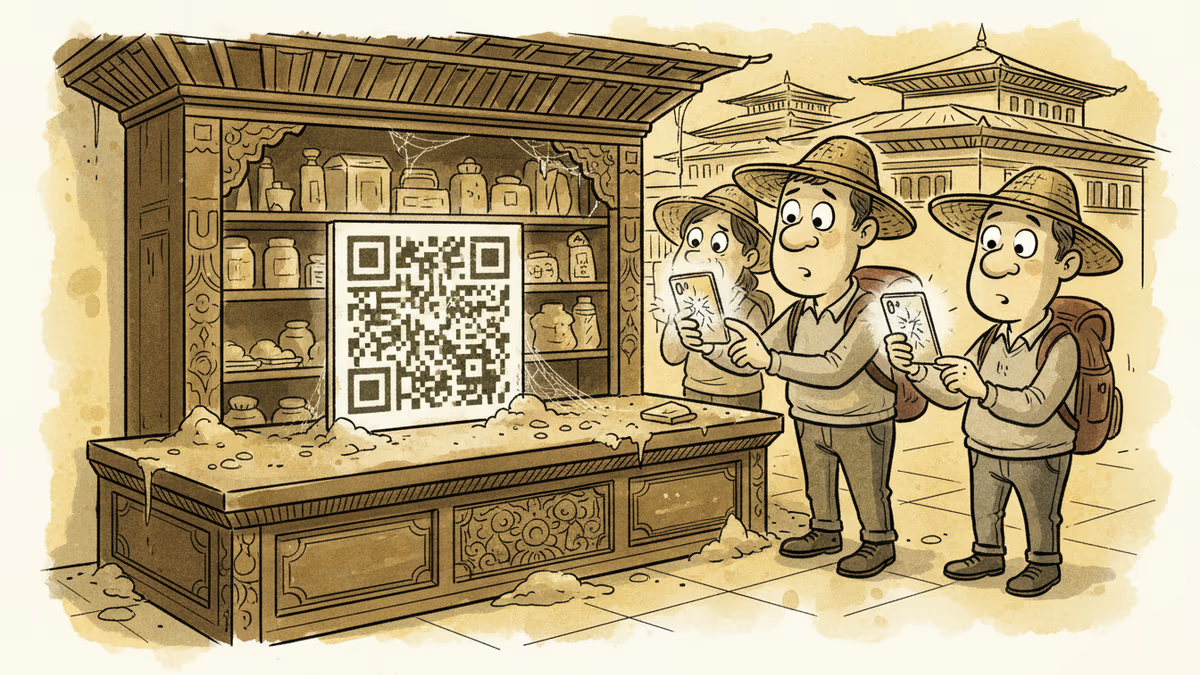
Bhutan launched the world's first nationwide crypto payment system for tourists. Nearly a year later, QR codes gather dust and merchants report zero crypto transactions. What went wrong?
South Korean police accidentally revealed recovery phrases in a press release photo, leading to the theft of seized cryptocurrency assets worth $5.6 million. A costly lesson in digital evidence handling.
Newly released Jeffrey Epstein files reveal deep ties to cryptocurrency leaders. How the convicted trafficker leveraged crypto's early promise for dark purposes, and what it means for the industry today.
THORChain founder's contradictions expose the illusion of decentralization in crypto. When one person can freeze $200M with a single key, is anything truly decentralized?
Bhutan launched the world's first nationwide crypto payment system for tourists. Nearly a year later, QR codes gather dust and merchants report zero crypto transactions. What went wrong?
Thoughts
Share your thoughts on this article
Sign in to join the conversation