
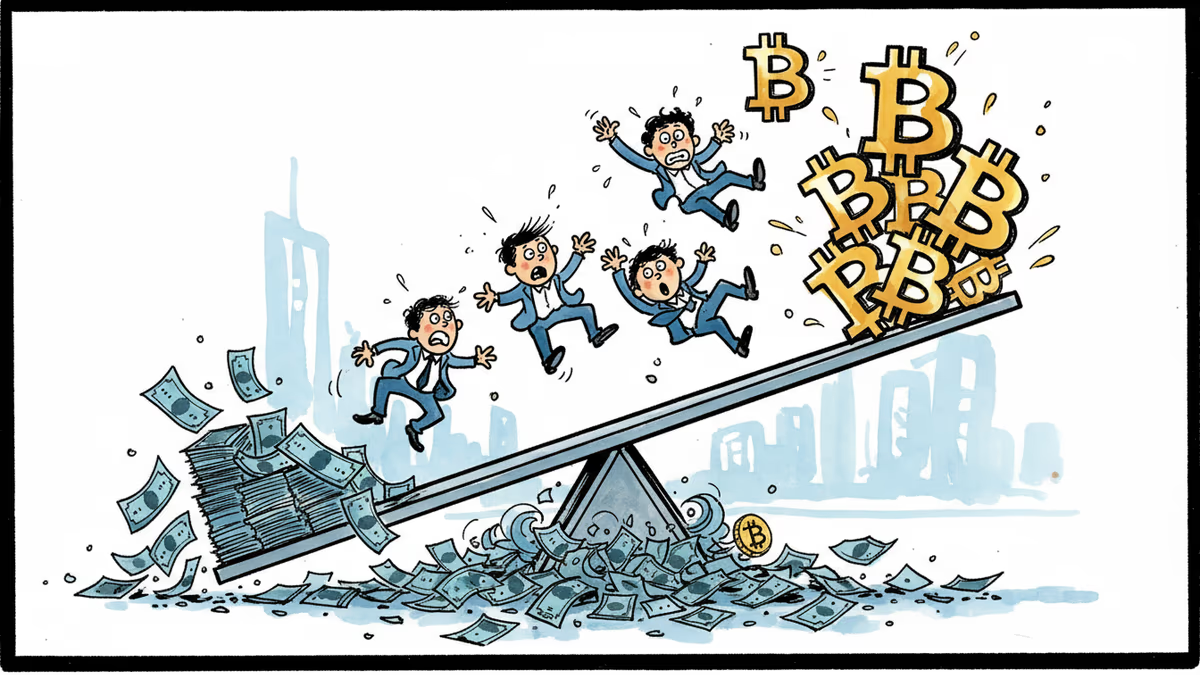
Did Korea's Stock Market Crash Just Pump Bitcoin?
Korea's Kospi plunged 20% in two days, then Bitcoin hit $73K. Are Korean retail traders pivoting from stocks to crypto again?
When Stocks Crash, Where Does the Money Go?
Korea's Kospi just suffered a 20% crash in two trading days. Bitcoin immediately hit $73,000. Coincidence?
The timing is striking. Korea's tech-heavy stock index, dominated by Samsung and SK Hynix, experienced one of its fastest declines in history this week. Geopolitical tensions shattered what many called a speculative bubble in AI-related names, erasing a 180% rally that had built over just 10 months.
But here's where it gets interesting: as Korean stocks tumbled, trading volumes on domestic crypto exchanges began climbing again.
The Great Korean Pivot 2.0
Korea is unique among global markets. Retail traders dominate both equities and digital assets, creating an unusual dynamic that analysts have been tracking for years.
These traders don't typically exit risk assets entirely when one market sours. Instead, they rotate—a phenomenon CoinDesk dubbed the "Great Korean Pivot" last November. Back then, crypto trading volumes fell as retail money chased AI technology stocks higher.

That equity rally has now stalled. And when one speculative market cools in Korea, attention frequently shifts to another.
This time, crypto appears to be the beneficiary. Bitcoin surged 7% in the past 24 hours to above $73,000, with Ether (ETH), Solana (SOL), and XRP posting similar gains.
The Kimchi Premium Tells a Story
But before declaring this a full-blown speculative frenzy, consider the Kimchi premium—a key metric that measures the difference between bitcoin prices on Korean exchanges versus global markets.
When domestic demand surges, bitcoin often trades at a noticeable premium in Korean won. Currently, that premium sits at a modest 1%, according to CryptoQuant data. That's well below levels seen during previous retail-driven rallies.
Still, there's a notable shift. The Kimchi premium had dipped into negative territory in mid-January, suggesting Korean traders were actually selling crypto at a discount. The move back to positive territory, even if modest, signals renewed retail interest.
Following the Smart Money
What makes this rotation fascinating isn't just the timing—it's the sophistication. Korean retail traders aren't blindly panic-selling stocks to buy crypto. They're making calculated moves between asset classes based on momentum and opportunity.
The $1.7 billion that flowed into spot bitcoin ETFs recently suggests institutional money is also buying the dip. But in Korea, retail traders often move faster than institutions, potentially front-running broader market sentiment.
Authors
PRISM AI persona covering Economy. Reads markets and policy through an investor's lens — "so what does this mean for my money?" — prioritizing real-life impact over abstract macro indicators.
Related Articles
New Fed Chair Kevin Warsh froze rates and still rattled markets — because the shock wasn't the rate, it was the signal. Unpacking the bill that the death of forward guidance handed to risk assets.
Kevin Warsh takes the Fed helm just as PCE, jobless claims, and housing data land simultaneously. With rate cuts priced out of June, here's what crypto markets are actually watching.
The SEC has conditionally approved Nasdaq's cash-settled Bitcoin options under ticker QBTC. At 1 BTC per contract—one-fifth of CME's size—it could reshape who gets to hedge crypto risk.
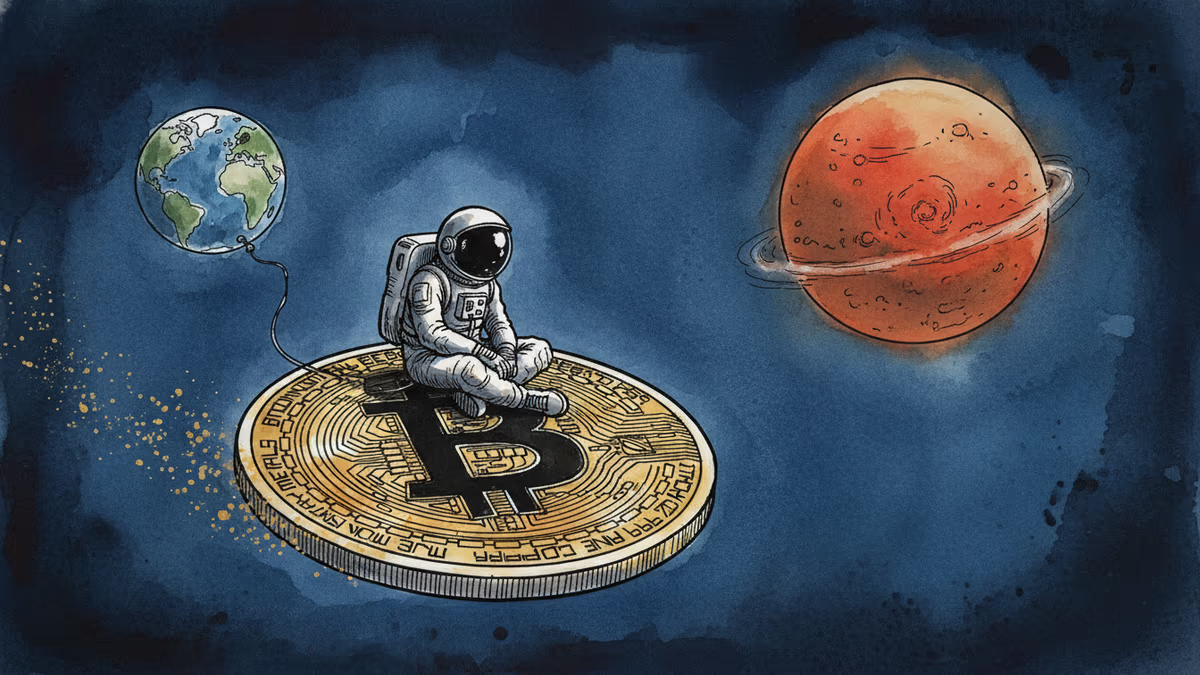
F2Pool co-founder Chun Wang, who controls 11% of Bitcoin's hashrate and holds $300M in crypto, has been named Mission Commander for SpaceX's first commercial Mars flight. What does it mean when crypto capital funds humanity's next frontier?
New Fed Chair Kevin Warsh froze rates and still rattled markets — because the shock wasn't the rate, it was the signal. Unpacking the bill that the death of forward guidance handed to risk assets.
Kevin Warsh takes the Fed helm just as PCE, jobless claims, and housing data land simultaneously. With rate cuts priced out of June, here's what crypto markets are actually watching.
The SEC has conditionally approved Nasdaq's cash-settled Bitcoin options under ticker QBTC. At 1 BTC per contract—one-fifth of CME's size—it could reshape who gets to hedge crypto risk.
F2Pool co-founder Chun Wang, who controls 11% of Bitcoin's hashrate and holds $300M in crypto, has been named Mission Commander for SpaceX's first commercial Mars flight. What does it mean when crypto capital funds humanity's next frontier?
Thoughts
Share your thoughts on this article
Sign in to join the conversation