

Why 60% of Fortune 500s are Betting on Web3 DePIN AI Infrastructure 2026
Explore why 60% of Fortune 500s are adopting Web3 DePIN AI infrastructure in 2026. Discover how AIOZ Network is bridging the gap between Web2 and Web3 for AI scaling.
Sixty percent of Fortune 500 companies are already exploring blockchain-based solutions. What started as a vague concept a decade ago has evolved into a concrete strategic necessity. As the Web2 era of centralized data control begins to wane, a hybrid model merging traditional business with decentralized principles is taking center stage.
Scaling Through Web3 DePIN AI Infrastructure 2026
The real game-changer is DePIN (Decentralized Physical Infrastructure Networks). Erman Tjiputra, CEO of AIOZ Network, points out that decentralized infrastructure offers greater data control and eliminates the 'single point of failure' that plagues centralized giants. In today's 'compute crunch' where AI demands are insatiable, Web3 provides a cost-effective way to scale.
Last year, AIOZ Network launched a distributed platform that taps into over 300,000 contributing devices. This allows enterprises to run AI inference and training without the opaque datasets or lock-in effects of centralized providers. At its peak, decentralized finance exchanges have already proven the model's viability with daily volumes exceeding $10 billion.

Overcoming the UX and Interoperability Gap
It's not all smooth sailing. The lack of interoperability between fragmented blockchain networks remains a major hurdle. Regulatory uncertainty and poor user experience also slow down adoption. Tjiputra notes that the biggest setback is UX—losing a private key still means losing access to all assets, a trade-off many enterprises find daunting.
To bridge this gap, AIOZ Network was built on Cosmos and EVM, prioritizing cross-chain communication. They've made it simple for developers to switch from Amazon S3 to decentralized storage by simply repointing endpoints via standard REST APIs. This hybrid approach lets companies keep one foot on familiar ground while harvesting the benefits of Web3.
Authors
Related Articles
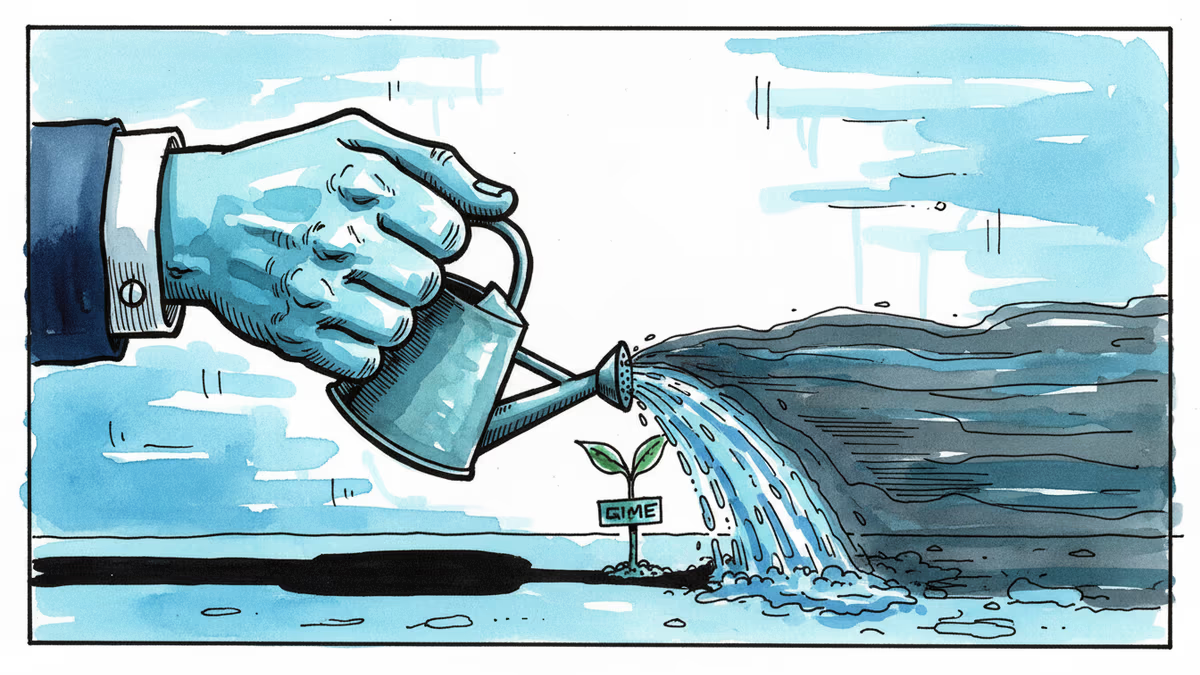
Google is committing up to $40 billion to Anthropic, a direct AI competitor. The deal reveals how the real AI arms race isn't about models — it's about who controls the infrastructure beneath them.
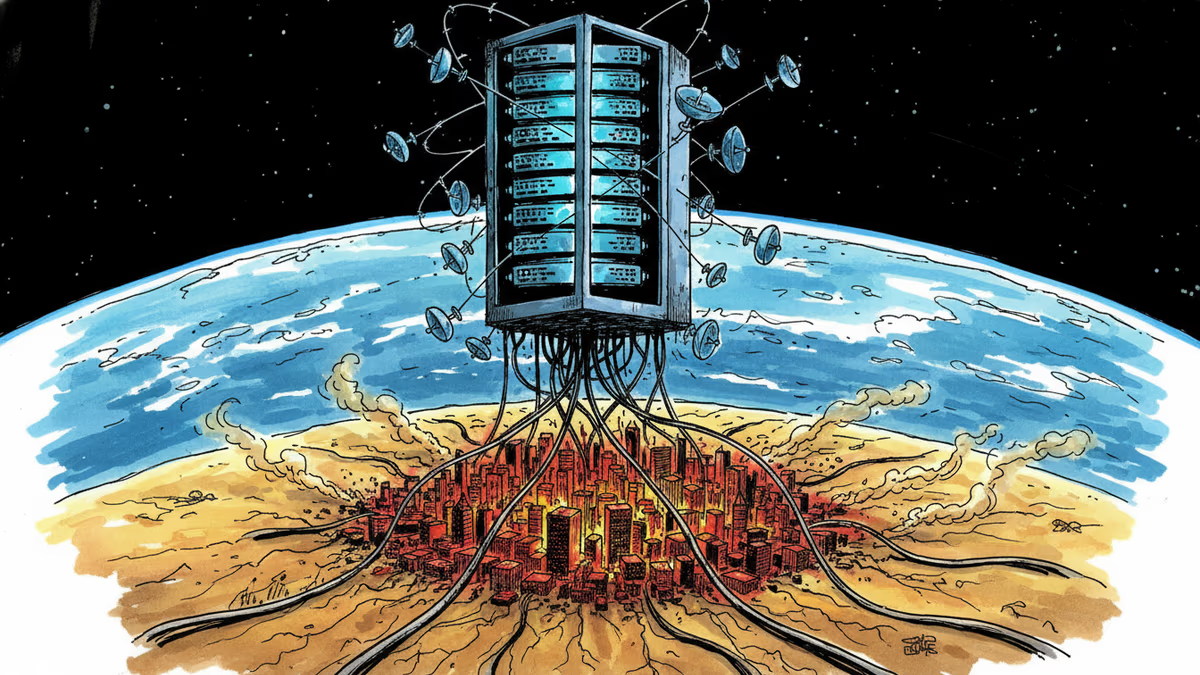
SpaceX wants to launch a million orbital data centers to power AI without draining Earth. The vision is compelling. The physics, economics, and debris math are not.
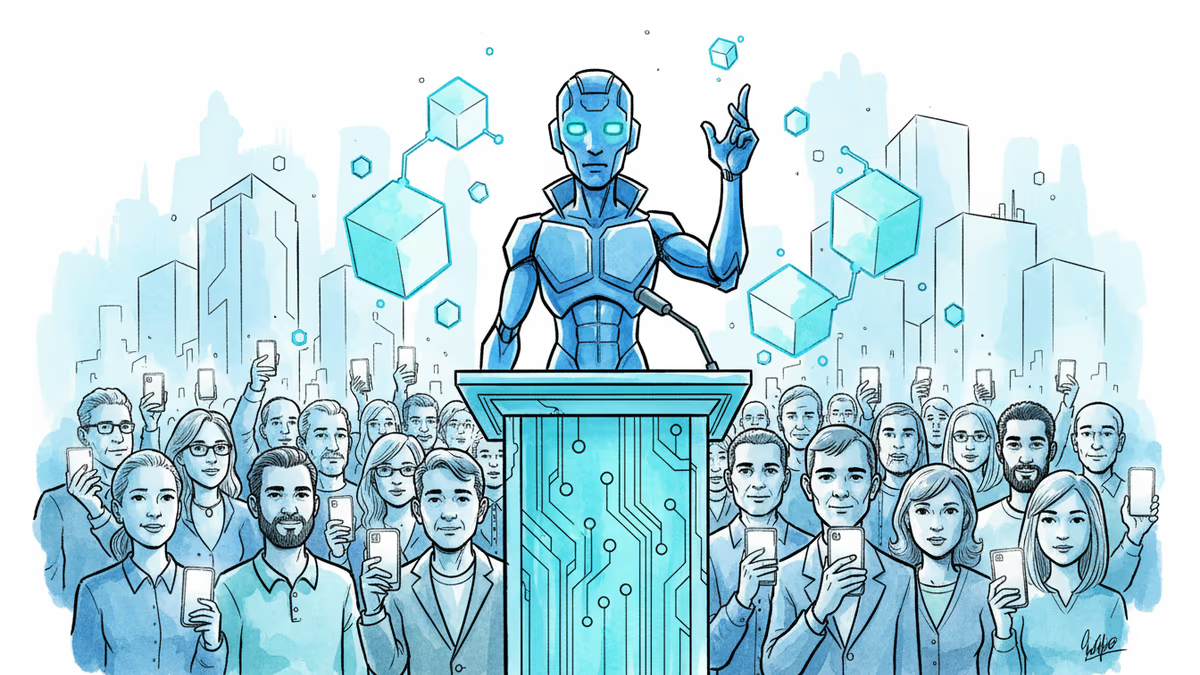
A Colombian Indigenous community is fielding an AI avatar as their parliamentary candidate, using blockchain for collective decision-making. What does this mean for democracy?
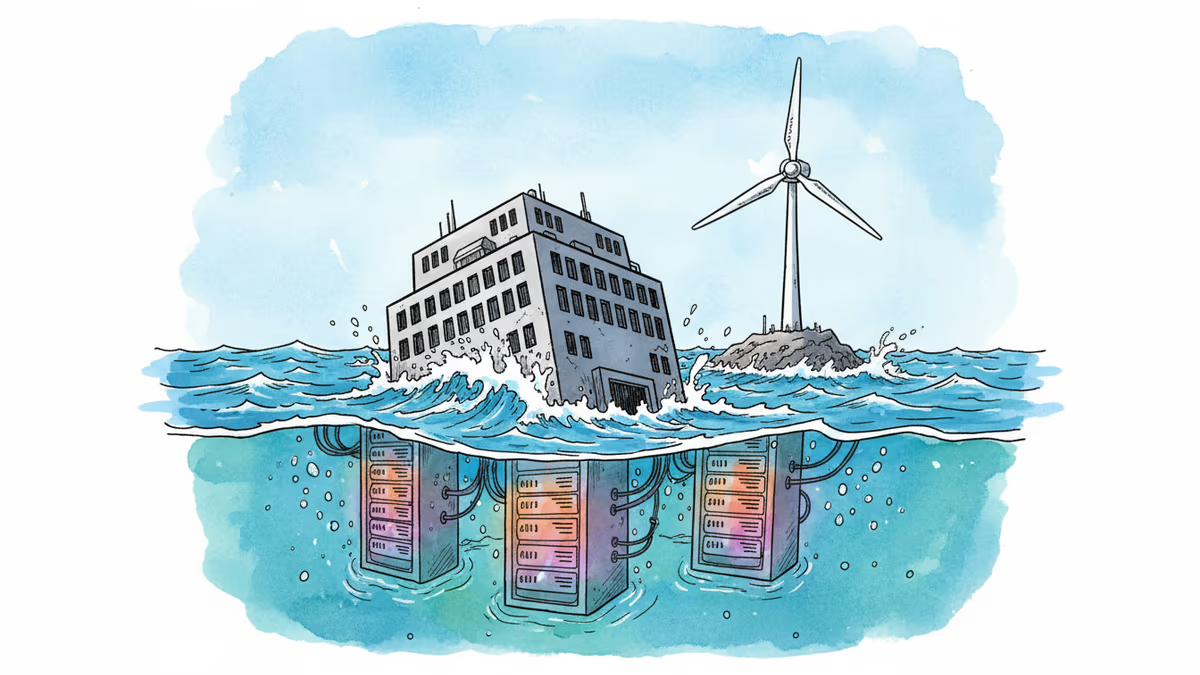
A Norwegian startup plans to submerge data centers offshore, powered by wind turbines. Could this solve AI's massive energy appetite, or create new problems? We examine multiple perspectives.
Google is committing up to $40 billion to Anthropic, a direct AI competitor. The deal reveals how the real AI arms race isn't about models — it's about who controls the infrastructure beneath them.
SpaceX wants to launch a million orbital data centers to power AI without draining Earth. The vision is compelling. The physics, economics, and debris math are not.
A Colombian Indigenous community is fielding an AI avatar as their parliamentary candidate, using blockchain for collective decision-making. What does this mean for democracy?
A Norwegian startup plans to submerge data centers offshore, powered by wind turbines. Could this solve AI's massive energy appetite, or create new problems? We examine multiple perspectives.
Thoughts
Share your thoughts on this article
Sign in to join the conversation