
When AI Runs for Office, Who Really Gets Represented?
A Colombian Indigenous community is fielding an AI avatar as their parliamentary candidate, using blockchain for collective decision-making. What does this mean for democracy?
300,000 Indigenous people just handed their political voice to an algorithm. What happens when artificial intelligence doesn't just influence elections—but actually runs in them?
The Candidate That Can't Be Killed
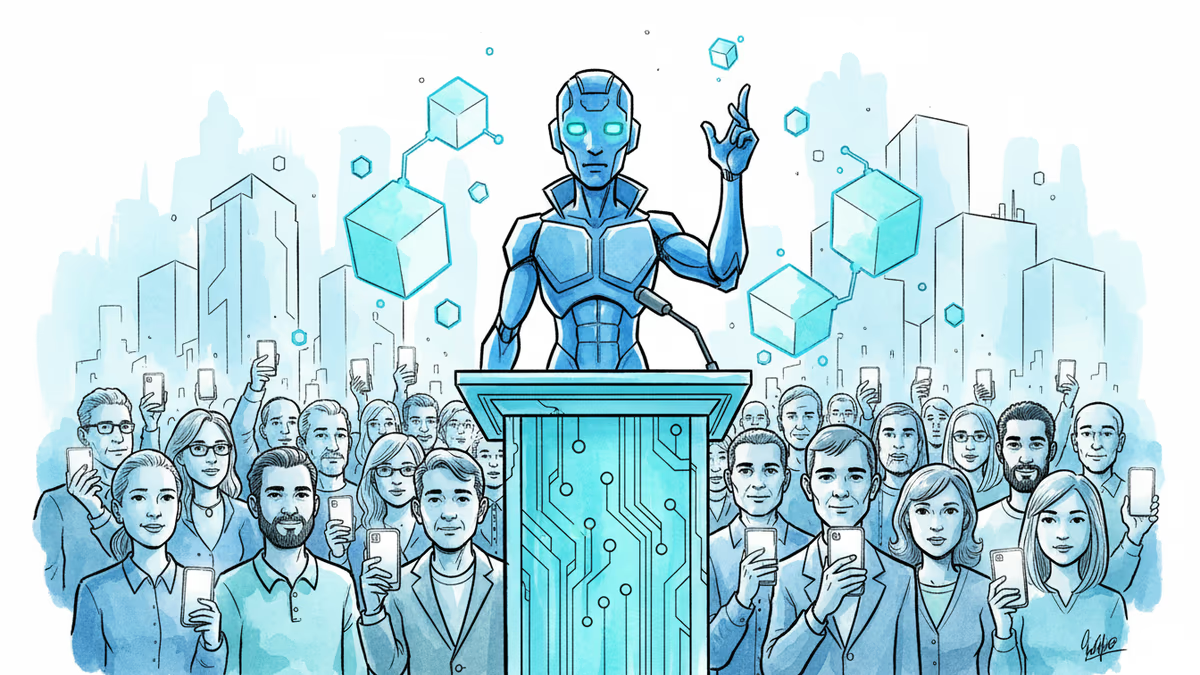
Meet Gaitana, a blue-skinned AI avatar running for Colombia's parliament this March. Named after a 16th-century revolutionary leader, she's not just a digital mascot—she's the collective political brain of the Zenú Indigenous community.
Here's the twist: if elected, the human candidates on the ballot will defer every legislative vote to Gaitana's blockchain-powered platform. Carlos Redondo (Senate) and Alba Rincón (House) appear as "IA" on voting cards—Spanish for artificial intelligence.
"To build something like this from the jungle, as outsiders who were never part of the political establishment, feels like a miracle," says Redondo, a 40-year-old mechatronics engineer who created the system. Over 10,000 users already engage with the platform.
But this isn't just a tech experiment. In a country where presidential candidates get shot during campaigns and congressional hopefuls disappear days before elections, AI offers something human politicians can't: immunity from assassination.
Democracy by Algorithm
Gaitana runs on DeepSeek's large language model, adapted for Indigenous worldviews. The platform uses smart contracts on blockchain to ensure transparency, with a 15-member ethics committee monitoring decisions.
The concept mirrors the traditional cabildo—Indigenous councils that govern by consensus. Every community member participates in decision-making, and Gaitana digitizes this ancient democratic process.
Yet critics raise fundamental questions. "There's little clarity on how consensus is reached, how it will be governed, and what AI's role actually is," warns Pilar Sáenz, a Colombian technology and human rights researcher.

The Digital Divide Dilemma
Here's the paradox: a platform designed to amplify Indigenous voices might silence the most marginalized. Rural Colombia suffers from precarious internet access, potentially excluding the very people Gaitana claims to represent.
"What kind of representation can exist through a tool that requires not just connectivity, but advanced digital skills?" Sáenz asks. The irony is stark—using cutting-edge technology to represent communities often left behind by technological progress.
Blockchain adds another layer of complexity. While Redondo claims anonymity through tokenization, experts worry about traceability. "Blockchain isn't designed for voting," Sáenz notes. "To guarantee traceability, you need full identification, making secret voting very difficult."
The Global AI Politics Experiment
Gaitana isn't alone. Denmark's AI party, Britain's "AI Steve," and Albania's virtual official Diella all represent growing attempts to inject artificial intelligence into governance. Most have failed spectacularly.
But Colombia's context is unique. When human candidates face literal life-or-death risks, AI offers practical advantages beyond democratic theory. "You can't poison an AI candidate or make him fall out of a window," observes Alberto Fernandez Gibaja from International IDEA.
This pragmatic appeal extends globally. Belarus used AI bots to help candidates avoid arrest. Pakistan's Imran Khan deployed deepfakes to campaign from prison. As political violence rises worldwide, AI candidates might become necessity, not novelty.
The Consensus Trap
Yet fundamental questions remain unanswered. What happens when AI achieves consensus on something genuinely antidemocratic? Who controls the algorithms that filter and compile community decisions?
"No AI system has enough fluency in minority languages," Fernandez Gibaja warns. "No AI model has enough safeguards for political processes either."
The risk extends beyond technical limitations. Like most digital platforms, Gaitana likely attracts the most engaged users while excluding those without technology access—potentially amplifying existing inequalities rather than addressing them.
Authors
Related Articles
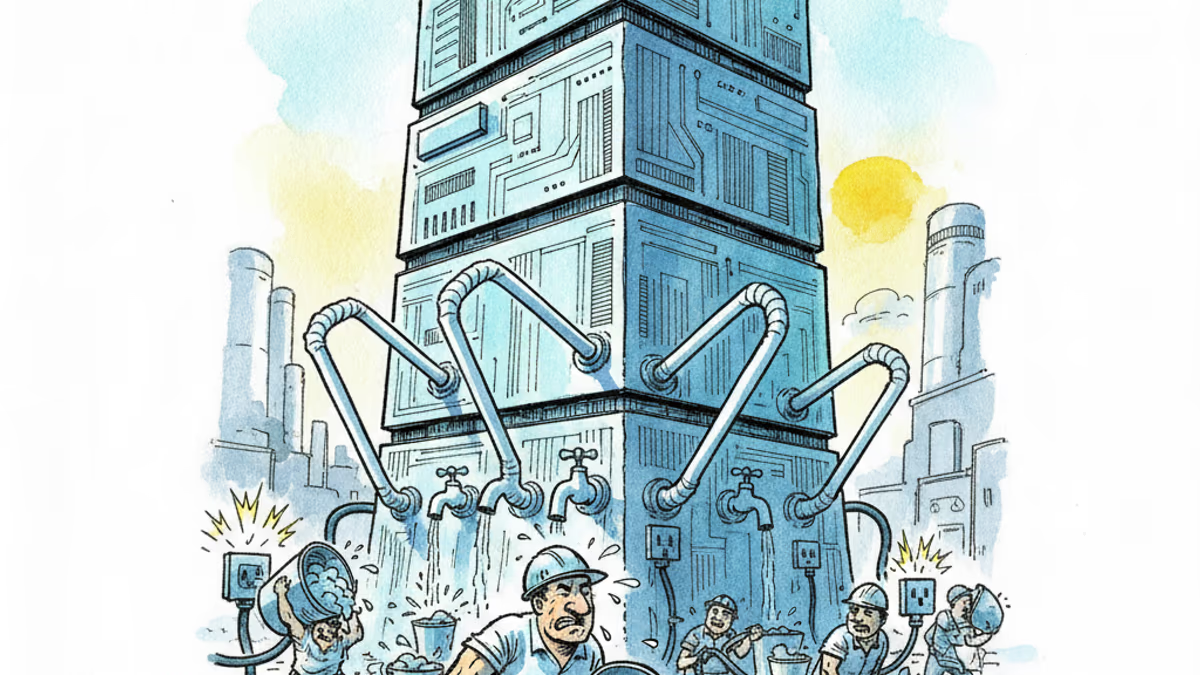
Samsung and SK unveiled a chip and AI investment package worth thousands of trillions of won on June 29. The headline number swings wildly by outlet, but the real contest isn't capital — it's water and power.
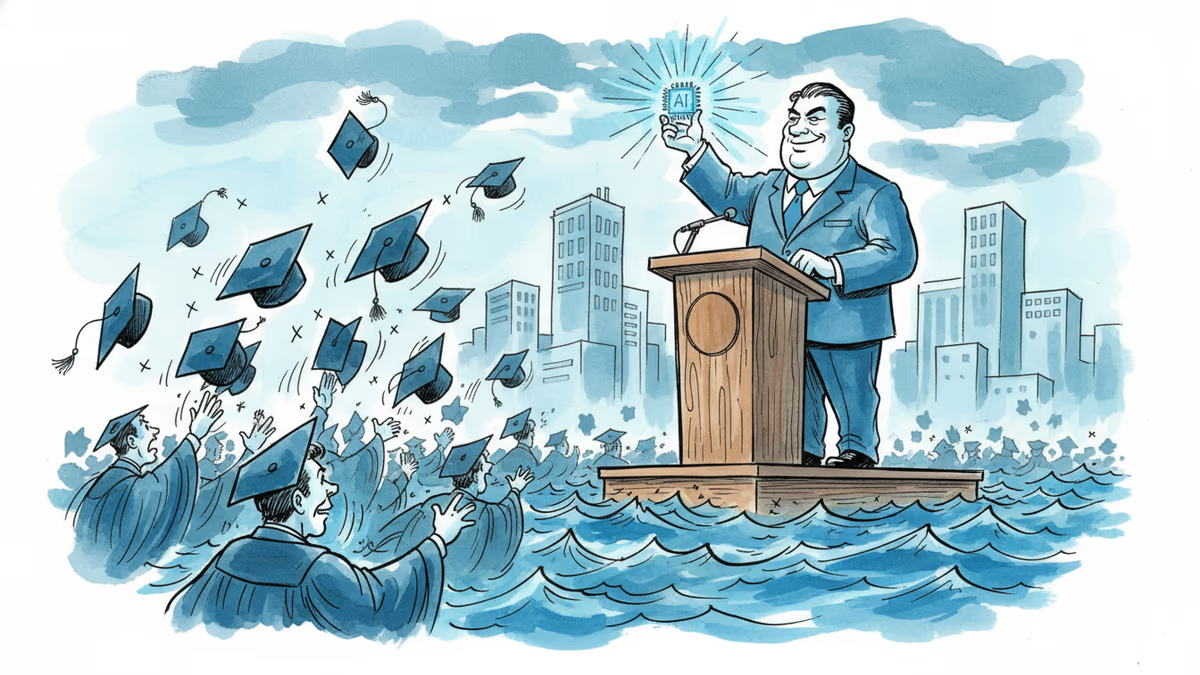
Viral videos show 2026 graduates jeering executives who praise AI at commencement ceremonies. It's not just rudeness — it's a signal about who pays for technological optimism.

Filipino virtual assistants using AI to ghost-manage LinkedIn profiles for executives is now a structured industry. 30 comments a day, fake engagement rings, and a platform struggling to tell real from fabricated.
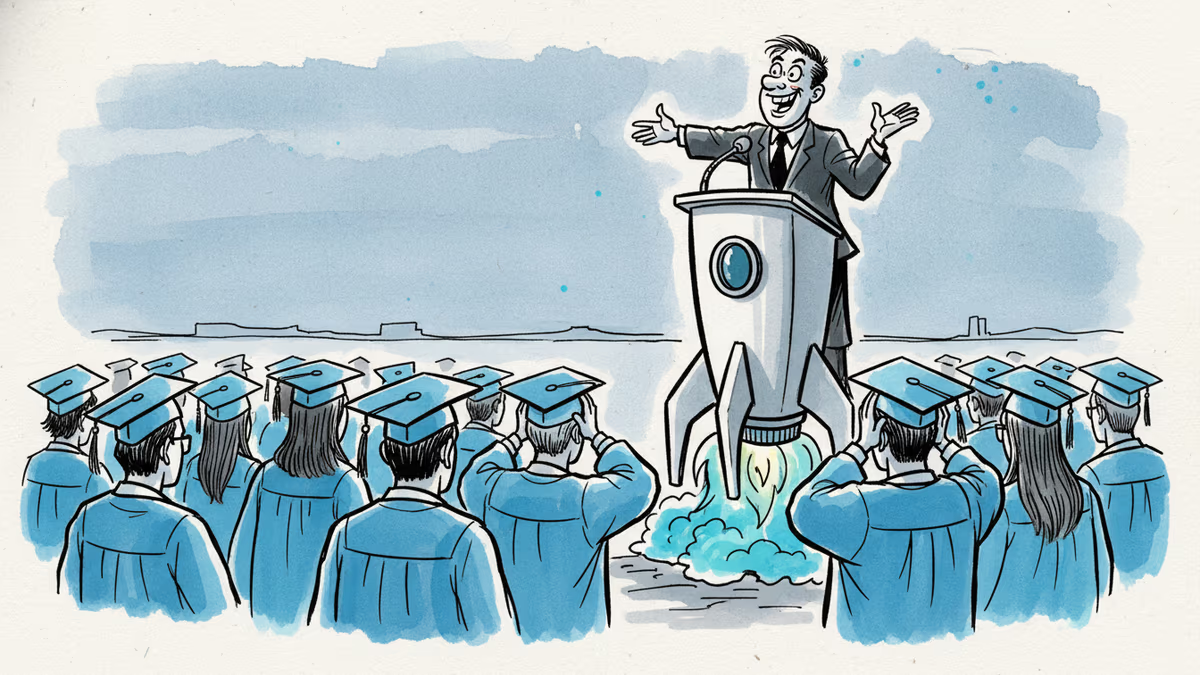
Two commencement speakers learned the hard way that AI enthusiasm doesn't land well with today's graduates. The backlash reveals a widening gap between tech optimism and Gen Z's economic reality.
Samsung and SK unveiled a chip and AI investment package worth thousands of trillions of won on June 29. The headline number swings wildly by outlet, but the real contest isn't capital — it's water and power.
Viral videos show 2026 graduates jeering executives who praise AI at commencement ceremonies. It's not just rudeness — it's a signal about who pays for technological optimism.
Filipino virtual assistants using AI to ghost-manage LinkedIn profiles for executives is now a structured industry. 30 comments a day, fake engagement rings, and a platform struggling to tell real from fabricated.
Two commencement speakers learned the hard way that AI enthusiasm doesn't land well with today's graduates. The backlash reveals a widening gap between tech optimism and Gen Z's economic reality.
Thoughts
Share your thoughts on this article
Sign in to join the conversation