
Sinking Data Centers: The Ocean Solution to AI's Power Crisis
A Norwegian startup plans to submerge data centers offshore, powered by wind turbines. Could this solve AI's massive energy appetite, or create new problems? We examine multiple perspectives.
When AI Eats Too Much Power
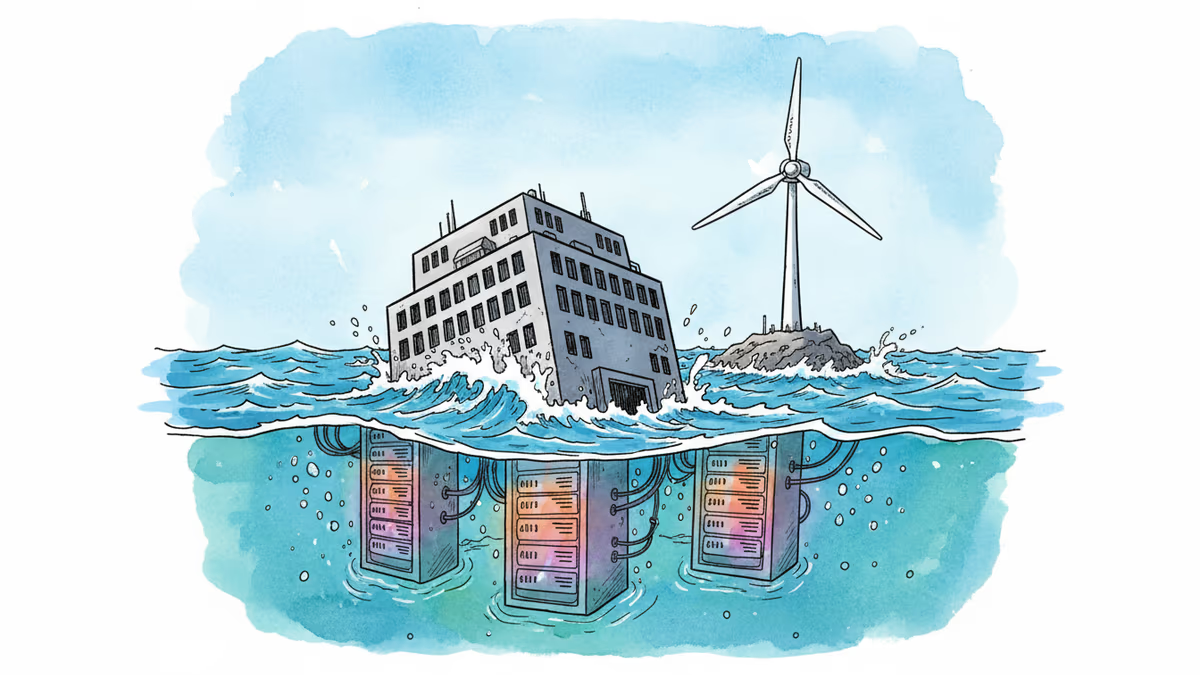
The power crunch for AI data centers has gotten so severe that people are talking about launching servers into space for 24/7 solar access. But startup Aikido thinks the ocean offers a better solution.
This year, the offshore wind developer plans to submerge a 100-kilowatt demonstration data center off Norway's coast. The unit will live inside floating wind turbine pods. If successful, they'll deploy a larger version off the UK coast in 2028: a 15-18 megawatt turbine feeding a 10-12 megawatt data center.
Three Problems the Ocean Solves
Moving offshore could tackle multiple challenges simultaneously.
Power proximity is obvious—the source sits directly overhead. Offshore winds are more consistent than onshore, and modest batteries could bridge any lulls. NIMBY concerns disappear when neighbors can't hear or see the facility. Cooling becomes simpler in cold seawater, unlike orbital data centers that need specialized vacuum techniques.
Microsoft's 2018 Scotland experiment proved the concept: only 6 of 850 servers failed during a 25-month trial, likely helped by nitrogen-filled containers.

But the Ocean Fights Back
For every problem solved, new ones emerge.
The ocean environment is harsh. Submerged servers won't face waves directly, but they won't be stationary either—everything needs robust securing. Seawater corrodes aggressively, requiring hardened containers, power connections, and data links. Microsoft accumulated patents over years, open-sourced them in 2021, then abandoned the project by 2024.
The Regulatory Maze
Offshore data centers face complex jurisdictional questions. Who regulates servers in international waters? How do data sovereignty laws apply? Environmental impact assessments could take years, especially regarding marine ecosystems.
European regulators might embrace the renewable energy angle, while US authorities could focus on national security implications. Different coastal nations will likely develop conflicting standards.
Tech Giants' Dilemma
For companies like Google, Amazon, and Microsoft, offshore data centers represent both opportunity and risk. The renewable energy narrative aligns with sustainability commitments, but operational complexity multiplies.
Maintenance requires specialized vessels and divers. Network latency increases with distance from shore. Redundancy becomes critical when you can't just walk into the server room. The economics work only at massive scale—exactly what these companies can provide.
Authors
Related Articles
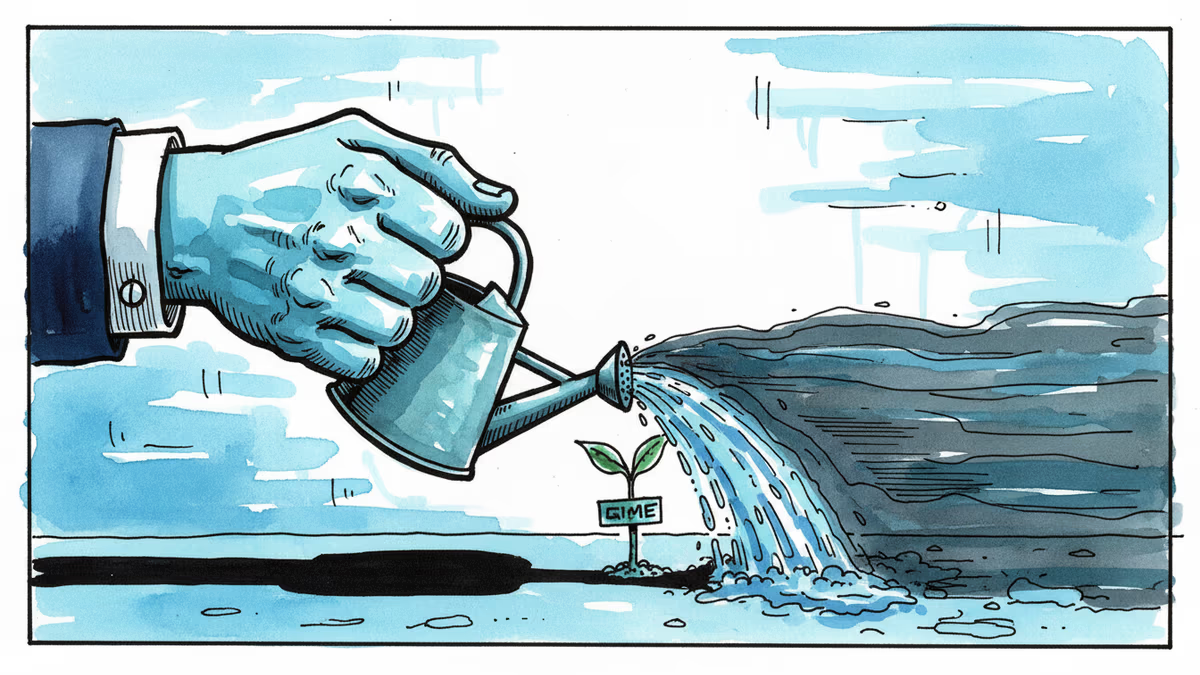
Google is committing up to $40 billion to Anthropic, a direct AI competitor. The deal reveals how the real AI arms race isn't about models — it's about who controls the infrastructure beneath them.
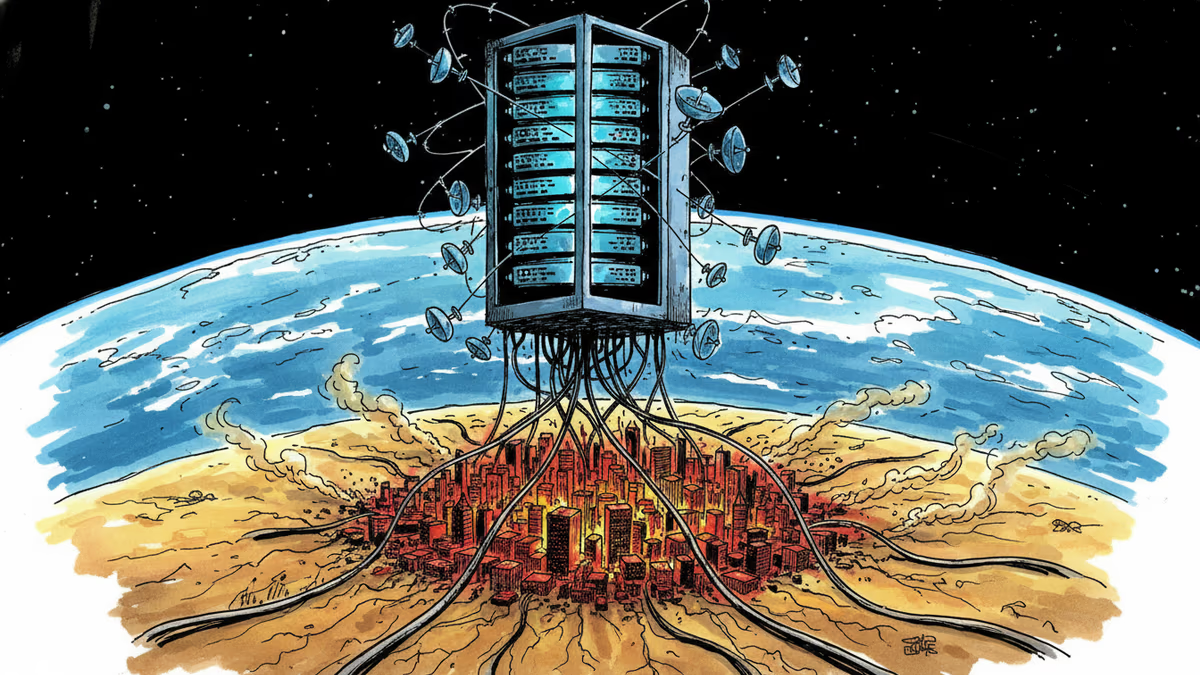
SpaceX wants to launch a million orbital data centers to power AI without draining Earth. The vision is compelling. The physics, economics, and debris math are not.
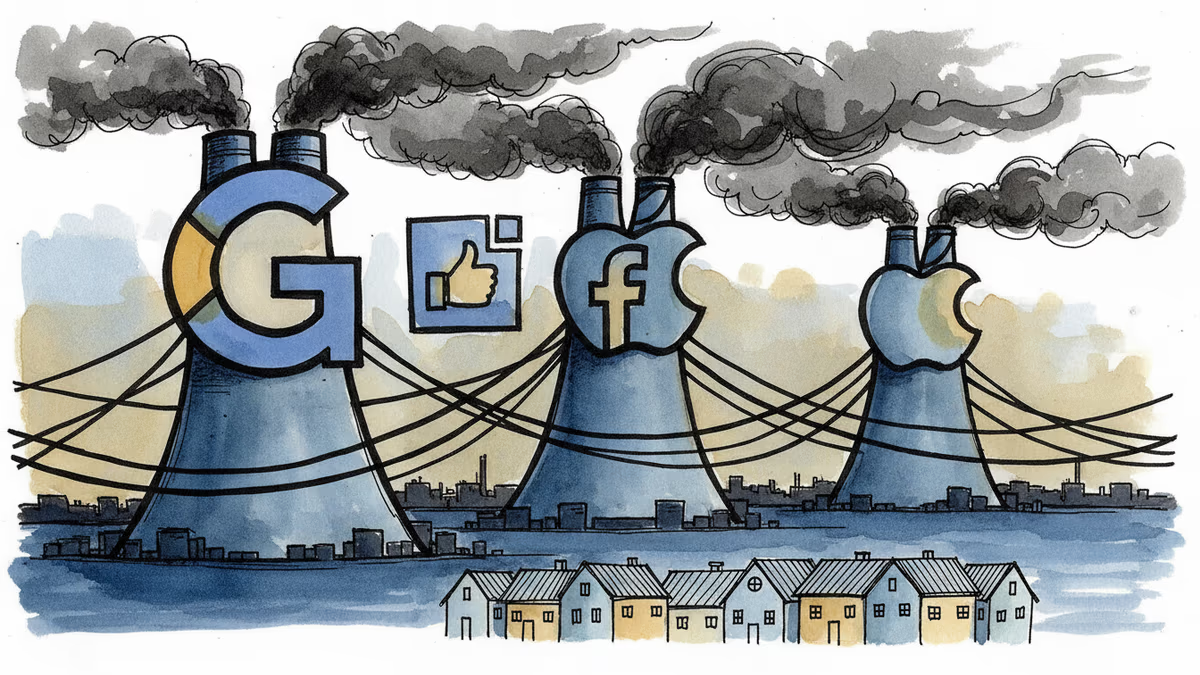
Amazon, Google, Meta and others pledge to pay for their data centers' power infrastructure, but the agreement lacks enforcement and ignores basic economics
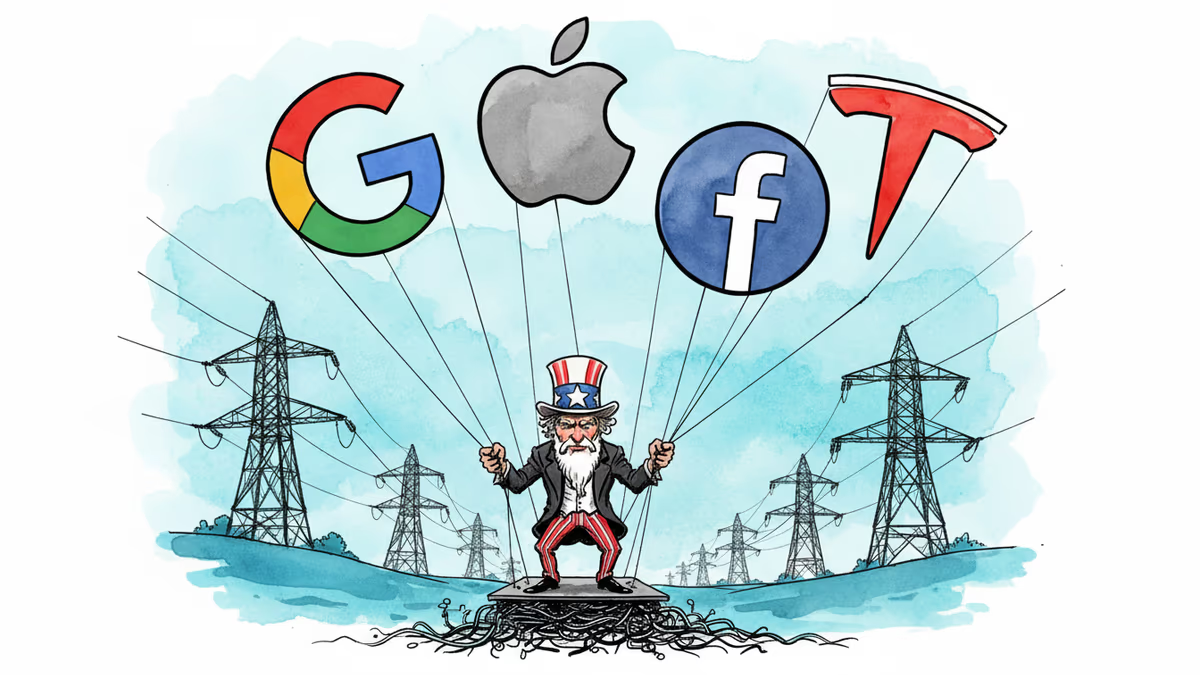
Trump administration secures nonbinding pledge from tech giants to protect consumers from data center electricity costs, but experts doubt meaningful impact
Google is committing up to $40 billion to Anthropic, a direct AI competitor. The deal reveals how the real AI arms race isn't about models — it's about who controls the infrastructure beneath them.
SpaceX wants to launch a million orbital data centers to power AI without draining Earth. The vision is compelling. The physics, economics, and debris math are not.
Amazon, Google, Meta and others pledge to pay for their data centers' power infrastructure, but the agreement lacks enforcement and ignores basic economics
Trump administration secures nonbinding pledge from tech giants to protect consumers from data center electricity costs, but experts doubt meaningful impact
Thoughts
Share your thoughts on this article
Sign in to join the conversation