
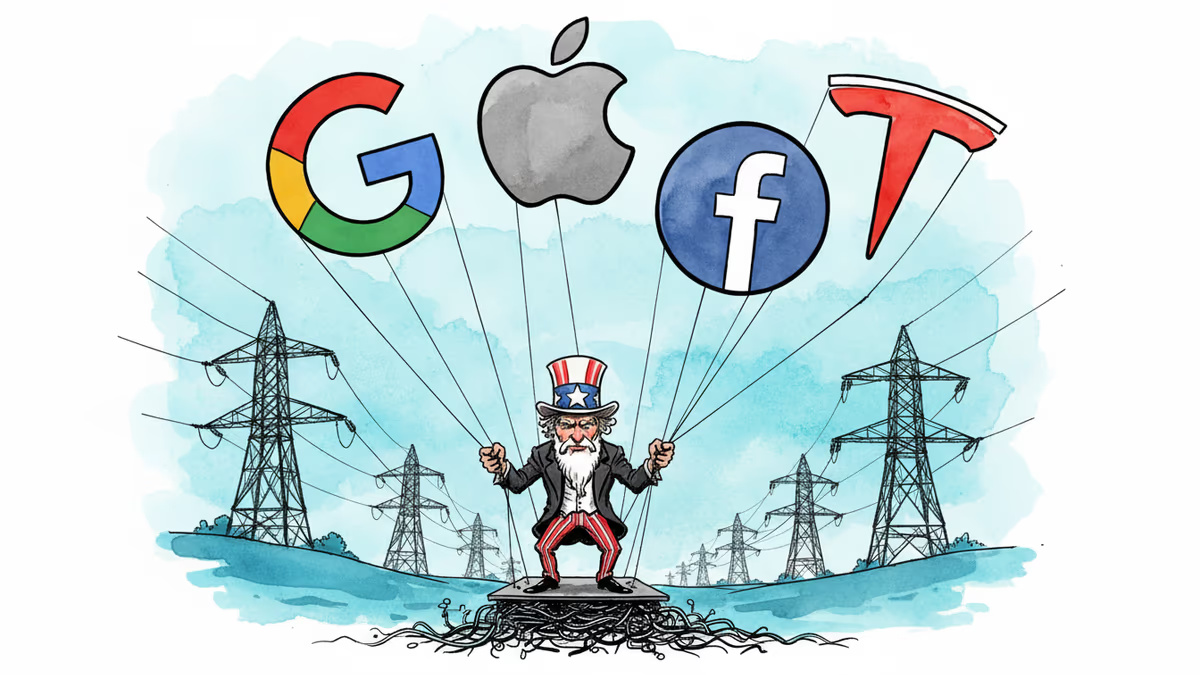
Big Tech's Power Promise: Why Experts Call It 'Theater
Trump administration secures nonbinding pledge from tech giants to protect consumers from data center electricity costs, but experts doubt meaningful impact
$2 Trillion Worth of Promises—But Are They Real?
Microsoft, Meta, Google, Amazon. Companies worth over $2 trillion combined stood alongside President Trump at the White House Wednesday, making a single promise: data centers won't drive up your electricity bill.
"Data centers ... they need some PR help," Trump said. "People think that if the data center goes in, their electricity is going up."
He's not wrong about the PR problem. Over the past year, bipartisan anger about data centers has exploded across America. A recent Heatmap News poll shows fewer than 30% of American voters would support a data center being built near where they live.
The Expert Verdict: 'This Is Theater'
But electricity experts aren't buying it. Ari Peskoe, director of the Electricity Law Initiative at Harvard Law School, was blunt: "This is theater."
"This is a press release designed to make it seem like they're addressing this issue. But this issue can only really be addressed by utility regulators or Congress. The White House doesn't really have a lot of moves here."

Why such skepticism? It comes down to how America's power grid actually works. Utilities make money by proposing equipment upgrades—pipelines, transmission lines—to regulators, who then greenlight passing those costs to consumers. Even the world's richest companies can't easily change this fundamental structure.
When Good Intentions Meet Hard Reality
Google's blog post about the pledge lists ongoing initiatives: nuclear and geothermal investments, utility agreements, job creation promises. But here's the catch—most of these were already in the works.
The bigger issue? The pledge is nonbinding. There's no way to track how companies actually follow through. Contracts between utilities and tech firms are largely private, making it nearly impossible to verify real consumer protection.
Georgia offers a sobering case study. Last week, state lawmakers abruptly killed a Senate bill that would've banned passing data center costs to consumers. The reason? Georgia Power, the state's utility giant, opposed it. Only a watered-down version the utility supports is moving forward.
The Structural Problem Nobody's Talking About
"The utility business model socializes cost—it's designed to spread cost to everybody," Peskoe explains. "We're in this new paradigm where we have just a few companies imposing billions of dollars of costs."
Even initiatives mentioned in the pledge—like building onsite power generation—are massively expensive. Smaller data center operators can't make similar promises. And many large projects are actually built by contractors who handle their own power sourcing.
Authors
Related Articles
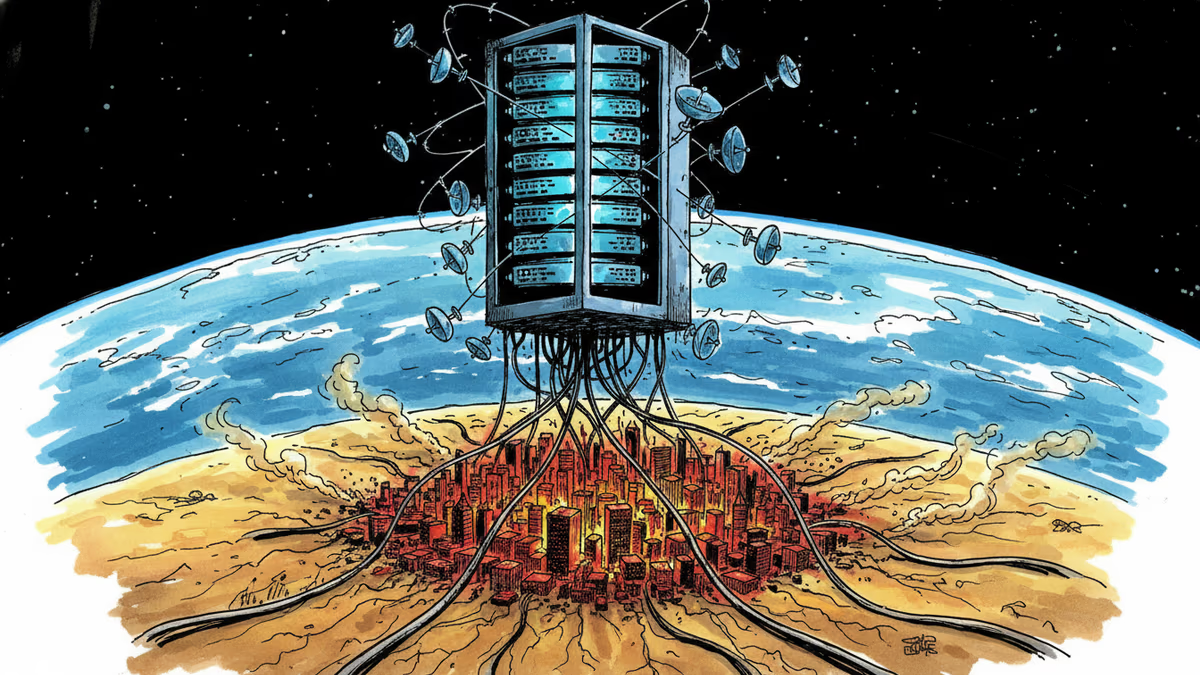
SpaceX wants to launch a million orbital data centers to power AI without draining Earth. The vision is compelling. The physics, economics, and debris math are not.

OpenAI's new app integrations let ChatGPT book hotels, order groceries, build websites, and control Spotify—all from one chat window. Here's what that power shift really means.
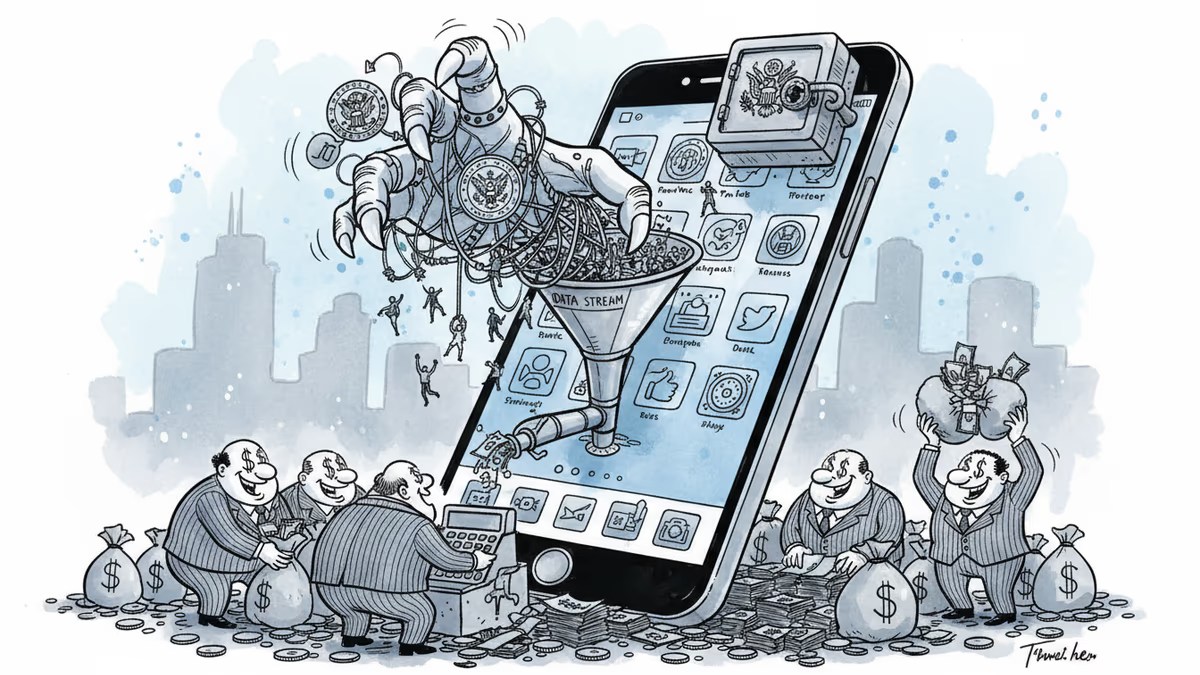
CBP admits buying location data from ad industry while Meta contractors watch users in bathrooms through smart glasses. The digital privacy boundary is crumbling.
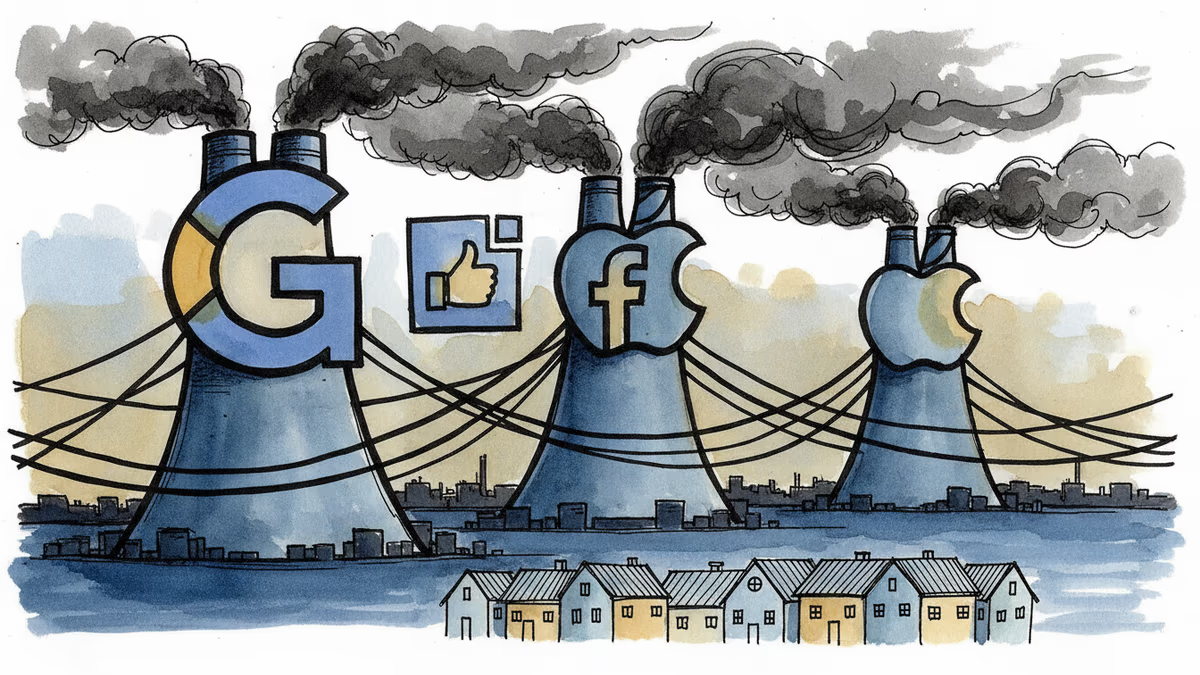
Amazon, Google, Meta and others pledge to pay for their data centers' power infrastructure, but the agreement lacks enforcement and ignores basic economics
SpaceX wants to launch a million orbital data centers to power AI without draining Earth. The vision is compelling. The physics, economics, and debris math are not.
OpenAI's new app integrations let ChatGPT book hotels, order groceries, build websites, and control Spotify—all from one chat window. Here's what that power shift really means.
CBP admits buying location data from ad industry while Meta contractors watch users in bathrooms through smart glasses. The digital privacy boundary is crumbling.
Amazon, Google, Meta and others pledge to pay for their data centers' power infrastructure, but the agreement lacks enforcement and ignores basic economics
Thoughts
Share your thoughts on this article
Sign in to join the conversation