
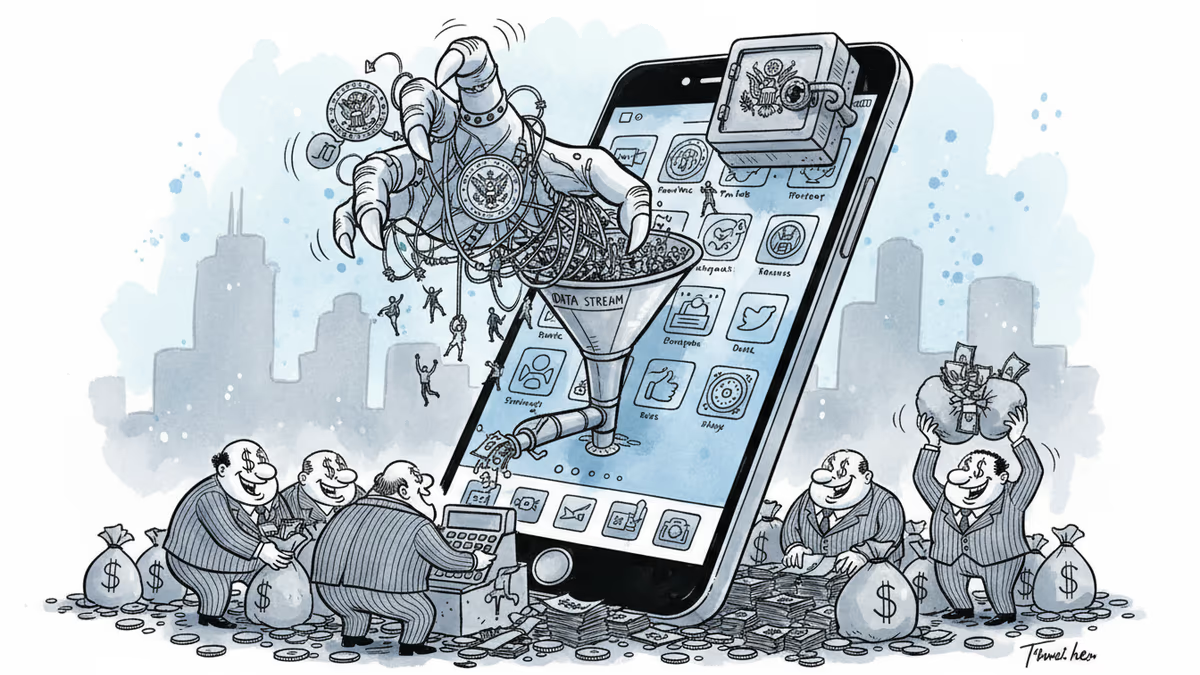
Your Phone Is Being Sold to the Government
CBP admits buying location data from ad industry while Meta contractors watch users in bathrooms through smart glasses. The digital privacy boundary is crumbling.
A cybercrime forum with 142,000 members vanished overnight in a multinational bust. But the real story isn't about criminals—it's about the legal surveillance apparatus watching your every move.
For the first time, US Customs and Border Protection has admitted it: they bought your phone's location data from the online advertising industry. The purchases ran from 2019 to 2021, harvesting information from the invisible auctions that happen every time you see an ad.
Every Ad View Is a Data Sale
When you scroll through an app and see an advertisement, you're witnessing the end result of a split-second auction. Advertisers bid to show you that specific ad, but in the process, your location data and device identifiers get packaged and sold. Industry insiders call this information a "gold mine" for tracking daily activities.
What did CBP do with this data? The Privacy Threshold Analysis obtained by 404 Media through FOIA doesn't specify. More concerning: ICE is reportedly planning to purchase access to Webloc, a system that can monitor entire neighborhoods for mobile phone movements.
The agencies haven't confirmed whether these data purchases continue, leaving a critical question unanswered.
Encryption Isn't Anonymity
Think Swiss-based ProtonMail offers bulletproof protection? The FBI identified an Atlanta protester by obtaining payment information linked to the email address [email protected]. Swiss authorities provided the data under international legal assistance treaties.
"We want to clarify that Proton did not provide any information to the FBI," a spokesperson said. "The information was obtained from the Swiss justice department via MLAT." The distinction matters less to the identified protester.

This incident highlights a crucial difference: privacy protects your messages, but anonymity protects your identity. Encrypted services can't access your communications, but they still hold customer data that legal orders can unlock.
Your Bathroom Is Training AI
The most disturbing revelation comes from Meta's smart glasses program. Contractors at data-labeling firm Sama in Nairobi told Swedish journalists they routinely review footage of users in bathrooms, undressing, and exposing financial information.
These recordings fuel Meta's AI training through the "live AI" feature, which lets users ask questions about what they're seeing. Meta's policies permit retention and review of these recordings, but contractors say most users don't realize humans are watching.
Workers who raise privacy concerns reportedly face termination—a chilling effect on the few safeguards that exist.
The Wiretap Wiretap
Meanwhile, the FBI is investigating "suspicious activity" on the portion of its network that handles wiretaps and surveillance warrants. Details remain scarce, but the incident echoes 2024's Salt Typhoon intrusions, when Chinese hackers exploited telecom wiretap systems to spy on US communications.
The irony is stark: systems built for government surveillance become targets for foreign adversaries, creating security vulnerabilities that affect everyone.
Beyond Individual Choice
Tech companies often frame privacy as a personal responsibility—adjust your settings, read the fine print, make informed choices. But when government agencies buy data from advertising networks and AI systems train on intimate footage, individual actions feel inadequate.
The Leakbase takedown, while successful, targeted obvious criminals. The legal surveillance economy operates in plain sight, protected by terms of service and privacy policies that few read and fewer understand.
Authors
Related Articles
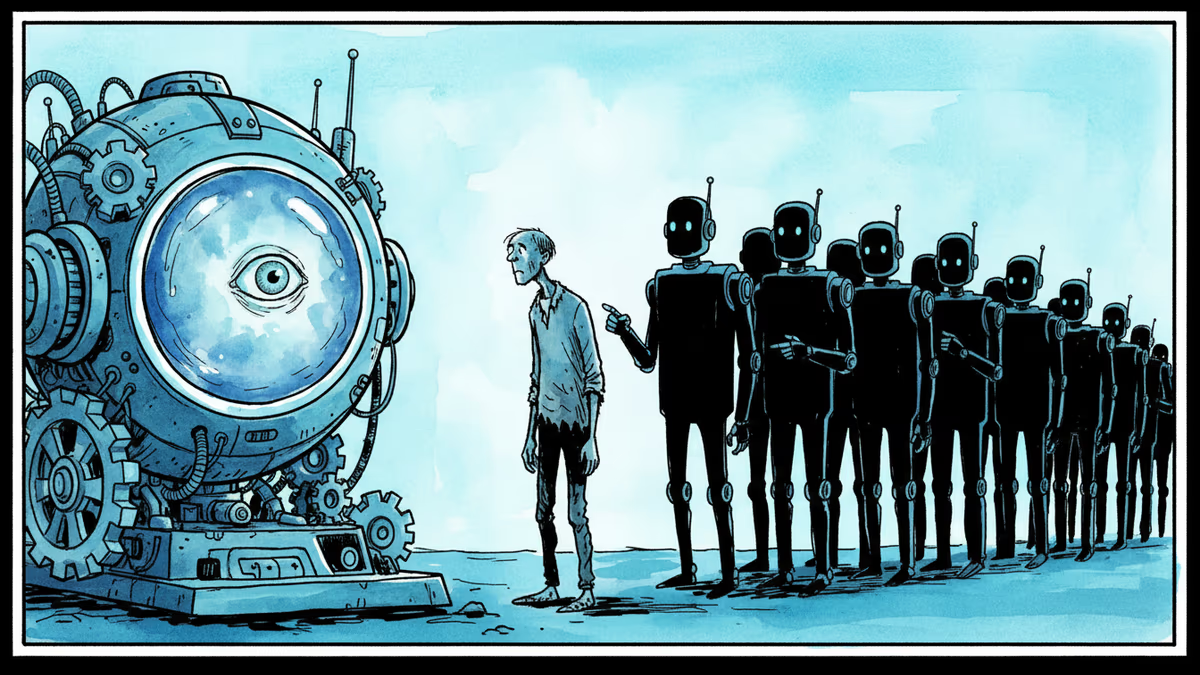
Tinder now rewards users who scan their irises at a World orb with free in-app boosts. As AI agents flood dating apps, 'being human' is becoming a verified status — and a business model.
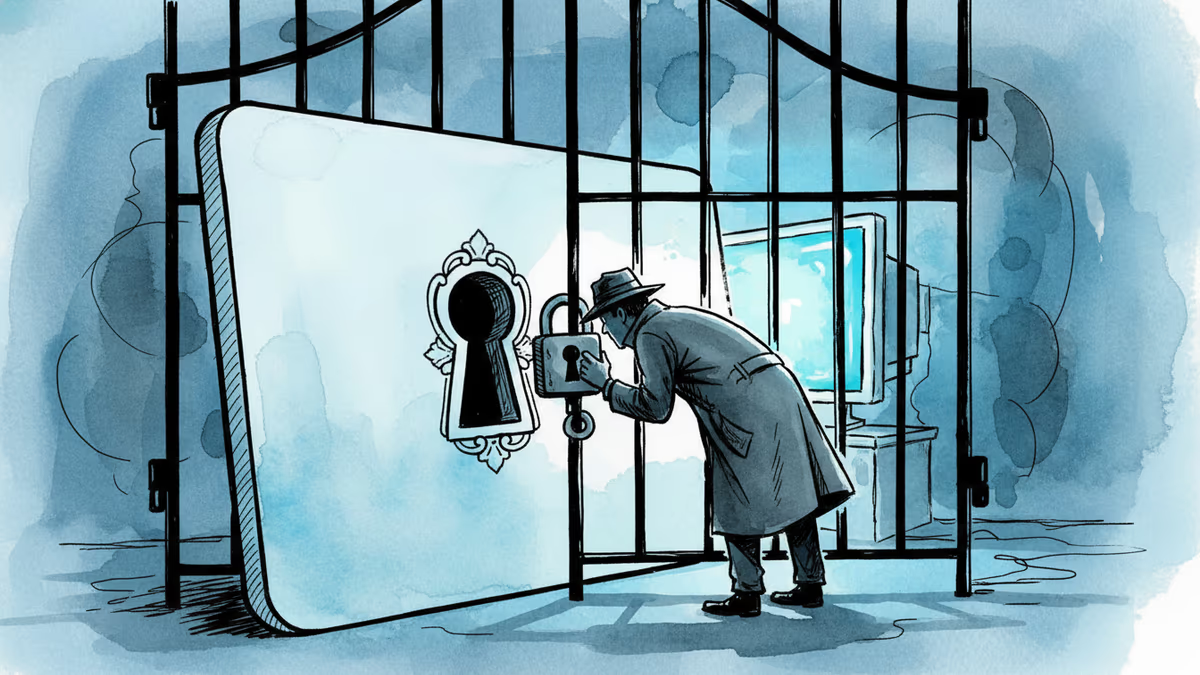
Wisconsin Governor Tony Evers vetoed an age verification bill for adult sites, citing privacy concerns. With 25+ states going the other way, the debate cuts to the heart of online freedom vs. child protection.

OpenAI's new app integrations let ChatGPT book hotels, order groceries, build websites, and control Spotify—all from one chat window. Here's what that power shift really means.
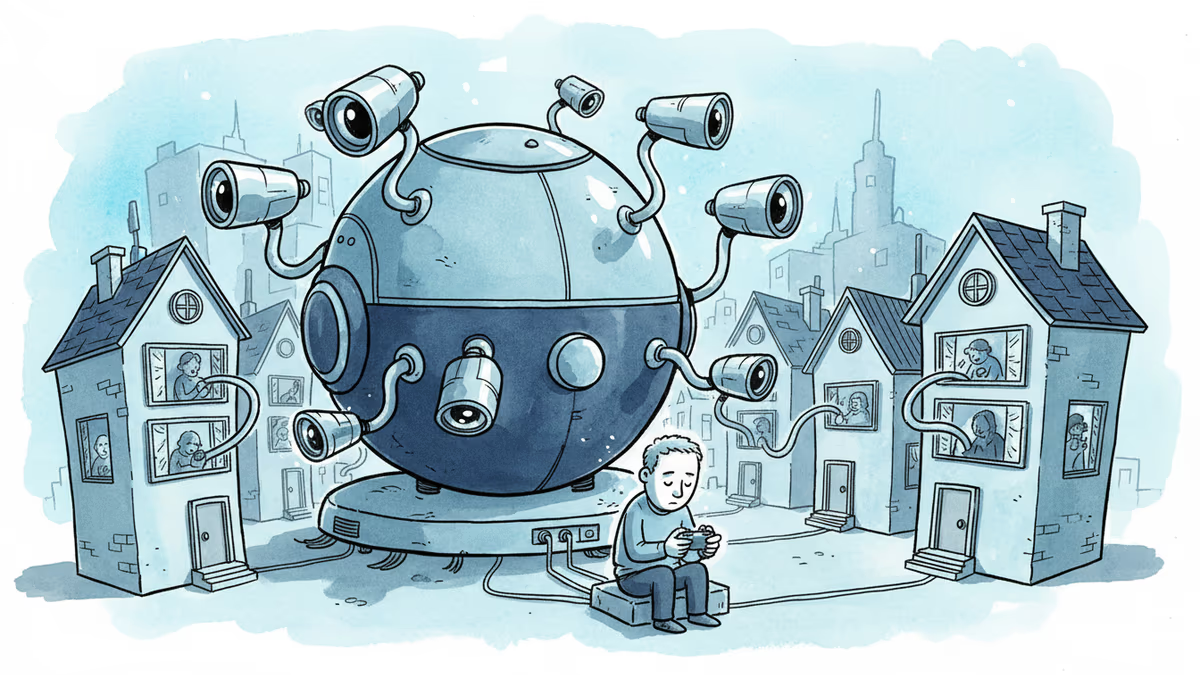
A security researcher discovered he could access 7,000 DJI robot vacuums and peek into strangers' homes. This Valentine's Day revelation exposes the hidden privacy risks of our smart home obsession.
Tinder now rewards users who scan their irises at a World orb with free in-app boosts. As AI agents flood dating apps, 'being human' is becoming a verified status — and a business model.
Wisconsin Governor Tony Evers vetoed an age verification bill for adult sites, citing privacy concerns. With 25+ states going the other way, the debate cuts to the heart of online freedom vs. child protection.
OpenAI's new app integrations let ChatGPT book hotels, order groceries, build websites, and control Spotify—all from one chat window. Here's what that power shift really means.
A security researcher discovered he could access 7,000 DJI robot vacuums and peek into strangers' homes. This Valentine's Day revelation exposes the hidden privacy risks of our smart home obsession.
Thoughts
Share your thoughts on this article
Sign in to join the conversation