
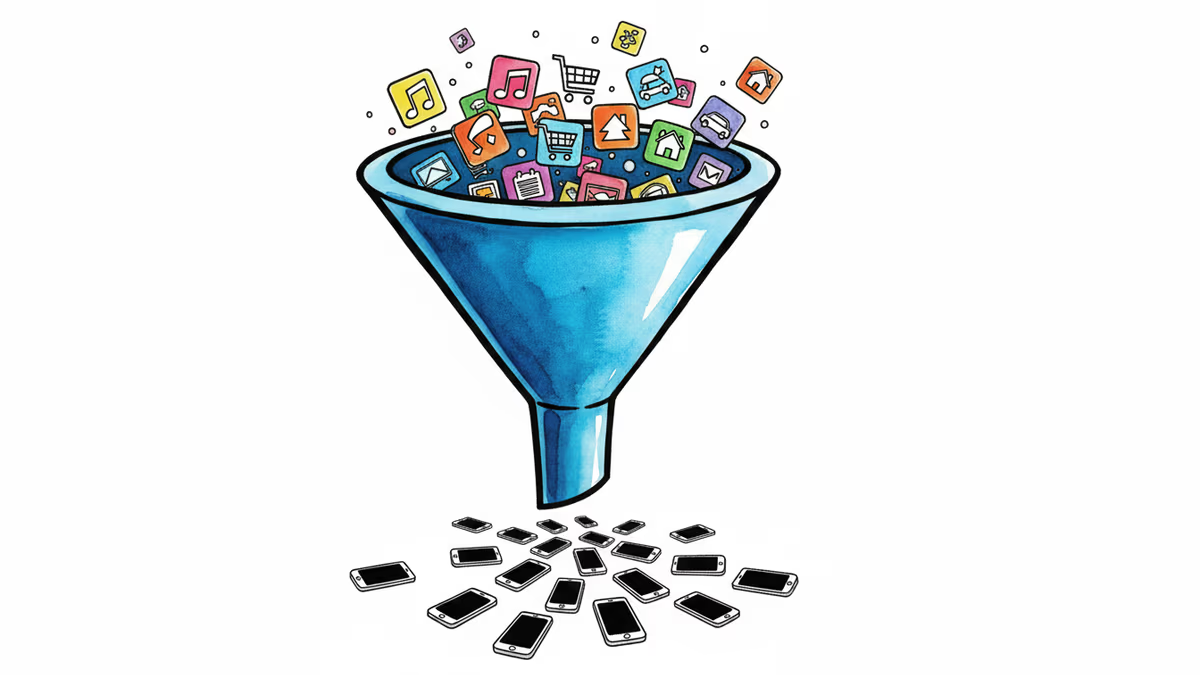
ChatGPT Wants to Be the Last App You Ever Open
OpenAI's new app integrations let ChatGPT book hotels, order groceries, build websites, and control Spotify—all from one chat window. Here's what that power shift really means.
What if you never had to open another app again?
That's the quiet ambition behind OpenAI's latest move. The company has rolled out App Integrations inside ChatGPT, letting users connect accounts from Spotify, Uber, DoorDash, Booking.com, Canva, Zillow, Target, Figma, Quizlet, Wix, Expedia, Coursera, and Angi—all from a single chat window. OpenTable, PayPal, and Walmart are confirmed to follow later in 2026. The rollout is currently live in the U.S. and Canada only.
The pitch is simple: instead of toggling between a dozen apps, you just... talk. Ask ChatGPT to build a grocery list and add everything to your DoorDash cart. Tell it to find a pet-friendly hotel in Austin under $200 a night, near public transit. Ask it to create a working website for your freelance business. It handles the query; the connected app executes the action.
From Chatbot to Control Tower
The distinction worth understanding here is the shift from information to action. The old ChatGPT told you things. This version does things—or at least starts them.
Take the Wix integration, launched in March 2026. A text or voice prompt generates a functional website. Existing Wix users can manage scheduling, payments, SEO, and security without leaving the chat interface. Quizlet's integration converts AI conversations or uploaded notes directly into flashcard study sets. Spotify doesn't just recommend music—it can add tracks to your library, create playlists by mood or artist, and surface podcast episodes, all on command.
The Target integration launched strategically ahead of Black Friday, letting shoppers describe a scenario—"ideas for a movie night"—and get a curated cart of available products they can check out immediately. Uber lets you configure a ride within ChatGPT and complete the booking in the Uber app (on-demand only, no advance scheduling, U.S. only for now).

Setting it up takes about thirty seconds: type the app name at the start of a prompt and ChatGPT walks you through authentication, or go to Settings → Apps and Connectors to link everything at once. Disconnecting is equally straightforward.
The Privacy Trade-Off Nobody's Talking About Loudly Enough
Here's the part buried in the fine print. Connecting an app means sharing its data with ChatGPT. Link Spotify and OpenAI can see your full listening history, playlists, and inferred tastes. Connect Zillow and your home-search behavior—price range, neighborhood preferences, frequency of browsing—becomes part of your ChatGPT profile.
OpenAI frames this as personalization. The more it knows, the better it performs. That's true. It's also true that this creates one of the most comprehensive behavioral profiles of any consumer platform ever built—spanning entertainment, travel, shopping, real estate, food, education, and professional tools, all funneled through a single AI.
The geographic restriction is telling. Europe and the U.K. are excluded from the rollout. GDPR and the EU AI Act create a regulatory environment where this level of cross-app data aggregation faces serious legal scrutiny. The U.S., with its comparatively lighter consumer data framework, is the proving ground. Regulators at the FTC have been watching OpenAI's data practices closely—this expansion gives them considerably more to examine.
Three Stakeholders, Three Very Different Reactions
For consumers, the appeal is real. Friction is the enemy of getting things done, and ChatGPT is systematically eliminating the friction between wanting something and having it. The risk is the gradual, comfortable surrender of data across every domain of daily life.
For the integrated apps, this is a calculated bet. Partnering with ChatGPT means access to its massive, engaged user base—but it also means ceding the interface layer. If users stop opening the Booking.com app and start asking ChatGPT instead, Booking.com becomes infrastructure rather than a destination. That's a meaningful loss of brand relationship and behavioral data.
For competitors—Google, Apple, Amazon, Microsoft—the signal is unmistakable. Google has been building similar action-oriented AI into Gemini and Google Assistant. Apple Intelligence is deepening its integration with iOS apps. Amazon has Alexa and a commerce ecosystem that dwarfs anything ChatGPT currently connects to. The race to become the default AI interface for daily life is no longer theoretical.
Authors
Related Articles

OpenAI has reorganized for the second time in a month, merging ChatGPT and Codex into a single agentic platform under president Greg Brockman's unified product leadership.
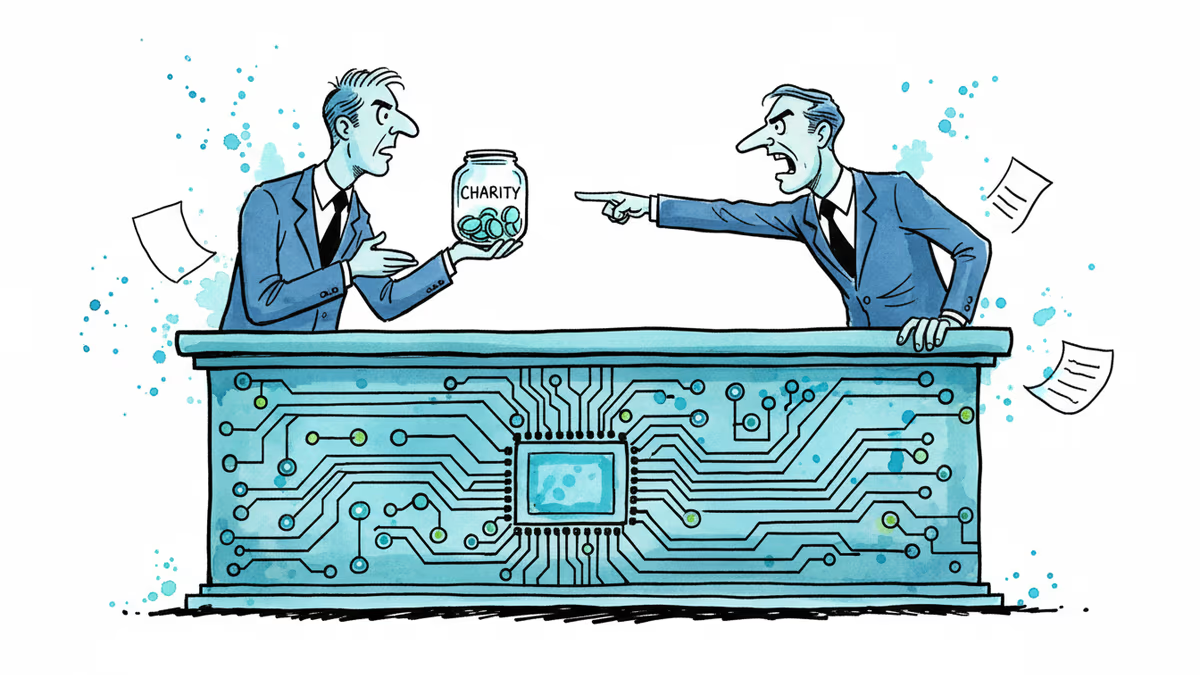
After two weeks of witnesses calling him a liar, OpenAI CEO Sam Altman testified in his own defense, claiming Elon Musk tried to kill the company twice.

Sam Nelson, 19, died after following ChatGPT's advice to mix Kratom and Xanax. His parents are suing OpenAI for wrongful death, raising urgent questions about AI trust, liability, and design.
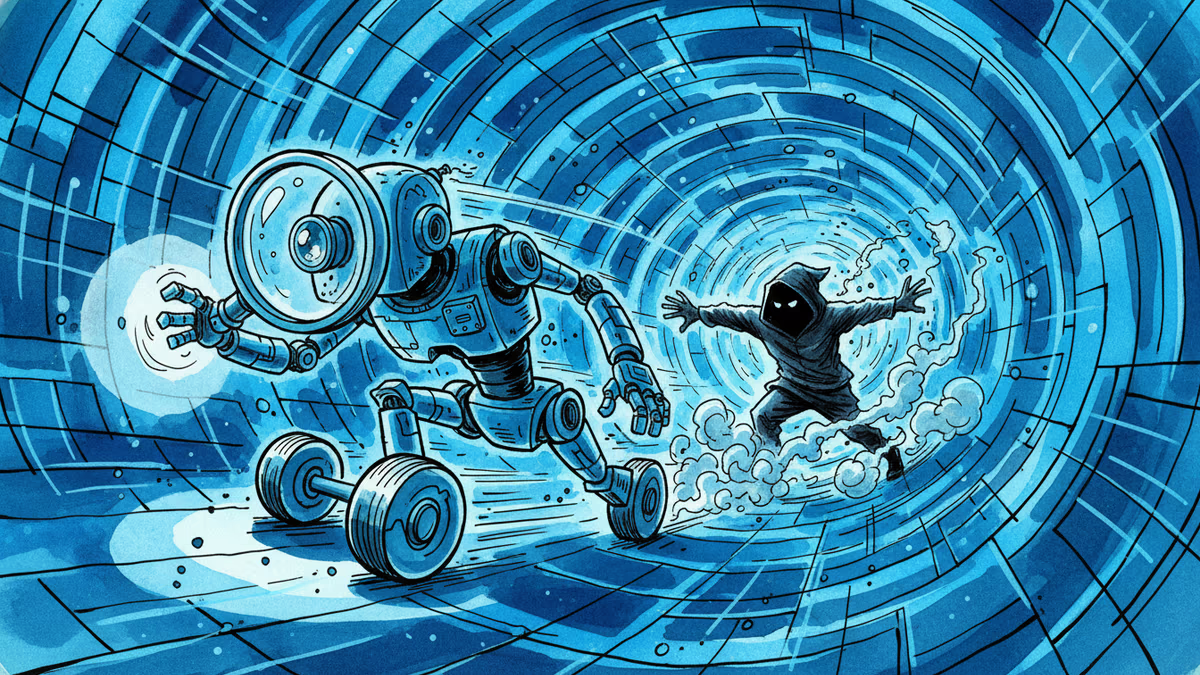
OpenAI's new Daybreak initiative uses the Codex AI agent to find and patch security vulnerabilities before attackers do—putting it in direct competition with Anthropic's secretive Claude Mythos.
OpenAI has reorganized for the second time in a month, merging ChatGPT and Codex into a single agentic platform under president Greg Brockman's unified product leadership.
After two weeks of witnesses calling him a liar, OpenAI CEO Sam Altman testified in his own defense, claiming Elon Musk tried to kill the company twice.
Sam Nelson, 19, died after following ChatGPT's advice to mix Kratom and Xanax. His parents are suing OpenAI for wrongful death, raising urgent questions about AI trust, liability, and design.
OpenAI's new Daybreak initiative uses the Codex AI agent to find and patch security vulnerabilities before attackers do—putting it in direct competition with Anthropic's secretive Claude Mythos.
Thoughts
Share your thoughts on this article
Sign in to join the conversation