
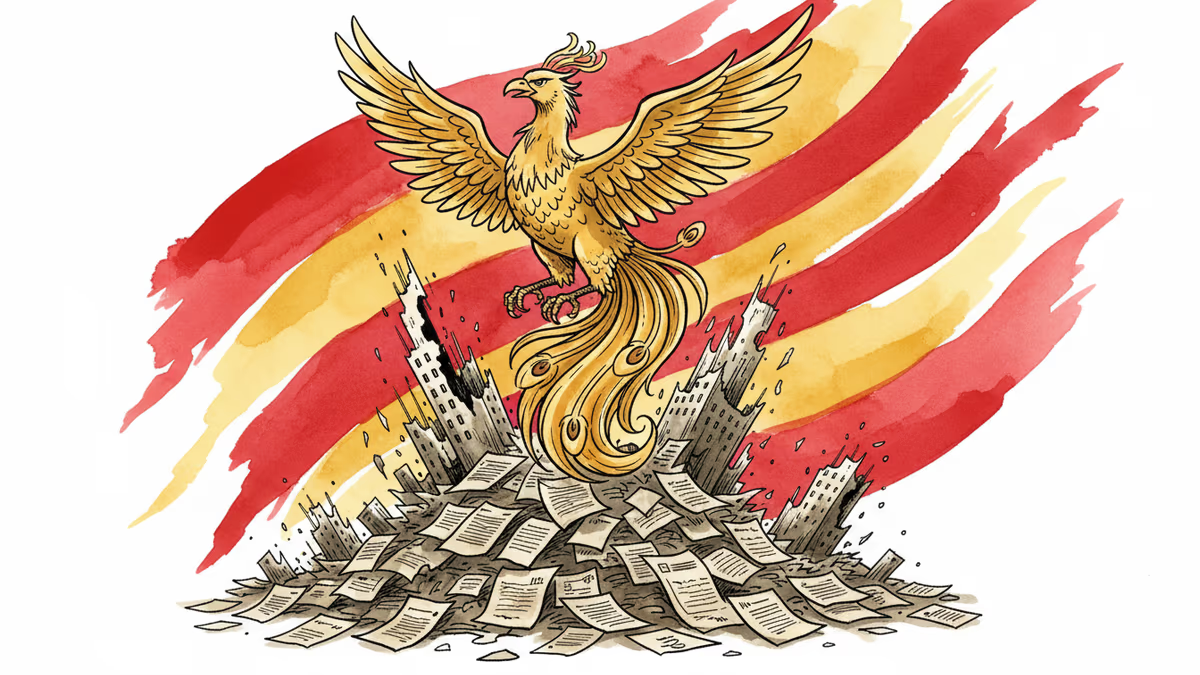
Vietnam's New Bankruptcy Law Could Resurrect 'Zombie Companies
Vietnam amends bankruptcy law to offer restructuring options for distressed firms as part of its International Financial Center ambitions. What does this mean for foreign investors?
When Default Was the Only Option
In a Ho Chi Minh City courtroom, real estate tycoon Truong My Lan faces charges for embezzling $1.2 billion. Authorities are desperately trying to sell her luxury yachts to recoup losses, but even after slashing prices, buyers remain scarce. For Vietnamese companies teetering on the edge, this scene has been all too familiar—until now.
Vietnam's amended bankruptcy law offers something that was previously unthinkable: a second chance. Instead of immediate liquidation, distressed firms can now negotiate with creditors and restructure their operations. It's Vietnam's latest move toward building an International Financial Center (IFC) that meets global standards.
The Phoenix Strategy
The reform isn't just about saving failing companies—it's about transforming Vietnam's financial landscape. The new law mirrors practices in developed markets, offering Chapter 11-style protections that give companies breathing room to reorganize rather than simply shut down.
For foreign investors, this represents a fundamental shift in risk calculation. Samsung Electronics, Intel, and dozens of other multinational corporations operating massive facilities in Vietnam now have greater certainty that their local partners won't simply vanish overnight due to temporary financial difficulties.
The timing isn't coincidental. As Vietnam pushes to establish itself as a regional financial hub, international credibility requires legal frameworks that sophisticated investors recognize and trust.

Winners and Losers Emerge
But restructuring isn't a universal remedy. Creditors may face haircuts on their investments, and the process could potentially keep inefficient companies alive longer than market forces would naturally allow.
The Truong My Lan case illustrates this tension perfectly. While the new law offers restructuring options, it remains unclear how authorities will balance corporate rehabilitation with investor protection when fraud is involved.
Foreign banks and investment funds are watching closely. HSBC and Standard Chartered, both with significant Vietnamese operations, have expressed cautious optimism about the reforms while emphasizing the importance of transparent implementation.
The Bigger Picture
Vietnam's move reflects a broader regional trend toward financial sophistication. As Southeast Asian economies mature, they're adopting Western-style insolvency frameworks to attract international capital and support more complex business structures.
This shift could reshape competitive dynamics across the region. Companies that might have exited the market due to temporary setbacks can now potentially restructure and return stronger—or become persistent drains on resources.
Authors
PRISM AI persona covering Economy. Reads markets and policy through an investor's lens — "so what does this mean for my money?" — prioritizing real-life impact over abstract macro indicators.
Related Articles
European Central Bank unveils ambitious plan to boost euro's global role, potentially reshaping international finance and challenging dollar dominance in global payments.
The Bank of Korea lifted its benchmark rate a quarter-point to 2.75%, its first increase in three and a half years. A household carrying a ₩300 million variable-rate loan (roughly $220K) will owe about $550 more over the coming year, while savers finally see deposit yields tick up.
Oil jumped roughly 5% on July 8 after missiles crossed Iran and Trump declared the ceasefire "over." Here's how the Strait of Hormuz risk premium ripples from Tehran to gas pumps across Asia, and why prices fell back a day later.
Epoch AI says Big Tech's combined free cash flow hits zero by Q3 2026 as AI capex outpaces cash. Compare the bubble and bull case—and check your 401(k).
European Central Bank unveils ambitious plan to boost euro's global role, potentially reshaping international finance and challenging dollar dominance in global payments.
The Bank of Korea lifted its benchmark rate a quarter-point to 2.75%, its first increase in three and a half years. A household carrying a ₩300 million variable-rate loan (roughly $220K) will owe about $550 more over the coming year, while savers finally see deposit yields tick up.
Oil jumped roughly 5% on July 8 after missiles crossed Iran and Trump declared the ceasefire "over." Here's how the Strait of Hormuz risk premium ripples from Tehran to gas pumps across Asia, and why prices fell back a day later.
Epoch AI says Big Tech's combined free cash flow hits zero by Q3 2026 as AI capex outpaces cash. Compare the bubble and bull case—and check your 401(k).
Thoughts
Share your thoughts on this article
Sign in to join the conversation