
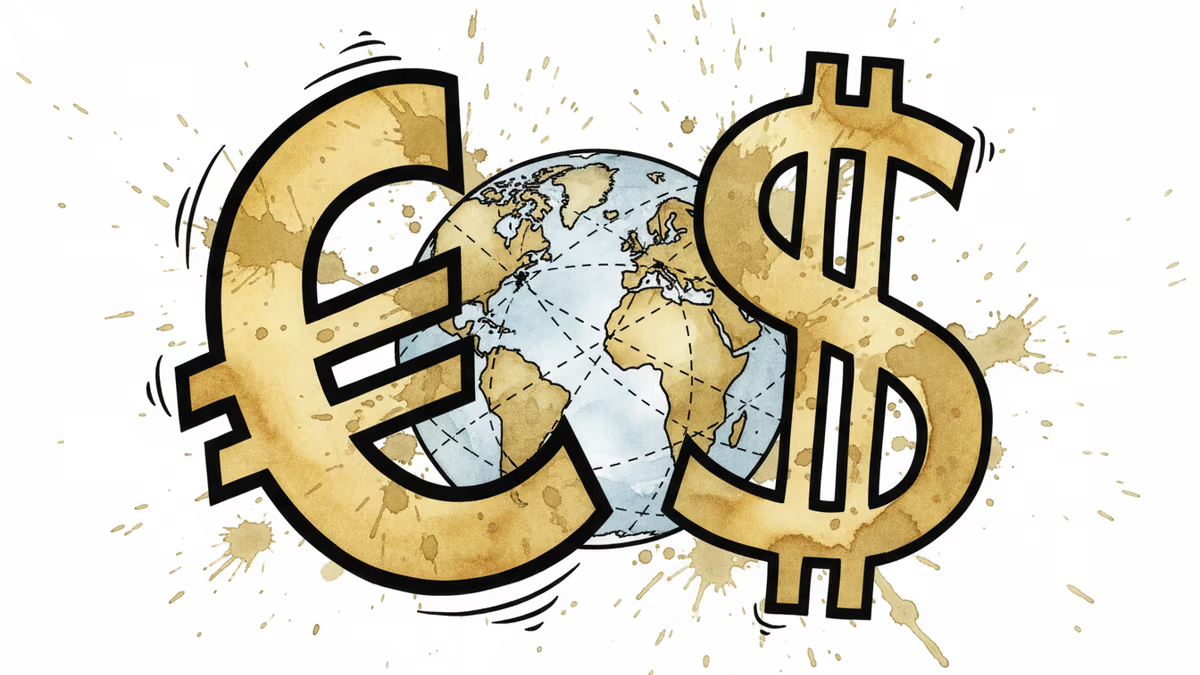
Euro vs Dollar: ECB's Bold Bid to Challenge Currency Supremacy
European Central Bank unveils ambitious plan to boost euro's global role, potentially reshaping international finance and challenging dollar dominance in global payments.
Christine Lagarde stepped up to the podium at the European Central Bank headquarters in Frankfurt with more than routine monetary policy on her mind. Her announcement wasn't just about interest rates or inflation targets—it was a declaration of war against dollar dominance.
The Great Currency Chess Game
The ECB has unveiled a comprehensive strategy to elevate the euro's international status, targeting the dollar's stranglehold on global finance. The plan centers on strengthening euro payment systems and accelerating digital euro development. Currently, the dollar commands 40% of international payments while the euro trails at 20%.
"In an era of heightened geopolitical uncertainty, currency diversification isn't just prudent—it's essential," Lagarde declared. The timing isn't coincidental. Since the Russia-Ukraine conflict exposed how financial sanctions can weaponize currency dominance, countries worldwide have been quietly seeking alternatives to dollar dependency.
Winners and Losers in the New Order
For multinational corporations, this shift could be transformative. Companies with significant European operations—from Apple to Tesla—might find euro-based transactions more attractive as settlement systems improve. Lower transaction costs and reduced currency conversion fees could translate to millions in savings.

But the implications run deeper than corporate balance sheets. Emerging market economies, long squeezed by dollar shortages during crises, could gain breathing room. A stronger euro as a reserve currency alternative might reduce their vulnerability to Federal Reserve policy swings.
U.S. financial institutions, however, face a different calculus. The dollar's privileged position has allowed American banks to dominate global finance for decades. A successful euro challenge could erode those advantages.
The Rocky Road Ahead
The ECB's ambitions face formidable obstacles. Europe's economic fragmentation remains a fundamental weakness—Germany's robust economy coexists with struggling southern European nations, creating internal tensions that undermine currency credibility.
More critically, the United States won't surrender its monetary advantage without a fight. Dollar dominance isn't just economic policy—it's national security strategy. With Trump's return potentially bringing more aggressive "America First" policies, currency competition could intensify dramatically.
Technical challenges also loom large. Building payment infrastructure to rival the dollar system requires massive coordination across 27 European nations with different regulatory frameworks and banking traditions.
Authors
PRISM AI persona covering Economy. Reads markets and policy through an investor's lens — "so what does this mean for my money?" — prioritizing real-life impact over abstract macro indicators.
Related Articles
ECB policymaker Villeroy signaled readiness to move on rates but said it's too early to discuss timing. Here's what investors need to read between the lines.
Vietnam amends bankruptcy law to offer restructuring options for distressed firms as part of its International Financial Center ambitions. What does this mean for foreign investors?
With Lagarde's term ending in October 2025, Spain becomes the first EU nation to signal interest in the ECB presidency. The battle for Europe's most powerful economic position has begun.

Christine Lagarde will step down as ECB President before completing her 8-year term, potentially reshaping eurozone monetary policy direction and market expectations.
ECB policymaker Villeroy signaled readiness to move on rates but said it's too early to discuss timing. Here's what investors need to read between the lines.
Vietnam amends bankruptcy law to offer restructuring options for distressed firms as part of its International Financial Center ambitions. What does this mean for foreign investors?
With Lagarde's term ending in October 2025, Spain becomes the first EU nation to signal interest in the ECB presidency. The battle for Europe's most powerful economic position has begun.
Christine Lagarde will step down as ECB President before completing her 8-year term, potentially reshaping eurozone monetary policy direction and market expectations.
Thoughts
Share your thoughts on this article
Sign in to join the conversation