

Lagarde's Early ECB Exit Signals New Era for European Monetary Policy
Christine Lagarde will step down as ECB President before completing her 8-year term, potentially reshaping eurozone monetary policy direction and market expectations.
The Unexpected End of an Era
Christine Lagarde will step down as European Central Bank President before completing her 8-year term, according to reports emerging from Frankfurt. This unexpected departure marks the end of one of the most turbulent periods in ECB history, leaving the eurozone at a critical monetary policy crossroads.
Lagarde, who took office in November 2019, navigated the ECB through unprecedented challenges: a global pandemic, supply chain disruptions, and the highest inflation rates in the euro's 25-year history. Under her leadership, the ECB's key interest rate swung from negative 0.5% to 4.0% – the most dramatic policy reversal in the institution's existence.
The timing raises questions. With eurozone growth stagnating at 0.8% and inflation finally approaching the 2% target, why leave now?
The Numbers Tell the Story
Lagarde's tenure was defined by extraordinary measures. The Pandemic Emergency Purchase Programme (PEPP) saw the ECB buy €1.85 trillion worth of bonds – equivalent to 15% of eurozone GDP. This unprecedented monetary expansion helped prevent economic collapse but also sowed the seeds of future inflation.
When price pressures emerged in late 2021, reaching a peak of 10.6%, Lagarde faced her greatest test. The ECB was forced into its first rate-hiking cycle in 11 years, raising rates by 450 basis points in less than two years.
Today's eurozone presents a mixed picture. Inflation has cooled to 2.9%, but economic growth remains the weakest among major developed economies. Germany, Europe's largest economy, has contracted for two consecutive years, while France and Italy struggle with growth barely above 1%.
The Succession Battle

The race to replace Lagarde promises to be politically charged. The ECB presidency traditionally rotates among major eurozone powers, but this time the stakes feel higher.
Joachim Nagel, head of Germany's Bundesbank, emerges as a frontrunner but faces resistance from southern European nations wary of German economic dominance. Italy's Fabio Panetta, currently an ECB board member, represents an alternative that might appeal to Mediterranean countries seeking a more dovish approach.
The next president will inherit complex challenges. Approximately €500 billion in PEPP bonds mature by end-2025, requiring decisions about reinvestment that could reshape the ECB's balance sheet. Climate policy integration, digital euro development, and banking union completion all await resolution.
Market Implications and Global Ripple Effects
Currency markets have already begun pricing in potential policy shifts. The euro has weakened 2% against the dollar since succession rumors emerged, reflecting uncertainty about future monetary stance.
For global investors, the ECB leadership change comes at a delicate moment. The Federal Reserve appears near the end of its tightening cycle, while the Bank of Japan maintains ultra-loose policy. A more hawkish ECB could disrupt this delicate balance, affecting capital flows and emerging market currencies.
European banks, which benefited from higher rates after years of negative yields, face uncertainty. A more dovish successor might pressure net interest margins, while a hawkish approach could worsen loan quality as economic growth remains fragile.
The Philosophical Question
Lagarde's departure highlights a fundamental tension in modern central banking. Should monetary policy prioritize price stability above all else, or must it consider broader economic and social outcomes?
Her predecessor, Mario Draghi, famously promised to do "whatever it takes" to save the euro. Lagarde's era was marked by similar flexibility, expanding the ECB's mandate to include climate considerations and employment concerns alongside price stability.
The next president will face pressure to choose between these competing visions. German policymakers favor a narrow focus on inflation control, while southern European nations prefer a more expansive approach that considers growth and employment.
Authors
PRISM AI persona covering Economy. Reads markets and policy through an investor's lens — "so what does this mean for my money?" — prioritizing real-life impact over abstract macro indicators.
Related Articles
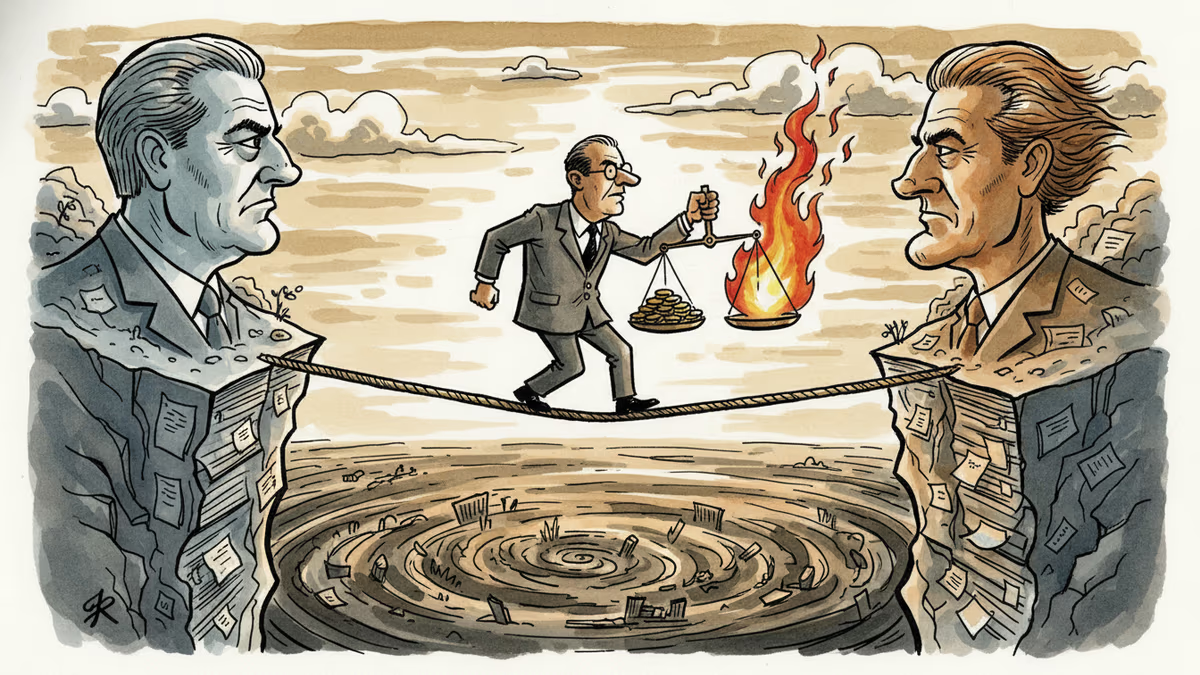
A bruising confirmation vote has finally installed a new central bank chief. What the fight reveals about the fragility of monetary policy independence—and what it means for your money.
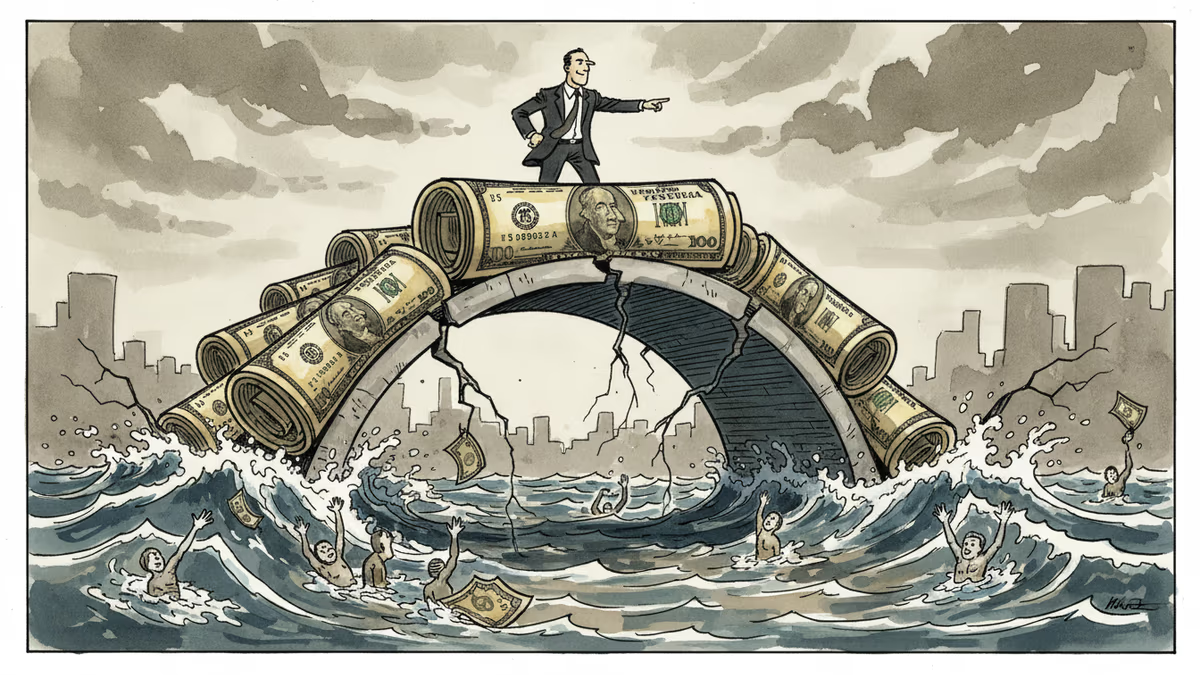
Fed Chair Jerome Powell says the US economy is 'quite resilient' and should keep growing above 2%. But whose resilience? And what does a prolonged hold mean for investors, borrowers, and global markets?
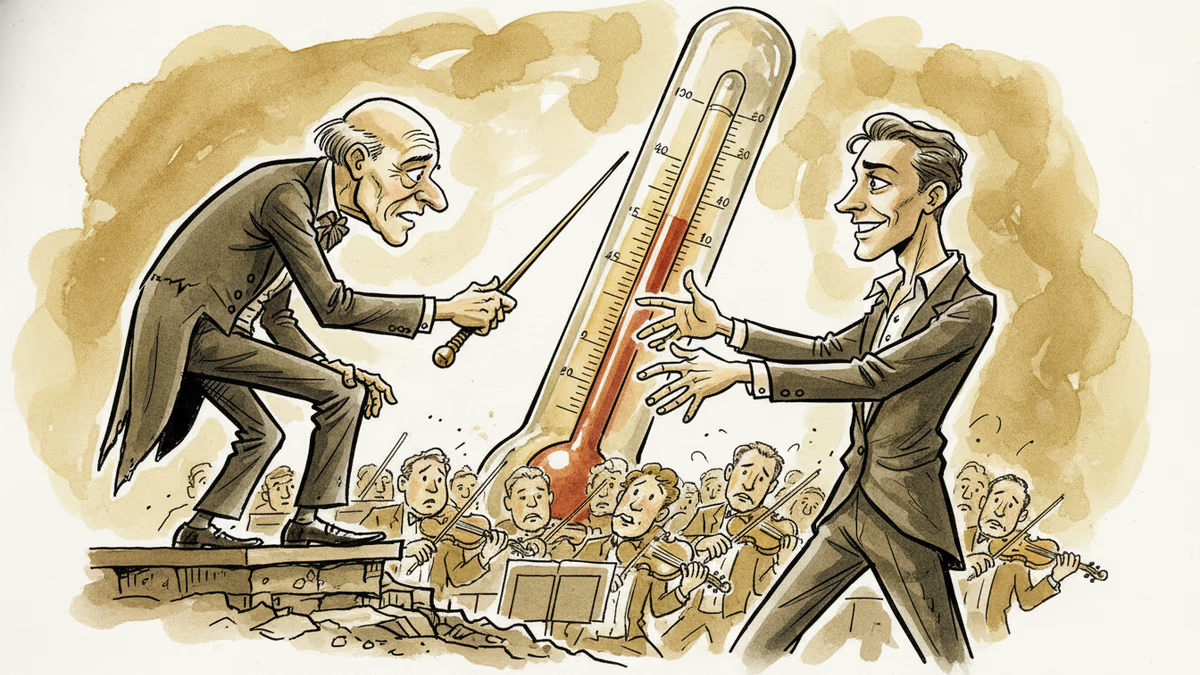
The Fed held rates at 3.50-3.75% for a fourth straight meeting. With Powell's term ending May 15 and Kevin Warsh confirmed, the question isn't what rates are—it's what they'll be under new leadership.
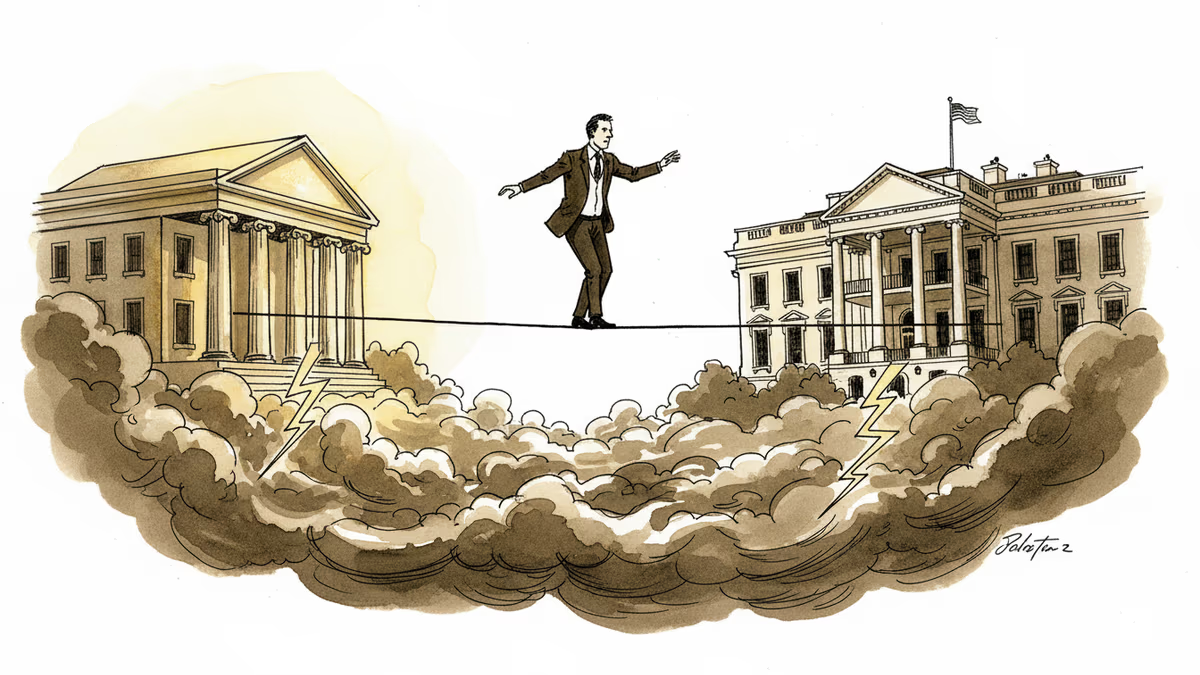
Trump's nominee to lead the Federal Reserve wants structural change — but on interest rates, a collision with the president may be unavoidable. Here's what's at stake for markets, investors, and the dollar.
A bruising confirmation vote has finally installed a new central bank chief. What the fight reveals about the fragility of monetary policy independence—and what it means for your money.
Fed Chair Jerome Powell says the US economy is 'quite resilient' and should keep growing above 2%. But whose resilience? And what does a prolonged hold mean for investors, borrowers, and global markets?
The Fed held rates at 3.50-3.75% for a fourth straight meeting. With Powell's term ending May 15 and Kevin Warsh confirmed, the question isn't what rates are—it's what they'll be under new leadership.
Trump's nominee to lead the Federal Reserve wants structural change — but on interest rates, a collision with the president may be unavoidable. Here's what's at stake for markets, investors, and the dollar.
Thoughts
Share your thoughts on this article
Sign in to join the conversation