
Venmo Wants to Be Your Social Feed. It Also Wants to Be Sold.
Venmo's biggest redesign since 2021 adds social features, personalized offers, and a revamped feed. But the timing — amid PayPal's restructuring and Stripe's reported interest — raises a harder question about who this update is really for.
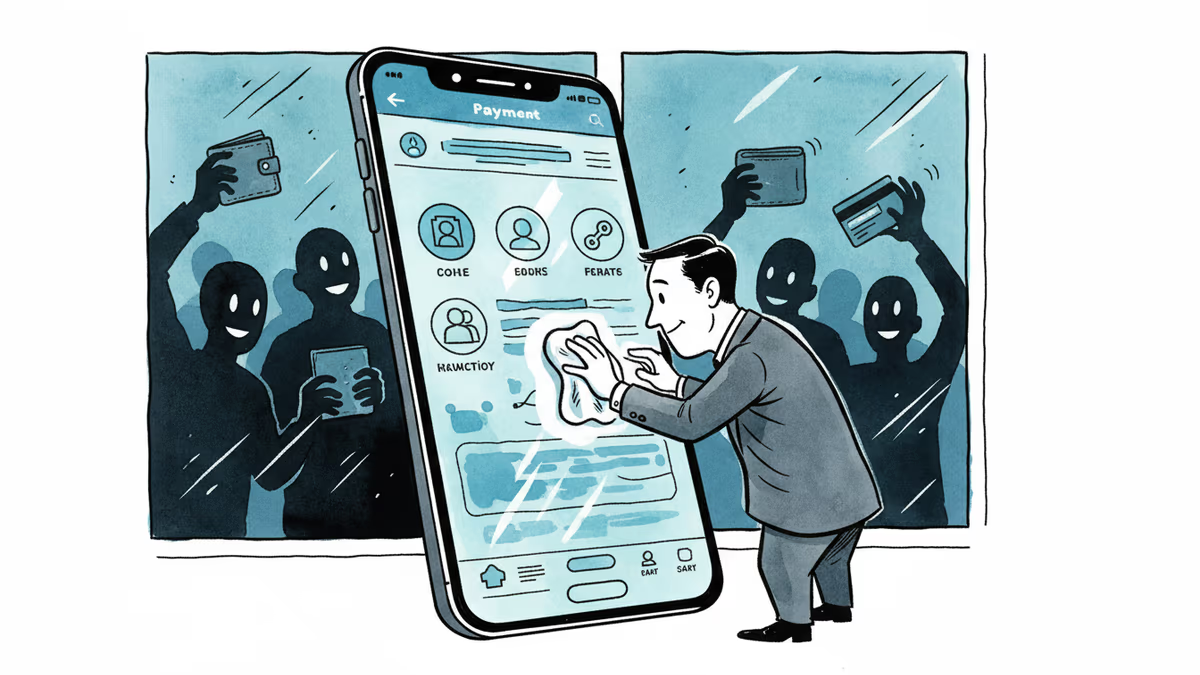
The best time to redecorate an apartment is right before you list it.
Venmo is rolling out its most significant redesign since 2021 — a revamped social feed, two new navigation tabs, local business endorsements, and a consolidated rewards section. On the surface, it reads like a thoughtful product update. Dig into the timing, and a more complicated story emerges.
What's Actually Changing
The rollout begins this week and runs through fall 2026, when all users will have access to the full redesign.
The first thing users will notice is the feed. Gone is the stripped-down list of who paid whom. In its place: larger images, a wider range of visual formats, reaction buttons, and quick-action shortcuts like "Pay Again" and "Say Thanks." The feed will also become more personalized — surfacing cashback offers from brands you already shop with and product suggestions based on past purchases.
A new "Give a Shoutout" button will appear beneath payments in the feed, letting users publicly endorse local businesses they frequent. Venmo's SVP and GM Alexis Sowa described it as "social proofing" — a way for users, especially Gen Z, to signal support for the small businesses they patronize. "In the future, you will be able to endorse that business — give a thumbs up, almost to say, 'I go to you,'" she told TechCrunch.
Two new tabs — "Send" and "Money" — arrive in the coming months. The Send tab surfaces your most frequent contacts as a row of icons, skipping the friction of searching through past transactions. Group bill-splitting now supports up to 30 people. The Money tab consolidates expense management, Teen Accounts, and crypto. A new Rewards tab brings together limited-time offers and Venmo's Stash program, launched last November, which offers up to 5% cashback on purchases with select brands, deposited directly to the Venmo Mastercard Debit Card.
Sowa said the redesign emerged from a year of user research. The most striking finding wasn't what users wanted that didn't exist — it was what already existed that users didn't know about. "One of the biggest insights is how many features and functionalities we have that customers just have no idea exist in the app."

The Inconvenient Subtext
None of the features are surprising in isolation. The context is what makes this redesign worth scrutinizing.
PayPal, which owns Venmo, is currently restructuring to spin Venmo off as a standalone business unit. That move is widely read as groundwork for a potential sale. Stripe has reportedly explored buying PayPal outright. In that environment, a high-profile redesign that sharpens Venmo's monetization story — branded offers, affiliate commerce, a loyalty program — looks less like a product decision and more like a valuation exercise.
Venmo has a brand problem that most companies would envy: its name became a verb. "Just Venmo me" entered American English without much effort. But turning cultural ubiquity into durable revenue has been a persistent challenge. The app's social DNA — friends splitting dinner, roommates settling utilities — was never designed around monetization. This redesign is an explicit attempt to change that architecture.
The direction isn't new. Revolut in Europe already bundles group splits, in-app chat, investment tools, and travel insurance. Apps like Verse and Daylight let users track friends' spending behavior as a social feed. Venmo isn't pioneering this model — it's catching up to it, under time pressure.
Three Stakeholders, Three Very Different Takes
For everyday users, the practical wins are real. 5% cashback is tangible. Thirty-person group splits solve an actual problem. Faster access to frequent contacts reduces friction. But as the feed fills with personalized brand offers and product suggestions, the app's original simplicity — send money, add a funny emoji, done — starts to erode. Users who chose Venmo for its lightness may find the new version feels heavier.
For potential acquirers, the picture looks different. A payment app with a clear monetization roadmap — feed advertising, affiliate commerce, financial products — is easier to price than one that's culturally beloved but financially opaque. This redesign essentially builds the pitch deck into the product.
For small businesses, the "Give a Shoutout" feature is the most intriguing wildcard. If it gains traction, Venmo could become a local commerce discovery layer unlike anything currently on the market — not Google reviews, not Yelp, but endorsements anchored to actual payment behavior. Whether users will engage with it consistently is an open question, but the underlying data advantage is real.
This content is AI-generated based on source articles. While we strive for accuracy, errors may occur. We recommend verifying with the original source.
Related Articles
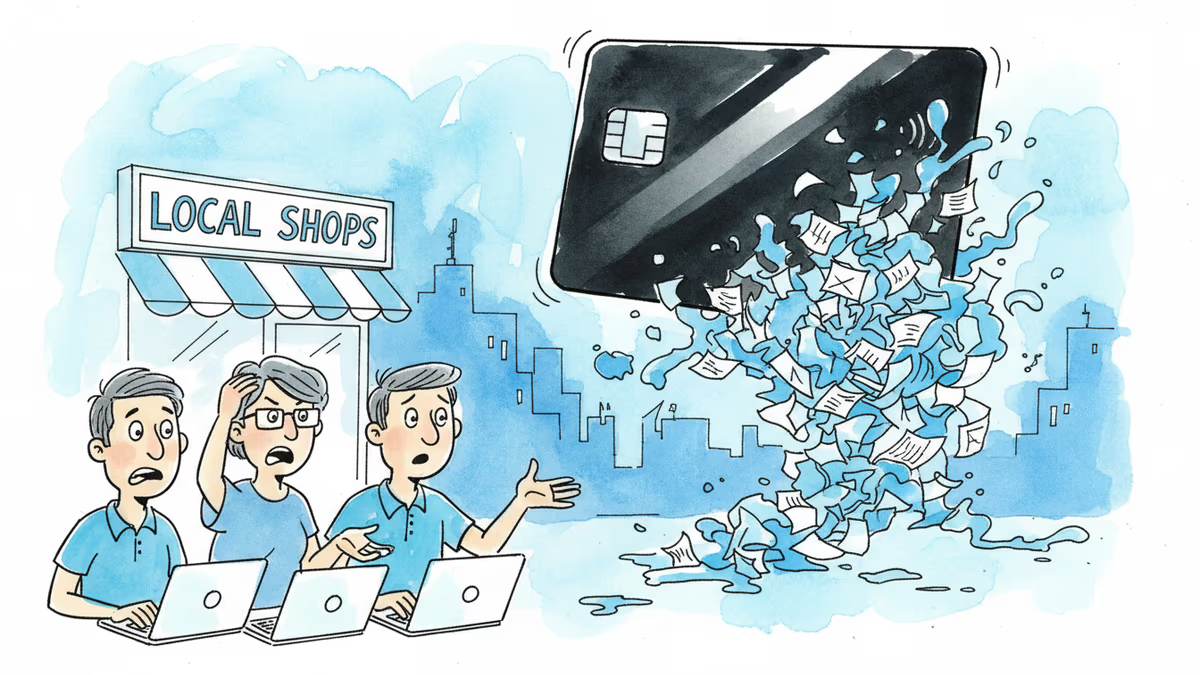
E-commerce fintech Parker filed for Chapter 7 bankruptcy on May 7, despite raising over $200M. The YC-backed startup's abrupt shutdown left small business customers scrambling—and exposed the fragility of vertical fintech models.
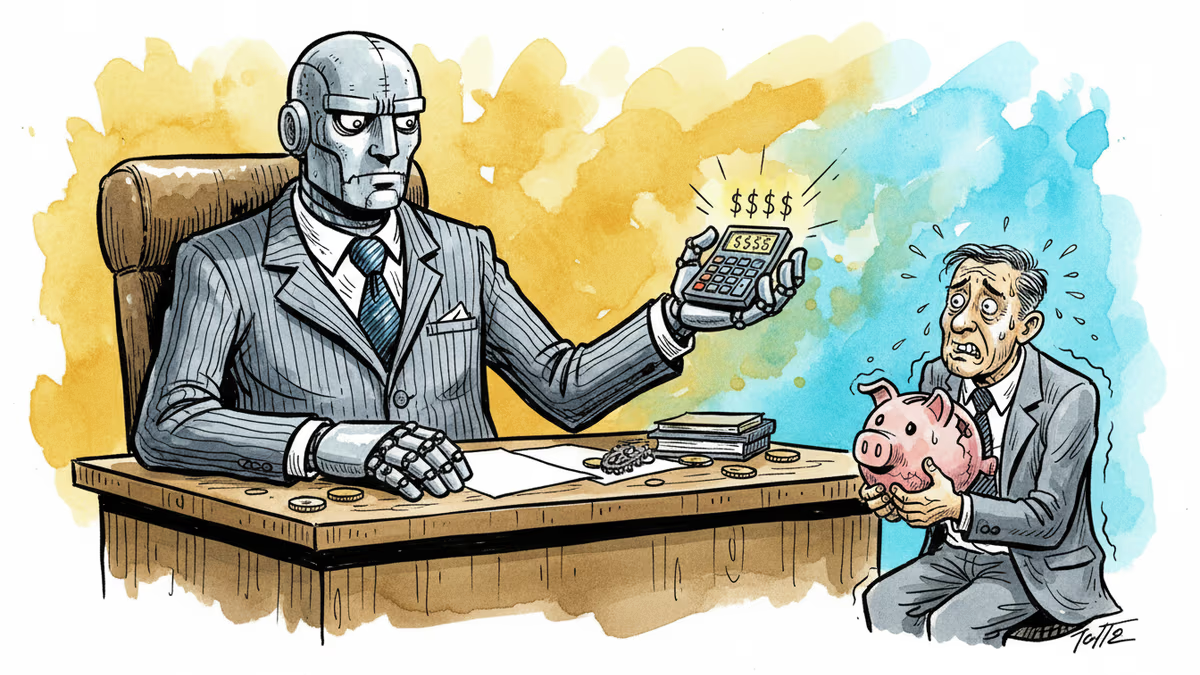
OpenAI acquired Hiro Finance, an AI-powered personal finance startup. Is this just a talent grab, or is the ChatGPT maker quietly building a financial services empire?
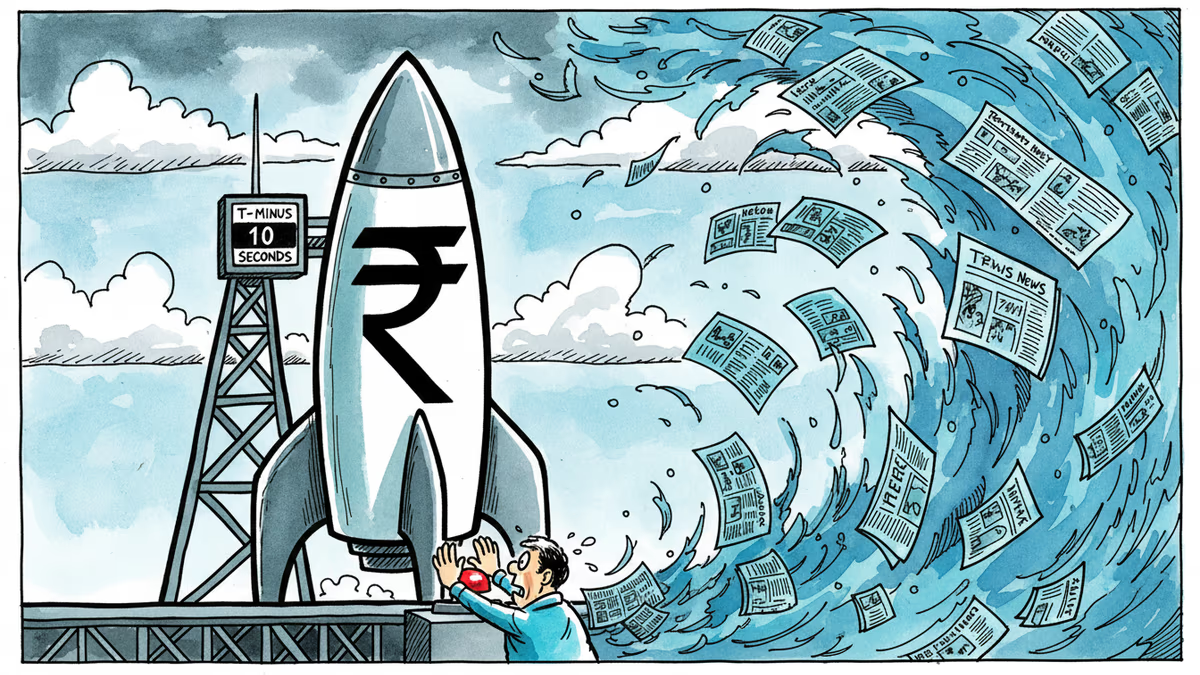
India's biggest digital payments platform PhonePe has shelved its IPO amid geopolitical tensions and a 9% market drop—but a quietly revised valuation tells a more complicated story.
From NYSE's parent company to Nasdaq, institutional money is flooding into prediction markets. But as Wall Street moves in, is the 'wisdom of crowds' at risk of becoming another professional trading arena?
E-commerce fintech Parker filed for Chapter 7 bankruptcy on May 7, despite raising over $200M. The YC-backed startup's abrupt shutdown left small business customers scrambling—and exposed the fragility of vertical fintech models.
OpenAI acquired Hiro Finance, an AI-powered personal finance startup. Is this just a talent grab, or is the ChatGPT maker quietly building a financial services empire?
India's biggest digital payments platform PhonePe has shelved its IPO amid geopolitical tensions and a 9% market drop—but a quietly revised valuation tells a more complicated story.
From NYSE's parent company to Nasdaq, institutional money is flooding into prediction markets. But as Wall Street moves in, is the 'wisdom of crowds' at risk of becoming another professional trading arena?
Thoughts
Share your thoughts on this article
Sign in to join the conversation