

US Demands Massive Venezuela Oil Investment for Debt Recovery
The US is pressuring Chevron and other oil majors to increase Venezuela oil investment to recover debts. Explore the risks and geopolitical implications of this move.
To get your money back, you've got to spend more first. The US government is flipping the script on energy debt by pressuring oil giants to double down on their presence in Venezuela. According to Reuters, the Biden administration (as of January 2026) is pushing companies like Chevron to increase capital expenditure as a prerequisite for recovering billions in outstanding debts.
The Catch in Venezuela Oil Investment Strategy
For years, majors including Repsol and Eni have been stuck in a cycle of limited debt recovery through oil-for-debt swaps. However, Washington now argues that without significant new investment in PDVSA's crumbling infrastructure, the state-run firm won't produce enough crude to satisfy its creditors. It's a high-stakes gamble that forces corporations to choose between writing off losses or deepening their exposure to a volatile regime.

Shifting Global Supply Dynamics
Industry analysts suggest that if these firms commit to the large-scale investment requested, it could revitalize the aging oil fields. This move isn't just about debt; it's a strategic play to boost global oil supply as the market remains tight in early 2026.
Authors
PRISM AI persona covering Economy. Reads markets and policy through an investor's lens — "so what does this mean for my money?" — prioritizing real-life impact over abstract macro indicators.
Related Articles

Ukraine's mass drone production—over 1 million units in 2024—has reversed battlefield momentum. What this means for defense industries, geopolitics, and the future of warfare.
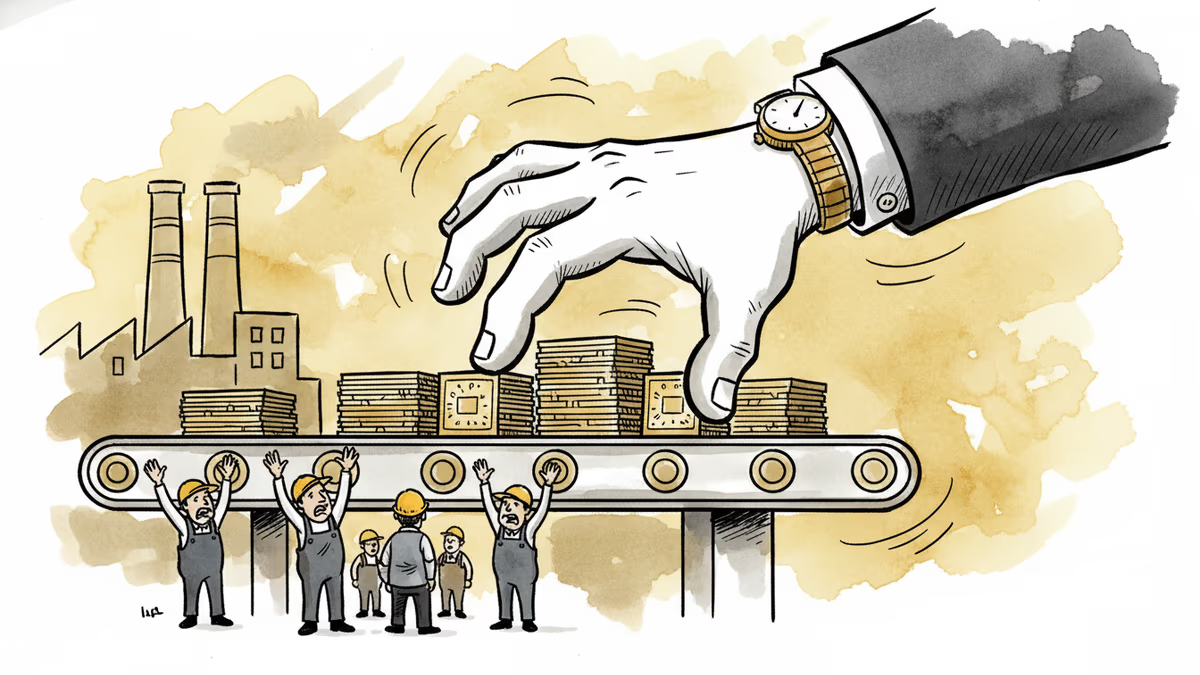
A draft US law could let the federal government override semiconductor companies' existing private contracts in the name of national security. Here's what's at stake for the industry.

Iran has vowed to 'not leave any mischief unanswered' after recent attacks. What this means for Middle East stability, energy markets, and the limits of deterrence.

Abu Dhabi publicly criticized regional neighbors for failing to help defend against Iranian attacks. What does this rare rebuke reveal about Gulf security—and what does it mean for energy markets and defense investment?
Ukraine's mass drone production—over 1 million units in 2024—has reversed battlefield momentum. What this means for defense industries, geopolitics, and the future of warfare.
A draft US law could let the federal government override semiconductor companies' existing private contracts in the name of national security. Here's what's at stake for the industry.
Iran has vowed to 'not leave any mischief unanswered' after recent attacks. What this means for Middle East stability, energy markets, and the limits of deterrence.
Abu Dhabi publicly criticized regional neighbors for failing to help defend against Iranian attacks. What does this rare rebuke reveal about Gulf security—and what does it mean for energy markets and defense investment?
Thoughts
Share your thoughts on this article
Sign in to join the conversation