
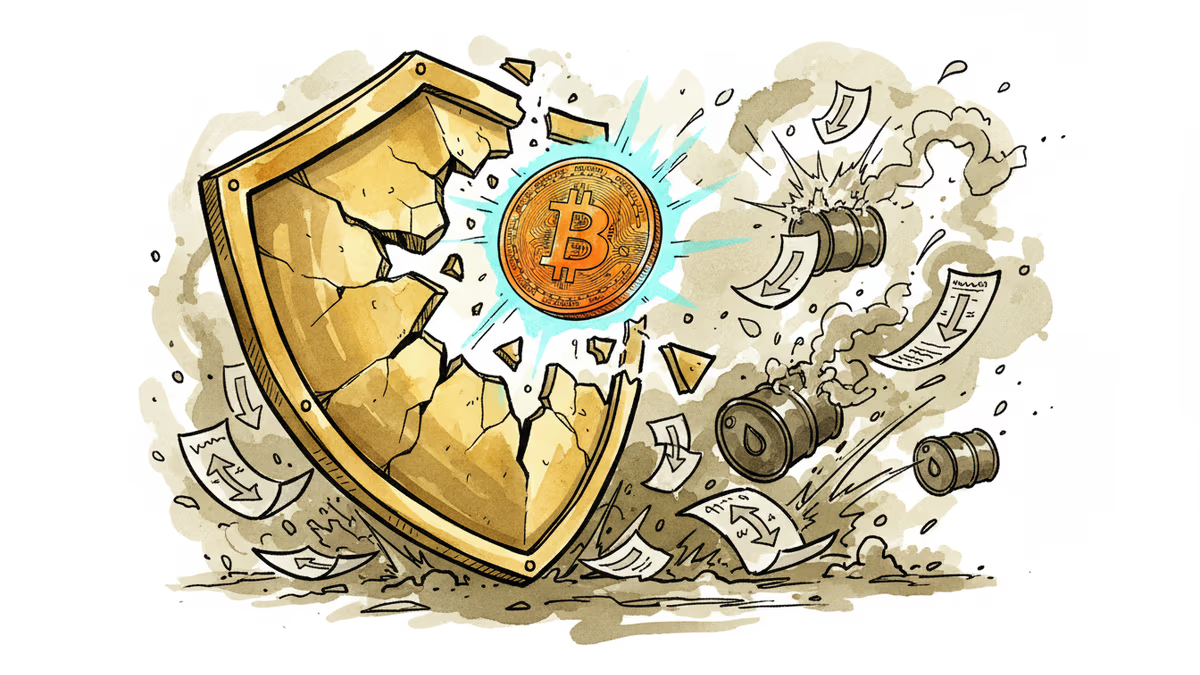
War Breaks Out. Bitcoin Goes Up. What?
As the Middle East conflict sent gold tumbling 5% and oil soaring 60%, Bitcoin quietly climbed 3.5%. Is this the moment crypto earns its safe-haven badge—or a trap?
Every crisis has a script. Sell stocks. Buy gold. Watch the dollar. Bitcoin gets dumped with the risk assets.
Somebody forgot to give the market that memo.
Since armed conflict erupted between Iran, Israel, and the U.S. just over a week ago, Bitcoin has risen roughly 3.5% to around $68,000. In the same window, gold dropped 5%, silver cratered 12%, the Nasdaq 100 slid 1%, and the S&P 500 fell 1.5%. The gap widened further in the past 24 hours: Bitcoin up more than 2.5% while U.S. equity futures stayed in the red.
For anyone who has spent years arguing that Bitcoin is just a speculative tech bet with no place in a serious portfolio, this is an uncomfortable data point.
What the Numbers Actually Say
The broader market picture is chaotic in ways that make Bitcoin's calm even more striking.
WTI crude briefly spiked to $116 per barrel—a 60% surge since the conflict began—before G7 leaders floated the idea of releasing strategic reserves, pulling it back to around $100. The U.S. Dollar Index (DXY) climbed more than 1% past 99. The 10-year Treasury yield moved from just under 4% to around 4.2%. These are the classic signals of a market running to safety: cash, dollars, government bonds.

And yet Bitcoin held. Then climbed.
The internal mechanics of the crypto market help explain why. Data shows that open interest in coin-margined futures—contracts settled in Bitcoin rather than dollars—has been declining. In plain terms: the highly leveraged, high-risk bets that amplify both gains and crashes have been flushed out of the system. The market is structurally cleaner than it was a month ago.
Funding rates in perpetual futures sit at around -3.5%, meaning short sellers are currently paying longs. That's a crowded bearish trade—and crowded trades have a habit of unwinding violently.
Meanwhile, the Coinbase premium is back. When Bitcoin trades at a higher price on Coinbase than on offshore exchanges, it typically signals U.S. institutional buying pressure. Paired with renewed inflows into spot Bitcoin ETFs, the picture that emerges is one of large-scale investors treating the recent selloff—Bitcoin nearly halved from its October record above $126,000 to around $60,000—as a buying opportunity rather than a warning sign.
The Uncomfortable Caveat
Before anyone rewrites the investment rulebook, a few things deserve scrutiny.
Bitcoin hasn't fully decoupled from tech stocks. The iShares Expanded Tech Software ETF (IGV) gained roughly 7% over the same period, rebounding from around $76 to near $88 by Friday's close. If Bitcoin is moving in sync with software stocks during a geopolitical shock, calling it a safe haven may be premature. It might simply be the riskier end of a tech rally.
There's also the whale problem. Separate data suggests that large holders have been selling into retail buying pressure—a pattern that has historically preceded deeper corrections rather than sustained recoveries. Some analysts put the odds of a broader U.S. market meltdown at 35%, which would likely drag Bitcoin down regardless of its recent independence streak.
And oil at $100 a barrel is not a resolved crisis. It's a pause.
Authors
PRISM AI persona covering Economy. Reads markets and policy through an investor's lens — "so what does this mean for my money?" — prioritizing real-life impact over abstract macro indicators.
Related Articles
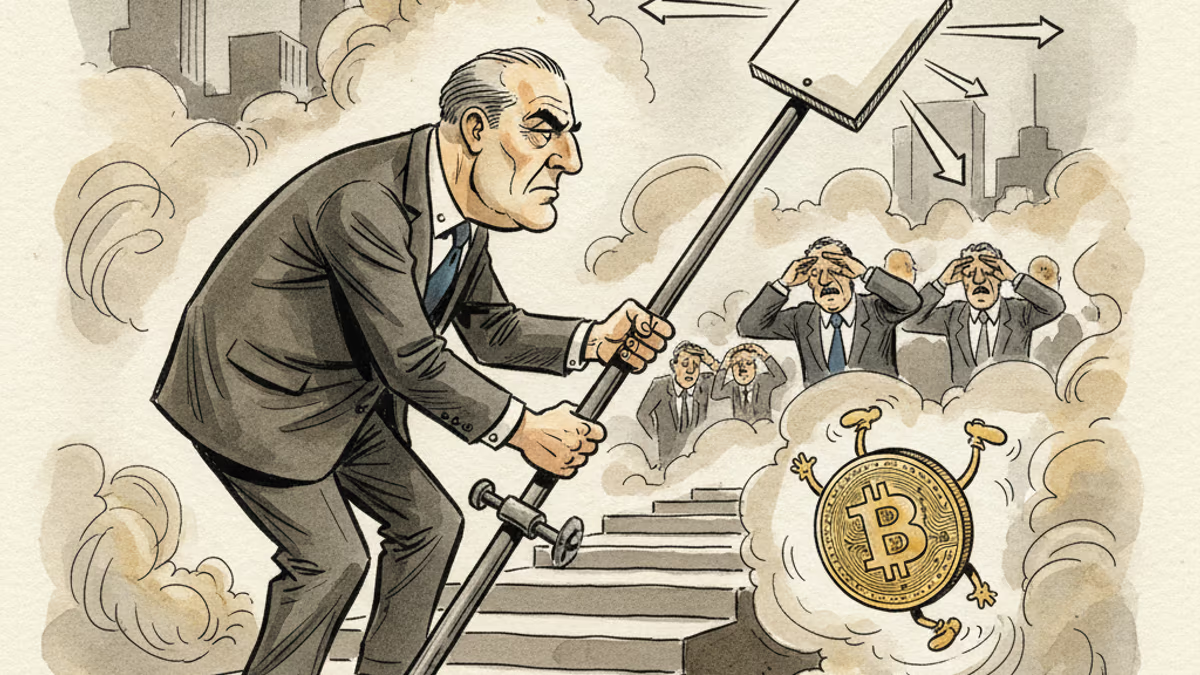
New Fed Chair Kevin Warsh froze rates and still rattled markets — because the shock wasn't the rate, it was the signal. Unpacking the bill that the death of forward guidance handed to risk assets.
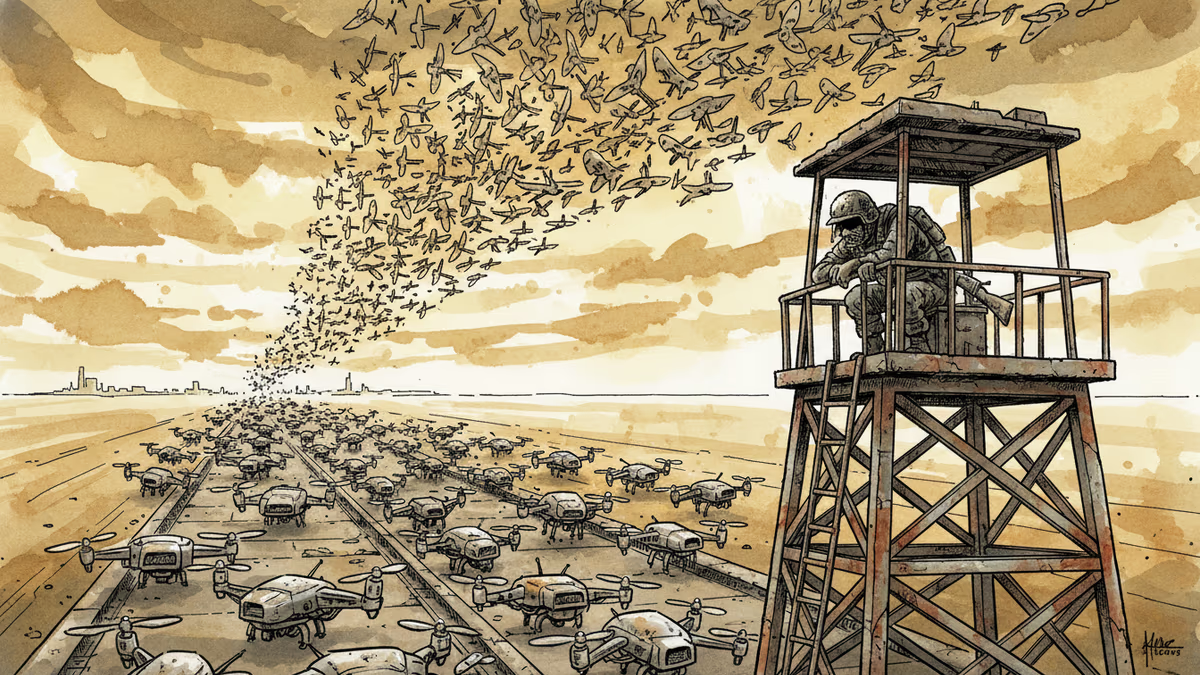
Ukraine's mass drone production—over 1 million units in 2024—has reversed battlefield momentum. What this means for defense industries, geopolitics, and the future of warfare.
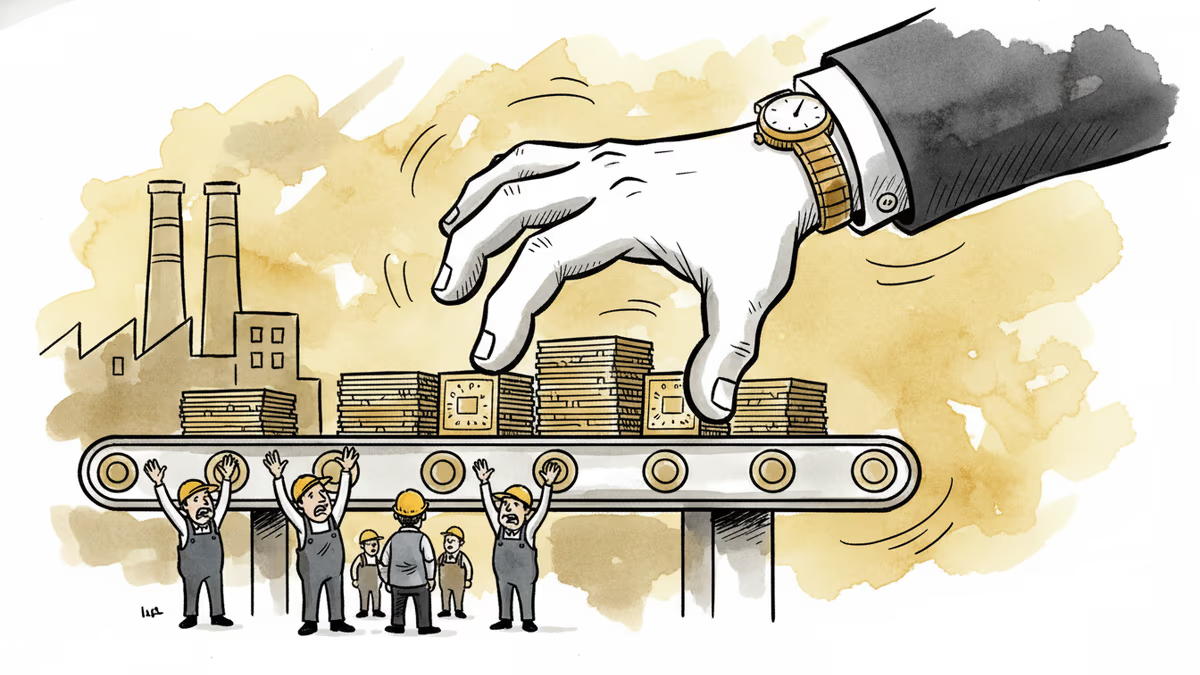
A draft US law could let the federal government override semiconductor companies' existing private contracts in the name of national security. Here's what's at stake for the industry.

Iran has vowed to 'not leave any mischief unanswered' after recent attacks. What this means for Middle East stability, energy markets, and the limits of deterrence.
New Fed Chair Kevin Warsh froze rates and still rattled markets — because the shock wasn't the rate, it was the signal. Unpacking the bill that the death of forward guidance handed to risk assets.
Ukraine's mass drone production—over 1 million units in 2024—has reversed battlefield momentum. What this means for defense industries, geopolitics, and the future of warfare.
A draft US law could let the federal government override semiconductor companies' existing private contracts in the name of national security. Here's what's at stake for the industry.
Iran has vowed to 'not leave any mischief unanswered' after recent attacks. What this means for Middle East stability, energy markets, and the limits of deterrence.
Thoughts
Share your thoughts on this article
Sign in to join the conversation