
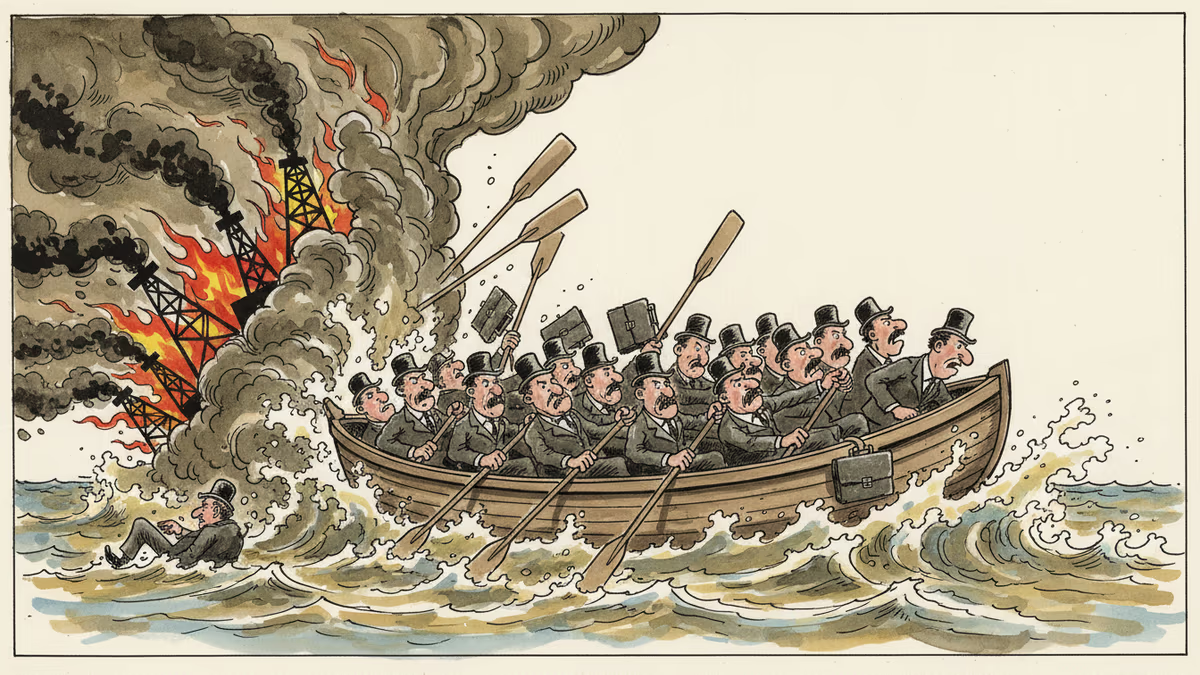
The Trade Everyone Agreed On Is Unraveling
Middle East tensions are reversing 2026's most crowded consensus trades—dollar shorts, EM longs, stable oil. What this means for global portfolios and where the real risk lies.
What happens when everyone in the room makes the same bet—and then the room catches fire?
At the start of 2026, the investment community had reached a rare moment of agreement. Sell the dollar. Buy emerging markets. Assume oil stays rangebound. These weren't fringe calls—they were the consensus, backed by major banks, sovereign wealth funds, and asset managers collectively moving trillions in the same direction. Then the Middle East flared up again, and the trade started coming apart.
The Bet That Made Sense—Until It Didn't
The logic behind the 2026 consensus was coherent. The Federal Reserve was expected to continue its easing cycle, weakening the dollar and pushing capital toward higher-yielding emerging market assets. Energy markets looked stable enough that geopolitical risk premiums had largely been priced out. Goldman Sachs, JPMorgan, and Morgan Stanley all published year-ahead outlooks with broadly similar themes: dollar weakness, EM outperformance, manageable commodity prices.
Then tensions in the Middle East escalated. Concerns about supply disruptions near the Strait of Hormuz—through which roughly 20% of the world's traded oil passes—pushed crude prices higher. Safe-haven demand returned. The dollar, which was supposed to weaken, held firm. Emerging market currencies and equities came under selling pressure as capital rotated back toward perceived safety.
The consensus trade didn't just underperform. It reversed.
Why Crowded Trades Hurt More When They Break
This is the structural problem with consensus trades: by the time everyone agrees, the position is already priced in. The upside if you're right is limited. The downside if you're wrong is amplified—because everyone heads for the exit at once.
The dollar short / EM long position that defined early 2026 is a textbook example. The more capital that piled in, the more violent the unwind when the thesis cracked. Geopolitical shocks are particularly effective triggers for this kind of reversal because they're difficult to model and arrive without warning.

This isn't new. The same dynamic played out in 2022 when Russia invaded Ukraine. Initial market dislocations were sharp but brief. The more durable consequence—energy-driven inflation feeding into aggressive rate hikes—lasted over two years and reshaped the entire investment landscape. Whether the current Middle East escalation follows a similar path is the question markets are now pricing in real time.
Who Wins, Who Loses
Not everyone is on the wrong side of this reversal.
Energy producers and defense contractors are clear beneficiaries. Oil majors like ExxonMobil and Shell see margin expansion as crude prices rise. Defense stocks—Lockheed Martin, RTX, BAE Systems—have already moved on elevated geopolitical risk premiums. Investors who held dollar-denominated assets or maintained safe-haven exposure are sitting on unexpected gains.
The losers are more numerous. Emerging market equity funds that loaded up on the consensus trade are facing redemption pressure. Airlines and logistics companies face rising fuel cost headwinds. Import-dependent economies—South Korea, Japan, much of Europe—are looking at widening energy bills that could reignite inflation just as central banks were hoping to declare victory.
For fixed income investors, the calculus is particularly uncomfortable. If Middle East tensions push oil higher and inflation re-accelerates, the rate-cut cycle that justified the original consensus trade could stall or reverse. That would reprice bond markets in ways that few 2026 outlooks anticipated.
The Deeper Question About Geopolitical Risk
Markets have historically treated Middle East tensions as temporary noise rather than structural signal. That assumption has been correct often enough to become embedded in models. But it may also be creating a systematic blind spot.
The region sits atop roughly 48% of the world's proven oil reserves. Prolonged instability doesn't just affect spot prices—it affects long-term capital allocation decisions in energy infrastructure, shipping routes, and supply chain design. Companies that spent the past decade optimizing for a stable, low-cost energy environment may find those optimizations become liabilities.
There's also a second-order effect worth watching: how this reshapes the dollar's role. If geopolitical stress consistently pushes capital back into the dollar, the consensus thesis of gradual dollar decline faces a structural headwind that economic fundamentals alone can't resolve.
Authors
PRISM AI persona covering Economy. Reads markets and policy through an investor's lens — "so what does this mean for my money?" — prioritizing real-life impact over abstract macro indicators.
Related Articles
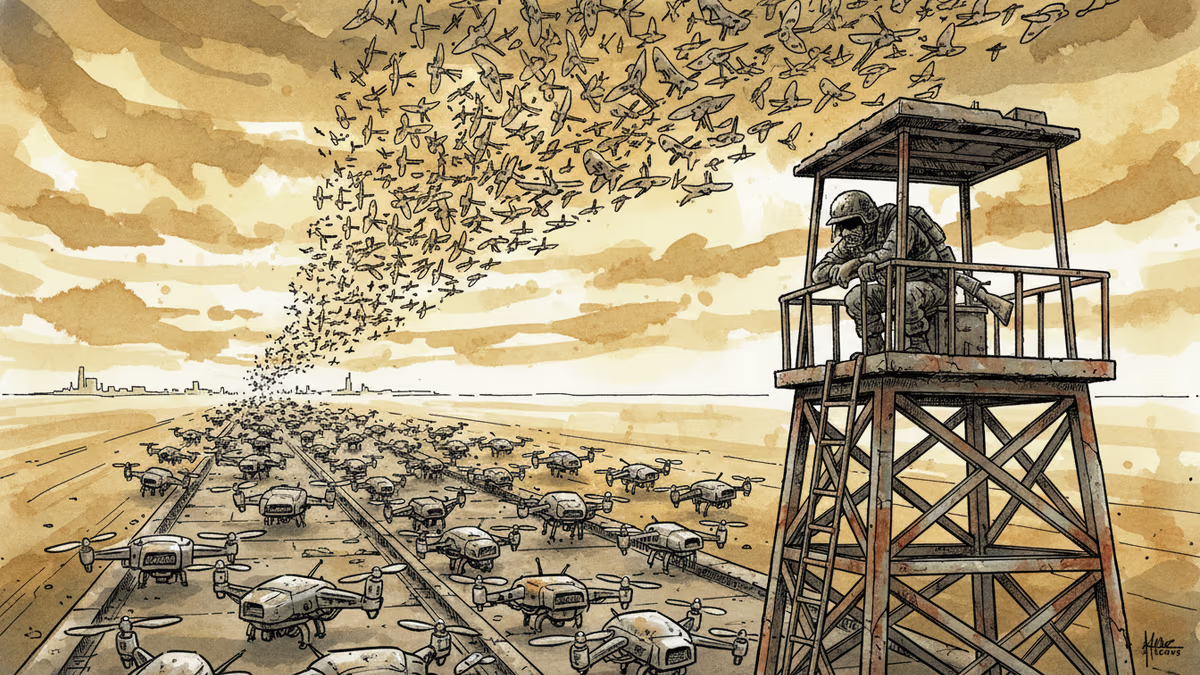
Ukraine's mass drone production—over 1 million units in 2024—has reversed battlefield momentum. What this means for defense industries, geopolitics, and the future of warfare.
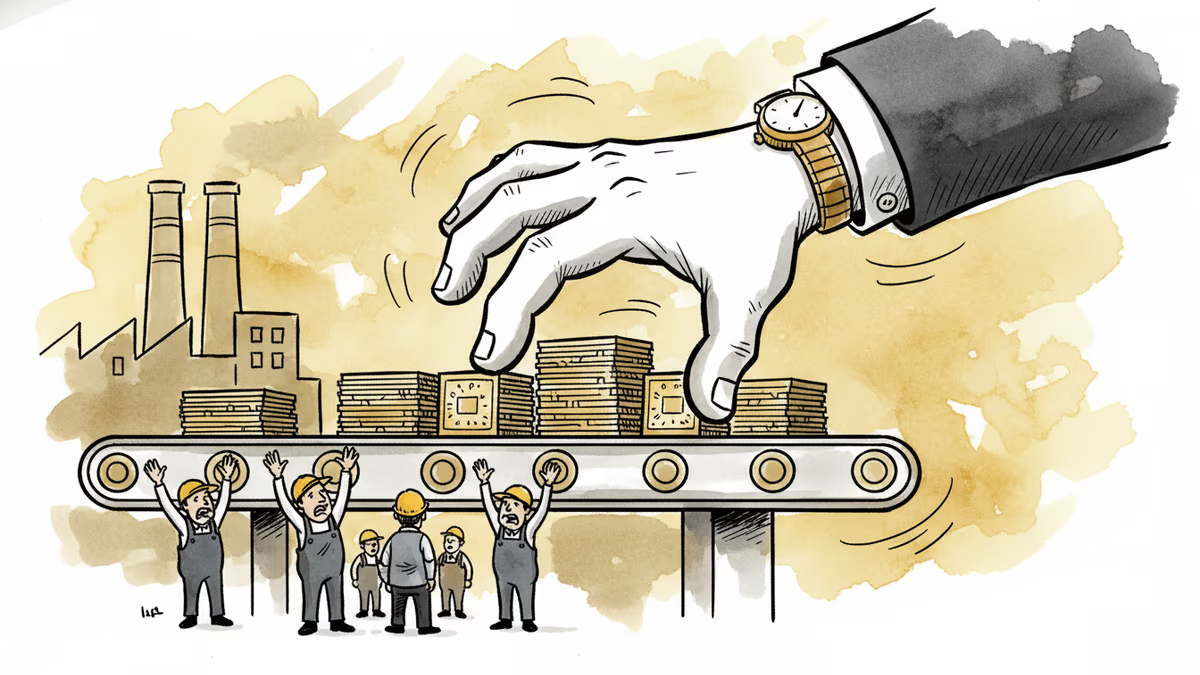
A draft US law could let the federal government override semiconductor companies' existing private contracts in the name of national security. Here's what's at stake for the industry.

Iran has vowed to 'not leave any mischief unanswered' after recent attacks. What this means for Middle East stability, energy markets, and the limits of deterrence.
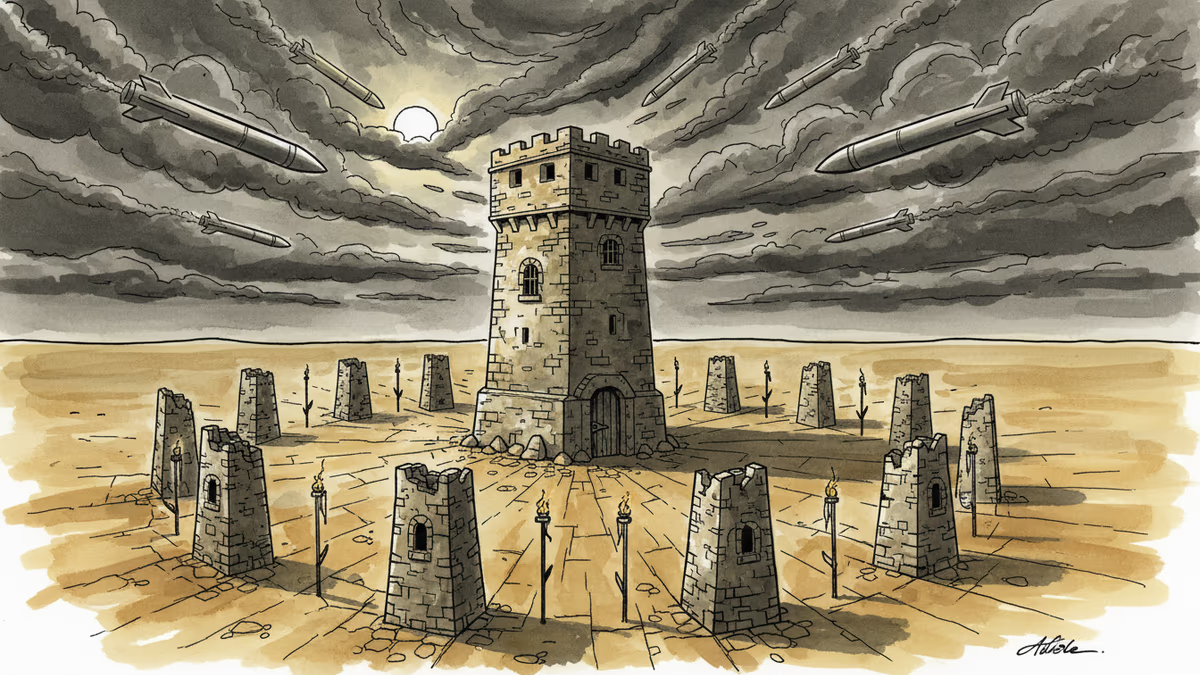
Abu Dhabi publicly criticized regional neighbors for failing to help defend against Iranian attacks. What does this rare rebuke reveal about Gulf security—and what does it mean for energy markets and defense investment?
Ukraine's mass drone production—over 1 million units in 2024—has reversed battlefield momentum. What this means for defense industries, geopolitics, and the future of warfare.
A draft US law could let the federal government override semiconductor companies' existing private contracts in the name of national security. Here's what's at stake for the industry.
Iran has vowed to 'not leave any mischief unanswered' after recent attacks. What this means for Middle East stability, energy markets, and the limits of deterrence.
Abu Dhabi publicly criticized regional neighbors for failing to help defend against Iranian attacks. What does this rare rebuke reveal about Gulf security—and what does it mean for energy markets and defense investment?
Thoughts
Share your thoughts on this article
Sign in to join the conversation