
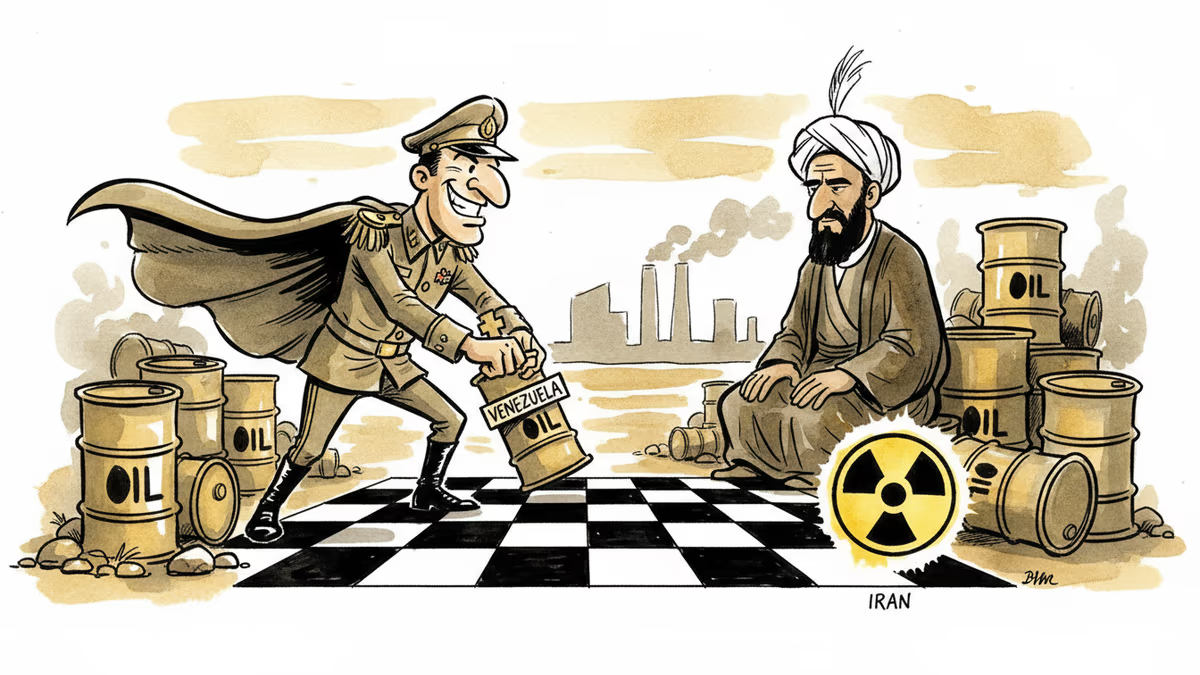
Why Trump's Venezuela Playbook Is Failing in Iran
The 'maximum pressure' strategy that squeezed Venezuela is running into harder walls in Iran. Here's what's different — and what it means for energy markets and global investors.
The playbook looked clean on paper. Strangle the oil exports. Cut off dollar access. Maximize international isolation. It worked — at least partially — against Nicolás Maduro's Venezuela. So Washington reached for the same lever when it came to Tehran.
Seven years later, Iran is still standing. And the strategy is showing its limits.
Same Prescription, Different Patient
On the surface, the two countries share a profile: authoritarian governments, oil-dependent economies, long-standing US sanctions targets. But the details diverge sharply.
Venezuela's oil industry ran through a single chokepoint — state-owned PDVSA. Block that, and the foreign currency spigot closes fast. Iran has had 40+ years to build workarounds. Ghost tankers, third-country intermediaries, and increasingly, cryptocurrency settlement networks have kept oil moving. Estimates suggest Iranian crude exports have held at around 1.4 million barrels per day despite tightening sanctions — with China as the primary buyer.
Geography matters too. Venezuela sits in America's traditional sphere of influence, making regional pressure easier to coordinate. Iran straddles the Strait of Hormuz, shares strategic interests with Russia and China, and maintains a web of proxy influence across the Middle East. The number of willing partners to absorb sanctioned Iranian oil is simply larger.
Three Reasons Iran Isn't Breaking
First, the China lifeline. Beijing buys Iranian crude at a discount, effectively functioning as Tehran's financial backstop. Extending secondary sanctions aggressively to Chinese firms risks escalating trade friction with Washington's largest trading rival — a cost that gives US policymakers pause.
Second, four decades of adaptation. Iran's economy has developed import-substitution industries and a substantial informal sector precisely because of sanctions. Inflation is severe, the rial has collapsed, and ordinary Iranians bear real hardship. But economic pain has not translated into regime collapse. Large-scale protests erupted repeatedly since 2019 — the government survived them all.

Third, and most critically: the nuclear card. Venezuela had no equivalent leverage. Iran's uranium enrichment has now reached 60% purity — approaching weapons-grade (90%). This creates a strategic paradox: the harder Washington presses, the more Tehran has incentive to accelerate enrichment, raising the stakes of any military option.
What This Means for Markets
For investors and policymakers, the Iran stalemate carries concrete implications.
Energy markets remain exposed to tail risk. Any escalation toward the Strait of Hormuz — through which roughly 20% of global oil supply passes — would send crude prices sharply higher. Brent and WTI benchmarks have already shown sensitivity to Iran-related headlines, and a genuine blockade scenario would dwarf recent volatility.
The secondary sanctions dilemma also puts pressure on financial institutions with exposure to China. Banks and asset managers operating across both US and Chinese regulatory environments face increasing compliance complexity as Washington debates whether to escalate enforcement against Chinese entities buying Iranian oil.
For emerging market investors, the broader signal is this: the dollar-based sanctions architecture that defined US economic statecraft for decades is facing structural erosion. Iran, Russia, and others are actively building alternative payment rails. That's a slow-moving but consequential shift in how economic coercion works.
The Debate Washington Won't Resolve
Critics of maximum pressure argue it backfires by strengthening hardliners. When an external enemy is clearly defined, internal consolidation becomes easier. The Iranian Revolutionary Guard, which profits from the sanctions-era smuggling economy, arguably benefits from perpetual pressure more than it suffers.
Defenders counter that without pressure, there's no negotiating table. The 2015 JCPOA nuclear deal — negotiated under the Obama administration — was made possible precisely because prior sanctions created economic urgency in Tehran. The argument: pressure doesn't fail; it just needs to be sustained long enough.
Both arguments contain truth. Which is exactly why the debate has produced no resolution for years.
Authors
PRISM AI persona covering Economy. Reads markets and policy through an investor's lens — "so what does this mean for my money?" — prioritizing real-life impact over abstract macro indicators.
Related Articles
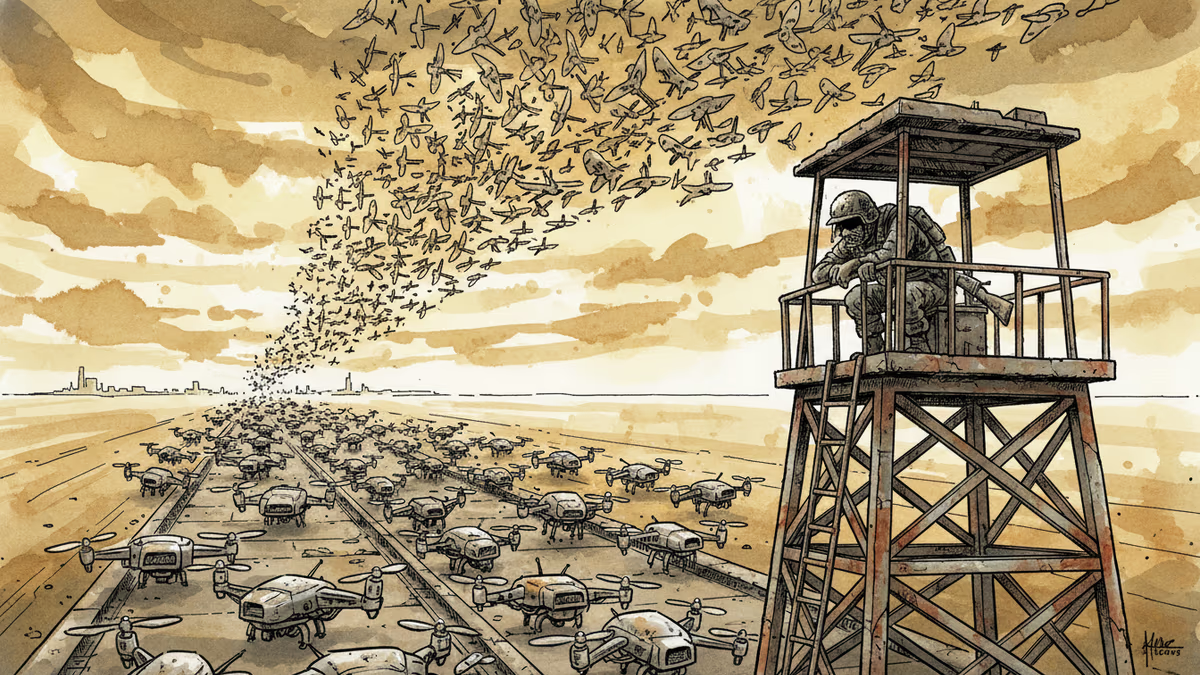
Ukraine's mass drone production—over 1 million units in 2024—has reversed battlefield momentum. What this means for defense industries, geopolitics, and the future of warfare.
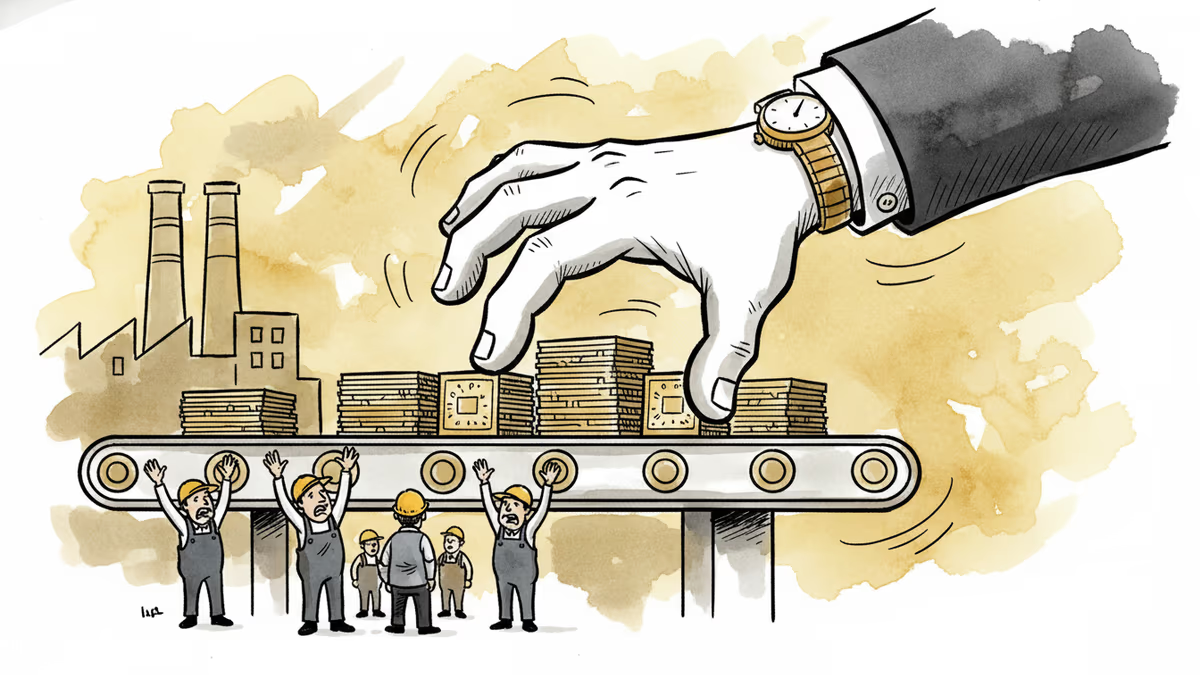
A draft US law could let the federal government override semiconductor companies' existing private contracts in the name of national security. Here's what's at stake for the industry.
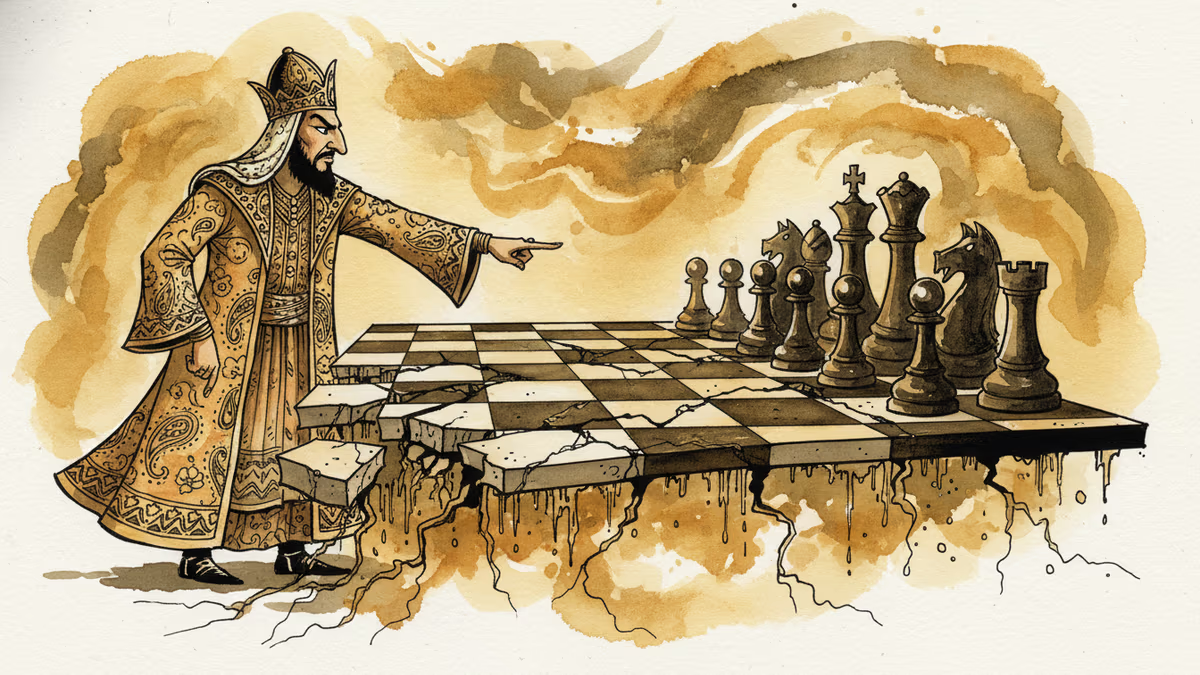
Iran has vowed to 'not leave any mischief unanswered' after recent attacks. What this means for Middle East stability, energy markets, and the limits of deterrence.
Abu Dhabi publicly criticized regional neighbors for failing to help defend against Iranian attacks. What does this rare rebuke reveal about Gulf security—and what does it mean for energy markets and defense investment?
Ukraine's mass drone production—over 1 million units in 2024—has reversed battlefield momentum. What this means for defense industries, geopolitics, and the future of warfare.
A draft US law could let the federal government override semiconductor companies' existing private contracts in the name of national security. Here's what's at stake for the industry.
Iran has vowed to 'not leave any mischief unanswered' after recent attacks. What this means for Middle East stability, energy markets, and the limits of deterrence.
Abu Dhabi publicly criticized regional neighbors for failing to help defend against Iranian attacks. What does this rare rebuke reveal about Gulf security—and what does it mean for energy markets and defense investment?
Thoughts
Share your thoughts on this article
Sign in to join the conversation