
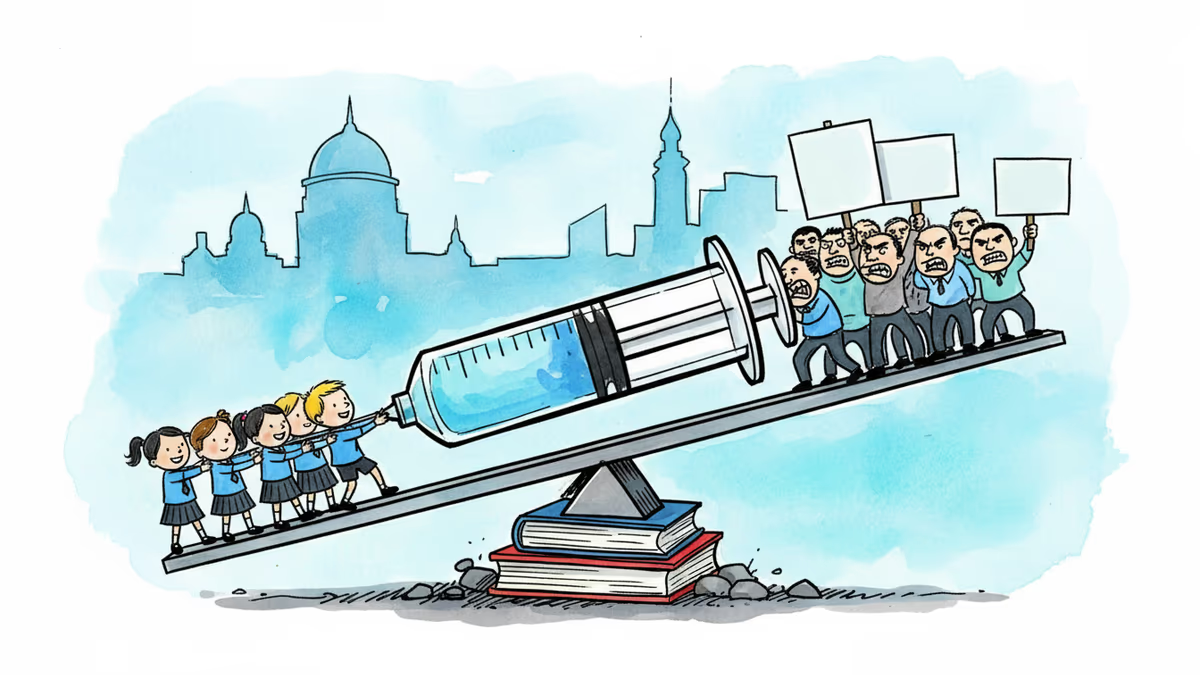
When a Vaccine Skeptic Becomes Health Secretary
RFK Jr.'s nomination as HHS Secretary sparks unprecedented legal challenge from 15 states over childhood vaccination policies. What this means for public health and global disease prevention.
Fifteen States Draw the Line
Fifteen states filed a federal lawsuit Tuesday, marking an unprecedented moment in American public health history. Their target? The Trump administration's "unprecedented attack on the nation's evidence-based childhood immunization schedule," led by Health and Human Services Secretary nominee Robert F. Kennedy Jr.
This isn't just political theater. The states argue that Kennedy's anti-vaccine stance will "make people sicker and strain state resources." They're not wrong to worry. Kennedy has spent decades promoting debunked claims linking vaccines to autism, despite overwhelming scientific evidence to the contrary.
The lawsuit represents more than legal maneuvering—it's a battle for the soul of American public health policy. For the first time in modern history, the U.S. is poised to install an outspoken vaccine critic as its top health official.
The 200-Year-Old Battle
Vaccine skepticism isn't new. Since Edward Jenner developed the first smallpox vaccine in the late 1700s, immunizations have sparked "fear, distrust, and contentious resistance." What's different now is the scale and institutional power behind the skepticism.
Previous administrations, regardless of party, maintained bipartisan support for CDC vaccination guidelines. Republican and Democratic health secretaries alike championed vaccines as "one of public health's greatest achievements." Kennedy's nomination shatters this consensus.
The timing couldn't be worse. Scientists warn that climate change is accelerating infectious disease spread, making vaccination "even more critical to safeguard public health." Warmer temperatures expand mosquito habitats, spreading diseases like Zika and dengue fever to new regions.
The Ripple Effect: Beyond American Borders

Kennedy's influence won't stop at U.S. borders. America drives global vaccine development through its massive market and regulatory leadership. When the FDA approves a vaccine, other countries often follow. When American officials express doubt, it reverberates worldwide.
Consider the $50 billion global vaccine market. Major players like Pfizer, Moderna, and Johnson & Johnson base R&D decisions partly on U.S. policy signals. If America's health secretary questions vaccine safety, it could chill investment in next-generation immunizations.
This matters for pandemic preparedness. The next global health emergency—and scientists say it's not "if" but "when"—will require rapid vaccine development and distribution. A vaccine-skeptical U.S. could derail coordinated international responses.
The Trust Deficit
Here's the paradox: vaccines work best when trust is highest. Even the most effective vaccine fails if people won't take it. Kennedy's appointment could erode confidence in immunizations just when we need it most.
Public health experts worry about a "trickle-down effect." When federal officials question vaccines, local communities follow suit. School vaccination rates could plummet, triggering outbreaks of measles, whooping cough, and other preventable diseases.
We've seen this before. In 2019, the U.S. experienced its worst measles outbreak in 25 years, with 1,282 cases across 31 states. Most occurred in communities with low vaccination rates, often driven by vaccine hesitancy.
The Global Health Gamble
Kennedy's nomination raises uncomfortable questions about expertise versus democracy. Should scientific consensus override public skepticism? Can democratic societies make evidence-based health policy when voters distrust experts?
Other countries are watching. If America—long seen as a global health leader—embraces vaccine skepticism, it could legitimize similar movements worldwide. Countries already struggling with vaccine hesitancy might see American policy shifts as validation.
The stakes extend beyond individual choice. Vaccination is fundamentally about community protection. When immunization rates drop below critical thresholds, herd immunity collapses, endangering everyone—especially those who can't be vaccinated due to medical conditions.
Authors
Related Articles
Trump admin lawyer claims RFK Jr.'s vaccine authority is beyond judicial review, even if he tells Americans to ditch vaccines entirely. Medical groups fight back.
The prestigious medical journal The Lancet delivered a scathing critique of RFK Jr.'s first year as US Health Secretary, highlighting concerns over vaccine misinformation and politicized health policy.
Vaccination rates plummet across London and US states as measles outbreaks surge. What happens when herd immunity collapses and childhood diseases return?
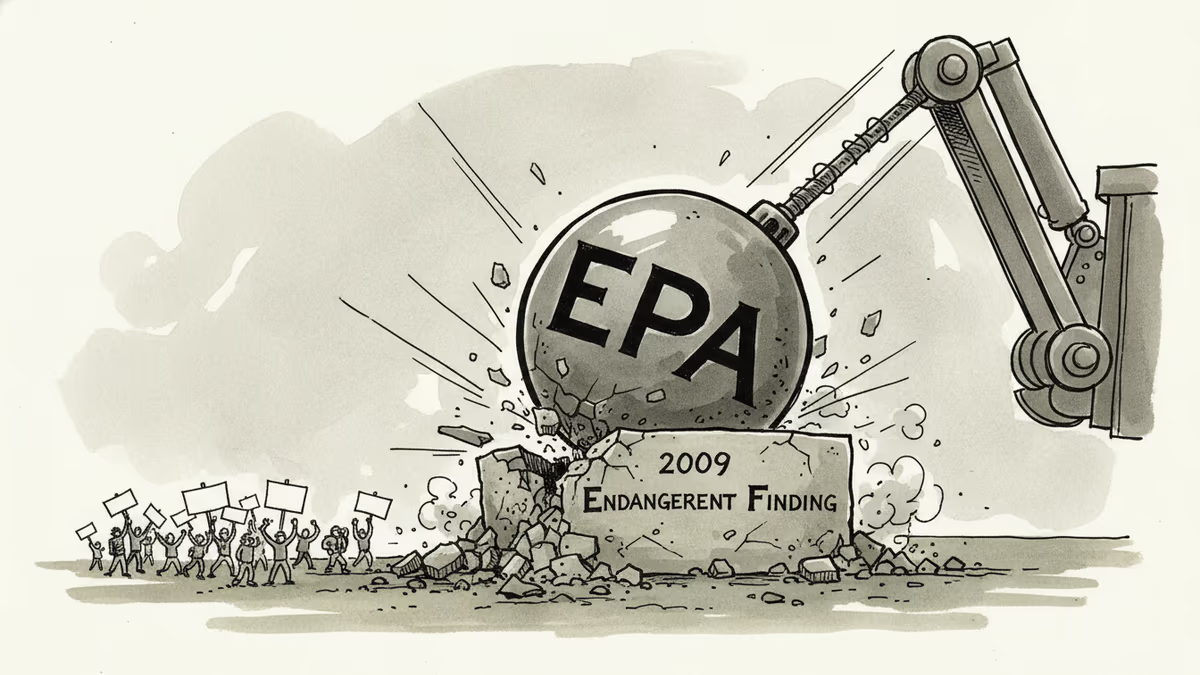
Environmental groups sue EPA after Trump administration repeals endangerment finding that anchored US climate regulations for 17 years, eliminating car emission standards in the process.
Trump admin lawyer claims RFK Jr.'s vaccine authority is beyond judicial review, even if he tells Americans to ditch vaccines entirely. Medical groups fight back.
The prestigious medical journal The Lancet delivered a scathing critique of RFK Jr.'s first year as US Health Secretary, highlighting concerns over vaccine misinformation and politicized health policy.
Vaccination rates plummet across London and US states as measles outbreaks surge. What happens when herd immunity collapses and childhood diseases return?
Environmental groups sue EPA after Trump administration repeals endangerment finding that anchored US climate regulations for 17 years, eliminating car emission standards in the process.
Thoughts
Share your thoughts on this article
Sign in to join the conversation