
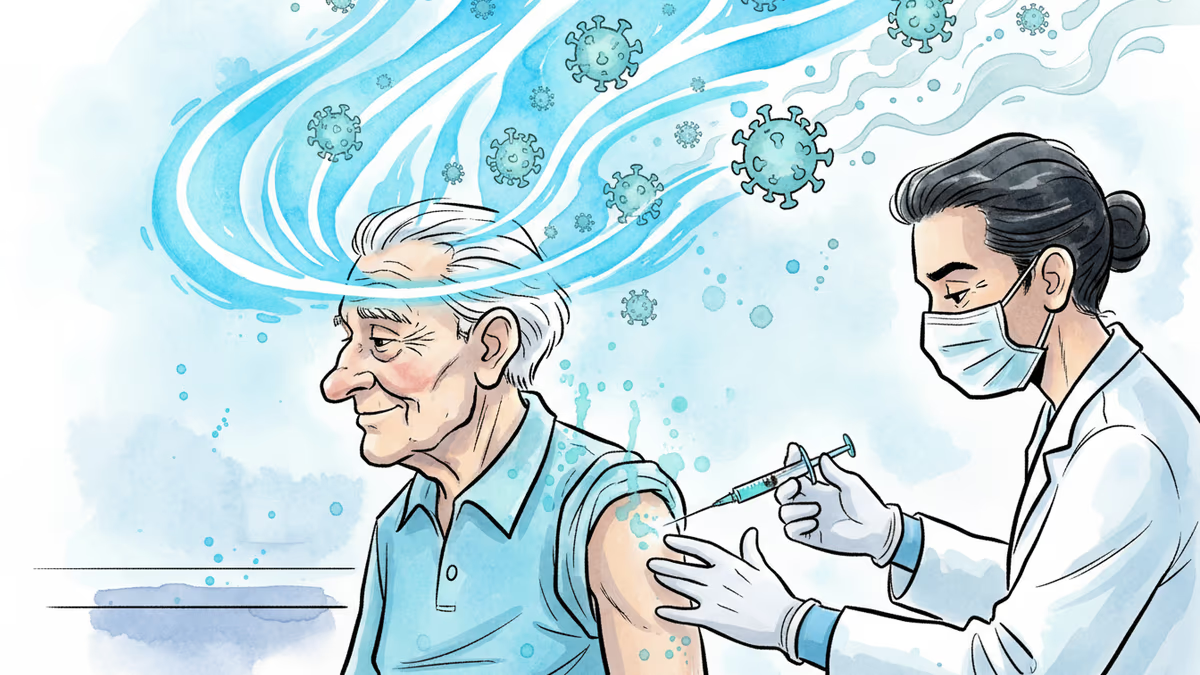
Could a Shingles Shot Be Your Brain's Best Friend?
Growing research suggests shingles vaccines may prevent dementia and slow biological aging, opening new frontiers in preventive medicine beyond infectious disease.
What if preventing shingles could save your memory?
While anti-vaccine sentiment surges through Washington—with Robert F. Kennedy Jr. leading the charge against lifesaving immunizations—science is quietly building a remarkable case. The shingles vaccine, originally designed to prevent painful skin eruptions, appears to be doing something extraordinary: protecting our brains.
Study after study shows older adults vaccinated against shingles have lower dementia risk. Last month's research went further, suggesting the same vaccine slows biological aging and reduces inflammation markers throughout the body.
"Our study adds to a growing body of work suggesting that vaccines may play a role in healthy aging strategies beyond solely preventing acute illness," said Eileen Crimmins from the University of Southern California.
With 6.7 million Americans living with Alzheimer's disease and numbers projected to nearly triple by 2060, this isn't just medical curiosity—it's potentially a game-changer.
The immune system's hidden superpower
How could a shingles shot protect your brain? Researchers propose several mechanisms, each more intriguing than the last.
First, immune system training. Vaccines don't just prevent specific diseases—they prime our entire immune response. The shingles vaccine might be teaching our immune system to better manage the chronic inflammation that fuels Alzheimer's disease.

Second, viral suppression. The varicella-zoster virus that causes chickenpox and shingles lurks in our nerve cells for life. When it reactivates, it might damage brain tissue. By keeping the virus dormant, the vaccine could be protecting neural pathways.
Third, cross-protective effects. Some vaccines provide broader protection than expected. The BCG tuberculosis vaccine has been linked to reduced mortality from unrelated infections. Could shingles vaccines be similarly multitalented?
Patients vs. skeptics: The growing divide
The medical community remains cautiously optimistic. "We're seeing consistent correlations, but correlation isn't causation," warns Dr. Sarah Chen, a neurologist at Johns Hopkins. "We need randomized controlled trials before making definitive claims."
Patients aren't waiting for perfect data. Online health forums buzz with discussions about getting shingles vaccines specifically for brain protection. The Shingrix vaccine, recommended for adults 50 and older, costs around $200-300 without insurance—a price many consider worthwhile if it could prevent dementia.
Insurance coverage varies wildly. While most plans cover shingles vaccination for eligible adults, using it specifically for dementia prevention remains off-label and often uncovered.
The political vaccine paradox
This research emerges against a backdrop of vaccine skepticism in American politics. Kennedy's nomination as Health Secretary has vaccine advocates worried about funding cuts and policy reversals. His long history of vaccine opposition could impact research into vaccines' broader health benefits.
Yet the shingles-dementia connection might transcend political divides. Alzheimer's disease affects families regardless of political affiliation, and the economic burden—$355 billion annually in the US—demands attention from any administration.
Biotech investors are taking notice. Companies developing next-generation shingles vaccines, like GSK and emerging players, could see their market expand dramatically if brain protection becomes an established benefit.
Authors
Related Articles
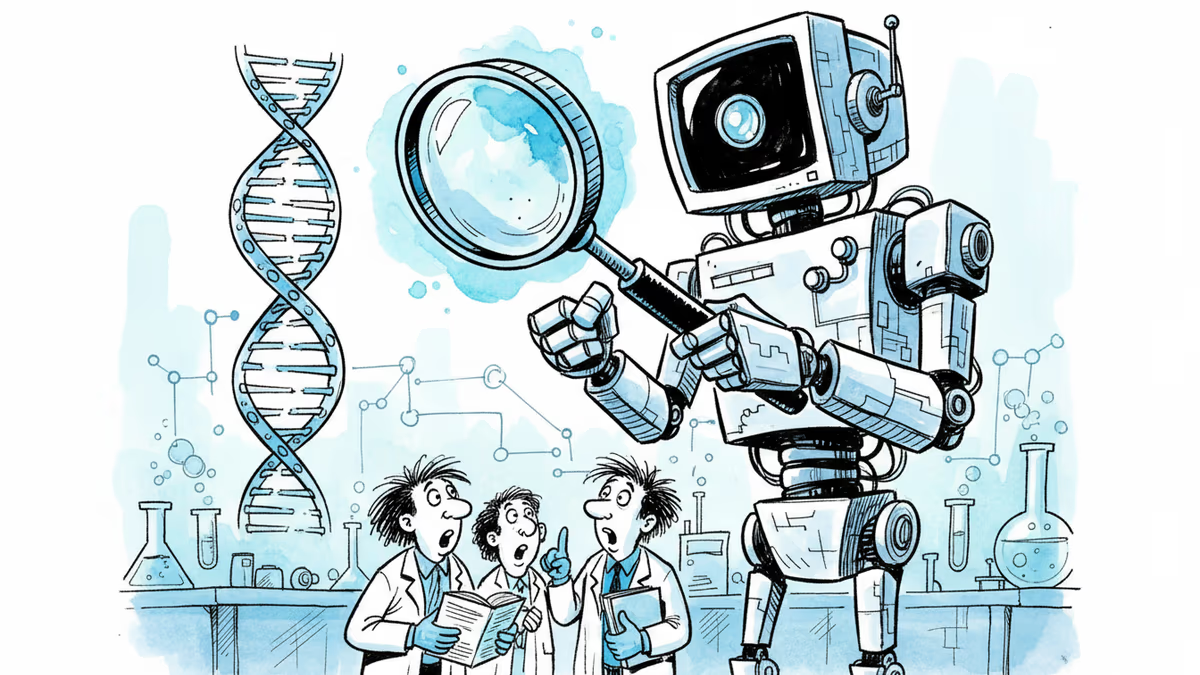
Evo 2 AI can now decode genomes from all life forms, including humans. We explore what this breakthrough means for medicine and biotechnology.
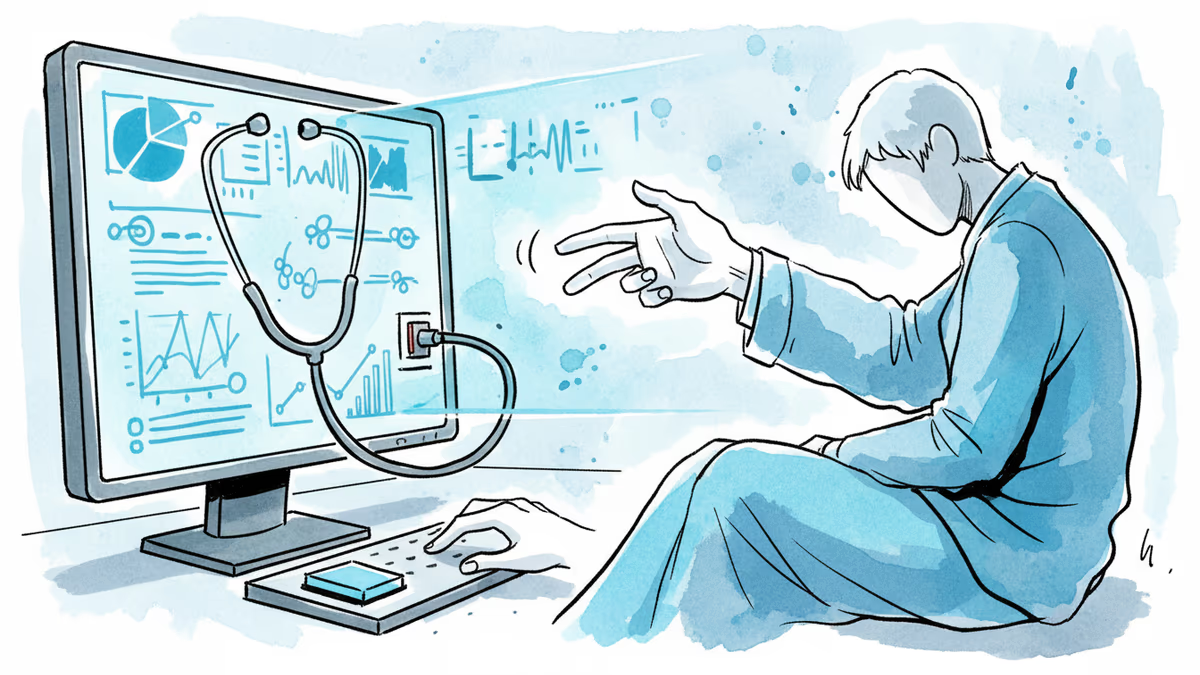
HBO's The Pitt reveals the unsettling reality of AI-driven healthcare. As hospitals embrace generative AI, doctors grapple with efficiency versus humanity.
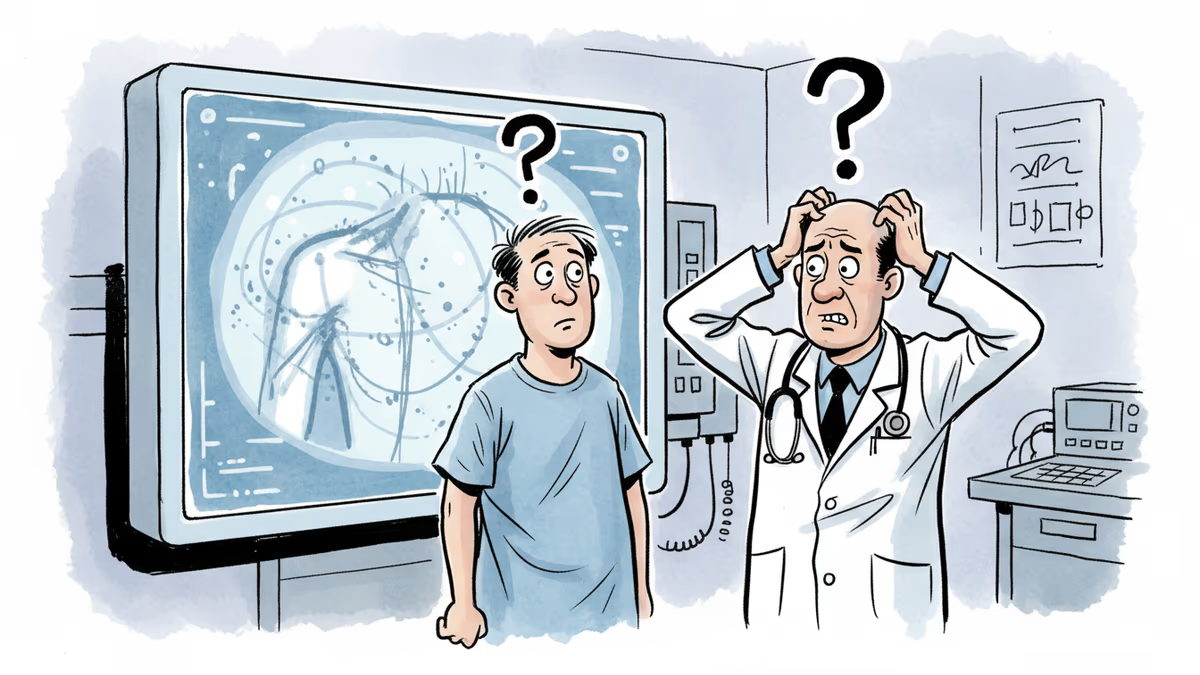
New study finds 99% of adults over 40 show rotator cuff abnormalities on MRI, yet most have no shoulder problems. Questions medical imaging's role in diagnosis and treatment.
Researchers use AI to discover antibiotics in extinct species' genetic code as 4 million die annually from drug-resistant infections. Could ancient DNA hold the key?
Evo 2 AI can now decode genomes from all life forms, including humans. We explore what this breakthrough means for medicine and biotechnology.
HBO's The Pitt reveals the unsettling reality of AI-driven healthcare. As hospitals embrace generative AI, doctors grapple with efficiency versus humanity.
New study finds 99% of adults over 40 show rotator cuff abnormalities on MRI, yet most have no shoulder problems. Questions medical imaging's role in diagnosis and treatment.
Researchers use AI to discover antibiotics in extinct species' genetic code as 4 million die annually from drug-resistant infections. Could ancient DNA hold the key?
Thoughts
Share your thoughts on this article
Sign in to join the conversation