
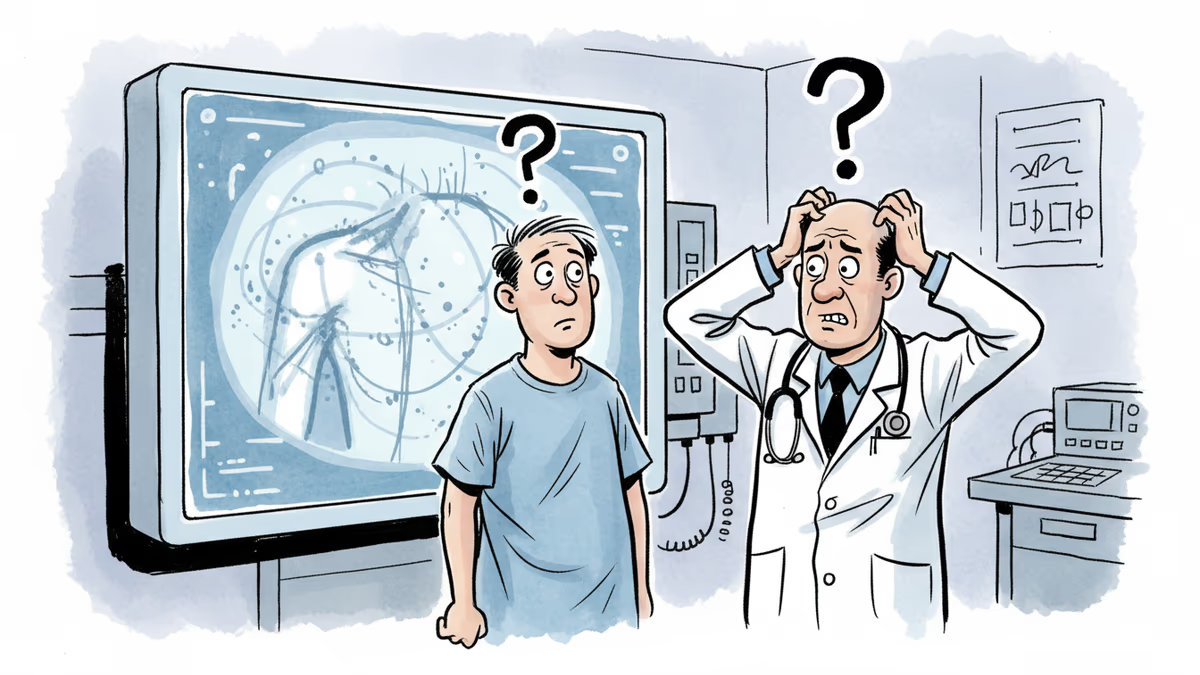
99% Have 'Abnormal' Shoulder MRIs, But Feel Fine
New study finds 99% of adults over 40 show rotator cuff abnormalities on MRI, yet most have no shoulder problems. Questions medical imaging's role in diagnosis and treatment.
When 99% Abnormal Becomes Normal
If you're over 40 and get an MRI of your shoulder, there's a 99% chance it'll show something "wrong." Yet most people with these "abnormalities" feel perfectly fine. This isn't a medical mystery—it's a wake-up call about how we interpret medical imaging.
A study published this week in JAMA Internal Medicine examined rotator cuff abnormalities in adults over 40. The rotator cuff—that crucial group of muscles and tendons keeping your upper arm bone snug in its socket—showed signs of tears, thickening, or other changes in virtually everyone. The catch? The vast majority had zero shoulder problems.
This finding isn't just academically interesting. It strikes at the heart of modern medicine's relationship with technology and our growing tendency to overtreate based on what we see rather than what patients feel.
The Imaging Paradox
Better technology means we can see more. But seeing more doesn't always mean knowing more. As MRI resolution improves and becomes more accessible, we're discovering "abnormalities" that might simply be normal aging—like finding wrinkles on a 50-year-old's face and calling them pathological.
The healthcare implications are staggering. In the US alone, rotator cuff surgeries exceed 300,000 annually, with costs running into billions. If most abnormalities don't cause symptoms, how many of these procedures are necessary?
Patients Want Answers, Doctors Face Dilemmas

When patients see abnormalities on their MRI reports, they expect action. "Something's torn—fix it," seems logical. But orthopedic surgeons increasingly find themselves in an uncomfortable position: explaining why visible damage might not need treatment.
Dr. Sarah Chen, an orthopedic surgeon at Johns Hopkins, describes the challenge: "Patients come in with MRI reports listing multiple 'abnormalities.' They're convinced these explain their pain. But often, the imaging findings don't correlate with their symptoms at all."
This disconnect creates a perfect storm for overtreatment. Defensive medicine practices, patient expectations, and the compelling nature of visual "proof" all push toward intervention, even when watchful waiting might be wiser.
The Economics of Seeing Too Much
The financial incentives are clear. MRI scans generate revenue. Abnormal findings justify procedures. Insurance often covers treatments for documented abnormalities, even when their clinical significance is questionable.
Meanwhile, healthcare systems worldwide grapple with rising costs. The UK's NHS spends millions annually on shoulder imaging, while American patients face mounting medical debt partly driven by unnecessary procedures stemming from incidental findings.
A Cultural Shift in Medicine?
This research suggests we need a fundamental change in how we approach medical imaging. Instead of asking "What do we see?" perhaps we should ask "What matters to the patient?"
Some progressive healthcare systems are already adapting. They're emphasizing clinical symptoms over imaging findings, educating patients about normal age-related changes, and developing guidelines that discourage imaging for certain conditions unless specific criteria are met.
Authors
Related Articles
Evo 2 AI can now decode genomes from all life forms, including humans. We explore what this breakthrough means for medicine and biotechnology.
Growing research suggests shingles vaccines may prevent dementia and slow biological aging, opening new frontiers in preventive medicine beyond infectious disease.
HBO's The Pitt reveals the unsettling reality of AI-driven healthcare. As hospitals embrace generative AI, doctors grapple with efficiency versus humanity.
Researchers use AI to discover antibiotics in extinct species' genetic code as 4 million die annually from drug-resistant infections. Could ancient DNA hold the key?
Evo 2 AI can now decode genomes from all life forms, including humans. We explore what this breakthrough means for medicine and biotechnology.
Growing research suggests shingles vaccines may prevent dementia and slow biological aging, opening new frontiers in preventive medicine beyond infectious disease.
HBO's The Pitt reveals the unsettling reality of AI-driven healthcare. As hospitals embrace generative AI, doctors grapple with efficiency versus humanity.
Researchers use AI to discover antibiotics in extinct species' genetic code as 4 million die annually from drug-resistant infections. Could ancient DNA hold the key?
Thoughts
Share your thoughts on this article
Sign in to join the conversation